

Navigating Nuance: Contemporary Art Movements & Their Enduring Legacy

Table of Contents
The Shifting Sands of 'Contemporary': Defining an Evolving Era
Contemporary art is a term used to describe the art of today, generally referring to art created from the 1970s onwards. Contemporary artists work in a globally influenced, culturally diverse, and technologically advancing world. Their art is a dynam...
The very term “contemporary art” presents a fascinating paradox. Unlike the relatively fixed boundaries of Renaissance or Baroque, ‘contemporary’ is perpetually in motion, anchored to our present moment yet constantly receding into history. While often used interchangeably with “modern art,” a crucial distinction exists. Modernism, born from a rejection of academic tradition in the mid-19th century and flourishing through the first half of the 20th, sought new forms of representation – a break *from* what came before. Contemporary art, however, is less about stylistic innovation and more about a fundamental questioning of art itself: its purpose, its meaning, its very definition. This shift began to solidify in the post-war era, fueled by rapid social change, technological advancements, and a growing awareness of global interconnectedness. The founding of institutions like the Contemporary Art Society in 1910 marked an early attempt to categorize this emerging sensibility, though the boundaries remained – and continue to remain – fluid. Today, defining ‘contemporary’ often encompasses art created from the 1970s onward, a period characterized by its eclecticism and resistance to singular ideologies.
From Abstract Expressionism to Pop Art: Key Movements of the Mid-20th Century
The post-World War II landscape witnessed an explosion of artistic energy in New York City. Abstract Expressionism, with figures like Jackson Pollock and Mark Rothko, abandoned representational forms altogether, prioritizing spontaneous gesture and emotional intensity. Pollock’s drip paintings weren't merely depictions *of* something; they were the embodiment of the creative act itself, a direct translation of the artist’s inner state onto canvas. This emphasis on subjectivity paved the way for further experimentation. Across the Atlantic, Art Informel explored similar territory, though often with a greater focus on materiality and texture. By the 1960s, a dramatic shift occurred with the emergence of Pop Art. Artists like Andy Warhol and Roy Lichtenstein turned their attention to mass culture – advertising, comic books, celebrity iconography – elevating everyday objects and images to the realm of high art. This wasn’t simply a celebration of consumerism; it was a critical commentary on its pervasive influence, challenging traditional notions of artistic subject matter and authorship. The boldness and accessibility of Pop Art democratized the art world, blurring the lines between ‘high’ and ‘low’ culture and foreshadowing the pluralistic tendencies that would define contemporary practice.
Postmodern Disruptions: Challenging Conventions and Embracing Plurality
Postmodernism encompasses a variety of artistic, cultural, and philosophical movements. It emerged in the mid-20th century as a skeptical response to modernism, emphasizing the instability of meaning, rejection of universal truths, and critique of gr...
If Modernism sought universal truths through formal innovation, Postmodernism, emerging in the mid-20th century, embraced skepticism and fragmentation. Rejecting grand narratives and fixed meanings, postmodern artists questioned established norms across all disciplines – art, architecture, literature, philosophy. This manifested in a diverse range of approaches: appropriation, pastiche, irony, and deconstruction. Conceptual Art, championed by figures like Sol LeWitt and Joseph Kosuth, prioritized the idea behind the artwork over its physical manifestation, often reducing the object itself to a mere documentation of a thought process. Performance art challenged the very notion of permanence, existing only in time and space. Artists began to actively dismantle traditional hierarchies, blurring the boundaries between artist and audience, art and life. This period saw a deliberate rejection of stylistic unity; instead, artists embraced eclecticism, drawing inspiration from diverse sources – historical styles, popular culture, non-Western traditions – creating works that were often deliberately ambiguous and open to multiple interpretations.
Neo-Expressionism & Beyond: The 1980s and the Rise of New Subjectivity
The relative conceptual rigor of the 1970s gave way in the 1980s to a renewed interest in painting, particularly Neo-Expressionism. Artists like Georg Baselitz and Anselm Kiefer rejected the cool detachment of Minimalism and Conceptual Art, embracing raw emotion, figuration, and historical subject matter. Their work was often characterized by its bold brushwork, intense colors, and a sense of psychological turmoil. This return to subjectivity wasn’t simply a nostalgic revival; it reflected a broader cultural shift – a growing disillusionment with postmodern theory and a desire for more direct forms of expression. Simultaneously, the Pictures Generation, including artists like Cindy Sherman and Jeff Koons, critically examined the influence of mass media and visual culture, appropriating images from advertising, film, and television to expose their underlying power structures. This period also saw the rise of feminist art, challenging patriarchal norms and exploring issues of gender, identity, and representation.
Globalization, Identity, and Technology: Contemporary Themes in Art
The late 20th and early 21st centuries have been defined by globalization, technological advancements, and an increasing awareness of social and political complexities. Contemporary art reflects these shifts, often addressing issues of identity, migration, cultural hybridity, and environmental concerns. Artists are increasingly engaging with digital technologies – video, installation, virtual reality – creating immersive experiences that challenge traditional notions of space and time. The rise of global biennials and art fairs has fostered a greater exchange of ideas across cultures, leading to a more diverse and interconnected art world. Identity politics have become central themes, with artists exploring issues of race, gender, sexuality, and class through personal narratives and critical interventions. Furthermore, the impact of climate change and environmental degradation is increasingly visible in contemporary artwork, prompting reflection on our relationship with the natural world. The boundaries between art and activism are becoming increasingly blurred, as artists use their work to raise awareness about pressing social issues.
Collecting Contemporary Art: Navigating Trends and Building a Visionary Collection
For collectors, navigating the contemporary art landscape can be both exhilarating and daunting. Unlike established masters with well-defined markets, contemporary art is often characterized by its volatility and rapid evolution. Building a visionary collection requires careful research, discerning taste, and a willingness to take risks. It’s crucial to move beyond fleeting trends and focus on artists whose work demonstrates originality, intellectual depth, and lasting relevance. Engaging with galleries, museums, and art fairs is essential for developing an understanding of the current market and discovering emerging talent. Consider your own aesthetic preferences and values – what themes resonate with you? What kind of impact do you want your collection to have? Don’t be afraid to seek advice from art consultants or appraisers. Ultimately, collecting contemporary art should be a deeply personal journey—a reflection of your individual vision and a commitment to supporting the artists who are shaping our cultural landscape. ArtsDot.com offers a curated selection of high-quality reproductions, allowing you to experience the power and beauty of contemporary masterpieces in your own home.
Related Articles

Reflections on Representation: Exploring the Meta-Narrative of 'Artwork' within Artistic Discourse
Explore the complex layers of artistic representation with ArtsDot.com's expert analysis of art history, self-reflexivity, and cultural context. Discover insights for discerning collectors.


Navigating Nuance: Contemporary Art's Themes & Techniques (1945 – Present)
Explore the dynamic world of contemporary art (1945–present). Discover key movements, influential artists & collecting insights from ArtsDot's expert analysis. Build your visionary collection today.
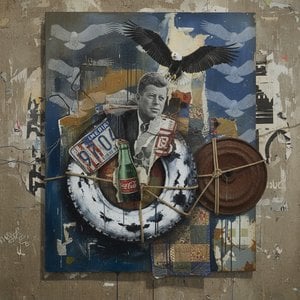
Robert Rauschenberg: Bridging Painting & Life – A Comprehensive Exploration of Combines, Silkscreens, and the Erasure of Boundaries
Explore the revolutionary art of Robert Rauschenberg – Combines, silkscreens & more. Discover his impact on Pop Art, investment potential & collecting insights for discerning art collectors.

