

The Rise of Sargent: From Florentine Beginnings to Parisian Acclaim
 Wikipedia: John Singer Sargent
John Singer Sargent (; January 12, 1856 – April 15, 1925) was an American expatriate artist, considered the "leading portrait painter of his generation" for his evocations of Belle Époque and Edwardian-era luxury. He created roughly 900 oil paintings...
John Singer Sargent’s story is one of remarkable cosmopolitanism, a life lived between worlds that profoundly shaped his artistic vision. Born in Florence in 1856 to American parents, he was instilled with an early appreciation for European culture and tradition. However, his upbringing wasn't rooted in any single place; the family moved frequently throughout Europe – Italy, Austria, Germany – fostering a sense of detachment and observation that would later become hallmarks of his work. This peripatetic childhood cultivated not only linguistic fluency but also a keen eye for detail and an ability to capture the essence of diverse environments. Unlike many artists who found early grounding in formal academies within their homeland, Sargent’s education was deliberately international. He received instruction from private tutors, absorbing techniques that blended classical rigor with emerging modern sensibilities. His initial training under Carolus-Duran in Paris proved pivotal; Duran encouraged a direct, *au premier coup* approach – painting swiftly and decisively, prioritizing the impression of light and texture over meticulous detail. This method, influenced by masters like Velázquez and Manet, would become Sargent’s signature style, setting him apart from his contemporaries.
The allure of Paris in the late 19th century was undeniable, a magnet for artists seeking innovation and recognition. Sargent arrived with ambition, determined to establish himself within the prestigious Salon system. His early successes hinted at his potential, but it was his move to London that solidified his position as a sought-after portraitist. While Paris offered artistic freedom, London provided a stable clientele – the burgeoning upper classes eager for likenesses rendered with both accuracy and flair.
Madame X and Beyond: Defining Portraiture in the Gilded Age
 Madame X
Admire 'Madame X,' John Singer Sargent’s iconic 1884 portrait! A captivating glimpse into Gilded Age elegance & melancholy, this masterpiece exemplifies Impressionistic technique.
The name John Singer Sargent became synonymous with the opulence and social complexities of the Gilded Age largely due to one painting: *Portrait of Madame Pierre Gautreau*, more commonly known as *Madame X*. Commissioned in 1884, the portrait was intended to be a triumphant statement, solidifying Sargent’s reputation within Parisian society. Instead, it ignited a scandal. Virginie Amélie Avegno, a renowned beauty and socialite, possessed an unconventional allure that captivated – and unsettled – many. Sargent captured her with a daring combination of elegance and aloofness; the suggestive pose, the pale complexion, the provocative neckline—all challenged conventional notions of propriety. The initial exhibition at the Paris Salon drew harsh criticism, with viewers scandalized by what they perceived as a brazen display of sensuality. The strap slipping off Madame Gautreau’s shoulder, though later adjusted in subsequent versions, became a focal point of outrage.
While initially devastating, the *Madame X* controversy proved to be a turning point for Sargent. It forced him to confront his artistic choices and ultimately led to his departure from Paris and a relocation to London. In England, he found a receptive audience willing to embrace his unique style and technical prowess. He continued to paint portraits of the elite, but with a newfound sensitivity and restraint. Works like *The Wyndham Sisters: Lady Elcho, Mrs. Adeane, and Mrs. Tennant* exemplify this shift – capturing not just physical likenesses but also the inner lives and social standing of his sitters. His watercolor portrait of Madame Gautreau, created later in her life, offers a more nuanced and sympathetic portrayal, revealing a woman beyond the initial scandal.
Technical Mastery: Brushwork, Light, and Sargent’s Impressionistic Style
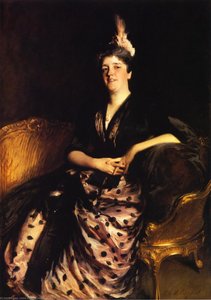
Sargent's genius lay not merely in his ability to capture resemblance but in his masterful manipulation of light and brushwork. He wasn’t strictly an Impressionist – he didn’t adhere to the movement’s emphasis on plein air painting or its focus on fleeting moments—but he absorbed its principles, integrating them into his own distinctive style. His technique was characterized by a remarkable fluidity and spontaneity; broad, confident strokes of color were layered upon one another, creating a sense of vibrancy and texture. He often employed a limited palette, relying on subtle variations in tone to convey depth and form.
His ability to render fabrics – silks, satins, velvets—with astonishing realism was particularly noteworthy. He understood how light interacted with different materials, capturing the play of shadows and highlights with breathtaking accuracy. This skill extended beyond portraits; his landscapes are equally celebrated for their luminous quality and atmospheric effects. Sargent’s watercolors, often created during his travels, demonstrate a remarkable freedom and expressiveness. He embraced the fluidity of the medium, allowing colors to blend and bleed into one another, creating evocative impressions of light and atmosphere.
Patronage and Society: The World Captured by Sargent's Canvas
 The Wyndham Sisters: Lady Elcho, Mrs. Adeane, and Mrs. Tennant
Sargent's 'The Wyndham Sisters' captures Edwardian elegance with three society women posed gracefully. A masterpiece of portraiture and skill.
John Singer Sargent’s success was inextricably linked to the patronage of the wealthy elite. He cultivated relationships with prominent families on both sides of the Atlantic, becoming a favored portraitist among industrialists, financiers, and socialites. These patrons not only provided him with financial security but also offered access to exclusive circles and opportunities for travel. His portraits served as status symbols, reflecting the affluence and sophistication of his sitters.
However, Sargent wasn’t simply a recorder of wealth; he possessed an astute understanding of human psychology and was able to capture the complexities of character beneath the veneer of social convention. He often depicted his subjects with a subtle irony or detachment, revealing their vulnerabilities and insecurities. His portraits are not merely flattering representations but insightful observations of a particular time and place—the Gilded Age, with its contradictions and aspirations.
Beyond Portraits: Landscapes, Murals, and a Restless Artistic Spirit
While Sargent is best known for his portraits, he was a remarkably versatile artist who excelled in various genres. Throughout his career, he devoted considerable time to landscape painting, seeking refuge from the constraints of formal portraiture. His landscapes, often created *en plein air*, demonstrate a keen eye for composition and a mastery of atmospheric effects. He traveled extensively throughout Europe and North America, capturing the beauty of diverse environments – from the rugged mountains of Tyrol to the serene coastlines of Maine.
His later years were marked by a growing ambition to create large-scale murals. He received commissions for several prominent public buildings, including the Boston Public Library and the Widener Memorial School at Harvard University. These projects challenged him technically and artistically, requiring him to adapt his techniques to a larger scale. Though these murals faced some criticism during his lifetime, they demonstrate his willingness to push boundaries and explore new artistic possibilities.
Sargent’s Enduring Legacy: Influence and Rediscovery
John Singer Sargent's influence on subsequent generations of artists is undeniable. His technical brilliance, his mastery of light and brushwork, and his ability to capture the essence of a subject continue to inspire painters today. While he faced periods of relative obscurity in the mid-20th century, his work has experienced a remarkable rediscovery in recent decades.
Exhibitions like “John Singer Sargent and Chicago’s Gilded Age” at the Art Institute of Chicago have shed new light on previously overlooked aspects of his career, revealing the depth and complexity of his artistic vision. His paintings are now highly sought after by collectors and museums worldwide, cementing his position as one of the greatest portraitists of all time. At ArtsDot.com, we celebrate Sargent’s legacy by offering high-quality reproductions of his masterpieces, allowing art enthusiasts to experience the beauty and brilliance of his work firsthand. Explore our collection today and discover the enduring allure of John Singer Sargent.