


 Preview
 Send
Send Share
Share
 Details

 Download
 Similars
 X-Ray
X-Ray Diaporama
Shoki Ensnaring a Demon in a Spider Web
 Muromachi Period
 1700
1700- Late Medieval
 158.0 x 172.0 cm
 Kimbell Art Museum
 Read More
Hand Made Oil Reproduction
Hand-painted oil on canvas in your size and frame, made to order by our artists. ( Switch to Print Switch to Image)




P118B $10

P118H $10

P118W $10

P438Z $10

P508JH $12

P508YH $12

P805H $10

P805Z $10

P919BZ $10

P919G $10

P919XJ $10

P959ZH $10

P968JZ $12

W106C $8

W218G $10

W218JH $8

W218Y $10

W307PJ $10

W316G $10

W316PJ $8

W316Y $10

W398PJ $8

W4111J $10

W500HY $15

W500JH $15

W692G $12

W849H $8

W940BG $15

W953PJ $8




Pick from our preset sizes that match the artwork's original proportions.

You may enter your own dimensions to fit a specific frame or space. If your selected size does not match the original image's proportions, we will either crop the artwork or extend the painting with additional hand-painted elements. A digital mockup will be sent for your approval before production begins.
Please note that the on-screen preview does not reflect the actual cropping or extension. Only the mockup will accurately show the final composition.
While custom sizes are available, we recommend selecting a dimension from the predefined list to preserve the original proportions.
After order, ArtsDot.com team will email client for instructions and provide a mockup preview
Worldwide Delivery () in 3/4 weeks instead of standard 5 weeks. (8 August). No compromise on quality.

Free Worldwide Express Shipping

High-Quality Linen Canvas

Full Shipping Insurance

Customs Tax Refund Guarantee

True Color Matching Guarantee

60-Day Return Policy (Defects Only)

100% Money-Back Guarantee

Bulk Discount Offer
 Glass option is only available in size under 110 CM

Shoki Ensnaring a Demon in a Spider Web
Reproduction Medium
Reproduction Size
-


Total Price
$ 263
Artwork Description
A Twisted Vision of Justice: Soga Shohaku’s “Shoki Ensnaring a Demon in a Spider Web”
Soga Shohaku's "Shoki Ensnaring a Demon in a Spider Web," painted around 1700, is not merely a depiction of a mythological scene; it’s a visceral exploration of morality, justice, and the unsettling beauty found within darkness. This arresting two-fold screen, now housed at the Kimbell Art Museum in Fort Worth, immediately commands attention with its dramatic composition and the artist's distinctive, almost jarring, Muromachi period brushwork – a style deliberately chosen to stand apart from the prevailing trends of his time.
At the heart of the image is Shoki (also known as Zhong Kui), a legendary Chinese hero who, unjustly denied a prestigious government post, took his own life in despair. Shohaku’s interpretation transforms this tragic tale into a potent symbol of retribution and protection. The demon-queller, rendered with an almost grotesque intensity, isn't simply a figure of righteous vengeance; he is actively trapping a shadowy form – the embodiment of evil – within a meticulously crafted spiderweb. This intricate web, rendered in bold, expressive strokes, becomes a metaphor for the delicate balance between order and chaos, good and evil.
The Echoes of Muromachi: Technique and Style
Shohaku’s artistic choices are profoundly rooted in the traditions of the Muromachi period (1336–1573), a time renowned for its unconventional approach to painting. While the Edo period (1603-1868) favored refined, often highly detailed, techniques influenced by Chinese art, Shohaku deliberately rejected this trend, embracing instead the looser, more expressive brushwork characteristic of his predecessors. This deliberate anachronism is key to understanding the work’s power; it suggests a conscious rebellion against artistic convention and a deep respect for a style considered outdated by many.
The painting's monochrome palette – primarily consisting of rich blacks and browns – further enhances its dramatic effect. Shohaku masterfully employs ink washes, layering them to create depth and texture. Notice the forceful, almost violent strokes used to define the demon’s form and the intricate details of the spiderweb. These aren’t delicate lines; they are imbued with a sense of urgency and determination, reflecting Shoki's relentless pursuit of justice.
Symbolism and Narrative Depth
Beyond the immediate depiction of the scene, “Shoki Ensnaring a Demon in a Spider Web” is rich in symbolic meaning. The spiderweb itself represents not just entrapment but also protection – safeguarding the realm from malevolent forces. The demon, often associated with chaos and destruction, is rendered as vulnerable and exposed, suggesting that even the most formidable evils can be overcome. The rope used to bind the demon symbolizes the chains of fate and the consequences of wrongdoing.
Furthermore, the inclusion of birds – perched on branches and seemingly observing the scene – adds another layer of interpretation. They could represent messengers of divine judgment or simply witnesses to this extraordinary event. The overall composition evokes a sense of timelessness, suggesting that the struggle between good and evil is an eternal one.
A Legacy of Unconventional Genius
Soga Shohaku’s legacy lies in his unwavering commitment to artistic individuality. He wasn't simply replicating established styles; he was forging his own path, drawing inspiration from a bygone era while imbuing his work with a uniquely modern sensibility. His paintings, particularly this powerful depiction of Shoki, continue to fascinate and challenge viewers today, reminding us that art can be both visually stunning and profoundly thought-provoking.
Reproductions of “Shoki Ensnaring a Demon in a Spider Web” offer a remarkable opportunity to bring this extraordinary artwork into your home or office. The dramatic composition and evocative symbolism will undoubtedly serve as a captivating focal point, sparking conversation and inviting contemplation on the enduring themes of justice, morality, and the eternal struggle between light and darkness.
Related Artworks


Artist Biography
life and artistic style
soga shōhaku, a japanese painter from the edo period (1730-1781), defied conventions with his unique brush style, reminiscent of the muromachi period, which was already 150 years out of vogue by the time of his birth. this distinctive approach set him apart from his contemporaries.notable works and their significance
* race at uji river (harvard art museums, cambridge, united states): this polychromatic screen, depicting a famous episode from the 14th-century war epic "the tale of the heike," showcases shōhaku's pictorial grotesquerie. it is a rare example of his work in full color. * the immortal li tieguai (128 x 28 cm, paper): this piece illustrates the story of one of the eight chinese immortals, li tieguai, and demonstrates shōhaku's ability to convey complex narratives through his art.artistic influences and legacy
* shōhaku's preference for the muromachi period's brush style reflects an aesthetic that was already passé by the time of his birth. this choice not only distinguishes him from his contemporaries but also highlights his unique artistic vision. * his monstrous depictions of prominent figures were extremely unusual compared to other painters of his time, further solidifying his position as an unconventional artist.explore more at ArtsDot
- discover soga shōhaku's works in the artist profile on ArtsDot.
- learn more about japanese art movements, including the bunjinga art movement, which influenced shōhaku's style.
- view other notable artists from the edo period in ArtsDot's extensive collection, including mori ransai.
conclusion
soga shōhaku's unorthodox approach to japanese painting during the edo period has left an indelible mark on art history. his unique style, characterized by monstrous depictions and a preference for outdated aesthetics, continues to fascinate art lovers today. explore his works and those of other influential artists at ArtsDot, the virtual museum for art aficionados. references:- soga shōhaku - artist profile, ArtsDot
- the bunjinga art movement, ArtsDot
- mori ransai - artist profile, ArtsDot
- ito jakuchu, known for his unique use of vegetables and plants in his art.
- kano einō, a prominent member of the preeminent kano family workshop.

soga shohaku
1730 - 1781 , Japan
Quick Facts
- Artistic Movement Or Style: Muromachi Style
- Artists Or Movements Influenced By This Artist: ['Bunjinga']
- Artists Who Influenced This Artist: ['Takada Keiho']
- Date Of Birth: Kyoto, Japan (1730)
- Full Name: Soga Shōhaku
- Nationality: Japanese
- Notable Artworks:
- Race at Uji River
- The Immortal Li Tieguai
- Place Of Birth: Kyoto
Related Articles

Hokusai's Masterpieces: 25 Iconic Prints & Paintings for Art Lovers | ArtsDot
Journey through Katsushika Hokusai’s 25 most iconic artworks, including *The Great Wave*. Explore the ukiyo-e master's history, style & timeless Japanese woodblock prints. Find museum-quality reproductions for your home at ArtsDot.com.

Ukiyo-e's Greatest Hits: 10 Masterpieces That Shaped a Movement | ArtsDot
Journey into Japan's 'Floating World'! Explore 10 Ukiyo-e masterpieces by Hokusai, Hiroshige & more. Discover the stories behind these iconic woodblock prints and bring timeless Japanese art to your home with ArtsDot.com. Explore the full collection online.
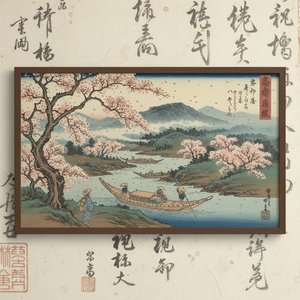
Ephemeral Landscapes: Hiroshige's Poetics of Transient Beauty in Edo Japan
Explore the captivating world of Utagawa Hiroshige's ukiyo-e landscapes. Discover his artistic innovations, influence on Western art, and the poetics of transient beauty in Edo period Japan. A guide for collectors & enthusiasts.

Suzuki Harunobu: Pioneering Ukiyo-e & the Refinement of Edo Period Printmaking
Discover the revolutionary world of Suzuki Harunobu, a pioneer of ukiyo-e printmaking. Explore his exquisite nishiki-e techniques, diverse subjects & lasting impact on Japanese art history. Learn more at ArtsDot.

Floating World: The Captivating Art and Legacy of Japanese Ukiyo-e
Explore the profound beauty of Japanese Ukiyo-e. Discover the history, masters like Hokusai, and the enduring legacy of the 'Floating World' through an expert art-historical lens.



