


 Preview
 Send
Send Share
Share
 Details

 Download
 Similars
 X-Ray
X-Ray Diaporama
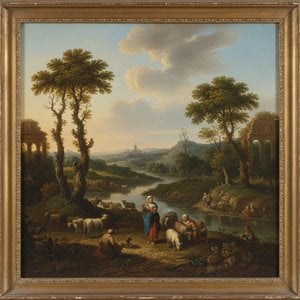
The Unexpected Arrival


 Read More
Hand Made Oil Reproduction
Hand-painted oil on canvas in your size and frame, made to order by our artists. ( Switch to Print Switch to Image)




P118B $10

P118H $10

P118W $10

P438Z $10

P508JH $12

P508YH $12

P805H $10

P805Z $10

P919BZ $10

P919G $10

P919XJ $10

P959ZH $10

P968JZ $12

W106C $8

W218G $10

W218JH $8

W218Y $10

W307PJ $10

W316G $10

W316PJ $8

W316Y $10

W398PJ $8

W4111J $10

W500HY $15

W500JH $15

W692G $12

W849H $8

W940BG $15

W953PJ $8




Pick from our preset sizes that match the artwork's original proportions.

You may enter your own dimensions to fit a specific frame or space. If your selected size does not match the original image's proportions, we will either crop the artwork or extend the painting with additional hand-painted elements. A digital mockup will be sent for your approval before production begins.
Please note that the on-screen preview does not reflect the actual cropping or extension. Only the mockup will accurately show the final composition.
While custom sizes are available, we recommend selecting a dimension from the predefined list to preserve the original proportions.
After order, ArtsDot.com team will email client for instructions and provide a mockup preview
Worldwide Delivery () in 3/4 weeks instead of standard 5 weeks. (9 August). No compromise on quality.

Free Worldwide Express Shipping

High-Quality Linen Canvas

Full Shipping Insurance

Customs Tax Refund Guarantee

True Color Matching Guarantee

60-Day Return Policy (Defects Only)

100% Money-Back Guarantee

Bulk Discount Offer
 Glass option is only available in size under 110 CM

The Unexpected Arrival
Reproduction Medium
Reproduction Size
-


Total Price
$ 438
Artwork Description
A Golden Moment in Italian Realism
In the vast, sun-drenched expanse of Francesco Lojacono’s 1883 masterpiece, The Unexpected Arrival, the viewer is immediately transported to a moment of profound stillness within the Italian countryside. This monumental oil on canvas serves as more than just a landscape; it is a window into the soul of the late 19th-century rural experience. The composition is defined by an immense, reverberating brightness, where a brilliant light blue sky, punctuated by soft, drifting clouds, meets a sea of undulating golden fields. As the eye wanders across the horizon, one encounters a group of figures—likely laborers or farmers—whose presence provides a poignant human anchor to the overwhelming scale of nature. The painting captures a sense of quietude and shared experience, evoking a mood that oscillates between peaceful contemplation and a subtle, lingering melancholy.
The historical significance of this work is as grand as its physical scale. Originally purchased by the sovereigns of Italy in 1883 during the Fine Arts Exhibition in Rome for the prestigious Savoy collections, the painting was destined for the Royal Villa of Monza before eventually finding its place in the Quirinal Palace. This lineage of ownership underscores the artist's standing within the Italian art canon; Lojacono, a master of his craft, was even honored with the title of Commander of the Crown of Italy. Often referred to by critics as a subject of the Risorgimento—or more evocatively as The Return of the Conscript—the work carries the weight of national identity, reflecting the social shifts and the enduring spirit of the Italian peasantry during a transformative era in European history.
Mastery of Light and Texture
Technically, Lojacono demonstrates an extraordinary command over the medium of oil paint, utilizing a meticulous approach to realism that breathes life into every blade of grass and fold of fabric. The artist employs a sophisticated palette of muted earth tones—deep browns, soft greys, and weathered blues—which harmonize beautifully with the vibrant gold of the harvest and the ethereal azure of the sky. There is a deliberate play between the horizontal dominance of the landscape and the subtle verticality found in the figures and distant structures, creating a balanced, rhythmic composition that guides the viewer’s gaze through the depth of the field. The texture of the painting is particularly captivating; through visible yet controlled brushstrokes, Lojacono creates a tactile sensation of the rough grasses and the heavy, sun-warmed clothing of the subjects.
For the discerning collector or interior designer, The Unexpected Arrival offers an unparalleled opportunity to introduce a sense of historical grandeur and atmospheric depth into a space. The painting’s ability to command attention through its sheer scale and luminous quality makes it a breathtaking centerpiece for any curated collection. Whether placed in a formal gallery setting or used to anchor a sophisticated contemporary room, the artwork provides a timeless connection to the beauty of the natural world and the dignity of human labor. It is an evocative piece that does not merely decorate a wall but invites a continuous dialogue between the viewer and the golden light of a bygone era.
Related Artworks


Artist Biography
William Keith: A Pioneer of California Tonalism
Born in Oldmeldrum, Aberdeenshire, Scotland, on November 18, 1838, William Keith’s artistic journey took him from the rugged landscapes of his homeland to the sun-drenched vistas of California. His early life was marked by a swift emigration with his family to New York City in 1850, where he apprenticed as an engraver – a skill that would later inform his meticulous attention to detail and tonal control. This initial training provided a foundation for his evolving artistic style, yet it was his relocation to San Francisco in 1859 that truly ignited his passion for painting. Keith’s lineage, claiming descent from the Scottish Clan Keith, added an intriguing layer to his identity, though this claim remains largely anecdotal.
Initially struggling to secure work as a painter, Keith quickly established himself through commissions and, crucially, by embracing a distinctly American aesthetic. He sought guidance from Samuel Marsden Brookes in 1863, absorbing elements of the burgeoning Tonalist movement – an approach emphasizing subtle gradations of tone and atmospheric effects over sharp outlines and detailed representation. This influence is evident in his early watercolors depicting Yosemite Valley and other High Sierra scenes, capturing not just the visual appearance but also the *feeling* of these majestic landscapes. His work during this period demonstrates a remarkable sensitivity to light and shadow, anticipating the later developments of American Barbizon painters who sought to emulate the French masters’ focus on tonal harmony.
European Studies and Artistic Evolution
Recognizing the need for broader artistic experience, Keith embarked on two significant study trips to Europe – first in 1867-68, then again in 1879. These journeys profoundly shaped his artistic development. He spent time in Paris, immersing himself in the works of artists like Jean-Baptiste Camille Corot and Gustave Courbet, absorbing their techniques for capturing atmospheric effects and rendering natural forms with subdued colors. His return to America brought a renewed confidence and a more refined approach to composition and color palette. The influence of these European experiences is particularly noticeable in his later landscapes, which retain the tonal qualities of his earlier work while exhibiting a greater sense of spatial depth and formal structure.
Keith’s artistic practice wasn't confined solely to landscape painting. He also produced portraits and genre scenes, often depicting rural life with a quiet dignity and understated charm. His subjects – farmers, laborers, and families – were rendered with a remarkable empathy, reflecting his own connection to the land and its people. He was particularly interested in capturing the essence of ordinary individuals, eschewing dramatic poses or elaborate settings in favor of simple, intimate scenes.
California Landscapes and Tonalist Principles
Keith’s career truly flourished in California, where he established a studio in San Francisco and became one of the state's leading landscape painters. He developed a distinctive style characterized by its subtle tonal harmonies, atmospheric perspective, and evocative sense of place. His paintings are not merely representations of scenery; they are meditations on light, color, and mood – capturing the spirit of the California wilderness with remarkable sensitivity. Keith’s commitment to Tonalism is evident in his deliberate avoidance of harsh contrasts and his preference for blending colors seamlessly to create a sense of unity and tranquility.
Keith's artistic philosophy was deeply personal. He famously stated, “My subjective pictures are the ones that come from the inside. I feel some emotion and I immediately paint a picture that expresses it.” He believed that true art should not rely on external influences or objective observation but rather on an artist’s inner experience. This conviction shaped his approach to painting, leading him to prioritize emotional expression over technical virtuosity. His work is imbued with a quiet introspection and a profound appreciation for the beauty of the natural world.
Legacy and Historical Significance
William Keith's contribution to American art lies primarily in his pioneering role as a Tonalist painter in California. He helped establish this movement’s foothold on the West Coast, influencing generations of artists who followed. His paintings are now recognized for their atmospheric qualities, emotional depth, and understated beauty. Keith’s work stands as a testament to the power of observation, empathy, and artistic vision – a reminder that true art is not simply about depicting reality but about capturing its essence.
He died in 1911, leaving behind a substantial body of work that continues to resonate with viewers today. His paintings are held in numerous public and private collections, including the Smithsonian American Art Museum and the California Palace of Fine Arts Collection. William Keith’s legacy endures as a significant figure in the history of American art, a quiet giant who shaped the landscape of California painting.

francesco lojacono
1838 - 1915
Quick Facts
- Artistic Movement Or Style: Genre, Landscape
- Artists Or Movements Influenced By This Artist: ['American Society']
- Artists Who Influenced This Artist: ['National Academy']
- Date Of Birth: March 20, 1838
- Date Of Death: 1918
- Full Name: William Magrath
- Nationality: Irish
- Notable Artworks:
- Cotton Plantation
- Levee, New Orleans
- Place Of Birth: Cork, Ireland
Related Articles

John Constable's Masterpieces: Explore 25 Iconic Landscapes for Your Home
Journey through John Constable's 25 most celebrated landscapes. Explore Romanticism, Dedham Vale & his masterful use of light in iconic paintings like 'Hay Wain'. Find museum-quality art reproductions and elevate your home decor on ArtsDot.com.

Beyond the Horizon: 10 Landscape Masterpieces for Your Home Decor
Journey through 10 breathtaking landscape paintings by Monet, Van Gogh & more! Explore iconic artworks, artistic techniques & find inspiration for your home decor. Museum-quality reproductions at ArtsDot.com. Discover all masterpieces on ArtsDot.com

Cultivating Visions: A Historical Journey Through Rural Landscapes in Art
Explore the rich history of rural landscape painting with ArtsDot. Discover Impressionist masterpieces, key artists & movements. Find your perfect serene artwork and bring nature's beauty home.

Romantic Landscapes: 10 Masterpieces for Your Home | ArtsDot
Journey through 10 Romantic landscape masterpieces by Friedrich, Turner & Cole. Explore emotional art, sublime nature scenes & iconic 19th-century paintings. Find museum-quality reproductions for your home at ArtsDot.com – discover the full collection online!
Nicolaes Berchem: Dutch Golden Age Pastoralism & the Evolution of Landscape Painting
Explore the captivating world of Nicolaes Berchem, a leading Dutch Golden Age painter. Discover his idyllic landscapes, masterful technique & lasting influence on art history. Learn more at ArtsDot.



