


 Preview
 Send
Send Share
Share
 Details

 Download
 Similars
 X-Ray
X-Ray Diaporama
Portrait of Joost de Zoete (?-1589), Lord of Villers, Jan Antonisz van Ravesteyn (workshop of), c. 1609 - c. 1633


 Read More
Hand Made Oil Reproduction
Hand-painted oil on canvas in your size and frame, made to order by our artists. ( Switch to Print Switch to Image)




































Pick from our preset sizes that match the artwork's original proportions.

You may enter your own dimensions to fit a specific frame or space. If your selected size does not match the original image's proportions, we will either crop the artwork or extend the painting with additional hand-painted elements. A digital mockup will be sent for your approval before production begins.
Please note that the on-screen preview does not reflect the actual cropping or extension. Only the mockup will accurately show the final composition.
While custom sizes are available, we recommend selecting a dimension from the predefined list to preserve the original proportions.
After order, ArtsDot.com team will email client for instructions and provide a mockup preview
Worldwide Delivery () in 3/4 weeks instead of standard 5 weeks. (7 August). No compromise on quality.

Free Worldwide Express Shipping

High-Quality Linen Canvas

Full Shipping Insurance

Customs Tax Refund Guarantee

True Color Matching Guarantee

60-Day Return Policy (Defects Only)

100% Money-Back Guarantee

Bulk Discount Offer
 Glass option is only available in size under 110 CM

Portrait of Joost de Zoete (?-1589), Lord of Villers, Jan Antonisz van Ravesteyn (workshop of), c. 1609 - c. 1633
Reproduction Medium
Reproduction Size
-


Total Price
$ 263
Artwork Description
Related Artworks


Artist Biography
A Life Dedicated to Likeness: Jan Antonisz van Ravesteyn and the Dutch Portrait Tradition
Jan Antonisz van Ravesteyn, born in The Hague in 1572, emerged during a pivotal era in Dutch history – the Golden Age. This period witnessed not only burgeoning economic prosperity but also an unprecedented flourishing of artistic talent, particularly in portraiture. Van Ravesteyn dedicated his life to capturing the likenesses of those who shaped this dynamic society, becoming one of the most sought-after portraitists of his time. While details surrounding his early training remain somewhat elusive, it is widely acknowledged that he followed in the footsteps of Michiel Jansz van Mierevelt, a prominent Delft painter renowned for his insightful and dignified portraits. This influence is discernible in Van Ravesteyn’s work, which often exhibits a similar depth of character and meticulous attention to detail. He became a member of the Guild of St. Luke in The Hague in 1598, establishing himself within the artistic community and beginning a career that would span over six decades.The Courtly Portraitist: Commissions and Artistic Style
Van Ravesteyn quickly ascended to prominence as a portraitist favored by the Dutch nobility, particularly the House of Nassau. His workshop became remarkably productive, fulfilling numerous commissions for portraits intended to adorn the residences of royalty and high-ranking officials. This success wasn’t merely due to industriousness; Van Ravesteyn possessed a distinct artistic style that resonated with his patrons. He masterfully balanced realism with an element of idealization, presenting his subjects in a manner that conveyed both their individual characteristics and their social standing. His portraits are characterized by refined brushwork, subtle use of light and shadow, and a keen understanding of human anatomy. A notable example is the *Portrait of Gaspard de Coligny III*, Count of Châtillon sur Loing, part of the Leeuwarden series depicting foreigners in service to the States-General. This work exemplifies his ability to capture not only physical resemblance but also the inner life and personality of his sitter. He even garnered recognition from fellow artists; Sir Anthony van Dyck himself painted a portrait of Van Ravesteyn, a testament to the esteem he held within artistic circles. The competition with Miereveld for commissions underscores Van Ravesteyn’s established skill and reputation during this period.Beyond Likeness: Technique and Influences
Van Ravesteyn's technical prowess extended beyond mere replication of features. He skillfully employed techniques to enhance the perceived status and character of his subjects. The careful selection of fabrics, jewelry, and backgrounds served not only as decorative elements but also as symbols of wealth, power, and social position. His compositions were often carefully balanced, creating a sense of harmony and stability that reflected the order and prosperity of Dutch society. While deeply influenced by Van Mierevelt’s realism, he also demonstrated an awareness of broader artistic trends, incorporating elements of Mannerism in some of his earlier works, such as the stylized treatment of facial features or the use of dramatic lighting effects. The influence of Pieter Pietersz is also noted in his work. He wasn't afraid to experiment with different formats and approaches, as evidenced by the *tondo* format employed in certain portraits, a nod to Renaissance medal-making traditions.A Legacy Continued: Teaching and Artistic Lineage
Van Ravesteyn’s impact extended far beyond his own artistic output. He was a dedicated teacher who nurtured the talents of numerous pupils, ensuring the continuation of his artistic lineage. Among his students were Dirck Abrahamsz., Leendert Barthouts, Adriaen Hanneman, and Johannes Harmensz Borsman – all of whom went on to establish successful careers as portrait painters in their own right. His influence can be seen in the works of these artists, who carried forward his commitment to realism, technical skill, and insightful characterization. In 1656, alongside other dissatisfied painters, he left the Guild of St. Luke to become a founding member of the *Confrerie Pictura*, demonstrating a continued dedication to artistic innovation and collaboration throughout his long career. He died in The Hague in 1657, leaving behind a substantial body of work that continues to be admired for its technical brilliance and historical significance.Enduring Significance: Van Ravesteyn’s Place in Dutch Art History
Jan Antonisz van Ravesteyn occupies a significant position within the pantheon of Dutch Golden Age portraitists. His ability to capture not only the physical likeness but also the inner character and social standing of his subjects made him a favorite among the nobility and elite members of society. His works provide invaluable insights into the lives, values, and aspirations of this transformative period in Dutch history. Today, his paintings can be found in prestigious museums such as the Mauritshuis in The Hague, serving as enduring reminders of his artistic legacy. Through his own creations and the influence he exerted on subsequent generations of artists, Van Ravesteyn left an indelible mark on the landscape of Dutch art, solidifying his place as a master portraitist of the 17th century. His dedication to capturing the essence of his sitters continues to resonate with viewers centuries later.
Jan Antonisz van Ravesteyn
1572 - 1657 , Netherlands
Quick Facts
- Artistic Movement Or Style: Baroque painting
- Artists Or Movements Influenced By This Artist:
- Dirck Abrahamsz.
- Adriaen Hanneman
- Artists Who Influenced This Artist: ['Michiel Jansz van Mierevelt']
- Date Of Birth: 1572
- Date Of Death: 1657
- Full Name: Jan Antonisz van Ravesteyn
- Nationality: Dutch
- Notable Artworks:
- Portrait of Gaspard de Coligny III
- Portrait of Joost de Zoete
- Self-portrait (1618)
- Place Of Birth: The Hague, Netherlands
Related Articles

Golden Age Reflections: Dutch Baroque Painting & Cultural Innovation
Explore the Dutch Golden Age of painting! Discover key artists like Vermeer & ter Borch, their innovative techniques, and the rich cultural context behind these Baroque masterpieces. Learn about collecting & appreciating this iconic art period.

Dutch Masters: 10 Golden Age Paintings That Still Inspire |
Journey into the Dutch Golden Age! Explore 10 iconic paintings by Rembrandt, Vermeer & Hals. Discover the stories behind these Baroque masterpieces and find museum-quality art reproductions to elevate your home decor on .

Dutch Baroque Masters: 10 Paintings That Shaped an Era | ArtsDot
Journey through the Golden Age with our guide to the Top 10 Dutch Baroque masterpieces! Explore iconic paintings by Rembrandt, Vermeer & Frans Hals. Find museum-quality art reproductions and elevate your home decor at ArtsDot.com.
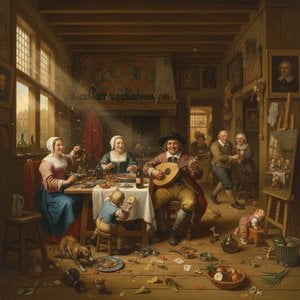
Jan Steen: A Master of Dutch Genre Painting & the Golden Age
Explore the life & art of Jan Steen, a leading Dutch Golden Age painter renowned for his humorous genre scenes & insightful social commentary. Discover his techniques, legacy, and collecting tips.

Illuminating Innovation: Exploring the Dutch Golden Age of Painting
Explore the Dutch Golden Age of painting with ArtsDot. Discover Rembrandt, Vermeer & other Masters. Learn about key characteristics, iconic artworks, and lasting influence. Expert insights for collectors & enthusiasts.



