

 Preview
 Send
Send Share
Share
 Details

 Download
 Similars
 X-Ray
X-Ray Diaporama
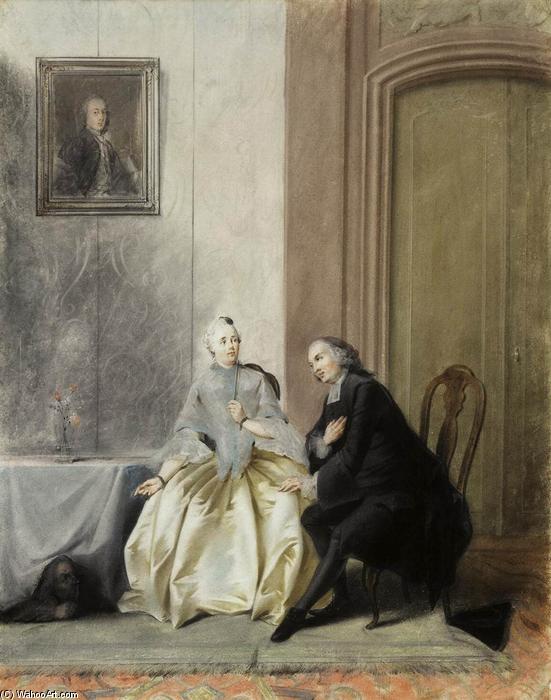
Scene from Molière's Tartuffe
 Rococo Style
 1795
1795 61.0 x 48.0 cm
 Hermitage Museum
 Read More
Hand Made Oil Reproduction
Hand-painted oil on canvas in your size and frame, made to order by our artists. ( Switch to Print Switch to Image)




P118B $10

P118H $10

P118W $10

P438Z $10

P508JH $12

P508YH $12

P805H $10

P805Z $10

P919BZ $10

P919G $10

P919XJ $10

P959ZH $10

P968JZ $12

W106C $8

W218G $10

W218JH $8

W218Y $10

W307PJ $10

W316G $10

W316PJ $8

W316Y $10

W398PJ $8

W4111J $10

W500HY $15

W500JH $15

W692G $12

W849H $8

W940BG $15

W953PJ $8




Pick from our preset sizes that match the artwork's original proportions.

You may enter your own dimensions to fit a specific frame or space. If your selected size does not match the original image's proportions, we will either crop the artwork or extend the painting with additional hand-painted elements. A digital mockup will be sent for your approval before production begins.
Please note that the on-screen preview does not reflect the actual cropping or extension. Only the mockup will accurately show the final composition.
While custom sizes are available, we recommend selecting a dimension from the predefined list to preserve the original proportions.
After order, ArtsDot.com team will email client for instructions and provide a mockup preview
Worldwide Delivery () in 3/4 weeks instead of standard 5 weeks. (8 August). No compromise on quality.

Free Worldwide Express Shipping

High-Quality Linen Canvas

Full Shipping Insurance

Customs Tax Refund Guarantee

True Color Matching Guarantee

60-Day Return Policy (Defects Only)

100% Money-Back Guarantee

Bulk Discount Offer
 Glass option is only available in size under 110 CM

Scene from Molière's Tartuffe
Reproduction Medium
Reproduction Size
-


Total Price
$ 263
Artwork Description
Artistic Style and Composition
The painting's composition is characterized by a soft and delicate appearance, thanks to the use of pastel. The artist's attention to detail is evident in the intricate facial expressions and body language of the characters. The scene depicts a moment from Molière's play Tartuffe, where two figures are engaged in a conversation or interaction. The woman, dressed in a yellow dress, appears to be listening or waiting for someone, while the man, kneeling beside her, conveys distress or sadness.Artist and Museum
Jacobus Buys was a Dutch painter and printmaker, known for his refined interior scenes and theatrical compositions. His work can be found in various museums, including The Hermitage, which houses an impressive collection of European art. To learn more about Jacobus Buys and his artwork, visit the ArtsDot.com website, which offers a wide range of information on artists and their paintings.- Pastel painting: A soft and delicate technique used by Jacobus Buys to create the Scene from Molière's Tartuffe.
- Theatrical composition: The painting's arrangement of characters and setting, which captures a moment from Molière's play.
- European art: The style and period of the painting, which can be found in museums such as The Hermitage.
The Scene from Molière's Tartuffe is a remarkable example of Jacobus Buys' skill in capturing the essence of a theatrical scene, and its beauty can be appreciated by art lovers around the world.
Related Artworks


Artist Biography
A Life Dedicated to Rococo Elegance: Jacobus Buys
Born in Amsterdam in 1724, Jacobus Buys emerged into a world steeped in the refined sensibilities of the Dutch Rococo period. His father, a wig-maker, provided a stable upbringing, though young Jacobus’s artistic inclinations quickly steered him toward a different path. He embarked on his formal training under Cornelis Pronk and later with Jacob de Wit, both established figures within Amsterdam's art circles. This early education laid the foundation for Buys’s distinctive style—a delicate balance between portraiture, theatrical scene painting, and an exquisite attention to detail that would define his career. He further honed his skills studying under Cornelis Troost, solidifying his mastery of technique and composition before eventually assuming a leadership role as director of the Amsterdam Drawing Academy.From Portraits to Playful Scenes: The Breadth of Buys’s Oeuvre
Buys was remarkably versatile, embracing a wide range of subjects throughout his artistic life. While he is perhaps best known for his elegant portraits, capturing the likenesses and social standing of Amsterdam's elite, his interests extended far beyond mere representation. He skillfully designed bas-reliefs and intricate tapestries, demonstrating an aptitude for decorative arts. A significant portion of his work involved creating book illustrations, showcasing a precision and narrative flair that appealed to a broader audience. However, it was his theatrical scenes—particularly those inspired by the works of Molière—that truly allowed Buys’s artistic personality to flourish. His pastel depiction of a scene from *Tartuffe*, now housed in The Hermitage Museum, is a testament to this passion. The work isn't simply an illustration; it’s a vibrant interpretation brimming with character and dramatic tension, revealing his deep understanding of both human psychology and the art of visual storytelling. He wasn’t merely copying plays but translating them into a visually compelling language that resonated with 18th-century audiences.Influences and Artistic Development
The influence of earlier Dutch masters is subtly present in Buys's work, particularly in his meticulous attention to detail and the use of light and shadow reminiscent of the Golden Age painters. However, he wasn’t simply replicating past styles; he synthesized these influences with the prevailing Rococo aesthetic sweeping across Europe. The lightness of palette, the graceful poses, and the emphasis on aristocratic leisure all point to a deliberate engagement with contemporary trends. His studies under Pronk and de Wit undoubtedly shaped his understanding of color theory and composition, while Troost likely instilled in him a deeper appreciation for portraiture techniques. Buys’s ability to seamlessly blend these influences—the Dutch tradition of realism with the French Rococo's emphasis on elegance and ornamentation—is what sets him apart. He also demonstrated an interest in copying works from renowned 17th-century artists, not as imitation but as a means of learning and refining his own skills.A Member of the Guild and Lasting Legacy
In 1750, Jacobus Buys achieved a significant milestone by becoming a member of Amsterdam's prestigious Guild of St Luke, solidifying his position within the city’s artistic community. This membership not only validated his skills but also opened doors to commissions from prominent patrons. He continued working diligently until his death in 1801, leaving behind a substantial body of work that offers valuable insights into Dutch society and artistic tastes during the late 18th century. While perhaps not as widely celebrated as some of his contemporaries, Buys’s contributions are increasingly recognized for their refined technique, elegant compositions, and insightful portrayals of both individuals and dramatic narratives. His paintings provide a window into a world of aristocratic leisure, theatrical spectacle, and the enduring power of storytelling through art. His legacy lies in his ability to capture the spirit of the Rococo era with grace, precision, and a distinctly Dutch sensibility.
jacobus buys
1724 - 1801 , Netherlands
Quick Facts
- Artistic Movement Or Style: Rococo
- Artists Who Influenced This Artist:
- Cornelis Pronk
- Jacob de Wit
- Cornelis Troost
- Date Of Birth: 1724 Amsterdam Netherlands
- Date Of Death: 1801 Amsterdam Netherlands
- Full Name: Jacobus Buys
- Nationality: Dutch
- Notable Artworks:
- Portrait of Elisabeth Troost
- Scene from Molière's Tartuffe
- Place Of Birth: Amsterdam Netherlands
Related Articles

Playful Masterpieces: Top 10 Artworks for a Joyful Home | ArtsDot
Find joy & inspiration! Explore 10 playful masterpieces by Monet, Matisse & more. Discover art history, vibrant colors & uplifting stories behind these iconic paintings. Museum-quality reproductions at ArtsDot.com – explore the full collection online!

Dutch Masters: 10 Golden Age Paintings That Still Inspire |
Journey into the Dutch Golden Age! Explore 10 iconic paintings by Rembrandt, Vermeer & Hals. Discover the stories behind these Baroque masterpieces and find museum-quality art reproductions to elevate your home decor on .
Jan Steen: A Master of Dutch Genre Painting & the Golden Age
Explore the life & art of Jan Steen, a leading Dutch Golden Age painter renowned for his humorous genre scenes & insightful social commentary. Discover his techniques, legacy, and collecting tips.

Golden Age Reflections: Dutch Baroque Painting & Cultural Innovation
Explore the Dutch Golden Age of painting! Discover key artists like Vermeer & ter Borch, their innovative techniques, and the rich cultural context behind these Baroque masterpieces. Learn about collecting & appreciating this iconic art period.

Charles Leickert: Capturing the Dutch Golden Age Light – A Comprehensive Study of Technique, Context, and Legacy
Explore the captivating winter landscapes of Charles Leickert, a master of Dutch Golden Age light & atmosphere. Discover his techniques, symbolism, and lasting legacy – a comprehensive study for art enthusiasts and collectors.



