Preview
 Send
Send Share
Share
 Details

 Download
 Similars
 X-Ray
X-Ray Diaporama
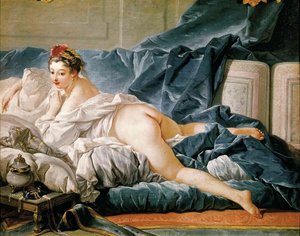
Leda And The Swan

 Read More
Hand Made Oil Reproduction
Hand-painted oil on canvas in your size and frame, made to order by our artists. ( Switch to Print Switch to Image)




P118B $10

P118H $10

P118W $10

P438Z $10

P508JH $12

P508YH $12

P805H $10

P805Z $10

P919BZ $10

P919G $10

P919XJ $10

P959ZH $10

P968JZ $12

W106C $8

W218G $10

W218JH $8

W218Y $10

W307PJ $10

W316G $10

W316PJ $8

W316Y $10

W398PJ $8

W4111J $10

W500HY $15

W500JH $15

W692G $12

W849H $8

W940BG $15

W953PJ $8




Pick from our preset sizes that match the artwork's original proportions.

You may enter your own dimensions to fit a specific frame or space. If your selected size does not match the original image's proportions, we will either crop the artwork or extend the painting with additional hand-painted elements. A digital mockup will be sent for your approval before production begins.
Please note that the on-screen preview does not reflect the actual cropping or extension. Only the mockup will accurately show the final composition.
While custom sizes are available, we recommend selecting a dimension from the predefined list to preserve the original proportions.
After order, ArtsDot.com team will email client for instructions and provide a mockup preview
Worldwide Delivery () in 3/4 weeks instead of standard 5 weeks. (9 August). No compromise on quality.

Free Worldwide Express Shipping

High-Quality Linen Canvas

Full Shipping Insurance

Customs Tax Refund Guarantee

True Color Matching Guarantee

60-Day Return Policy (Defects Only)

100% Money-Back Guarantee

Bulk Discount Offer
 Glass option is only available in size under 110 CM

Leda And The Swan
Reproduction Medium
Reproduction Size
-


Total Price
$ 263
Artwork Description
The Myth Behind Leda and the Swan
In Greek mythology, Leda was the wife of King Tyndareus of Sparta. According to legend, Zeus, the king of gods, transformed himself into a swan in order to seduce or rape her (depending on the version). From this union, two eggs were produced: one containing Helen and Polydeuces, children of Zeus; and another with Castor and Clytemnestra, children of Tyndareus.François Boucher's Interpretation
Boucher's "Leda and the Swan", painted in 1740, is a prime example of his mastery over the Rococo style. The painting depicts Leda lying on her back with the swan-shaped Zeus gently resting between her legs. Boucher's use of soft pastel colors and delicate brushstrokes creates an atmosphere of sensuality and intimacy, reflecting the romantic nature of the story.Influence and Legacy
Boucher's "Leda and the Swan" has had a significant impact on art history. It inspired numerous artists to create their own interpretations of this mythological tale, including Leonardo da Vinci, Michelangelo, and Peter Paul Rubens. The painting also showcases Boucher's skill as an artist who could capture the essence of a story through his unique style.Experience Leda and the Swan at ArtsDot
At ArtsDot, we offer high-quality reproductions of famous artworks, including Boucher's "Leda and the Swan". Our handmade oil paintings are crafted with precision and care to ensure that you receive a stunning piece of art for your home or office. Browse our collection today and discover the beauty of François Boucher's masterpiece!Conclusion
François Boucher's "Leda and the Swan" is a testament to his talent as an artist who could transform mythological tales into captivating visual narratives. This iconic painting continues to inspire artists and art enthusiasts alike, making it one of the most celebrated works in Western art history.References:
- François Boucher | ArtsDot - François Boucher [Wikipedia]### Response:Related Artworks




Artist Biography
François Boucher: A Life in Rococo
François Boucher (1703-1770) was a pivotal figure in 18th-century French art, renowned as one of the most celebrated painters of the Rococo era. His work embodies the elegance, sensuality, and playful spirit that defined this influential style.
Early Life and Training
Born on September 29, 1703, in Paris, France, François Boucher’s artistic journey began under the tutelage of his father, Jean Boucher, a painter himself. At the age of seventeen, he caught the eye of François Lemoyne, leading to a brief but impactful apprenticeship. He further honed his skills with engraver Jean-François Cars before achieving a significant milestone: winning the prestigious Grand Prix de Rome in 1720.
Rise to Prominence and Artistic Development
Boucher’s time in Italy, following his win at the Grand Prix, proved formative. Upon returning to France, he was admitted to the Académie Royale de Peinture et de Sculpture in 1731. His *morceau de réception*, “Rinaldo and Armida” (1734), immediately established him as a master of the Rococo style. This period saw his artistic voice fully emerge, characterized by delicate brushwork, pastel palettes, and an emphasis on mythological and pastoral themes.
Key Works and Themes
Boucher’s oeuvre is remarkably diverse, encompassing mythology, portraiture, genre scenes, and decorative arts. Some of his most celebrated works include:
- “The Breakfast” (1739): A charming depiction of domestic life featuring his wife and children.
- “The Triumph of Venus” (1740-1751): A series of paintings showcasing Boucher’s mastery of mythological narratives.
- Numerous portraits of Madame de Pompadour, the influential mistress of King Louis XV, solidifying his position at court.
- Landscape paintings like “The Setting of the Sun”, demonstrating a lyrical and idyllic vision of nature.
Recurring themes in Boucher’s work include love, beauty, leisure, and the idealized world of mythology. His paintings often evoke a sense of playful eroticism and refined elegance.
Influence and Legacy
Boucher's influence extended far beyond painting. He designed costumes and sets for the theater, created tapestries for the Beauvais workshops, and collaborated with the Gobelins Manufactory. His appointment as *Premier Peintre du Roi* in 1765 cemented his status as the leading artist of the French Rococo.
While later critics questioned the perceived superficiality of Rococo art, Boucher’s impact on subsequent generations is undeniable. He influenced artists such as Jean-Honoré Fragonard and contributed significantly to the development of Neoclassicism through his students.
Historical Significance
François Boucher's work provides a valuable window into the tastes and values of 18th-century French society. His paintings reflect the aristocratic culture of the era, characterized by luxury, refinement, and a pursuit of pleasure. He remains a significant figure in art history, celebrated for his technical skill, artistic innovation, and enduring contribution to the Rococo style.

François Boucher
1703 - 1770 , France
Quick Facts
- Birth Date: September 29, 1703
- Birth Place: Paris, France
- Death Date: 1770
- Influenced By: François Lemoyne, Jean-François Cars
- Movement: Rococo
- Name: François Boucher
- Nationality: French
- Notable Works:
- Rinaldo and Armida
- The Breakfast
- Madame Boucher
- The Setting of the Sun
- Vulcan Presenting Venus with Arms for Aeneas
Related Articles

The Barbizon School: Pioneering Realism & the Pastoral Vision in 19th-Century French Painting
Explore the Barbizon School's pivotal role in 19th-century French painting. Discover how these artists revolutionized landscape art with their commitment to Realism and a profound connection to nature. Learn about key figures like Rousseau, Millet & Corot.

Reflections of Power: Aristocratic Life in Western Art & the Rococo Era
Explore the captivating world of aristocratic life through Western art history. Discover Rococo masterpieces & portraits of European nobility. Expert insights for collectors and enthusiasts.

The Rococo Style: Aristocratic Leisure & the Pursuit of Delight in 18th-Century Art
Explore the opulent world of Rococo art! Discover Watteau, Boucher & Nattier's masterpieces. Expert insights for collectors seeking museum-quality reproductions and custom portraits at ArtsDot.

The Rococo Aesthetic: Opulence, Rebellion & the Pursuit of Pleasure in 18th-Century Art
Explore the opulent world of Rococo art! Discover its origins, key artists like Watteau & Boucher, and lasting influence on design. Expert insights for collectors & enthusiasts.

Echoes of Olympus: Mythological Narratives in Western Art Through the Ages
Explore the captivating history of mythological narratives in Western art! From ancient Greece to modern masterpieces, discover iconic artworks & symbolism. Expert analysis and high-quality reproductions at ArtsDot.