
Distorted Red Square-Circle

- 40.0 x 40.0 cm


The picture follows your choices: , .
Artist Biography
Robert Mangold (b. 1937) is a leading American minimalist painter renowned for shaped canvases, geometric abstraction & subtle color fields. Explore his influential work challenging traditional painting boundaries.
 Read More
This Artwork Is Under Copyright Protection
The artwork displayed on this page is protected by copyright law, which means we cannot legally create or sell an identical reproduction. This protection is enforced under international agreements such as the Berne Convention and by national laws, including those outlined by the U.S. Copyright Law - Title 17.
As a respectful and legal alternative, we offer custom, hand-painted artworks inspired by the original. Our skilled and professional artists carefully study the original's style, mood, and artistic essence to create a new, unique piece that evokes the same feeling - while remaining an original creation in its own right.
This method fully complies with copyright regulations because it does not involve copying or duplicating the protected artwork. Instead, it is a creative reinterpretation - a new painting that is influenced by the original but not identical to it.
Order your in four simple steps
Take your time. You can change any answer; the price in your order card follows each choice.
1 Step one of four
On which medium should it be printed?
Canvas is printed with giclée inks and can be stretched or framed like a painting; paper comes flat, or framed behind glass.
2 Step two of four
Which size would you like?
These sizes keep the proportions of the original painting. The drawing shows your choice on a wall, above a two-metre sofa.
Or give your own measurements
Pick from our preset sizes that match the artwork's original proportions.

Type the width and the height you need, to fit your frame or your wall. A print can only be cut, never made bigger than the picture, so a size with a different shape loses a part of the image. We send you a digital mockup to approve before we print anything. The picture shown on this page does not show the real cut — only the mockup does.
3 Step three of four
How should it be prepared: rolled, stretched or framed?
The prices below are for the size you chose in step one.
Choose the edges of the stretched canvas
Choose your frame

White $1

Blurside $1

Extended $1

P118B $10

P118H $10

P118W $10

P438Z $10

P508JH $12

P508YH $12

P805H $10

P805Z $10

P919BZ $10

P919G $10

P919XJ $10

P959ZH $10

P968JZ $12

W106C $8

W218G $10

W218JH $8

W218Y $10

W307PJ $10

W316G $10

W316PJ $8

W316Y $10

W398PJ $8

W4111J $10

W500HY $15

W500JH $15

W692G $12

W849H $8

W940BG $15

W953PJ $8

H24-GOLD $30

H24-SILVER $30

H36-GOLD $45

H36-SILVER $45
Framed
Moulding: . Overall size with the frame: .
4 Step four of four
A few finishing options
All of them are optional. The answers already selected cost nothing extra.
Worldwide Delivery () in 2 weeks instead of standard 4/5 weeks. (21 November)
A nameplate, as in a museum?
Engraved Bronze Plaque Details
This elegant plaque features the artist's name and the title of the artwork, finely engraved for a timeless presentation.
It is made from bronze with a refined, elegant finish. The text is precisely laser-engraved for a sharp and permanent result. Measuring 9x2 cm, the plaque is compact yet easy to read. It's built to be durable and scratch-resistant, offering a professional, museum-quality look. Mounting is simple thanks to the included adhesive backing.
Transparent Acrylic Plaque Details
The plaque includes essential engraved details such as the artist's name, the title of the artwork, the date it was created, the type of media used-like oil on canvas or watercolor-a brief description of the piece, and a QR code that links to the complete artwork information.
It is crafted from clear acrylic, offering a sleek, modern appearance. The text is UV-engraved in black to ensure strong visual contrast. With a size of 10x15 cm, it ensures optimal readability. It comes equipped with two metal hooks for secure wall mounting. The plaque is designed to be weather-resistant, making it suitable for various environments, and it includes interactive features that work seamlessly with smartphone scanning.
Black Acrylic Plaque Details
This elegant plaque includes engraved information such as the artist's name, the title of the artwork, the date it was created, the type of media used (like oil on canvas or watercolor), a short description of the artwork, and a QR code for quick access to more information.
The plaque itself is made from refined black acrylic with a premium finish. The text is laser-engraved in white for high contrast and readability. Its size is 10x15 cm, designed to be easy to read. It comes with two metal hooks for professional mounting. The design is sleek and fits any interior style. It is also weather-resistant and durable, with built-in digital integration for mobile compatibility.
A protective varnish?
When do you need it?
✓ Check and order
Your print, as you ordered it

Distorted Red Square-Circle
Reproduction Medium
Reproduction Size
-

Reproduction Frame
-
-
For artworks or reproductions larger than 105 cm (approximately 41 inches) on any side, the frame will be shipped as a kit, disassembled. This method ensures safe delivery and prevents damage during transport.
Professional assembly required - this is not a DIY product.
The kit must be assembled and the canvas stretched by an experienced professional framer, using wood glue (not supplied), a canvas stretching plier and clamps to hold the bars square while the glue dries. Incorrect assembly or uneven canvas tension can permanently damage the artwork and is not covered by our warranty.
 For artworks or reproductions larger than 105 cm (approximately 41 inches) on any side, the frame will be shipped as a kit, disassembled. This method ensures safe delivery and prevents damage during transport.
All solid wood bars are included, precisely cut to size.
Assembled with the screws provided, plus wood glue for the corner joints, which is not supplied and must be sourced by your framer.
Professional tools are required and not included: a canvas stretching plier (tensioner) and clamps to hold the bars square while the glue dries.
Important:
The corner joints require wood glue, the bars must be held with clamps until the glue is fully dry, and tightening the canvas on the assembled frame requires a canvas stretching plier. None of these are included in the kit. Please arrange an experienced professional framer before ordering this size.

Nameplate
-
-

Protective Varnish
Glossy Varnish (enhances colors, protects against light/moisture)
-

Urgent
Worldwide Delivery () in 2 weeks instead of standard 4/5 weeks. (21 November)
-
Express Shipping
Worldwide Delivery () in 4/5 weeks. (28 November).
Included
Total Price
$ 63
Glass option is only available in size under 110 CM
Included with every order
- Free Worldwide Express Shipping
- High-Quality Linen Canvas
- Full Shipping Insurance
- Customs Tax Refund Guarantee
- True Color Matching Guarantee
- 100-Day Return Policy (Defects Only)
- 100% Money-Back Guarantee
- Bulk Discount Offer


More about this painting
 Preview
 Buy Hand Made Painting
 Send
Send Share
Share
 Details
 Guide
Guide

 Download
 Similars
 X-Ray
X-Ray Diaporama
 Q&A
Q&A Stats
StatsRelated Artworks


Robert Mangold
1937 - , United States of America
Artist Biography
A Quiet Revolution in Form: The World of Robert Mangold
Robert Mangold emerged as a pivotal figure in the American art landscape of the 1960s, though his impact wasn’t one of bombast or overt gesture. Instead, it was a quiet revolution—a subtle dismantling of traditional painting conventions that paved the way for new explorations of form, color, and perception. Born in North Tonawanda, New York, in 1937, Mangold's path to becoming a leading minimalist painter wasn’t immediately clear. He initially pursued engineering studies before recognizing the compelling pull of artistic expression, ultimately earning degrees from the University of Buffalo and Yale University School of Art. This early exposure to technical disciplines perhaps informed his later meticulous approach to painting, where precision and conceptual rigor are paramount. Mangold's journey began within the shadow of Abstract Expressionism, but he quickly discerned a desire for something more restrained, more intellectual—a move away from the subjective emotionality toward an objective exploration of the fundamental elements of art.The Influence of Pioneers and the Birth of a Style
Mangold’s artistic development was profoundly shaped by encounters with the giants of abstraction who preceded him. The austere geometries of Kazimir Malevich, the carefully calibrated compositions of Piet Mondrian, and the expansive color fields of Barnett Newman all resonated deeply, providing a foundation for his own unique vision. He wasn’t simply imitating these masters; rather, he was absorbing their core principles—the reduction to essential forms, the emphasis on flatness, the exploration of spatial relationships—and reinterpreting them through a distinctly contemporary lens. This period marked a deliberate rejection of the gestural intensity that characterized Abstract Expressionism. Mangold sought to eliminate any trace of the artist’s hand, striving for a sense of impersonal objectivity. It was in this pursuit that he began experimenting with shaped canvases – a defining characteristic of his mature style. These weren't arbitrary forms; they were carefully considered interventions, challenging the very notion of what a painting *could* be.Shaped Canvases and Conceptual Rigor
The introduction of shaped canvases wasn’t merely an aesthetic choice for Mangold; it was a conceptual one. By abandoning the traditional rectangular format, he disrupted the established relationship between image and support, forcing viewers to confront the physicality of the painting as an object in space. His compositions typically feature geometric abstraction—simplified shapes and lines arranged with meticulous precision. These forms aren’t representational; they don't refer to anything outside themselves. Instead, they exist purely as arrangements of color and line, inviting contemplation of their inherent qualities. Mangold’s palette is often muted, favoring subtle pastel tones that create atmospheric effects without overwhelming the viewer. This restraint extends to his technique: surfaces are smooth and even, devoid of brushstrokes or any other evidence of manual manipulation. The result is a sense of serene detachment—a painting that feels both present and remote, inviting prolonged observation. Major series like the Plane/Figure Series, with its explorations of divided canvas compositions, and the Ring Series, featuring circular forms within rectangular fields, demonstrate his consistent engagement with these core principles.Legacy and Lasting Impact
Robert Mangold’s influence on contemporary art is undeniable. He played a crucial role in shaping the development of minimalist painting, expanding the possibilities of abstract art and challenging conventional notions of representation. Alongside artists like Robert Ryman, he represents the heart of minimalist painting—a commitment to conceptual rigor and formal reduction. His work has been widely exhibited in museums and galleries around the world, finding homes in prominent collections such as The Museum of Modern Art and The Metropolitan Museum of Art in New York, and The Tate Modern in London. Beyond his paintings, Mangold’s explorations extended into wall paintings, large-scale works designed to interact with architectural spaces, and the Column Structure Series, which investigated verticality and spatial relationships. His legacy isn't simply about the specific forms he created; it’s about the questions he raised—questions that continue to resonate with artists today who grapple with the fundamental elements of art and the possibilities of abstraction. He demonstrated that profound artistic expression could emerge not from grand gestures, but from a quiet, persistent exploration of form and color.


Related Articles

The Weight of Emotion: Analyzing Color and Distortion in German Expressionist Art
Explore the raw emotion and distorted forms of German Expressionism through expert analysis. Discover the power of color and technique today.
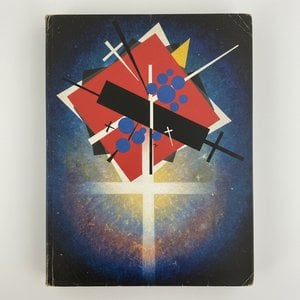
Beyond Representation: Exploring the Radical Geometry of Suprematism & Its Spiritual Foundations
Explore the revolutionary world of Suprematism with our expert guide. Discover Kazimir Malevich's groundbreaking art, its spiritual foundations & lasting influence on modern design. Learn about collecting this iconic movement.