


 Preview
 Send
Send Share
Share
 Details

 Download
 Similars
 X-Ray
X-Ray Diaporama
Ignudo (16)


 Read More
Hand Made Oil Reproduction
Hand-painted oil on canvas in your size and frame, made to order by our artists. ( Switch to Print Switch to Image)




P118B $10

P118H $10

P118W $10

P438Z $10

P508JH $12

P508YH $12

P805H $10

P805Z $10

P919BZ $10

P919G $10

P919XJ $10

P959ZH $10

P968JZ $12

W106C $8

W218G $10

W218JH $8

W218Y $10

W307PJ $10

W316G $10

W316PJ $8

W316Y $10

W398PJ $8

W4111J $10

W500HY $15

W500JH $15

W692G $12

W849H $8

W940BG $15

W953PJ $8




Pick from our preset sizes that match the artwork's original proportions.

You may enter your own dimensions to fit a specific frame or space. If your selected size does not match the original image's proportions, we will either crop the artwork or extend the painting with additional hand-painted elements. A digital mockup will be sent for your approval before production begins.
Please note that the on-screen preview does not reflect the actual cropping or extension. Only the mockup will accurately show the final composition.
While custom sizes are available, we recommend selecting a dimension from the predefined list to preserve the original proportions.
After order, ArtsDot.com team will email client for instructions and provide a mockup preview
Worldwide Delivery () in 3/4 weeks instead of standard 5 weeks. (10 August). No compromise on quality.

Free Worldwide Express Shipping

High-Quality Linen Canvas

Full Shipping Insurance

Customs Tax Refund Guarantee

True Color Matching Guarantee

60-Day Return Policy (Defects Only)

100% Money-Back Guarantee

Bulk Discount Offer
 Glass option is only available in size under 110 CM

Ignudo (16)
Reproduction Medium
Reproduction Size
-


Total Price
$ 263
Artwork Description
Michelangelo Buonarroti: The Genius Behind Ignudo
Michelangelo Buonarroti (1475–1564), arguably the most influential artist of the High Renaissance, remains an enigma to scholars and admirers alike. Born in Caprese Michelangelo, Tuscany, his early life was marked by familial hardship and a profound connection to the Florentine artistic landscape—a connection that would irrevocably shape his extraordinary creative output. Unlike many artists of his time who pursued multiple disciplines, Michelangelo steadfastly dedicated himself to sculpture, painting, and architecture, achieving unparalleled mastery in each field and leaving an indelible mark on Western art history. His unwavering belief in the power of disegno—the humanist concept of innate artistic talent—guided him throughout his prolific career, propelling him to create masterpieces that continue to inspire awe and contemplation centuries later.- Early Influences: Michelangelo’s formative years were steeped in Classical ideals championed by Filippo Brunelleschi and Leon Battista Alberti. These figures instilled in him a reverence for proportion, harmony, and the pursuit of idealized beauty—principles that would permeate his artistic endeavors.
- The Quarry Years: Spending time with his father's marble quarry in Settignano fostered an instinctive understanding of stone’s transformative potential. This experience honed his sculptural skills and instilled within him a lifelong fascination for manipulating materials to convey emotion and form.
The Sistine Chapel Ceiling: A Monumental Achievement
Commissioned by Pope Julius II in 1508, the Sistine Chapel ceiling project represents Michelangelo’s zenith of artistic ambition and technical prowess. Facing immense pressure to deliver a monumental undertaking within a remarkably short timeframe—a challenge compounded by logistical difficulties—Michelangelo persevered with unwavering determination, transforming into an almost superhuman figure during this period. The fresco cycle depicts scenes from Genesis, capturing the drama and grandeur of biblical narratives with breathtaking detail and expressive dynamism. Michelangelo’s innovative use of pigment and brushwork—particularly his masterful application of sfumato—created a luminous surface that conveyed depth and emotion with unparalleled subtlety.- Technique: Michelangelo employed fresco technique, applying pigments directly onto wet plaster, ensuring durability and preserving the artwork for posterity.
- Composition & Perspective: The ceiling’s intricate composition utilizes linear perspective to create a convincing illusion of space, drawing viewers into the biblical drama unfolding before their eyes.
Ignudo (16): A Study in Human Form
Among Michelangelo's numerous sculptures and paintings, Ignudo (16), created in 1511, stands as a particularly poignant testament to his artistic vision. This marble statue depicts a seated man with crossed legs—a pose that embodies both physical stillness and profound contemplation. The figure’s drapery is rendered with meticulous attention to detail, conveying texture and movement through subtle folds and creases. Michelangelo skillfully captures the human form in its idealized state, reflecting Classical ideals of beauty and proportion.- Symbolism: The statue's posture symbolizes introspection and spiritual reflection—themes central to Renaissance humanist thought.
- Material & Texture: Michelangelo’s masterful manipulation of marble demonstrates his unparalleled understanding of material properties and his ability to translate sculptural concepts into tangible form.
Legacy and Influence
Michelangelo Buonarroti's legacy extends far beyond the Sistine Chapel ceiling and Ignudo (16). His artistic innovations profoundly impacted subsequent generations of artists, establishing Mannerism as a dominant stylistic trend and inspiring countless imitators. More importantly, Michelangelo’s unwavering belief in disegno—the innate capacity for artistic talent—continues to resonate with artists today, reminding us that true creativity stems from an inner conviction and a dedication to mastering one's craft. His work remains a beacon of inspiration, demonstrating the transformative power of art to elevate human experience and capture the sublime beauty of the natural world.Related Artworks


Artist Biography
A Renaissance Forged in Stone and Paint
Michelangelo Buonarroti, a name synonymous with the High Renaissance, resonates through centuries as a testament to human artistic potential. Born on March 6, 1475, in Caprese Michelangelo, nestled in the Tuscan hills of Italy, his life was an extraordinary convergence of talent, ambition, and divine inspiration. Though initially met with resistance from his father regarding an artistic path, young Michelangelo’s innate gift for drawing proved undeniable, setting him on a course to redefine the boundaries of sculpture, painting, and architecture. His early apprenticeship under Domenico Ghirlandaio provided foundational skills in fresco and draftsmanship, but it was within the Medici gardens—a haven of classical antiquity—that his artistic soul truly awakened. Immersed in the study of Greek and Roman sculptures, Michelangelo absorbed the principles of anatomy, proportion, and idealized beauty that would become hallmarks of his style. This formative period wasn’t merely technical training; it was a philosophical immersion into the humanist ideals blossoming during the Renaissance, an emphasis on human dignity and potential that profoundly shaped his artistic vision.From Pietà's Sorrow to David's Strength
Michelangelo’s ascent in the art world was remarkably swift. By 1496, he had journeyed to Rome, where he received his first major commission: the sculpture of the *Pietà*. Completed in 1499 for Cardinal Jean de Bilhères, this breathtaking marble masterpiece—now housed within St. Peter’s Basilica—immediately established Michelangelo as a sculptor of unparalleled skill and emotional depth. The serene beauty and poignant sorrow captured in Mary's face cradling the body of Christ were revolutionary, demonstrating an ability to imbue cold stone with profound human feeling. This early success paved the way for his next monumental undertaking: *David*. Carved between 1501 and 1504 from a single block of Carrara marble, the over seventeen-foot statue became a symbol of Florentine republican ideals—a defiant embodiment of strength, courage, and civic virtue. The anatomical accuracy, dynamic pose, and psychological intensity of *David* were unprecedented, solidifying Michelangelo’s reputation as a master sculptor capable of bringing stone to life. It wasn't simply the scale that impressed; it was the palpable sense of contained energy, the anticipation of action frozen in marble, that captivated viewers then and continues to do so today.The Sistine Chapel: A Divine Canvas
Perhaps Michelangelo’s most enduring legacy lies within the walls of the Sistine Chapel. In 1508, Pope Julius II commissioned him to paint the chapel ceiling—a task that would consume four years of his life and forever alter the course of Western art. Initially reluctant, viewing himself primarily as a sculptor, Michelangelo nonetheless accepted the challenge, embarking on a monumental fresco cycle depicting scenes from Genesis. Working in arduous conditions, often lying on his back for hours, he painted over 300 figures with breathtaking detail and compositional brilliance. *The Creation of Adam*, arguably the most iconic image from the chapel ceiling, captures the divine spark passing between God and humanity—a powerful symbol of creation and potential. Beyond this famous panel, the entire cycle is a testament to Michelangelo’s narrative power, his mastery of anatomy, and his ability to convey complex theological concepts through visual storytelling. Simultaneously, he began work on Pope Julius II's tomb – an ambitious project that would remain unfinished in its original grandeur, yet yielded powerful sculptures like *Moses*.Architecture, Mannerism, and a Lasting Influence
In the later years of his life, Michelangelo’s talents extended to architecture. In 1520, he became architect of St. Peter’s Basilica in Rome, significantly altering Bramante’s original design with a more imposing and structurally sound plan. This transition marked a shift towards Mannerism—a style characterized by elongated forms, exaggerated poses, and dramatic compositions. This stylistic evolution is vividly apparent in *The Last Judgment*, painted on the altar wall of the Sistine Chapel between 1536 and 1541. The fresco depicts the Second Coming of Christ with an overwhelming sense of drama and emotional intensity, reflecting a more turbulent spiritual climate. Michelangelo’s influence extended far beyond his own lifetime. He profoundly impacted both High Renaissance and Mannerist art movements, inspiring generations of artists with his anatomical accuracy, dynamic compositions, and profound exploration of the human condition.A Legacy Etched in Time
Michelangelo died on February 18, 1564, in Rome, leaving behind an unparalleled body of work that continues to captivate and inspire. He remains a towering figure in art history—the quintessential “Renaissance man”—whose sculptures, paintings, and architectural designs have shaped our understanding of beauty, power, and human potential. His legacy is not merely one of artistic achievement; it’s a testament to the enduring power of creativity, dedication, and the relentless pursuit of perfection. He demonstrated that art could transcend mere representation, becoming a vehicle for profound spiritual and emotional expression. The echoes of his genius resonate in museums and churches around the world, ensuring that Michelangelo Buonarroti will forever be remembered as one of the greatest artists who ever lived.- Influences: Classical Antiquity (Greek & Roman sculpture), Renaissance Humanism, Florentine artistic tradition (Donatello, Masaccio).
- Key Works: *Pietà*, *David*, Sistine Chapel ceiling frescoes (*The Creation of Adam*), *The Last Judgment*, Tomb of Julius II.
- Artistic Style: Initially Classical Idealism, evolving towards a dynamic and expressive Mannerism.

Michelangelo Buonarroti
1475 - 1564 , Italy
Quick Facts
- Artistic Movement Or Style: High Renaissance, Mannerism
- Artists Or Movements Influenced By This Artist:
- High Renaissance
- Mannerism
- Artists Who Influenced This Artist:
- Donatello
- Masaccio
- Date Of Birth: March 6, 1475
- Date Of Death: February 18, 1564
- Full Name: Michelangelo Buonarroti
- Nationality: Italian
- Notable Artworks:
- David
- Pietà
- Sistine Chapel frescoes
- Place Of Birth: Caprese, Italy
Related Articles

Michelangelo's Masterpieces: Explore 25 Iconic Artworks for Your Home | ArtsDot
Journey through Michelangelo's 25 greatest artworks – from David’s strength to the Sistine Chapel’s beauty. Explore Renaissance masterpieces, art history & find museum-quality reproductions for your home at ArtsDot.com.

Bronze Sculptures That Defined Art History | ArtsDot
Journey through art history with our Top 10 bronze sculptures! Explore masterpieces by Rodin, Michelangelo & more. Discover stories behind iconic statues and find museum-quality reproductions for your home decor at ArtsDot.com.

Bronze Age to Modern Masters: 10 Sculptures That Redefined Art | ArtsDot
Journey through art history with 10 legendary bronze sculptures – from Michelangelo's David to Rodin’s Thinker. Explore the stories, techniques & timeless beauty of these masterpieces. Find museum-quality reproductions & elevate your home decor on ArtsDot.com.
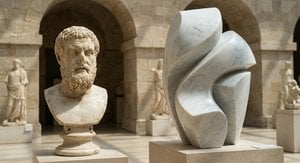
The Enduring Allure of Marble in Art History: From Classical Sculpture to Modern Abstraction
Explore the captivating history of marble sculpture from ancient Greece to modern art. Discover renowned artists like Canova & Michelangelo, carving techniques, and investment insights at ArtsDot.

The Enduring Form: Exploring Themes & Techniques in Sculpture Across Historical Periods
Explore the rich history of sculpture from ancient masterpieces to contemporary innovations. Discover key techniques, influential artists & investment potential for discerning art collectors.



