
Spatial Concept

- 85.0 x 125.0 cm


The picture follows your choices: , .
Collectible Description
Explore a unique private collection of paintings, sculptures & drawings by Antonio Boschi & Marieda Di Stefano in Milan.
 Read More
Artist Biography
Founder of Spatialism, Lucio Fontana is famous for his iconic slashed canvases. Discover his revolutionary art today.
This Artwork Is Under Copyright Protection
The artwork displayed on this page is protected by copyright law, which means we cannot legally create or sell an identical reproduction. This protection is enforced under international agreements such as the Berne Convention and by national laws, including those outlined by the U.S. Copyright Law - Title 17.
As a respectful and legal alternative, we offer custom, hand-painted artworks inspired by the original. Our skilled and professional artists carefully study the original's style, mood, and artistic essence to create a new, unique piece that evokes the same feeling - while remaining an original creation in its own right.
This method fully complies with copyright regulations because it does not involve copying or duplicating the protected artwork. Instead, it is a creative reinterpretation - a new painting that is influenced by the original but not identical to it.
Order your in four simple steps
Take your time. You can change any answer; the price in your order card follows each choice.
1 Step one of four
Which size would you like?
These sizes keep the proportions of the original painting. The drawing shows your choice on a wall, above a two-metre sofa.
Or give your own measurements
Pick from our preset sizes that match the artwork's original proportions.

Type the width and the height you need, to fit your frame or your wall. This is hand-painted, so for a size with a different shape the artist can paint a bit more around the picture, or cut a bit — you choose. We send you a digital mockup to approve before the painting starts. The picture shown on this page does not show the real result — only the mockup does.
2 Step two of four
How should it be prepared: rolled, stretched or framed?
The prices below are for the size you chose in step one.
Choose the edges of the stretched canvas
Choose your frame

White $1

Blurside $1

Extended $1

P118B $10

P118H $10

P118W $10

P438Z $10

P508JH $12

P508YH $12

P805H $10

P805Z $10

P919BZ $10

P919G $10

P919XJ $10

P959ZH $10

P968JZ $12

W106C $8

W218G $10

W218JH $8

W218Y $10

W307PJ $10

W316G $10

W316PJ $8

W316Y $10

W398PJ $8

W4111J $10

W500HY $15

W500JH $15

W692G $12

W849H $8

W940BG $15

W953PJ $8

H24-GOLD $30

H24-SILVER $30

H36-GOLD $45

H36-SILVER $45
Framed
Moulding: . Overall size with the frame: .
3 Step three of four
Would you like anything changed in the painting?
Most people answer no. Because each painting is made by hand, our artist can also adapt it for you.
After order, ArtsDot.com team will email client for instructions and provide a mockup preview
4 Step four of four
A few finishing options
All of them are optional. The answers already selected cost nothing extra.
Who paints it?
Worldwide Delivery () in 3/4 weeks instead of standard 5 weeks. (20 November). No compromise on quality.
A nameplate, as in a museum?
Engraved Bronze Plaque Details
This elegant plaque features the artist's name and the title of the artwork, finely engraved for a timeless presentation.
It is made from bronze with a refined, elegant finish. The text is precisely laser-engraved for a sharp and permanent result. Measuring 9x2 cm, the plaque is compact yet easy to read. It's built to be durable and scratch-resistant, offering a professional, museum-quality look. Mounting is simple thanks to the included adhesive backing.
Transparent Acrylic Plaque Details
The plaque includes essential engraved details such as the artist's name, the title of the artwork, the date it was created, the type of media used-like oil on canvas or watercolor-a brief description of the piece, and a QR code that links to the complete artwork information.
It is crafted from clear acrylic, offering a sleek, modern appearance. The text is UV-engraved in black to ensure strong visual contrast. With a size of 10x15 cm, it ensures optimal readability. It comes equipped with two metal hooks for secure wall mounting. The plaque is designed to be weather-resistant, making it suitable for various environments, and it includes interactive features that work seamlessly with smartphone scanning.
Black Acrylic Plaque Details
This elegant plaque includes engraved information such as the artist's name, the title of the artwork, the date it was created, the type of media used (like oil on canvas or watercolor), a short description of the artwork, and a QR code for quick access to more information.
The plaque itself is made from refined black acrylic with a premium finish. The text is laser-engraved in white for high contrast and readability. Its size is 10x15 cm, designed to be easy to read. It comes with two metal hooks for professional mounting. The design is sleek and fits any interior style. It is also weather-resistant and durable, with built-in digital integration for mobile compatibility.
A protective varnish?
When do you need it?
✓ Check and order
Your painting, as you ordered it

Spatial Concept
Reproduction Medium
Reproduction Size
-

Elite Senior Artist
More detail, finesse, and extra production time
-

Reproduction Frame
-
-
For artworks or reproductions larger than 105 cm (approximately 41 inches) on any side, the frame will be shipped as a kit, disassembled. This method ensures safe delivery and prevents damage during transport.
Professional assembly required - this is not a DIY product.
The kit must be assembled and the canvas stretched by an experienced professional framer, using wood glue (not supplied), a canvas stretching plier and clamps to hold the bars square while the glue dries. Incorrect assembly or uneven canvas tension can permanently damage the artwork and is not covered by our warranty.
 For artworks or reproductions larger than 105 cm (approximately 41 inches) on any side, the frame will be shipped as a kit, disassembled. This method ensures safe delivery and prevents damage during transport.
All solid wood bars are included, precisely cut to size.
Assembled with the screws provided, plus wood glue for the corner joints, which is not supplied and must be sourced by your framer.
Professional tools are required and not included: a canvas stretching plier (tensioner) and clamps to hold the bars square while the glue dries.
Important:
The corner joints require wood glue, the bars must be held with clamps until the glue is fully dry, and tightening the canvas on the assembled frame requires a canvas stretching plier. None of these are included in the kit. Please arrange an experienced professional framer before ordering this size.

Nameplate
-
-

Protective Varnish
Glossy Varnish (enhances colors, protects against light/moisture)
-

Customize My Artwork
Examples of what can be changed: Replace face with customer photo; Add pet (e.g., replace cat with dog); Include hidden message in background; Change background landscape or elements.
-

Urgent
Worldwide Delivery () in 3/4 weeks instead of standard 5 weeks. (20 November). No compromise on quality.
-
Express Shipping
Worldwide Delivery () in 5 weeks. (27 November).
Included
Total Price
$ 263
Glass option is only available in size under 110 CM
Included with every order
- Free Worldwide Express Shipping
- High-Quality Linen Canvas
- Full Shipping Insurance
- Customs Tax Refund Guarantee
- True Color Matching Guarantee
- 100-Day Return Policy (Defects Only)
- 100% Money-Back Guarantee
- Bulk Discount Offer


A Pioneering Leap into Spatial Perception
Lucio Fontana’s “Spatial Concept,” created in 1956, stands as a cornerstone of Spatialism—a movement that fundamentally challenged the conventions of Western painting and envisioned art as an active participant in shaping our understanding of space and time. More than just pigment on canvas, this mixed media masterpiece embodies Fontana's audacious ambition to transcend illusionistic representation and engage with the very fabric of reality.
The Genesis of Spatialism
Born in Rosario, Argentina, in 1899, Lucio Fontana’s artistic journey began amidst the burgeoning avant-garde fervor of Europe. Influenced by Futurism's embrace of dynamism and technological advancement, Fontana sought to liberate art from the constraints of traditional perspective—a pursuit that culminated in Spatial Concept and cemented his position as a visionary innovator.
Composition and Technique: Breaking Boundaries
The painting’s dominant hue is a serene blue, accented by subtle greens that contribute to an atmosphere of contemplative depth. Scattered throughout the scene are meticulously placed objects—small circles rendered in pink and red—that punctuate the expanse of color. However, Fontana's genius lies not merely in his palette but in his groundbreaking technique: he employed a combination of pigment and perforations into stretched canvas. These incisions weren’t simply decorative; they represented a deliberate rupture with established artistic conventions, symbolizing an opening onto an infinite realm beyond visual perception.
Symbolism and Conceptual Depth
Spatial Concept speaks to Fontana's profound belief in the interconnectedness of art and science—a conviction rooted in his desire to propel humanity into the future. The perforations serve as a metaphor for exploration, pushing against boundaries and inviting contemplation about the nature of existence itself. As Fontana famously declared, “I want to break through,” reflecting the movement’s core ethos: to dismantle illusion and embrace the tangible reality of space.
A Legacy Enduring Influence
Displayed prominently at the Boschi Di Stefano House Museum in Milan, Spatial Concept continues to inspire artists and collectors alike. Its enduring appeal resides in its ability to capture a moment of artistic liberation—a bold assertion that art could transcend representation and engage directly with our sensory experience. Fontana’s pioneering work remains a testament to the transformative power of imagination and innovation.
Questions & Answers
What luminance does "Spatial Concept" by Lucio Fontana have?
"Spatial Concept" by Lucio Fontana has a soft shadow luminance. Luminance describes how much light the colors appear to reflect.
What orientation does "Spatial Concept" by Lucio Fontana have?
The format of "Spatial Concept" is landscape. This is useful when planning where a reproduction will be placed.
What style does "Spatial Concept" belong to?
The movement associated with "Spatial Concept" by Lucio Fontana is Spatialism. This classification situates the work among related artists and artworks.
More about this painting
 Preview
 Switch to Print
 Send
Send Share
Share
 Details
 Guide
Guide

 Download
 Similars
 X-Ray
X-Ray Diaporama
 Q&A
Q&A Stats
StatsRelated Artworks


Lucio Fontana
1899 - 1968, Argentina
Artist Biography
The Early Life of Lucio Fontana
To understand the radical shifts in mid-century abstraction, one must look back to the specific origins of Lucio Fontana. Born on 19 February 1899 in Rosario, Santa Fe, Argentina, his identity was forged at the intersection of two worlds. He was an Argentine-born Italian sculptor, painter, and theorist, a distinction that provided him with a dual perspective on form and space from his very beginning. This was no accidental lineage; he was the son of the sculptor Luigi Fontana, a man whose professional focus on monumental forms provided the material foundation for Lucio's later disruptions of the canvas.
His early years were defined by this proximity to craftsmanship and the physical weight of sculpture. Growing up in the shadow of his father's work, Lucio Fontana did not merely observe art; he was immersed in the technical realities of its creation. This early exposure to the tactile nature of material would eventually lead him to challenge the very surfaces he was taught to master. He moved between Argentina and Italy, a movement that prevented any singular, static adherence to a single tradition. By the time he reached adulthood, the tension between his Argentine roots and his Italian heritage had already begun to shape a perspective that refused to remain within the boundaries of traditional representation.
Training and Early Artistic Development
Fontana’s technical foundation was built on the practicalities of sculpture. He began his training under his father, Luigi Fontana, a sculptor who provided the initial discipline required to handle physical matter. This apprenticeship was not a mere academic exercise; it was a direct immersion into the mechanics of form. His early years were marked by significant movement between Argentina and Italy. After being sent to Italy in 1905, he remained there until 1922, a period that anchored his development within the European tradition before his later radical departures.
The transition from craftsmanship to formal academic study occurred at the Accademia di Brera in Milan. Between 1928 and 1930, he studied under Adolfo Wildt, a period that refined his understanding of volume and material. This academic rigor provided the necessary tension against which his later theories would react. By 1930, his presence in the Milanese art scene was established through his first exhibition, organized by the Milan art gallery Il Milione. This debut signaled the emergence of an artist who had mastered the traditional rules of sculpture and painting only to begin questioning their necessity.
The Foundation of Spatialism
Fontana did not merely participate in the avant-garde; he engineered a new way for art to exist in a post-war reality. In 1946, he authored the White Manifesto, a document that signaled a departure from the static limitations of traditional representation. This was not a mere theoretical exercise. It was a direct response to a world transformed by scientific and technological shifts. He understood that art had to evolve alongside the discovery of new physical forces and the mastery over matter and space. By 1946, his influence was already institutionalized through the founding of the Altamira academy in Buenos Aires.
The movement he established, Spatialism, sought to integrate real space and time into the work itself. Between 1947 and 1952, Fontana authored five Spatialism manifestos that codified this radical shift. He rejected the idea of the canvas as a flat, enclosed surface. Instead, he treated it as a site for action, a way to puncture the barrier between two-dimensional painting and the three-dimensional void. This was a calculated disruption of the picture plane. He moved beyond the illusion of depth to engage with the actual, physical dimensions of the cosmos.
- White Manifesto (1946)
- Spatialism manifestos (1947–1952)
Techniques and Artistic Style
Fontana’s approach was a direct assault on the traditional two-dimensional plane. He moved beyond mere representation to investigate the physical relationship between matter and space. This was achieved through deliberate, violent interventions in the medium. Using a specialized drill, he created buchi (holes) that functioned as portals, puncturing the barrier between the surface and the void. He also utilized slashed canvases, using a razor to create tagli that disrupted the visual field. These were not random acts of destruction but calculated methods to introduce actual, three-dimensional space into the work.
His material experimentation extended to the manipulation of texture and light. He frequently encrusted surfaces with heavy impasto and colored glass to create tactile, physical presence. To deepen the sense of mystery, he often lined the reverse of his canvases with black gauze, allowing a dark, shimmering depth to appear behind the cuts. He also integrated modern technology into his practice, employing neon to explore how light interacts with spatial dimensions. This combination of heavy, physical matter and the emptiness of the void defines his specific visual language.
- Concetto spaziale, La Fine di Dio (1963)
- Concetto spaziale, Attese (1965)
Key Works and Sculptural Achievements
Fontana’s early output reveals a sculptor deeply engaged with the physical weight of his medium. In 1931, he produced Busto femminile, a work that captures a transition from figurative elegance toward the radical spatial explorations that would later define his career. By 1934, his focus on materiality continued with Il fiocinatore. These early pieces demonstrate a command of form before he moved to dismantle the very concept of the object.
The shift toward Spatialism necessitated a move away from traditional representation. He began treating the canvas and the sculpture as sites of physical disruption. His Spatial Concept is a direct confrontation with this idea, utilizing wood and metal to create a tension between solid matter and the void. This was not a decorative gesture but a structural interrogation of space. He expanded this logic into the environment itself with the 1951 Luce spaziale, a neon ceiling that integrated light as a physical component of the work.
His later investigations into the void reached a peak in the mid-1960s. Between 1963 and 1964, he executed Concetto spaziale, La Fine di Dio, a work that pushed the boundaries of his spatial theories. These pieces prove that his interest was never in the surface, but in the dimensions existing beyond it.
- Busto femminile (1931)
- Il fiocinatore (1934)
- Luce spaziale (1951)
- Concetto spaziale, La Fine di Dio (1963–1964)
Legacy and Global Influence
Fontana’s impact is felt most clearly in the shift toward materiality and the reduction of form. His insistence on treating the canvas as a physical object rather than a window for illusion provided the groundwork for Minimalism. By stripping away representational clutter, he forced a confrontation with the raw properties of the medium. This focus on the essential nature of matter also anticipated the core tenets of Arte Povera, specifically in how he utilized unconventional materials and emphasized the physical presence of the work within a space.
His radical approach remains a touchstone for contemporary practitioners of installation and conceptual art. He moved beyond the two-dimensional plane to engage with the actual dimensions of the room, a move that anticipated much of the immersive art seen today. By treating the void as a tangible element, he changed how artists approach the relationship between an object and its environment. His work does not merely occupy space; it actively interrogates it.
The courage to challenge established conventions allowed him to redefine the essence of artistic expression. He moved art away from the act of depiction and toward the act of intervention. This shift from what a work represents to what a work does remains a fundamental concept in modern practice. His influence is visible in any work that prioritizes the physical gesture and the spatial reality of the medium over traditional narrative.
Where to See His Works Today
Fontana’s physical presence in the global museum circuit remains significant. To witness the actual impact of his spatial interventions, one must look to major institutional collections. In New York, his work is held by the Metropolitan Museum of Art and the Solomon R. Guggenheim Museum. These locations provide the necessary context to understand how his punctures and slashes functioned within the evolution of modern abstraction. His influence is equally visible in Europe, with permanent holdings in the Centre Pompidou in Paris and the Stedelijk Museum in Amsterdam. These institutions preserve the material reality of his experiments with depth and void.
The Venetian landscape also maintains a connection to his practice through the Peggy Guggenheim Collection. Seeing his work in these specific environments allows for a direct confrontation with the texture and the physical gaps he created. His presence in these cities ensures that his theories on space and matter remain part of the active dialogue in contemporary art history. The following works represent specific examples of his output found in various collections:
- Busto femminile (Museo del Novecento, Milan)
- Il fiocinatore (Museo del Novecento, Milan)
- Spatial Concept (Boschi Di Stefano House Museum, Milan)
- Concetto spaziale (La notte) (Museo del Novecento, Milan)
- Space Concept, Waiting (Sezon Museum of Modern Art, Karuizawa)


Related Articles

Umberto Boccioni: Dynamism, Futurist Ideals & the Evolution of Modern Sculpture
Explore the revolutionary art of Umberto Boccioni, a leading figure of Futurism. Discover his iconic sculptures & paintings, and delve into the movement's impact on modern art history with ArtsDot.

Deconstructing Reality: A Comprehensive Exploration of Cubist Expression & its Enduring Legacy
Explore the revolutionary world of Cubism with ArtsDot. Discover Picasso & Braque's groundbreaking techniques, its philosophical roots, and lasting impact on modern art. Expert insights for collectors.
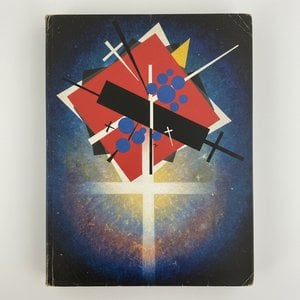
Beyond Representation: Exploring the Radical Geometry of Suprematism & Its Spiritual Foundations
Explore the revolutionary world of Suprematism with our expert guide. Discover Kazimir Malevich's groundbreaking art, its spiritual foundations & lasting influence on modern design. Learn about collecting this iconic movement.