


The picture follows your choices: , .
Artist Biography
A member of the Pont-Aven School, he captured the light of Egypt. Discover his beautiful watercolor and oil paintings today.
 Read More
Order your in four simple steps
Take your time. You can change any answer; the price in your order card follows each choice.
1 Step one of four
On which medium should it be printed?
Canvas is printed with giclée inks and can be stretched or framed like a painting; paper comes flat, or framed behind glass.
2 Step two of four
Which size would you like?
These sizes keep the proportions of the original painting. The drawing shows your choice on a wall, above a two-metre sofa.
Or give your own measurements
Pick from our preset sizes that match the artwork's original proportions.

Type the width and the height you need, to fit your frame or your wall. A print can only be cut, never made bigger than the picture, so a size with a different shape loses a part of the image. We send you a digital mockup to approve before we print anything. The picture shown on this page does not show the real cut — only the mockup does.
3 Step three of four
How should it be prepared: rolled, stretched or framed?
The prices below are for the size you chose in step one.
Choose the edges of the stretched canvas
Choose your frame

White $1

Blurside $1

Extended $1

P118B $10

P118H $10

P118W $10

P438Z $10

P508JH $12

P508YH $12

P805H $10

P805Z $10

P919BZ $10

P919G $10

P919XJ $10

P959ZH $10

P968JZ $12

W106C $8

W218G $10

W218JH $8

W218Y $10

W307PJ $10

W316G $10

W316PJ $8

W316Y $10

W398PJ $8

W4111J $10

W500HY $15

W500JH $15

W692G $12

W849H $8

W940BG $15

W953PJ $8

H24-GOLD $30

H24-SILVER $30

H36-GOLD $45

H36-SILVER $45
Framed
Moulding: . Overall size with the frame: .
4 Step four of four
A few finishing options
All of them are optional. The answers already selected cost nothing extra.
Worldwide Delivery () in 2 weeks instead of standard 4/5 weeks. (23 November)
A nameplate, as in a museum?
Engraved Bronze Plaque Details
This elegant plaque features the artist's name and the title of the artwork, finely engraved for a timeless presentation.
It is made from bronze with a refined, elegant finish. The text is precisely laser-engraved for a sharp and permanent result. Measuring 9x2 cm, the plaque is compact yet easy to read. It's built to be durable and scratch-resistant, offering a professional, museum-quality look. Mounting is simple thanks to the included adhesive backing.
Transparent Acrylic Plaque Details
The plaque includes essential engraved details such as the artist's name, the title of the artwork, the date it was created, the type of media used-like oil on canvas or watercolor-a brief description of the piece, and a QR code that links to the complete artwork information.
It is crafted from clear acrylic, offering a sleek, modern appearance. The text is UV-engraved in black to ensure strong visual contrast. With a size of 10x15 cm, it ensures optimal readability. It comes equipped with two metal hooks for secure wall mounting. The plaque is designed to be weather-resistant, making it suitable for various environments, and it includes interactive features that work seamlessly with smartphone scanning.
Black Acrylic Plaque Details
This elegant plaque includes engraved information such as the artist's name, the title of the artwork, the date it was created, the type of media used (like oil on canvas or watercolor), a short description of the artwork, and a QR code for quick access to more information.
The plaque itself is made from refined black acrylic with a premium finish. The text is laser-engraved in white for high contrast and readability. Its size is 10x15 cm, designed to be easy to read. It comes with two metal hooks for professional mounting. The design is sleek and fits any interior style. It is also weather-resistant and durable, with built-in digital integration for mobile compatibility.
A protective varnish?
When do you need it?
✓ Check and order
Your print, as you ordered it

Étretat
Reproduction Medium
Reproduction Size
-

Reproduction Frame
-
-
For artworks or reproductions larger than 105 cm (approximately 41 inches) on any side, the frame will be shipped as a kit, disassembled. This method ensures safe delivery and prevents damage during transport.
Professional assembly required - this is not a DIY product.
The kit must be assembled and the canvas stretched by an experienced professional framer, using wood glue (not supplied), a canvas stretching plier and clamps to hold the bars square while the glue dries. Incorrect assembly or uneven canvas tension can permanently damage the artwork and is not covered by our warranty.
 For artworks or reproductions larger than 105 cm (approximately 41 inches) on any side, the frame will be shipped as a kit, disassembled. This method ensures safe delivery and prevents damage during transport.
All solid wood bars are included, precisely cut to size.
Assembled with the screws provided, plus wood glue for the corner joints, which is not supplied and must be sourced by your framer.
Professional tools are required and not included: a canvas stretching plier (tensioner) and clamps to hold the bars square while the glue dries.
Important:
The corner joints require wood glue, the bars must be held with clamps until the glue is fully dry, and tightening the canvas on the assembled frame requires a canvas stretching plier. None of these are included in the kit. Please arrange an experienced professional framer before ordering this size.

Nameplate
-
-

Protective Varnish
Glossy Varnish (enhances colors, protects against light/moisture)
-

Urgent
Worldwide Delivery () in 2 weeks instead of standard 4/5 weeks. (23 November)
-
Express Shipping
Worldwide Delivery () in 4/5 weeks. (30 November).
Included
Total Price
$ 63
Glass option is only available in size under 110 CM
Included with every order
- Free Worldwide Express Shipping
- High-Quality Linen Canvas
- Full Shipping Insurance
- Customs Tax Refund Guarantee
- True Color Matching Guarantee
- 100-Day Return Policy (Defects Only)
- 100% Money-Back Guarantee
- Bulk Discount Offer


More about this painting
 Preview

 Buy Hand Made Painting
 Send
 Share
 Details
 Guide


 Download
 Similars
 X-Ray
 Diaporama
 Q&A
 Stats
Related Artworks


Henry Bacon
1839 - 1912, United States
Artist Biography
Early Life and Military Service
Henry Bacon enters the historical record in 1839, born in Haverhill, Massachusetts. His early years precede the upheaval of the American Civil War, a conflict that would fundamentally alter his trajectory. On 16 July 1861, he enlists in the Union Army. He is assigned to the 13th Massachusetts Infantry, but his role is not strictly that of a combatant. He serves as a field artist for Frank Leslie's Weekly, documenting the realities of war through his sketches and observations.
The violence of the conflict finds him personally. During the Second Battle of Bull Run, Bacon is badly wounded. The injury is severe enough to necessitate his discharge from military service on 19 December 1862. This period of combat and documentation marks a sharp departure from the quiet life of a civilian in Massachusetts, leaving a permanent imprint on his professional development.
Artistic Training in Paris
The transition from the battlefields of the American Civil War to the studios of Europe begins with a recommendation. Following his discharge, Walter Gay suggests a move toward formal instruction. By 1864, Henry Bacon arrives in Paris alongside his first wife, Elizabeth Lord. The focus shifts from the visceral documentation of war to the disciplined study of figure painting.
The rigor of the French academic system provides the next stage of his development. He gains admission to the National School of Fine Arts, entering a world of strict technique and classical tradition. Within these walls, he becomes a pupil of Alexandre Cabanel. This period of intense study establishes the technical foundation that will support his later shifts in subject matter and medium.
The Pont-Aven School Period
The landscape shifts from the formal studios of Paris to the commune of Pont-Aven in the Finistère département of Brittany. Here, Bacon finds a new rhythm. He becomes a member of the Pont-Aven School, a movement defined by its departure from academic rigidity. His focus turns toward the quietude of French country life. He captures genre subjects, rendering the daily existence of rural inhabitants with a specific, localized interest.
Bacon’s presence in Brittany carries historical weight. He is credited as the first American painter to arrive in Pont-Aven. His influence extends beyond his own canvas; he acts as a bridge for others. He advises and attracts fellow American Robert Wylie to spend summers in the village, helping to establish the area as a destination for artists seeking a different way of seeing.
Journalism and Maritime Works
The ink of the journalist meets the brush of the painter in the bustling atmosphere of Paris. Bacon does not merely observe the city; he reports on its shifting social and political currents. Writing for the Boston Daily Evening Transcript, he sends dispatches back to America, bridging the distance between the French capital and his home country. His reports capture significant moments, including General Grant's visit and the formation of the American Artists Association. These journalistic endeavors provide a steady connection to the American market, which remains his primary audience.
By 1880, a shift occurs in his subject matter. The focus moves toward the sea. He devotes himself to maritime scenes, capturing the movement and atmosphere of nautical life. This period marks a departure from his earlier genre subjects, as he turns his attention to the complexities of the water. His work during these years remains intended for the American collectors who follow his progress from across the Atlantic.
Orientalist Interests and Egypt
The year 1897 marks a shift in Bacon's focus. His first trip to Egypt ignites a fascination with Orientalist painting, pulling his attention away from the maritime scenes and French genre subjects of his earlier career. This interest becomes a permanent fixture of his life. From 1899 onwards, he takes up the habit of residing in Egypt during the winter months, seeking the specific atmosphere of the Middle East.
The light of the region demands a change in technique. To capture the transparent quality of the Egyptian sun, Bacon gradually abandons oil painting. He switches to watercolours, finding the medium better suited to the luminosity of the landscape. He spends his winters there, immersing himself in the local environment and the shifting light that defines the desert and the Nile.
Later Years and Death
The shift in Bacon's technical approach marks a definitive departure from his earlier training. He gradually abandons oil painting, moving away from the heavy textures of his previous years to devote himself to watercolors. This transition allows for a different kind of precision, one suited to the specific light he encountered during his travels.
The final chapter of his life unfolds in the Middle East. After years of spending winters in the region, he remains in Egypt. In 1912, a heart attack brings his life to an end in Cairo. The suddenness of his passing leaves behind a body of work focused on the landscapes and subjects of his adopted surroundings.
Following his death, his wife organizes a large posthumous exhibition. This collection focuses primarily on his Orientalist paintings, many of which were completed during the final year of his life. The retrospective travels across the United States, appearing in many American cities to present his final vision to the public.


Related Articles

Boats on Canvas: 10 Masterpieces of Maritime Art for Your Home Decor
Sail away with 10 iconic boat paintings! Explore masterpieces by Monet, Van Gogh & Turner. Discover the stories behind these timeless seascapes and find museum-quality art reproductions for your home decor at ArtsDot.com.
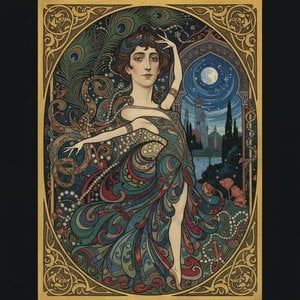
Léon Bakst: A Master of Decadence and the Ballet Russes' Visual Revolution
Explore the captivating world of Léon Bakst, master designer of the Ballets Russes. Discover his opulent costumes, revolutionary stagecraft & lasting influence on art and design. Learn about Diaghilev's vision and Bakst’s iconic works.

19th Century Masterpieces: 10 Paintings That Defined an Era | ArtsDot
Journey through 19th century art with ArtsDot! Explore 10 iconic paintings – from Monet & Renoir to Courbet – and discover the stories behind Romanticism, Realism & Impressionism. Find museum-quality reproductions for your home decor. Explore the full collection online!