Portrait of David Adolph Constanz Artz

David Adolph Constanz Artz's Most Famous Paintings: All 41, Ranked

Updated October 2026 · ranked by our popularity score (searches, visits and orders for each work) · 43 works by David Adolph Constanz Artz in our catalogue

In short

The David Adolph Constanz Artz painting most people know is In the Orphanage at Katwijk-Binnen (1880), and you can see it at the Rijksmuseum, Amsterdam. Right after it come Return of the herd (1865) and Girl sleeping in the dunes (1871). Out of 43 works by David Adolph Constanz Artz in our catalogue, these 41 are the best known. Each one comes with its year, its museum and a short note on what makes it stand out.

1837 – 1890, The Hague Contemporary realism Most works: Rijksmuseum

David Adolph Constanz Artz's top 10: the pieces everyone knows

1
In the Orphanage at Katwijk-Binnen (1880) by David Adolph Constanz Artz

In the Orphanage at Katwijk-Binnen

1880 · Oil On Canvas · Rijksmuseum, Amsterdam

The air inside the room feels heavy with the scent of old wood and the soft rustle of fabric. Sunlight streams through a large leaded-glass window on the right, cutting through the dimness to illuminate a scene of quiet, disciplined labor. Four figures sit gathered around a table, their hands moving in a rhythmic dance of needlework. They are the orphans of Katwijk-Binnen, caught in a moment of profound stillness.…

Hand-painted oil reproduction from $250 37 × 27 cm Same size as the original $590 130 × 97 cm Order at original size →
Order this piece More about this piece

Keep exploring David Adolph Constanz Artz: 11 to 41

11Ducks (1940) by David Adolph Constanz ArtzDucks1940 Make it yours from $175 →
12At grandmother's by David Adolph Constanz ArtzAt grandmother's Order this piece from $175 →
13Lulled to Sleep (1871) by David Adolph Constanz ArtzLulled to Sleep1871 · Rijksmuseum Order this piece from $175 →
14Zittende vrouw (1869) by David Adolph Constanz ArtzZittende vrouw1869 Make it yours from $175 →
15Mother's Joy (1868) by David Adolph Constanz ArtzMother's Joy1868 Get it hand-painted from $175 →
16Le bonheur d'une mère (1869) by David Adolph Constanz ArtzLe bonheur d'une mère1869 Get it hand-painted from $175 →
17A Joyful Ride (1876) by David Adolph Constanz ArtzA Joyful Ride1876 Make it yours from $175 →
18The First Step (1872) by David Adolph Constanz ArtzThe First Step1872 Order this piece from $175 →
19Seascape (1880) by David Adolph Constanz ArtzSeascape1880 · Rijksmuseum Make it yours from $175 →
20At Grandmother"s, David Adolph Constant Artz, 1883 (1883) by David Adolph Constanz ArtzAt Grandmother"s, David Adolph Constant Artz, 18831883 · Rijksmuseum Get it hand-painted from $175 →
21Bénédicté (1889) by David Adolph Constanz ArtzBénédicté1889 · The Mesdag Collection Order this piece from $175 →
22Boy and Girl in the Dunes, David Adolph Constant Artz, 1870 - 1890 (1890) by David Adolph Constanz ArtzBoy and Girl in the Dunes, David Adolph Constant Artz, 1870 - 18901890 · Rijksmuseum Get it hand-painted from $175 →
23Young love by David Adolph Constanz ArtzYoung love Make it yours from $200 →
24A walk in the dunes by David Adolph Constanz ArtzA walk in the dunes Order this piece from $200 →
25Return of the flock by David Adolph Constanz ArtzReturn of the flock Order this piece from $175 →
26On the dunes by David Adolph Constanz ArtzOn the dunes Get it hand-painted from $175 →
27A girl knitting in the dunes by David Adolph Constanz ArtzA girl knitting in the dunes Get it hand-painted from $175 →
28Toddler in a child seat by David Adolph Constanz ArtzToddler in a child seat Get it hand-painted from $175 →
29On the beach, scheveningen by David Adolph Constanz ArtzOn the beach, scheveningen Order this piece from $250 →
30Mother and Child in the Dunes by David Adolph Constanz ArtzMother and Child in the Dunes Order this piece from $175 →
31A Windmill and a Village on the Edge of a Snowy Meadow by David Adolph Constanz ArtzA Windmill and a Village on the Edge of a Snowy Meadow Order this piece from $175 →
32Puppy love by David Adolph Constanz ArtzPuppy love Make it yours from $175 →
33Sailing the toy boat by David Adolph Constanz ArtzSailing the toy boat Get it hand-painted from $175 →
34Idylle - A happy tune by David Adolph Constanz ArtzIdylle - A happy tuneCrocker Art Museum Make it yours from $175 →
35A Brace of Mallards by David Adolph Constanz ArtzA Brace of Mallards Order this piece from $175 →
36Ducks On A Riverbank by David Adolph Constanz ArtzDucks On A Riverbank Order this piece from $175 →
37The sewing class by David Adolph Constanz ArtzThe sewing class Make it yours from $175 →
38Motherhood by David Adolph Constanz ArtzMotherhood Get it hand-painted from $175 →
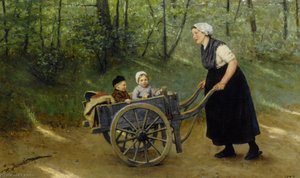
39A stroll in the pushcart by David Adolph Constanz ArtzA stroll in the pushcart Get it hand-painted from $175 →
40Portrait of a young cowherd by David Adolph Constanz ArtzPortrait of a young cowherd Order this piece from $175 →
41Ducks And Ducklings by David Adolph Constanz ArtzDucks And Ducklings Order this piece from $175 →

What David Adolph Constanz Artz painted most

The four subjects that come up most often in these pieces, each with its best-known example.

Where you can see David Adolph Constanz Artz's paintings

The 6 museums that hold the most of the paintings on this page.

Museum City Works by David Adolph Constanz Artz Paintings from this list
Rijksmuseum, AmsterdamRijksmuseum Amsterdam 6 In the Orphanage at Katwijk-Binnen, Lulled to Sleep, David Adolph Constant Artz, 1871, Lulled to Sleep
The Mesdag Collection, The HagueThe Mesdag Collection The Hague 6 Girl sleeping in the dunes, Woman from Scheveningen, By the Fire
Kunstmuseum Den Haag, The HagueKunstmuseum Den Haag The Hague 1 Return of the herd
Glasgow Museums Resource CentreGlasgow Museums Resource Centre 1 Coming from Church
Museum Boijmans Van Beuningen, RotterdamMuseum Boijmans Van Beuningen Rotterdam 1 Fisherman's Wife with Children on a Dune
Crocker Art Museum, SacramentoCrocker Art Museum Sacramento 1 Idylle - A happy tune

One famous David Adolph Constanz Artz piece for every decade

Works per decade

Pick a decade to see its standout piece.

David Adolph Constanz Artz paintings: what people want to know

What painting is David Adolph Constanz Artz best known for?See the answer

Top of the list is In the Orphanage at Katwijk-Binnen (1880), Rijksmuseum, Amsterdam. Right behind it: Return of the herd (1865) and Girl sleeping in the dunes (1871).

How old was David Adolph Constanz Artz at the time of In the Orphanage at Katwijk-Binnen?See the answer

43 years old. David Adolph Constanz Artz was born in 1837, and In the Orphanage at Katwijk-Binnen dates from 1880.

Which 10 David Adolph Constanz Artz paintings are the most famous?See the answer

In the Orphanage at Katwijk-Binnen, Return of the herd, Girl sleeping in the dunes, Woman from Scheveningen, Lulled to Sleep, David Adolph Constant Artz, 1871, Coming from Church, Fisherman's Wife with Children on a Dune, By the Fire, On the lookout and The widow. You'll find the year and the museum of each in the list above.

How many David Adolph Constanz Artz works are there?See the answer

We have 43 works by David Adolph Constanz Artz in our catalogue, dated 1865 to 1890.

Which museums have David Adolph Constanz Artz's best-known paintings?See the answer

You'll find most of them in Rijksmuseum (Amsterdam), The Mesdag Collection (The Hague) and Kunstmuseum Den Haag (The Hague). The museum list above has the full breakdown.

When were David Adolph Constanz Artz's most famous pieces painted?See the answer

In 1880s, more than any other time: 8 of the 41 pieces on this page date from then, In the Orphanage at Katwijk-Binnen among them.

What are the oldest and newest famous paintings by David Adolph Constanz Artz?See the answer

The earliest piece here is Return of the herd (1865); the most recent is Boy and Girl in the Dunes, David Adolph Constant Artz, 1870 - 1890 (1890).

What did David Adolph Constanz Artz paint most?See the answer

Family portrait (3), Dutch painting (3) and Rural life (3), out of the 41 pieces on this page.

What did David Adolph Constanz Artz usually paint with?See the answer

Oil On Canvas, used in 2 of the 41 pieces on this page.

Which art movement is David Adolph Constanz Artz linked to?See the answer

Contemporary realism and Hague school, as you can see in the pieces on this page.

What can you see by David Adolph Constanz Artz at the Rijksmuseum?See the answer

You can see 6 of the pieces on this page at the Rijksmuseum, Amsterdam, including In the Orphanage at Katwijk-Binnen, Lulled to Sleep, David Adolph Constant Artz, 1871 and Lulled to Sleep.

Can I order a David Adolph Constanz Artz reproduction for my home?See the answer

Yes. Every painting on this page is available as a hand-painted oil reproduction or a print, in the size that suits you. Just open the painting's page to order.

Meet David Adolph Constanz Artz

A Gentle Soul Captured in Light and Color: Exploring the Artistry of Adolph Artz

Adolph Artz (1837-1890), a Dutch painter hailing from The Hague, remains an artist whose serene depictions of family life and tranquil landscapes continue to resonate with collectors and art enthusiasts alike. While his output wasn’t voluminous compared to some contemporaries of the Hague School—a movement he helped establish—Artz's distinctive style cemented his place as a significant contributor to Victorian artistic sensibilities.
  • Early Life & Education: Born into a family steeped in artistic tradition, Artz received formative training from his father, Constant Artz, who himself was a respected portrait painter. This familial influence undoubtedly instilled within him an appreciation for meticulous observation and skillful rendering of human emotion—qualities that would become hallmarks of his oeuvre.
  • The Hague School & Artistic Vision: Artz joined the burgeoning Hague School around 1860, aligning himself with luminaries like Isaac Israelson and Anton Mauve. The school’s ethos centered on capturing fleeting moments of everyday life—particularly domestic scenes—with a palpable sense of atmosphere and realism. Unlike some of his peers who favored dramatic narratives or idealized representations, Artz consistently prioritized conveying tenderness and warmth through his canvases.
His artistic approach was characterized by a masterful command of light and color. Employing glazing techniques – layering translucent washes of pigment over underlying tones—Artz achieved remarkable luminosity and depth, mirroring the soft hues found in Dutch countryside vistas. He meticulously studied anatomy and perspective, ensuring accuracy while simultaneously prioritizing expressive brushwork that conveyed subtle nuances of feeling. This dedication to technique wasn’t merely about technical proficiency; it served as a conduit for conveying profound emotional resonance.
  • Notable Works: Artz's artistic legacy rests primarily on his captivating portrayals of familial affection and idyllic natural landscapes. Pieces like “Ducks,” featuring a mother gently guiding her children amidst waterfowl, exemplify his ability to distill complex emotions into deceptively simple compositions. Similarly, "Lulled to Sleep," depicting a sleeping infant nestled in the arms of its caregiver, embodies the quiet beauty of maternal tenderness.
  • Landscapes & Impressionistic Influence: Beyond portraits, Artz produced evocative landscapes that demonstrate his engagement with Impressionist principles. “A Walk in the Dunes,” for instance, captures the ethereal quality of twilight over sandy shores—a testament to his sensitivity to atmospheric conditions and his desire to convey a sense of serenity.

Legacy & Historical Significance

Adolph Artz’s contribution to the Hague School transcends mere stylistic imitation. He championed a humanist aesthetic that prioritized capturing genuine human experience—a refreshing counterpoint to the prevailing artistic trends of his time. His paintings continue to inspire admiration for their understated elegance and profound emotional depth, securing his place as an artist who successfully translated the spirit of Victorian domestic life onto canvas. Today, reproductions of Artz’s works offer viewers a glimpse into a bygone era—a reminder that beauty can be found in the simplest of gestures and landscapes.