Portrait of Constance Mayer

Constance Mayer's Most Famous Paintings: All 7, Ranked

Updated November 2026 · ranked by our popularity score (searches, visits and orders for each work) · 7 works by Constance Mayer in our catalogue

In short

The Constance Mayer painting most people know is Self-portrait (1801). Right after it come The Happy Mother (1810) and The Unfortunate Mother (1810). Out of 7 works by Constance Mayer in our catalogue, these 7 are the best known. Each one comes with its year, its museum and a short note on what makes it stand out.

1774 – 1821, Chauny Most works: la Cour D'or

Constance Mayer's top 10: the pieces everyone knows

1
Self-portrait (1801) by Constance Mayer

Self-portrait

1801 · Oil On Canvas

A single figure occupies the vertical space, seated in a three-quarter view with her head resting against her left hand. This Neoclassical self-portrait captures a moment of quiet melancholy. The subject's gaze is directed slightly toward the viewer, her expression pensive and heavy with thought. She wears an empire-waist gown of bright white, which creates a sharp contrast against the deep blacks and dark blues of the surrounding drapery. Soft,…

Hand-painted oil reproduction from $175 27 × 36 cm Same size as the original $402 90 × 98 cm Order at original size →
Make it yours Get to know it
2
The Happy Mother (1810) by Constance Mayer

The Happy Mother

1810 · Oil On Canvas

In this 1810 oil on canvas, a seated woman is positioned slightly to the right of the vertical axis, cradling an infant in a woodland setting. The composition centers on the physical connection between the mother and the child, framed by the verticality of surrounding tree trunks. A soft light source illuminates the mother's face, her shoulders, and the infant's body, while the background forest remains in deep shadow. This…

Hand-painted oil reproduction from $200 28 × 36 cm Same size as the original $1002 147 × 195 cm Order at original size →
Get it hand-painted Read its story
3
The Unfortunate Mother (1810) by Constance Mayer

The Unfortunate Mother

1810 · Oil

A heavy, somber stillness hangs over the scene, as if the very air has thickened with grief. A solitary woman stands in the dimness, her figure caught in a moment of profound contemplation or perhaps a quiet, crushing loss. She is draped in classical attire, the pale cream and yellowish tones of her gown catching a singular, soft light that seems to emerge from the void itself. This light traces…

Hand-painted oil reproduction from $175 27 × 36 cm Same size as the original $957 145 × 193 cm Order at original size →
Order this piece More about this piece
4
Portrait of Amable Tastu (1817) by Constance Mayer

Portrait of Amable Tastu

1817 · Oil On Canvas · la Cour D'or, Metz

The Portrait of Amable Tastu emerges from the shadows of the early nineteenth century, a quiet encounter with a woman of intellect and letters. Painted by the French artist Constance Mayer about 1817, this work captures a moment of stillness in the life of a notable figure. The subject, Amable Tastu, moves through the frame not merely as a sitter, but as a 19th-century French poet and writer whose presence…

Hand-painted oil reproduction from $175 28 × 36 cm
Get it hand-painted Read its story
5
The Sleep of Venus and Cupid (1806) by Constance Mayer

The Sleep of Venus and Cupid

1806 · Oil On Canvas · Wallace Collection, London

In the soft, amber glow of an eternal afternoon, Marie Constance Mayer’s The Sleep of Venus and Cupid invites the viewer into a realm where myth and intimacy converge. Painted in 1806, this monumental oil on canvas is far more than a mere mythological illustration; it is a dramatic ode to Eros, capturing the very moment when divine slumber meets the stirring of passion. The scene unfolds with a breathtaking…

Hand-painted oil reproduction from $250 39 × 26 cm Same size as the original $632 145 × 97 cm Order at original size →
Get it hand-painted Read its story

What Constance Mayer painted most

The four subjects that come up most often in these pieces, each with its best-known example.

Where you can see Constance Mayer's paintings

The 4 museums that hold the most of the paintings on this page.

Museum City Works by Constance Mayer Paintings from this list
la Cour D'or, Metzla Cour D'or Metz 1 Portrait of Amable Tastu
Wallace Collection, LondonWallace Collection London 1 The Sleep of Venus and Cupid
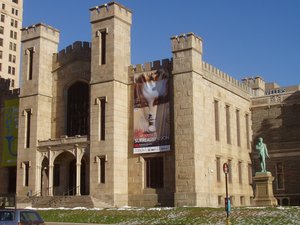
Wadsworth Atheneum, HartfordWadsworth Atheneum Hartford 1 Self-Portrait with Artist's Father
Музей витончених мистецтв Нансі, NancyМузей витончених мистецтв Нансі Nancy 1 Portrait of Madame Élise Voïart

The famous Constance Mayer pieces of each year

From 1801 to 1817, Constance Mayer's dated pieces stretch over 17 years. Browse that long career year by year.

Works per year

Pick a year to see its pieces.

Constance Mayer paintings: what people want to know

What painting is Constance Mayer best known for?See the answer

Top of the list is Self-portrait (1801). Right behind it: The Happy Mother (1810) and The Unfortunate Mother (1810).

How old was Constance Mayer at the time of Self-portrait?See the answer

27 years old. Constance Mayer was born in 1774, and Self-portrait dates from 1801.

How many Constance Mayer works are there?See the answer

We have 7 works by Constance Mayer in our catalogue, dated 1801 to 1817.

Which museums have Constance Mayer's best-known paintings?See the answer

You'll find most of them in la Cour D'or (Metz), Wallace Collection (London) and Wadsworth Atheneum (Hartford). The museum list above has the full breakdown.

When were Constance Mayer's most famous pieces painted?See the answer

In 1801, more than any other time: 2 of the 7 pieces on this page date from then, Self-portrait among them.

What are the oldest and newest famous paintings by Constance Mayer?See the answer

The earliest piece here is Self-portrait (1801); the most recent is Portrait of Amable Tastu (1817).

What did Constance Mayer paint most?See the answer

Woman (4), Drapery (2) and Forest (2), out of the 7 pieces on this page.

What did Constance Mayer usually paint with?See the answer

Oil On Canvas, used in 4 of the 7 pieces on this page.

Can I order a Constance Mayer reproduction for my home?See the answer

Yes. Every painting on this page is available as a hand-painted oil reproduction or a print, in the size that suits you. Just open the painting's page to order.

Meet Constance Mayer

Marie Constance Mayer: Life and Artistic Journey

Born in France around 1774, Marie Constance Mayer lived a life marked by artistic talent, personal struggles, and complex relationships within the Neoclassical art world. Her career, often described as "brilliant but bitter," reflects both her successes as a woman artist in post-Revolutionary France and the challenges she faced due to gender bias and dependence on male colleagues.

Early Training and Influences

Mayer's artistic training began with established artists of the time. She initially studied under Jean-Baptiste Greuze, known for his genre scenes and portraits. This early instruction provided her with a foundation in traditional painting techniques and an understanding of popular subject matter. Her style was influenced by the Neoclassical movement, characterized by its emphasis on clarity, order, and idealized forms.

Collaboration and Dependence on Pierre-Paul Prud'hon

A significant portion of Mayer’s artistic development occurred through her long association with Pierre-Paul Prud'hon, a leading French painter. Their relationship was complex, involving both collaboration and dependence. He sketched designs and compositions, while she executed the paintings. Many works were exhibited under her name, but later attributed to Prud'hon when they entered public collections. This practice blurred the lines of authorship and contributed to confusion regarding their individual contributions.

  • Collaborative Process: Prud’hon sketched designs; Mayer painted them.
  • Attribution Issues: Works initially exhibited under Mayer's name were later attributed to Prud'hon in public collections.

Major Achievements and Artistic Style

Despite the challenges of attribution, Mayer achieved recognition for her artistic skill. Her style was characterized by Neoclassical principles, with a focus on clarity, idealized forms, and refined execution. She excelled in portraiture, genre scenes, and miniature paintings.

  • Portraiture: She created portraits of individuals from various social backgrounds.
  • Genre Scenes: Mayer painted scenes depicting everyday life and popular activities.
  • Miniature Paintings: She was skilled in creating small-scale paintings with intricate detail.

Later Years, Personal Struggles, and Historical Significance

Mayer’s later years were marked by personal struggles and a sense of unfulfilled potential. Her dependence on Prud'hon and the subsequent attribution issues hindered her recognition as an independent artist. She died in 1821, leaving behind a legacy complicated by questions of authorship and gender bias.

  • Unrecognized Contributions: Her individual contributions were often overshadowed by Prud’hon's reputation.
  • Historical Significance: Mayer represents the challenges faced by women artists in post-Revolutionary France, who sought to make progress despite gender bias and limited opportunities.

Legacy and Recognition

In recent years, there has been renewed interest in Mayer’s life and work. Art historians are reevaluating her contributions and seeking to clarify the complex relationship between her and Prud'hon. Her story serves as a reminder of the importance of recognizing the achievements of women artists throughout history.