

 Se i rummet
 Del som kort
 Del
Del
 Detaljer
 Guide
Guide

 Download
 Lignende værker
 Røntgenundersøgelse
 Diasshow
 Spørgsmål og svar
 Statistikker
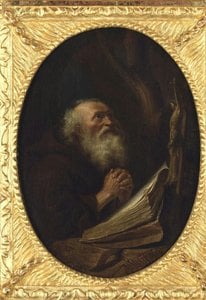
Saint Peter


 Vis mere
Kunstværket vist på denne side er beskyttet af ophavsretsloven, hvilket betyder, at vi ikke lovligt kan skabe eller sælge en identisk reproduktion. Denne beskyttelse håndhæves i henhold til internationale aftaler som f.eks. den Bernerkonventionen og af nationale love, herunder de bestemmelser, der er fastlagt i Amerikansk ophavsretslov - Titel 17.
Denne metode overholder fuldt ud ophavsretsreglerne, da den ikke indebærer kopiering eller duplikering af det beskyttede kunstværk. I stedet er der tale om en kreativ nytolkning – et nyt maleri, som er inspireret af det oprindelige, men ikke identisk med det.
Giclée / Kunsttryk
Giclée- eller lærredstryk i museumskvalitet med hurtig produktion og fleksible muligheder for finish. ( Køb håndmalet maleri Skift til digitalt billede)




P118B Dkr10

P118H Dkr10

P118W Dkr10

P438Z Dkr10

P508JH Dkr12

P508YH Dkr12

P805H Dkr10

P805Z Dkr10

P919BZ Dkr10

P919G Dkr10

P919XJ Dkr10

P959ZH Dkr10

P968JZ Dkr12

W106C Dkr8

W218G Dkr10

W218JH Dkr8

W218Y Dkr10

W307PJ Dkr10

W316G Dkr10

W316PJ Dkr8

W316Y Dkr10

W398PJ Dkr8

W4111J Dkr10

W500HY Dkr15

W500JH Dkr15

W692G Dkr12

W849H Dkr8

W940BG Dkr15

W953PJ Dkr8




Vælg mellem vores forudindstillede størrelser, der matcher kunstværkets originale proportioner.

Indtast den bredde og højde, du har brug for, så det passer til din ramme eller din væg. Et print kan kun beskæres, aldrig gøres større end selve billedet, så en størrelse med et andet format vil medføre, at dele af motivet går tabt. Vi sender dig en digital mockup til godkendelse, før vi printer noget. Billedet vist på denne side viser ikke den faktiske beskæring — det er kun mockuppen, der gør.
Verdensomspændende levering () på 2 uger i stedet for de sædvanlige 4/5 uger. (12 november)

Gratis ekspresforsendelse til hele verden

Lærred af linned i høj kvalitet

Fuld transportforsikring

Garanti for refusion af told og importafgifter

Garanti for præcis farvegengivelse

100 dages returret ved fabrikationsfejl

100% fuld returret

Mængderabat ved flere køb
 Glasmulighed er kun tilgængelig i størrelser under 110 cm

Saint Peter
Giclée / Kunsttryk
Størrelse på reproduktion
-


Samlet pris
Dkr 421
Spørgsmål og svar
Hvor kan jeg købe et print af "Saint Peter" af Pietro Ricchi?
"Saint Peter" er tilgængelig som et fine art-print på bomuldscanvas eller arkivbestandigt lærredspapir. Du kan bestille den i den ønskede størrelse på dens Kunstprint i høj kvalitet-side.
Hvor gammel var Pietro Ricchi, da vedkommende skabte "Saint Peter"?
Pietro Ricchi var 44 år gammel, da vedkommende skabte "Saint Peter" i 1650. Alderen er beregnet ud fra kunstnerens fødselsår, 1606.
Hvilken følelse skaber farverne i "Saint Peter" af Pietro Ricchi?
Den Earthy farvepalet i "Saint Peter" af Pietro Ricchi harmonerer med værkets Spiritual følelsesmæssige tone. Farven er en af de måder, et værk formidler følelser på.
Lignende kunstværker



Kunstnerbiografi
A Brush with Devotion: The Life and Art of Pietro Ricchi
Pietro Ricchi, a name resonating within the artistic heart of Venice and Rome, embodies a fascinating continuation of the Italian Renaissance tradition well into the 17th and 18th centuries. While biographical details remain somewhat elusive – a common trait for artists operating within the prolific workshops and patronage networks of the period – his surviving works speak volumes about his dedication to religious narrative, masterful technique, and a keen understanding of classical form. Ricchi wasn’t merely replicating styles; he was actively participating in a vibrant artistic dialogue that sought to reinvigorate sacred themes with dramatic intensity and emotional depth. His career unfolded during a time when the Baroque had begun its ascendance, yet his paintings reveal a deliberate balance between the dynamism of the new style and the enduring principles of Renaissance composition and idealized beauty.Early Training and Venetian Roots
Born in Venice (the exact year remains unconfirmed), Ricchi’s artistic journey likely began within one of the city's numerous ateliers. Venice, a republic steeped in visual splendor, provided an unparalleled education for aspiring painters. The influence of masters like Titian, Veronese, and Tintoretto was inescapable – their use of color, light, and grand scale permeated the artistic atmosphere. It’s reasonable to assume Ricchi received training in drawing, anatomy, and fresco techniques, skills essential for a painter destined to adorn both canvases and ceilings with elaborate compositions. The lagoon city's unique environment also shaped his aesthetic sensibility; the interplay of water, light, and architecture likely informed his spatial arrangements and atmospheric effects. While specific mentors are undocumented, it’s clear that Ricchi absorbed the Venetian tradition of rich colorism and dramatic storytelling. His early works demonstrate a proficiency in depicting textures – silks, velvets, and flesh tones rendered with remarkable realism – hallmarks of the Venetian school.Roman Commissions and Artistic Development
Ricchi's artistic trajectory took him to Rome, a pivotal move that broadened his horizons and exposed him to a different set of influences. The Eternal City was a magnet for artists from across Europe, drawn by the patronage of powerful families like the Barberini and the Farnese. Here, he encountered the works of Caravaggio and the High Baroque masters, witnessing firsthand the power of *tenebrism* – the dramatic use of light and shadow to create emotional impact. However, Ricchi didn’t simply adopt these new techniques wholesale. Instead, he synthesized them with his Venetian background, creating a distinctive style characterized by a harmonious blend of classical composure and Baroque dynamism. His Roman commissions often focused on religious subjects, particularly scenes from the lives of saints and biblical narratives. Paintings like those depicting Saint Paul showcase his ability to convey both physical action and spiritual fervor. The attention to detail in portraying architectural settings also suggests an engagement with the city’s rich historical landscape.Themes and Techniques: A Synthesis of Tradition and Innovation
The core of Ricchi's artistic output lies in religious painting, specifically depictions of biblical stories and the lives of saints. He frequently chose subjects that allowed him to explore themes of faith, sacrifice, and divine intervention. His *Judith Painting* exemplifies his skill in portraying complex psychological states – Judith’s determination juxtaposed with Holofernes’ vulnerability. Beyond individual portraits of piety, Ricchi also undertook larger-scale projects, decorating churches and chapels with elaborate frescoes and altarpieces. A notable example is his work within the Basilica di San Pietro in Rome, where he contributed to the ongoing embellishment of this iconic structure. His technique reveals a meticulous approach to composition, often employing diagonal lines to create a sense of movement and drama. He was also adept at using color to guide the viewer’s eye and emphasize key elements within his paintings. The *Morra Players Art* demonstrates his ability to capture fleeting moments of tension and anticipation. Ricchi's engagement with classical sculpture – particularly Michelangelo’s work, as evidenced in studies after *Moses* – is apparent in the anatomical accuracy and idealized forms of his figures.Historical Significance and Enduring Legacy
Pietro Ricchi occupies a unique position within the history of Italian art. He wasn't a revolutionary innovator like Caravaggio, but rather a skilled practitioner who successfully bridged the gap between Renaissance ideals and Baroque sensibilities. His work reflects a conscious effort to uphold artistic traditions while embracing new stylistic developments. While not as widely celebrated as some of his contemporaries, Ricchi’s paintings continue to captivate viewers with their technical brilliance, emotional depth, and compelling narratives. His contributions to the decoration of significant religious sites – particularly in Venice and Rome – ensure that his legacy endures. He represents a vital link in the chain of artistic transmission, demonstrating how Renaissance principles were adapted and reinterpreted by subsequent generations of painters. The continued appreciation for his art speaks to the timeless power of devotional imagery and the enduring appeal of masterful craftsmanship.
Pietro Ricchi
1606 - 1675 , Republic of Lucca
Relaterede artikler
Pietro Perugino: Umbrian Master of Serenity & Precursor to Raphael's High Renaissance
Explore the life & art of Pietro Perugino, a pivotal Renaissance master and Raphael’s influential teacher. Discover his serene compositions, Sistine Chapel frescoes, and lasting legacy with ArtsDot.

Francesco Guardi: Venetian Light, Atmospheric Perspective & the Rococo to Neoclassical Transition
Explore the captivating world of Francesco Guardi, master of Venetian light and atmosphere. Discover his transition from Rococo to Neoclassicism, influence on Impressionism & investment potential with ArtsDot.

Pietro Perugino: A Renaissance Master's Legacy of Grace & Spiritual Depth
Explore the serene beauty & spiritual depth of Pietro Perugino's Renaissance masterpieces. Discover his influence on Raphael, key works like 'Baptism of Christ,' and legacy as a leading Umbrian painter.

From Grandeur to Grace: Exploring the Evolution of Baroque & Rococo Art
Explore the captivating evolution from Baroque's drama to Rococo's grace! Discover key artists, characteristics & lasting influence of these art movements with expert insights at ArtsDot.

Pietro da Cortona: Baroque Grandeur & the Synthesis of Roman Painting
Explore the life & masterpieces of Pietro da Cortona, a defining figure of the Italian Baroque. Discover his stunning frescoes at Palazzo Barberini and lasting influence on Roman art history. Learn more with ArtsDot.