


 Preview
 Send
Send Share
Share
 Details
 Guide
Guide

 Download
 Similars
 X-Ray
X-Ray Diaporama
 Stats
StatsMadame Andre Wormser and her Children


 Read More
Hand Made Oil Reproduction
Hand-painted oil on canvas in your size and frame, made to order by our artists. ( Switch to Print Switch to Digital Image)




P118B $10

P118H $10

P118W $10

P438Z $10

P508JH $12

P508YH $12

P805H $10

P805Z $10

P919BZ $10

P919G $10

P919XJ $10

P959ZH $10

P968JZ $12

W106C $8

W218G $10

W218JH $8

W218Y $10

W307PJ $10

W316G $10

W316PJ $8

W316Y $10

W398PJ $8

W4111J $10

W500HY $15

W500JH $15

W692G $12

W849H $8

W940BG $15

W953PJ $8




Pick from our preset sizes that match the artwork's original proportions.

You may enter your own dimensions to fit a specific frame or space. If your selected size does not match the original image's proportions, we will either crop the artwork or extend the painting with additional hand-painted elements. A digital mockup will be sent for your approval before production begins.
Please note that the on-screen preview does not reflect the actual cropping or extension. Only the mockup will accurately show the final composition.
While custom sizes are available, we recommend selecting a dimension from the predefined list to preserve the original proportions.
After order, ArtsDot.com team will email client for instructions and provide a mockup preview
Worldwide Delivery () in 3/4 weeks instead of standard 5 weeks. (4 October). No compromise on quality.

Free Worldwide Express Shipping

High-Quality Linen Canvas

Full Shipping Insurance

Customs Tax Refund Guarantee

True Color Matching Guarantee

100-Day Return Policy (Defects Only)

100% Money-Back Guarantee

Bulk Discount Offer
 Glass option is only available in size under 110 CM

Madame Andre Wormser and her Children
Reproduction Medium
Reproduction Size
-


Total Price
$ 263
A Moment Frozen in Pastel Hues: Jean Edouard Vuillard's *Madame Andre Wormser and her Children*
Jean Edouard Vuillard’s 1926 painting, *Madame Andre Wormser and her Children*, is more than a simple portrait; it’s a delicately rendered snapshot of domestic tranquility, imbued with the quiet beauty and subtle emotional resonance that defined the artist's unique vision. This work, executed in the heart of the Post-Impressionist movement, offers a profound glimpse into a private world – a family absorbed in the comfortable rhythms of daily life within their Parisian home. The scene unfolds with an almost dreamlike quality, achieved through Vuillard’s masterful manipulation of color and form, inviting the viewer to step into this intimate tableau and experience it as if they were a silent observer.
The Language of Post-Impressionism
Vuillard was a pivotal figure within the *Nabis* group – a collective of young French artists who sought to push beyond the limitations of Impressionism. Inspired by Japanese prints, particularly their use of flattened planes and bold color blocks, Vuillard employed a technique that prioritized atmosphere and suggestion over precise representation. The painting’s palette is dominated by soft, muted tones—pale pinks, blues, greens, and ochres—creating a hazy, almost ethereal effect. This deliberate blurring of detail contributes to the work's overall sense of serenity and nostalgia. Notice how Vuillard doesn't attempt to capture every wrinkle or expression; instead, he focuses on conveying the *feeling* of the scene – the warmth, comfort, and quiet connection between family members.
- Color as Emotion: The use of color isn’t merely decorative; it’s a fundamental element of the painting's emotional impact. Vuillard expertly employs color to evoke feelings of peace, intimacy, and nostalgia.
- Flattened Perspective: Like many Post-Impressionists, Vuillard utilizes a flattened perspective, reducing depth and emphasizing the two-dimensionality of the canvas. This technique contributes to the painting’s dreamlike quality.
- Pattern and Texture: The artist's meticulous attention to pattern – in the fabrics, furniture, and books – adds another layer of visual interest and reinforces the sense of a lived-in space.
A Study in Domesticity and Symbolism
The composition itself is carefully constructed to draw the viewer’s eye through the scene. The family—Madame Wormser, two children, and potentially another male figure – are arranged within a richly furnished living room, surrounded by books, a bowl, and various objects that speak of intellectual pursuits and quiet leisure. These details aren't merely decorative; they subtly symbolize the values of education, family, and domesticity that were central to the bourgeois ideals of the early 20th century. The arrangement of the figures—seated, relaxed, engaged in their own activities—suggests a harmonious balance within the family unit.
The Legacy of Vuillard’s Vision
*Madame Andre Wormser and her Children* represents a pivotal moment in the development of modern art. Vuillard's innovative approach to color, form, and perspective profoundly influenced subsequent movements such as Cubism and Fauvism, demonstrating his role as a crucial bridge between Impressionism and abstraction. This painting stands not just as a beautiful portrait but as a testament to Vuillard’s artistic genius and his ability to capture the essence of everyday life with remarkable sensitivity and grace. Its enduring appeal lies in its quiet beauty, its evocative atmosphere, and its timeless portrayal of family connection.
Questions & Answers
Who is the artist behind "Madame Andre Wormser and her Children"?
"Madame Andre Wormser and her Children" was created by Jean-Édouard Vuillard. The information on this page describes Jean-Édouard Vuillard's original work.
What kind of piece is "Madame Andre Wormser and her Children"?
In the catalog, "Madame Andre Wormser and her Children" by Jean-Édouard Vuillard is filed as wall art. The category helps find similar works.
In what year was "Madame Andre Wormser and her Children" by Jean-Édouard Vuillard created?
"Madame Andre Wormser and her Children" by Jean-Édouard Vuillard was created in 1926.
What technique was used for "Madame Andre Wormser and her Children", and when was it created?
"Madame Andre Wormser and her Children" was made in 1926, in acrylic on canvas.
At what size is "Madame Andre Wormser and her Children" recommended to be printed?
"Madame Andre Wormser and her Children" is recommended at a large print size. Other sizes are available with the same proportions.
Where can I find artworks similar to "Madame Andre Wormser and her Children" by Jean-Édouard Vuillard?
The Similars page of "Madame Andre Wormser and her Children" by Jean-Édouard Vuillard presents related artworks.
What was Jean-Édouard Vuillard's age when "Madame Andre Wormser and her Children" was created?
When "Madame Andre Wormser and her Children" was created in 1926, Jean-Édouard Vuillard - born in 1868 - was 58 years old.
Related Artworks


Artist Biography
**early life and artistic beginnings**
jean-édouard vuillard, a french painter, decorative artist, and printmaker, was born on november 11, 1868, in cuiseaux, france. his life's work would later become a cornerstone of the avant-garde artistic group les nabis, alongside fellow visionaries like maurice denis and édouard vuillard. this collective would revolutionize the art world with their innovative approach to color and form.**the nabis movement and its influence**
as a prominent member of les nabis, vuillard's paintings assembled areas of pure color, influenced by japanese prints. his interior scenes explored the spatial effects of flattened planes of color, pattern, and form. this approach would later influence the development of cubism, fauvism, and abstract art.- les nabis, a group of young french artists active in paris from 1888 until 1900, played a large part in the transition from impressionism and academic art to abstract art, symbolism, and the other early movements of modernism.
- their philosophy was based upon the philosophy of positivism, and the writings of auguste comte and hippolyte taine.
**vuillard's later work and legacy**
after 1900, when les nabis disbanded, vuillard adopted a more realistic style, approaching landscapes and interiors with greater detail and vivid colors. in the 1920s and 1930s, he painted portraits of prominent figures in french industry and the arts in their familiar settings. **key works and exhibitions:**- jean-édouard vuillard's paintings can be found in various museums, including the musée de la révolution française (france), which boasts a rich collection of artworks, documents, and objects related to the revolutionary period.
- some of his notable works include "la patrie en danger" by guillaume lethière and "jean de la barre" by jean clouet, which depict a young man condemned to death for blasphemy during the ancien régime.
- vuillard's later work, such as his portraits of french industry and arts figures, can be seen in various galleries, including those at intimism art movement and jean-édouard vuillard's page on ArtsDot.
**conclusion**
jean-édouard vuillard's enigmatic world, characterized by its innovative use of color and form, has left an indelible mark on the art world. as a pioneer of modernism, his work continues to inspire artists and influence various artistic movements. discover more about intimism art movement and explore jean-édouard vuillard's works on ArtsDot.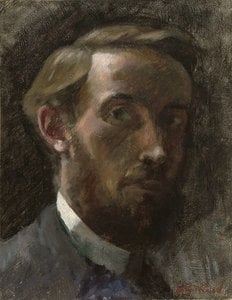
Jean-Édouard Vuillard
1868 - 1940 , France
Quick Facts
- Full Name: Jean-Édouard Vuillard
- Nationality: French
- Date Of Birth: 1868
- Date Of Death: 1940
- Place Of Birth: Chesaux, France
- Notable Artworks:
- Woman Sweeping
- Sunlit Interior
- Artistic Movement Or Style: Nabis
- Artists Who Influenced This Artist: ['Paul Gauguin']
- Artists Or Movements Influenced By This Artist:
- Cubism
- Fauvism
Related Articles

Post-Impressionism's 10 Defining Masterpieces: Art for Your Home |
Journey through Post-Impressionism's 10 defining masterpieces – Van Gogh, Monet & more. Explore iconic paintings, art history & find museum-quality reproductions for your home at . Discover all masterpieces online!

Giclée Prints: Archival Quality & Aesthetic Nuances for the Discerning Collector
Explore the world of giclée prints with ArtsDot. Learn about archival quality, aesthetic nuances & investment potential. Expert guidance for discerning art collectors seeking museum-quality reproductions and lasting value.

Renoir's Masterpieces: Explore 25 Iconic Paintings & Bring Art Home | ArtsDot
Explore 25 iconic Pierre-Auguste Renoir paintings! Discover the stories behind Impressionist masterpieces like 'Dance at Le Moulin de la Galette' & 'Luncheon of the Boating Party'. Find museum-quality art reproductions and elevate your home decor with ArtsDot.com.

Impressionistic Realism's Finest: 10 Masterpieces for Your Home | ArtsDot
Journey through Impressionistic Realism with 10 iconic masterpieces by Monet, Renoir & Van Gogh. Explore art history, techniques & find museum-quality reproductions for your home at ArtsDot.com. Discover all masterpieces online!

Impressionistic Landscapes: 10 Masterpieces That Changed Art & Decor
Journey into the heart of Impressionism! Explore 10 masterpieces by Monet, Renoir & Degas that revolutionized landscape art. Discover their stories, techniques & find museum-quality reproductions to elevate your home decor on ArtsDot.com.


