The Calligraphic Essence of Huang Tingjian
Huang Tingjian (1045–1107), a towering figure of the Song dynasty, wasn't merely a painter or calligrapher; he was an intellectual deeply immersed in the traditions of literature, history, and philosophy. Born into a scholarly family during a period of significant cultural flourishing, Huang’s life unfolded against a backdrop of political turmoil and artistic innovation. He navigated a complex career path, repeatedly failing the imperial examinations – a common fate for those whose independent spirit clashed with bureaucratic conformity. This rejection, however, proved pivotal, freeing him to pursue his artistic vision without compromise. Instead of seeking officialdom, Huang dedicated himself to the study of ancient masters, particularly Du Fu and Han Yu, absorbing their styles and philosophies which would profoundly shape his own work. He became a leading member of the Jiangxi School of poets, advocating for a return to more direct and unadorned expression in verse, mirroring his approach to calligraphy. His early life was marked by a restless search for mentors and an insatiable appetite for knowledge, traveling extensively throughout China to connect with fellow scholars and artists.A Revolutionary Approach to Calligraphy
Huang Tingjian’s contribution to Chinese art lies primarily in his revolutionary approach to calligraphy. He rejected the prevailing trends of his time – the elegant, flowing styles favored by courtly circles – deeming them overly refined and lacking in genuine substance. Instead, he turned to the earlier, more rugged works of Tang dynasty masters like Yan Zhenqing and Liu Gongquan, finding inspiration in their strength and individuality. However, Huang didn’t simply imitate these predecessors; he synthesized their characteristics with his own unique sensibility, creating a style that was both powerful and deeply personal. He is renowned for his *shu fa*, or “method of writing,” which emphasized the importance of structure, balance, and the expressive use of brushstrokes. His calligraphy isn't about effortless beauty but rather about revealing the artist’s inner state through deliberate control and nuanced variation. He often described his style as ‘bone method’ (*gu fa*), referring to a fundamental underlying structure that gave strength and vitality to his work. This concept became hugely influential, shaping generations of calligraphers who followed.Poetry and Painting: An Integrated Vision
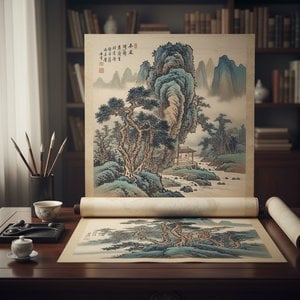
While celebrated for his calligraphy, Huang Tingjian was also an accomplished poet and painter. His poetry, characterized by its allusions to classical literature and its subtle emotional depth, often served as a direct inspiration for his calligraphic works. He frequently inscribed poems onto paintings, creating a harmonious integration of the visual and literary arts. His paintings, though fewer in number than his calligraphy, demonstrate a similar emphasis on intellectual content and expressive brushwork. They typically depict landscapes, bamboo groves, and plum blossoms – subjects imbued with symbolic meaning reflecting themes of resilience, solitude, and spiritual contemplation. He wasn’t interested in creating realistic depictions but rather in capturing the *essence* of nature through evocative imagery and poetic suggestion. His paintings often feature sparse compositions and a restrained palette, allowing the calligraphic inscriptions to take center stage.Legacy and Historical Significance
Huang Tingjian's influence on subsequent generations of Chinese artists cannot be overstated. His *gu fa* – bone method – became a cornerstone of calligraphy theory and practice, inspiring countless scholars and painters to seek their own unique voices within the traditions of the past. He is considered one of the Four Masters of the Song Dynasty alongside Su Shi, Mi Fu, and Cai Xiang, each representing distinct approaches to calligraphy that collectively defined the aesthetic landscape of the era. His emphasis on intellectual rigor and expressive individuality paved the way for a more personal and subjective approach to art-making.- The Jiangxi School: His leadership in promoting direct poetic expression influenced literary circles.
- Calligraphic Innovation: He challenged conventional styles, emphasizing structure and inner expression.
- Influence on Literati Painting: His integrated approach to poetry, calligraphy, and painting shaped the development of literati art.
Questions & Answers
How many artworks by Huang Tingjian are available to browse?
You can browse 1 artwork by Huang Tingjian on the All Artworks page.
Is there an overview of all the subjects Huang Tingjian painted?
The Subject Atlas page maps Huang Tingjian's artworks by subject.
Can I browse Huang Tingjian's works by medium?
The All Medium page groups Huang Tingjian's artworks by technique.