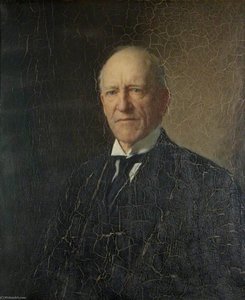
Samuel Henry William Llewellyn (1858–1941): A Visionary Painter of Biblical Landscapes
Samuel Henry William Llewellyn, born in Cirencester, Gloucestershire, England, on December 1st, 1858, was a British painter whose artistic legacy resides primarily in his monumental biblical landscapes and deeply spiritual depictions. He emerged from the Victorian academic tradition—a period characterized by meticulous observation and idealized representation—and established himself as one of its foremost practitioners, leaving an indelible mark on British art history.
- Early Life & Education: Llewellyn’s formative years were spent in a family steeped in engineering heritage. His father, Samuel Llewellyn, was a respected engineer, fostering within him a fascination for precision and detail—qualities that would later translate into his artistic endeavors. He attended Heidelberg University, Germany, where he immersed himself in the burgeoning Impressionist movement, encountering artists like Monet and Sisley who championed capturing fleeting moments of light and color. This exposure profoundly influenced his stylistic sensibilities, subtly shifting away from the rigid conventions of academic painting towards a more expressive approach.
- Career Highlights: Llewellyn’s artistic career commenced in earnest with exhibitions at the Royal Academy in London starting in 1884. He quickly gained recognition for his masterful renderings of biblical scenes—particularly those depicting landscapes imbued with profound spiritual significance. Notable works include “The Nativity” and “The Sermon on the Mount,” executed with painstaking detail and bathed in atmospheric hues that conveyed a palpable sense of reverence. His artistic reputation soared, securing commissions from prominent patrons and cementing his position as a leading figure within the British art world.
- Style & Technique: Llewellyn’s distinctive style was characterized by an unwavering commitment to academic principles—particularly disegno—the Italian term for drawing—which demanded meticulous preparatory sketches and precise tonal gradations. He employed oil paints with remarkable skill, layering colors to achieve luminous effects that captured the grandeur of nature while simultaneously conveying spiritual contemplation. His landscapes weren't merely representations of scenery; they were vehicles for exploring themes of faith, morality, and divine providence.
- Influence & Legacy: Llewellyn’s influence extended beyond his own lifetime. He served as President of the Royal Academy from 1928 to 1938, shaping artistic discourse during a pivotal moment in British cultural history. His dedication to upholding academic standards ensured that the tradition continued to thrive amidst the stylistic upheavals of the modernist era. Today, Llewellyn’s paintings reside in prestigious collections across Europe and North America—testaments to his enduring artistic vision and his contribution to the canon of Victorian art.
His ashes were interred at Westminster Abbey on November 26th, 1941, a solemn occasion honoring a life devoted to art and scholarship.