

 Predogled v realnem okolju
 Pošlji
 Deli
Deli
 Podrobnosti o delu
 Priročnik

 Prenesi sliko
 Podobni izdelki
 Rentgenski posnetek
 Predvajaj diaporama
 Vprašanja in odgovori
 Statistika
Self-Portrait

- 9.0 x 10.0 cm


 Preberi več
Giclée tisk / Umetniški tisk
Giclée ali platnati odtis muzejske kakovosti z hitro proizvodnjo in prilagodljivimi možnostmi končne obdelave. ( Kupite ročno slikano delo Preklop na digitalno sliko)




P118B €10

P118H €10

P118W €10

P438Z €10

P508JH €12

P508YH €12

P805H €10

P805Z €10

P919BZ €10

P919G €10

P919XJ €10

P959ZH €10

P968JZ €12

W106C €8

W218G €10

W218JH €8

W218Y €10

W307PJ €10

W316G €10

W316PJ €8

W316Y €10

W398PJ €8

W4111J €10

W500HY €15

W500JH €15

W692G €12

W849H €8

W940BG €15

W953PJ €8




Izberite eno od naših vnaprej določenih velikosti, ki ustrezajo prvotnim proporcijam umetničkega dela.

Vnesite širino in višino, ki jih potrebujete za svoj okvir ali steno. Tiskanje se lahko le odreže, vendar ga ni mogoče narediti večjega od slike, zato format z drugačno obliko pomeni izgubo dela slike. Pred tiskanjem vam pošljemo digitalni predogled za potrditev. Slika, prikazana na tej strani, ne prikazuje dejanskega izrezka — le predogled to omogoča.
Globalna dostava () v 2 tednih namesto standardnih 4/5 tednov. (7 november)

Brezplačna ekspresna dostava po vsem svetu

Visokokakovostno laneno platno

Popolno zavarovanje pošiljke

Garancija povračila carine in uvoznih davkov

Garancija popolnega barvnega ujemanja

100-dnevna politika vračil (le v primeru okvar)

Garancija 100% povračila denarja

Popust pri večjem naročilu
 Možnost stekla je na voljo le za velikosti pod 110 cm

Self-Portrait
Giclée tisk / Umetniški tisk
Velikost reprodukcije
-


Skupna cena
€ 56
A Study in Yellow and Green: Arnold Schoenberg's Self-Portrait (1922)
This intimate drawing, measuring just 9 x 10 cm, offers an arresting glimpse into the mind of one of the 20th century’s most revolutionary composers – Arnold Schoenberg. Executed in 1922, a pivotal year in his artistic development, the work transcends a simple portrait; it's a concentrated distillation of intellectual intensity and perhaps, a subtle self-examination rendered with remarkable precision. The stark palette of yellow and green immediately draws the viewer in, colors that would become increasingly significant within Schoenberg’s musical explorations of atonality and dissonance.
- Subject & Composition: The central focus is undeniably the artist himself – a man with a neatly trimmed mustache, his gaze direct and unwavering. The simplified rendering emphasizes key features: the piercing green eyes, a hallmark of Schoenberg’s artistic vision, and the strong jawline hinting at an unyielding intellect.
- Technique & Materials: Crafted in black and yellow tones, the drawing utilizes a technique that suggests both meticulous observation and a deliberate departure from representational realism. The use of shading creates depth and volume, while the limited color palette contributes to a sense of austerity and focused contemplation.
The Second Viennese School & Atonality
To fully appreciate this self-portrait, it’s crucial to understand Schoenberg's place within the artistic landscape of early 20th-century Vienna. He was at the heart of the “Second Viennese School,” a group of composers – including Alban Berg and Anton Webern – who radically challenged traditional harmonic structures. Schoenberg pioneered atonality, rejecting the established rules of key signatures and chord progressions, believing that music should be free from conventional constraints. This drawing can be seen as a visual manifestation of this intellectual shift; the deliberate use of color and simplified form reflects a desire to break away from established artistic conventions.
The year 1922 was particularly significant for Schoenberg, marking a period of intense experimentation with serialism – a compositional technique based on mathematical series that further explored the possibilities of atonality. This self-portrait isn’t merely a likeness; it's a visual echo of his groundbreaking musical ideas.
Symbolic Resonance & Emotional Impact
While seemingly straightforward, the drawing possesses a subtle emotional depth. The intense gaze suggests introspection and perhaps a sense of isolation – feelings that likely accompanied Schoenberg as he navigated the turbulent waters of artistic innovation. The yellow and green hues, often associated with envy and growth respectively, could symbolize his ambition and relentless pursuit of new musical frontiers. The starkness of the image evokes a feeling of quiet contemplation, inviting the viewer to engage in their own thoughts about creativity, genius, and the challenges of pushing boundaries.
A Collector’s Piece – Reproduction & Legacy
This hand-painted reproduction captures not only the visual details of Schoenberg's self-portrait but also the spirit of a revolutionary artist. Each reproduction is meticulously crafted by skilled artisans, ensuring an authentic representation of this significant work. Perfect for interior design projects seeking a touch of intellectual sophistication or as a unique addition to any art collection, this piece offers a tangible connection to one of music’s most influential figures. Its small size makes it ideal for display in intimate settings, while its powerful imagery ensures that it will remain a captivating subject of contemplation for years to come.
Vprašanja in odgovori
Kakšna tehnika in slog značilita "Self-Portrait" avtorja Arnold Schoenberg?
"Self-Portrait" avtorja Arnold Schoenberg združuje tehniko Acrylic On Canvas s slogom Atonal Expressionism. Tehnika in umetnostno smer opredeljata način izdelave ter slog dela.
Priporočena uporaba in prostor za "Self-Portrait" avtorja Arnold Schoenberg?
Za Reflective se priporoča "Self-Portrait", priporočena prostorina pa je Living Room.
Kje lahko najdem umetniška dela, podobna delu "Self-Portrait" avtorja Arnold Schoenberg?
Umetninice, podobne delu "Self-Portrait" avtorja Arnold Schoenberg, so zbrane na strani Podobna dela te umetnine.
Sorodna umetniška dela


Biografija umetnika
zgodno mladost in glasbeni začetki
arnold schoenberg, avstrijsko-ameriški skladatelj, se je rodil 13. septembra 1874 v Dunaju na Avstriji. Njegovo zgodnje življenje je zaznamoval skromen začetek, saj je bil njegov oče trgovec s čevlji. Kljub temu je Schoenbergova vroča strast do glasbe vodila k temu, da se je na področju glasbe v veliki meri izobrazil sam.glasbna evolucija in pomembna dela
Schoenbergova zgodnja dela, kot je verklärte nacht (1899), so prikazovala sintezo Brahmsa in Wagnerja. Z napredovanjem je postal osrednja figura druge vienske šole, skupaj z antonom webernom in albanom bergom. Njegove kompozicije, vključno s kvartetom za strune št. 2 (1907–1908), erwartung (1909) in pierrot lunaire (1912), so prikazale njegov inovativni pristop k atonalnosti.podajanje, emigracija in poznejše življenje
Schoenberg je leta 1933 zaradi vzpona nazistov odstopil iz Pruske akademije umetnosti, saj je njihova vlast označila njegovo glasbo za "dekadentno". Nato je poučeval v ZDA, med drugim na Univerzi Kalifornije v Los Angelesu (1936–1944), kjer so nekateri objekti po njegovi časti poimenovani po njem. [https://ArtsDot.com/@/arnolog-schoenberg](odkryjte več o Schoenbergovem življenju in delih na ArtsDot).- Schoenberg je raziskoval filmsko glasbo in pisal bolj tonalno glasbo, s čemer je leta 1939 dokončal komponirano simfonijo št. 2.
- V delu ode to napoleon (1942), navdihnjenem Byronom, je satirično prikazal fašistične tirane.
- Povojni Dunaj mu je podelil častno državljanstvo, vendar je bil bolan, kar je odraženo v njegovem strunnem triu (1946).
dediščina in vpliv
Ko se je svet soočil z grozotami holokausta, je Schoenberg spomnil na njegove žrtve v delu a survivor from warsaw (1947). Izraelni konzervatorij in akademija za glasbo ga je leta 1951 izvolila za častnega predsednika. [https://ArtsDot.com/@@/a@d3bqc7-the-museum-destroyed-by-fire-(united-states)](izvedite več o vplivu njegovega dela na ArtsDot). Ključne točke: Schoenbergova inovativna glasba je bila med najbolj vplivnimi in polémicnimi v klasični glasbi 20. stoletja. Vsaj trije generacije skladateljev so nadgradile njene formalne principe. Njegovi estetski in glasbeno-zgodovinski pogledi so vplivali na muzikologe, kot sta Theodor W. Adorno in Carl Dahlhaus. [https://ArtsDot.com/@@/a@d3cl2x--a-journey-through-art-history-with-ArtsDot-s-extensive-collection-](raziskujte obsežno zbirko umetnosti na ArtsDot, ki sega od 12. do 20. stoletja).
Arnold Schoenberg
1874 - 1951 , Avstrija
Hitri podatki
- Artistic Movement Or Style: Dvanajsttonska tehnika; Ekspresionizem
- Artists Or Movements Influenced By This Artist:
- Anton Webern
- Alban Berg
- Artists Who Influenced This Artist:
- Johannes Brahms
- Richard Wagner
- Date Of Birth: 13. september 1874
- Date Of Death: 1951
- Full Name: Arnold Schoenberg
- Nationality: Avstrijsko-ameriški
- Notable Artworks:
- Suite, op. 29
- Music Typewriter
- Staffliner
- Place Of Birth: Dunaj, Avstrija
Sorodni članki
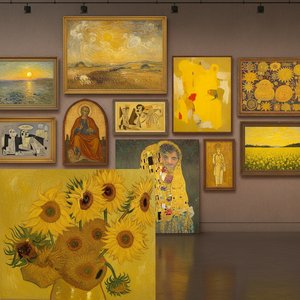
Golden Hues: 10 Masterpieces Dominated by Chrome Yellow | ArtsDot
Immerse yourself in golden light! Explore 10 famous paintings dominated by 'Chrome Yellow', from Van Gogh’s Sunflowers to Monet's Haystacks. Discover the stories behind these iconic Impressionist & Post-Impressionist masterpieces and find museum-quality art reproductions at ArtsDot.com.

Giclée Prints: Archival Quality & Aesthetic Nuances for the Discerning Collector
Explore the world of giclée prints with ArtsDot. Learn about archival quality, aesthetic nuances & investment potential. Expert guidance for discerning art collectors seeking museum-quality reproductions and lasting value.

Echoes of Time: Exploring the Enduring Appeal & Historical Context of Vintage Art Prints
Explore the captivating world of vintage art prints! Discover their history, collecting tips & enduring appeal. Expert insights on chromolithography and building a legacy collection with ArtsDot.

The Enduring Legacy of Fine Art Prints: Technique, History & Aesthetic Impact
Explore the rich history & techniques of fine art prints. Discover investment potential, assess authenticity, and learn how to preserve your collection with expert guidance. Trusted insights for discerning collectors.

Dark Masterpieces: 10 Iconic Paintings Dominated by Black Tones |
Explore 10 iconic paintings dominated by black tones, from Rembrandt’s chiaroscuro to Goya's dark expressions. Discover the stories behind these masterpieces & find museum-quality art reproductions for your home at .


