

 Visualizar na parede
 Compartilhar
 Compartilhar
 Detalhes
 Guia
Guia

 Baixar imagem
 Semelhantes
 Raio X
 Ver diaporama
 Perguntas e Respostas
 Estatísticas
River Scene

- 81.0 x 65.0 cm


 Ler mais
Giclée / Impressão de Arte
Impressão giclée ou em tela de qualidade de museu, com produção rápida e opções flexíveis de acabamento. ( Comprar pintura feita à mão Alternar para Imagem Digital)




P118B €10

P118H €10

P118W €10

P438Z €10

P508JH €12

P508YH €12

P805H €10

P805Z €10

P919BZ €10

P919G €10

P919XJ €10

P959ZH €10

P968JZ €12

W106C €8

W218G €10

W218JH €8

W218Y €10

W307PJ €10

W316G €10

W316PJ €8

W316Y €10

W398PJ €8

W4111J €10

W500HY €15

W500JH €15

W692G €12

W849H €8

W940BG €15

W953PJ €8




Escolha entre os nossos tamanhos pré-definidos que respeitam as proporções originais da obra de arte.

Insira a largura e a altura desejadas para se ajustarem à sua moldura ou parede. Uma impressão pode ser apenas cortada, nunca ampliada além da imagem original; portanto, um tamanho com proporções diferentes resultará na perda de parte da imagem. Enviamos uma maquete digital para sua aprovação antes de realizarmos a impressão. A imagem exibida nesta página não mostra o corte real — apenas a maquete o faz.
Entrega mundial () em 2 semanas, em vez das 4/5 semanas padrão. (7 Novembro)

Envio expresso gratuito para todo o mundo

Tela de Linho de Alta Qualidade

Seguro de transporte completo

Garantia de Reembolso de Impostos Alfandegários

Garantia de Fidelidade Cromática

Política de Devolução em 100 Dias (Apenas para Defeitos)

Garantia de reembolso de 100%

Oferta de desconto por quantidade
 A opção de vidro está disponível apenas para tamanhos inferiores a 110 cm

River Scene
Giclée / Impressão de Arte
Tamanho da Reprodução
-


Preço Total
€ 56
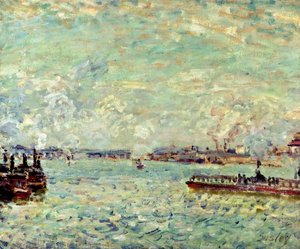
River Scene – A Window Into Impressionistic Vision
“River Scene,” painted by Ferdinand Guillaumin in 1890, stands as a quintessential example of Impressionism’s fascination with capturing fleeting moments and sensory impressions. More than just a depiction of a riverside landscape, it's an invitation to experience the atmosphere of a bygone era—a testament to Guillaumin’s ability to distill the essence of light and color into a single canvas.
Subject Matter & Composition
The artwork portrays a bustling waterway dominated by several boats – barges laden with cargo, smaller vessels navigating calmer stretches – reflecting the industrial growth occurring in France during the late 19th century. Guillaumin skillfully employs horizontal lines to emphasize the expansive space of the river and horizon, creating a visual rhythm that draws the viewer’s eye across the composition. The arrangement of boats contributes to this sense of movement and dynamism.
Style & Technique – Impasto and Atmospheric Light
Guillaumin's distinctive style is characterized by “impasto,” where thick layers of paint are applied directly onto the canvas, creating a palpable textural surface that captures the shimmering effect of sunlight on the water’s surface. Short, broken brushstrokes dominate the technique, mirroring the fragmented nature of perception itself—a hallmark of Impressionism’s rejection of academic realism.
Color Palette & Symbolism
The color palette leans heavily towards blues and greens – reflecting the dominant hues of the river environment – punctuated by yellows and browns that add warmth and depth. Guillaumin utilizes a muted tonal range, prioritizing atmospheric light over precise representation. The boats themselves could symbolize progress, trade, or perhaps even the passage of time, subtly enriching the artwork’s narrative.
Historical Context & Artistic Legacy
Painted during the height of Impressionism's influence, “River Scene” aligns perfectly with the movement’s core principles—a deliberate departure from traditional artistic conventions. Its inclusion in exhibitions alongside Claude Monet solidified Guillaumin’s place within the canon of Impressionist art. Today, reproductions of this evocative piece continue to inspire collectors and interior designers seeking a connection to the beauty and immediacy of nature.
Additional Research
Further exploration into Ferdinand Guillaumin's artistic career reveals his membership in the Société Nautique de Marne, where he championed the depiction of maritime subjects. His work at the Musée d’Art Moderne de Paris alongside Monet exemplifies the collaborative spirit that propelled Impressionism forward.
Perguntas e Respostas
A que período da carreira de Ferdinand Guillaumin pertence "River Scene"?
"River Scene" representa o Mature Period de Ferdinand Guillaumin.
Que sentimento transmite "River Scene", de Ferdinand Guillaumin?
Em "River Scene", um clima Serene acompanha uma emoção Tranquil.
Qual é a técnica utilizada em "River Scene", de Ferdinand Guillaumin?
Ferdinand Guillaumin utilizou a técnica de Oil On Canvas para "River Scene". A técnica define a natureza material da obra original.
Obras Relacionadas


Biografia do Artista
early life and career
Ferdinand Guillaumin, born Jean Baptiste Armand Guillaumin on February 16, 1841, in Paris, France, embarked upon his artistic journey amidst the burgeoning fervor of Impressionism – a movement that redefined art by prioritizing fleeting impressions of light and color over meticulous detail.
His formative years were marked by an unwavering dedication to mastering drawing and painting techniques. Though biographical information remains somewhat sparse, Guillaumin’s early training instilled in him a profound appreciation for observation and capturing the essence of natural landscapes – qualities that would become hallmarks of his distinctive style.
contribution to impressionism
Guillaumin's involvement with Impressionism extended beyond mere participation; he actively championed its principles, aligning himself with luminaries like Claude Monet and Camille Pissarro. This collaboration fostered a shared vision for artistic expression, propelling them to exhibit their works simultaneously at influential salons.
His canvases frequently depicted serene landscapes bathed in ethereal light—a stylistic choice perfectly attuned to the movement’s core ethos. Guillaumin skillfully employed vibrant hues and loose brushstrokes, eschewing academic conventions in favor of spontaneity and immediacy. These techniques underscored Impressionism's commitment to portraying the sensory experience of a particular moment.
notable works and associations
A testament to Guillaumin’s artistic prowess resides within the collections of prestigious institutions such as Mount Holyoke College Art Museum, where reproductions of his paintings offer viewers an opportunity to immerse themselves in his evocative vision. Notably, he maintained close ties with Claude Monet, whose influence is palpable in Guillaumin's compositional choices and palette.
Furthermore, Guillaumin’s artistic sensibilities drew inspiration from Symbolism—a movement that explored the realm of dreams and subconsciousness through symbolic imagery and emotive color palettes. This fusion of Impressionistic technique and Symbolic aesthetics distinguishes his oeuvre and elevates it beyond mere representation to convey deeper psychological resonances.
legacy and remembrance
Ferdinand Guillaumin passed away on June 26, 1927, leaving behind a legacy as one of the foremost practitioners of Impressionism. His paintings continue to captivate audiences worldwide, residing in museums across North America and Europe—a testament to his enduring artistic significance.
Explore more of Guillaumin’s captivating landscapes and delve into the intricacies of Impressionist art on ArtsDot: ferdinand guillaumin | 3 artworks impressionism art movement

Ferdinand Guillaumin
1841 - 1927 , França
Dados Rápidos
- Artistic Movement Or Style: Impressionismo
- Artists Or Movements Influenced By This Artist:
- Cubismo
- Realismo
- Artists Who Influenced This Artist:
- Vincent van Gogh
- Claude Monet
- Paul Cézanne
- Date Of Birth: February 16, 1841
- Date Of Death: June 26, 1927
- Full Name: Jean Baptiste Armand Guillaumin
- Nationality: Francês
- Notable Artworks:
- Garden in Janville in June
- River Scene
- View of Puy de Dôme
- Place Of Birth: Paris, France
Artigos Relacionados

Paul Cézanne: As 25 Obras-Primas que Definiram um Gênio da Arte Moderna | ArtsDot
Descubra as 25 obras-primas de Paul Cézanne, o mestre do pós-impressionismo! Explore a história, técnica e cores vibrantes por trás de quadros icônicos como 'Les Baigneurs' e 'Mont Sainte-Victoire'. Encontre reproduções de arte exclusivas para decorar sua casa com elegância em ArtsDot.com.

Evocations of Place: A Historical Journey Through Landscape Art
Explore the rich history of landscape art with ArtsDot. Discover renowned artists, movements like Impressionism & tonalism, and expert guidance for collecting timeless pieces. Find your perfect serene escape today!

Evoking Nature's Sublime: A Comprehensive Exploration of 19th-Century Landscape Painting
Explore the captivating world of 19th-century landscape painting! Discover renowned artists like Friedrich & Monet, key movements, and find the perfect artwork to bring nature's serenity into your home. Expert insights at ArtsDot.

Evocations of Place: A Historical Journey Through Landscape Art
Explore the rich history of landscape art with ArtsDot. Discover renowned artists, movements like Impressionism & Romanticism, and expert guidance for collecting timeless pieces. Find your perfect serene escape today!

Flowing Narratives: Rivers in Painting – A Historical Exploration
Explore the rich history of rivers in painting! Discover masterpieces from ancient times to Impressionism & beyond. Learn about symbolism, artists like Monet & Daubigny, and find your perfect serene artwork at ArtsDot.