

Flowing Narratives: Rivers in Painting – A Historical Exploration
Índice
The River as Genesis: Ancient Symbolism and Early Representations
 Fluid Reflections: Exploring Water's Symbolism in Art History – From Myth to Impressionism
Explore the rich symbolism of water in art history – from ancient myths to Impressionism's fleeting beauty. Discover masterpieces & find your perfect serene artwork with ArtsDot.com.
From the dawn of civilization, rivers have held a profound significance for humankind – not merely as sources of life-sustaining water, but as potent symbols woven into the very fabric of our myths, religions, and artistic expression. Ancient cultures, cradled in the fertile valleys of the Nile, Tigris, and Euphrates, perceived these waterways as divine entities, the origin points of creation itself. Early representations, though often stylized rather than strictly realistic, reflect this reverence. Consider the intricate depictions on Mesopotamian cylinder seals, where river deities are frequently portrayed alongside symbols of fertility and abundance. These weren’t simply landscapes; they were cosmologies rendered in stone, illustrating a worldview deeply connected to the rhythms of the natural world.
The symbolism extended beyond mere sustenance. Rivers often served as boundaries between worlds – the known and the unknown, life and death. In Greek mythology, the River Styx became synonymous with the passage into the underworld, guarded by Charon, ferrying souls across its dark waters. Similarly, Norse cosmology featured Ymir, a primordial ocean from which all creation sprang, highlighting water’s role as both the beginning and end of existence. These early artistic expressions weren't attempts at photographic accuracy; they were visual narratives designed to convey complex spiritual beliefs, using the river as a central metaphor for life’s journey and the mysteries beyond.
Barbizon School & Realism: Capturing the Essence of Rural Riverscapes
 Landscape with a River
Discover "Landscape with a River" by Daubigny – a serene Barbizon masterpiece capturing nature's tranquility through light and composition. Explore its history & artistic significance.
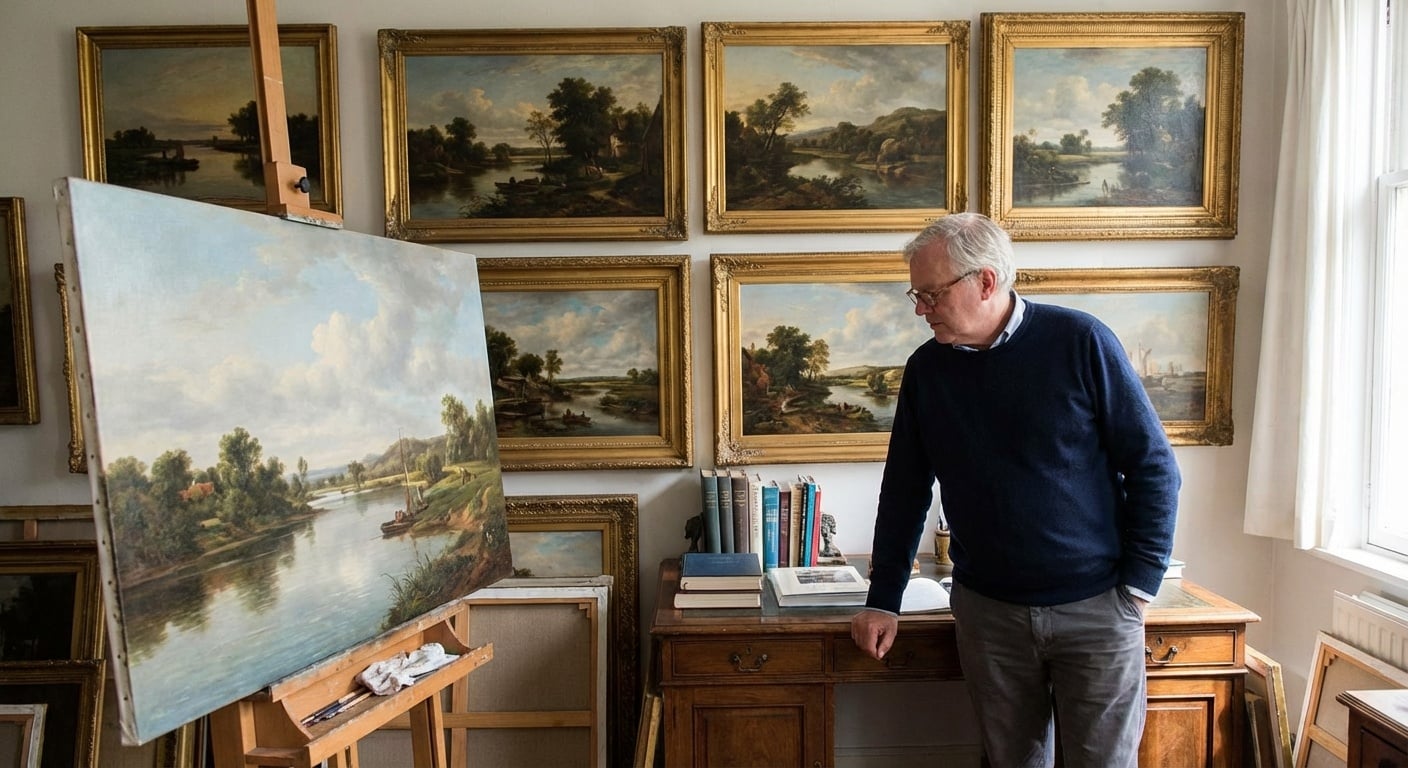
As art evolved, so too did its approach to depicting rivers. The Barbizon school, emerging in mid-19th century France, marked a shift towards a more direct engagement with nature. Artists like Charles-François Daubigny eschewed the grand historical narratives favored by earlier generations, instead focusing on the quiet beauty of the French countryside. His “Landscape with a River” exemplifies this approach – a serene masterpiece capturing the tranquility of nature through subtle shifts in light and composition. Daubigny’s work wasn't about dramatic events; it was about conveying a feeling, an atmosphere, a sense of peaceful immersion in the natural world.
This emphasis on realism extended to the broader movement of Realism, where artists sought to portray life as it truly was, without idealization or romantic embellishment. While not exclusively focused on rivers, Realist painters often depicted scenes along waterways, capturing the everyday lives of those who depended on them – fishermen, boatmen, and rural workers. This focus on authenticity brought a new level of detail and immediacy to river landscapes, grounding them in the tangible realities of 19th-century life.
Impressionism's Liquid Light: Monet, Guillaumin, and the Fleeting Moment
 Ferdinand Guillaumin: Impressionism’s Lyrical Landscapes & the French Countryside
Explore the captivating landscapes of Ferdinand Guillaumin, a key figure in Impressionism. Discover his vibrant color palettes, symbolic style & lasting legacy with ArtsDot.
The Impressionist movement revolutionized painting with its focus on capturing fleeting moments of light and color. And what better subject to explore these principles than water – a constantly shifting surface reflecting the ever-changing sky? Claude Monet’s series of paintings depicting the Seine River are perhaps the most iconic examples, showcasing his mastery of atmospheric perspective and broken brushstrokes. He wasn't interested in meticulously rendering every detail; he sought to capture the *impression* of light on water, the way it shimmered and danced.
Ferdinand Guillaumin, another key figure in Impressionism, similarly dedicated much of his work to capturing the lyrical landscapes of the French countryside. His vibrant color palettes and symbolic style brought a unique energy to his river scenes, often depicting boats and figures bathed in golden sunlight. Sir Alfred James Munnings, though known primarily for his equine art, also produced stunning studies of riverscapes, like “Study of a River Landscape” and “River Landscape with Trees,” showcasing his ability to capture the serene beauty of rural England with Impressionistic brushstrokes and earthy tones. These artists weren’t simply painting rivers; they were capturing the *experience* of being near them – the warmth of the sun, the gentle breeze, the play of light on water.
Beyond Representation: Water’s Emotional Resonance in 19th-Century Art
The fascination with rivers extended beyond mere visual representation. Throughout the 19th century, artists increasingly explored the emotional and psychological resonance of water. Water could symbolize purity, renewal, or even melancholy and loss. The reflective surface became a metaphor for introspection, mirroring not just the surrounding landscape but also the inner world of the viewer. This is evident in the works of Maximilien Luce, a Neo-Impressionist master who used Pointillist techniques to create vibrant Parisian scenes and landscapes that often evoked a sense of nostalgia and longing.
The Hungarian National Gallery’s exhibition, “Rivers, Lakes, Seas – Vitalizing Water,” further illustrates this theme, showcasing how water motifs permeated European art during the 19th century. The exhibition highlights the diverse ways in which artists interpreted water – from its role as a source of life and creation to its association with death and rebirth. This exploration reveals that rivers weren’t simply landscapes to be depicted; they were powerful symbols capable of evoking a wide range of emotions and ideas.
Riverscapes as Historical Records: Depicting Life Along the Waterways
Beyond their symbolic significance, river paintings also serve as valuable historical records, offering glimpses into the lives of those who depended on these waterways. Artists like Jan Brueghel the Elder captured scenes of bustling river life in meticulous detail, depicting boats, bridges, and settlements along the banks. These paintings provide a window into the past, revealing how people lived, worked, and interacted with their environment.
Emanuel Leutze’s iconic “Washington Crossing Delaware,” while romanticized, similarly captures a pivotal moment in American history, depicting the challenges and hardships faced by the Continental Army. Even paintings that don't explicitly focus on historical events can offer insights into the social and economic conditions of the time. The depiction of boats, clothing, and architecture provides valuable clues about daily life along the waterways.
The Enduring Appeal of Rivers: A Legacy for Contemporary Collectors
Today, river paintings continue to captivate audiences with their beauty, tranquility, and historical significance. Whether you’re drawn to the serene landscapes of Daubigny, the vibrant colors of Monet, or the emotional resonance of Luce, there's a river painting to suit every taste. At ArtsDot, we offer a curated selection of museum-quality reproductions, allowing you to bring these masterpieces into your own home.
From handmade oil paintings meticulously crafted by skilled artists to high-resolution prints that capture the essence of the original artwork, we provide a range of options to suit every budget and preference. Explore our collection today and discover the enduring appeal of rivers in painting – a legacy that continues to inspire and enchant generations. Find your perfect serene escape with ArtsDot.
Artigos Relacionados

Evoking Arcadia: A Historical & Aesthetic Exploration of Rural Landscape Art
Explore the rich history of pastoral landscape art, from classical Arcadia to Impressionism & beyond. Discover key artists, movements, and how to collect serene rural scenes for your home. Expert insights at ArtsDot.

Capturing Ephemeral Light: A Comprehensive Exploration of Plein Air Painting's History & Enduring Legacy
Explore the rich history of plein air painting, from its origins to Impressionism & beyond. Discover key artists, techniques, and the enduring legacy of capturing light in landscape art. Find museum-quality reproductions at ArtsDot.

Evocations of Place: A Historical Journey Through Landscape Art
Explore the rich history of landscape art with ArtsDot. Discover renowned artists, movements like Impressionism & Romanticism, and expert guidance for collecting timeless pieces. Find your perfect serene escape today!

Echoes of an Era: Exploring Themes & Techniques in 19th-Century Painting
Explore the captivating world of 19th-century painting! Discover Realism & Impressionism's revolutionary techniques, key artists like Manet and Monet, and their lasting impact. A comprehensive guide for art enthusiasts.
Fluid Reflections: Exploring Water's Symbolism in Art History – From Myth to Impressionism
Explore the rich symbolism of water in art history – from ancient myths to Impressionism's fleeting beauty. Discover masterpieces & find your perfect serene artwork with ArtsDot.com.

