Infância, Família e Formação
Alfred Sisley nasceu em Paris, em 30 de outubro de 1839. Sua criação foi moldada pela intersecção de duas culturas, uma vez que seus pais, William Sisley e Felicia Sell, eram expatriados britânicos vivendo na França. Seu pai atuava como comerciante de artigos de luxo importados, proporcionando um ambiente burguês e confortável para o jovem. Esse contexto fez com que Alfred crescesse navegando por um mundo bilíngue, sentindo-se igualmente à vontade tanto em francês quanto em inglês.
O caminho traçado para ele não era, originalmente, feito de pincéis e telas. Seu pai pretendia que ele seguisse o negócio da família e, aos dezoito anos, Alfred viajou para Londres para se preparar para uma vida no comércio. No entanto, o fascínio pelas artes visuais revelou-se mais forte do que as exigências do comércio. Ele acabou retornando a Paris em 1861 para iniciar sua formação formal, buscando uma maneira de transformar seu interesse em profissão.
Ele ingressou no ateliê do artista suíço Marc-Charles-Gabriel Gleyre na École des Beaux-Arts. Nesse ambiente acadêmico, ele começou a desenvolver a base técnica que sustentaria suas explorações posteriores da natureza. Foi durante esses anos formativos em Paris que ele começou a se afastar das estruturas rígidas do ensino tradicional, movendo-se em direção a uma observação mais direta do mundo ao seu redor.
O Círculo Impressionista em Paris
Nos estúdios de Paris, Alfred Sisley encontrou uma comunidade de rebeldes com ideais semelhantes. Ele estudou sob a orientação do artista suíço Marc-Charles-Gabriel Gleyre na École des Beaux-Arts, um ambiente onde forjou amizades profundas e duradouras com Claude Monet, Pierre-Auguste Renoir e Frédéric Bazille. Estes quatro jovens compartilhavam um objetivo comum: afastar-se das regras rígidas e formais da pintura acadêmica. Eles preferiam levar suas telas para o ar livre, buscando capturar as qualidades imediatas e mutáveis da luz e da atmosfera diretamente do mundo natural.
Essa rebeldia compartilhada acabou levando-os a desafiar o estabelecido mundo da arte. O Salão oficial da Académie de Beaux-Arts, o guardião da legitimidade artística da época, recusou-se a convidar suas obras. Para a sociedade daquele período, a abordagem deles era demasiado nova e distinta para ser reconhecida como arte real. Em vez de esperarem pela aprovação das instituições tradicionais, o grupo tomou as rédeas da situação. Em abril de 1874, organizaram e participaram da Primeira Exposição Impressionista, um movimento audacioso que ajudou a definir um novo estilo artístico.
Uma Vida Dedicada à Pintura de Paisagem
Enquanto muitos de seus contemporâneos oscilavam entre diferentes gêneros, o foco de Alfred Sisley permaneceu notavelmente singular. Toda a sua obra consiste quase exclusivamente em paisagens. Ele buscou capturar o mundo natural através de um compromisso inabalável com a pintura en plein air, trabalhando frequentemente ao ar livre para captar a luz mutável no exato momento em que ela acontecia. Essa devoção à experiência imediata e vivida da natureza fez dele, talvez, o mais consistente dos Impressionistas em seu método.
Sua vida estava profundamente enraizada no campo francês, embora ele detivesse a cidadania britânica. Ele transitou por diversas paisagens, encontrando inspiração nos cantos tranquilos da França. Seu caminho o levou por Paris e Louveciennes, e ele passou períodos significativos em Marly-le-Roi, Sèvres, Veneux-les-Sablons e Moret-sur-Loing. Esses locais serviram como o cenário constante para uma carreira dedicada à observação das mudanças sutis no céu e na água.
Essa presença constante na paisagem permitiu-lhe desenvolver uma familiaridade profunda com o terreno que pintava. Ele não buscava cenas grandiosas ou dramáticas, mas sim a realidade silenciosa dos lugares onde vivia e trabalhava. Sua obra reflete uma vida dedicada à observação serena da terra e da atmosfera que a envolve.
Pintando a Costa Inglesa e o Tâmisa
Embora sua vida estivesse amplamente enraizada na França, Alfred Sisley sentia uma atração irresistível pelas paisagens da Grã-Bretanha, visitando o país em três ocasiões distintas. Em 1874, ele viajou para Londres acompanhado por seu patrono, Jean-Baptiste Faure. Durante essa jornada, encontrou um tema de serenidade nos trechos não-tideais do Tâmisa. Nas proximidades da ponte de Hampton Court, perto de East Molesey, ele produziu vinte pinturas que capturaram a luz e o movimento específicos daquele rio. Essas obras refletem um período de observação profunda e focada, um desvio de suas habituais e familiares margens francesas.
Sua conexão com a paisagem britânica nem sempre foi um caminho de facilidades. Em 1881, ele planejou pintar a Ilha de Wight, mas a viagem terminou em frustração quando seus materiais essenciais e telas nunca foram entregues. Esse contratempo impediu-o de explorar plenamente a luz costeira que tanto buscava. Mais tarde, no verão de 1897, ele realizou uma última viagem ao País de Gales ao lado de sua esposa, Eugénie. Essas excursões permitiram que ele encontrasse atmosferas e qualidades de luz muito distintas daquelas encontradas no vale do Sena.
A Serenidade de Moret-sur-Loing
Moret-sur-Loing tornou-se uma parte central da vida de Alfred Sisley, um refúgio onde ele passou muitos anos consolidando sua identidade artística. Ele sentia uma conexão profunda com a cidade, observando que sua arte florescia de forma mais intensa enquanto estava cercado pela natureza densa e pelas águas mutáveis do Loing. O rio era uma presença constante em sua obra, oferecendo um tema silencioso que lhe permitia estudar a maneira como a luz dançava sobre a superfície da água.
Ele dedicou grande parte de seu tempo a capturar a paisagem local, focando frequentemente nos canais e pontes que definiam o caráter da cidade. Essas cenas não buscavam o drama grandioso, mas sim a quietude de um lugar específico. Ele procurava registrar o encontro entre o céu e a água, e como as estruturas da cidade se integravam à exuberância do verde. Sua estadia em Moret-sur-Loing foi um longo período de observação contemplativa que perdurou até sua morte, ocorrida ali em 29 de janeiro de 1899, aos cinquenta e nove anos.
- Moret ao Pôr do Sol (cerca de 1888)
- A Ponte de Moret sob a Luz do Sol (1892)
- Paisagem Fluvial perto de Moret-sur-Loing (1890)
Técnica e Estilo Artístico
A abordagem de Alfred Sisley em relação à tela estava profundamente enraizada em uma observação silenciosa e constante do mundo natural. Ele não buscava o dramático ou o estridente; em vez disso, sua obra focava em uma representação sutil da luz e em um sentimento de profunda tranquilidade. Para alcançar esse efeito, ele frequentemente iniciava suas pinturas trabalhando primeiro no céu. Ao estabelecer os céus antes da terra, ele conseguia capturar melhor o estado de espírito específico de um momento, garantindo que a luz parecesse integrada a toda a cena. Esse método permitiu que ele dominasse a forma como a luz interage com a superfície da água e com a vastidão do firmamento, criando uma sensação de atmosfera que parecia vivida, e não apenas encenada.
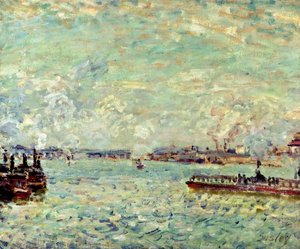
Sua paleta de cores nunca era agressiva. Ele preferia uma gama delicada de tons, frequentemente banhando suas paisagens em matizes pálidos de verde, rosa e púrpura. É comum encontrar o uso de tons de azul poeirento e creme para sugerir a névoa suave de uma manhã ou o reflexo gentil de um rio. Ele aplicava a tinta com um toque diversificado, variando suas pinceladas para lidar com o jogo de luz e sombra. Essa técnica o ajudou a ir além da simples representação, permitindo-lhe retratar a maneira como a luz se transforma através de uma paisagem conforme o dia avança.
- The Saint Martin Canal in Paris (1870)
- A February Morning at Moret sur Loing (cerca de 1881)
- The Lock of Saint-Mammès (1885)
Obras-Primas e Temas Notáveis
Alfred Sisley encontrou o seu propósito no movimento silencioso do mundo natural. O seu olhar voltava-se para rios, canais e o mar, encontrando frequentemente uma paz singular na forma como a luz interagia com a água. Ele sentia-se tão confortável ao pintar a quietude densa e branca da neve quanto ao capturar as correntes mutáveis de um rio. O seu foco permaneceu imutável nestes elementos, procurando eternizar a sensação de uma paisagem num único e fugaz momento.
Em 1870, ele produziu The Saint Martin Canal in Paris, uma obra que reflete o seu interesse inicial pelas vias navegáveis da cidade. À medida que a sua carreira progredia, Alfred Sisley tornou-se profundamente apegado aos ritmos da campiña francesa. Esta conexão é palpável em A February Morning at Moret sur Loing, pintada em 1881, onde a atmosfera de uma manhã de inverno é evocada através de tons suaves e sobrepostos. Ele também voltou a sua atenção para as transformações mais dramáticas da natureza, como as cheias do Sena em Port-Marly em 1875, que documentou através de uma série de pinturas memoráveis.
- The Saint Martin Canal in Paris (1870)
- A February Morning at Moret sur Loing (1881)
Legado e Influência Duradoura
O lugar de Alfred Sisley na história da arte é marcado por uma persistência silenciosa e constante. Enquanto muitos de seus contemporâneos buscavam a fama ou a mudança social através de suas telas, ele permaneceu focado nas mudanças sutis do céu e no movimento da água. Ele atuou como um elo vital entre a escola de Barbizon, com seu realismo fundamentado, e o florescimento pleno do Impressionismo. Essa conexão ajudou a construir uma ponte entre a pintura de paisagem tradicional e as novas e experimentais formas de enxergar o mundo.
Seu reconhecimento não chegou durante sua vida. Embora tenha enfrentado dificuldades financeiras e trabalhado frequentemente em relativa obscuridade, o valor de sua obra mudou significativamente após sua partida. Os preços de suas telas dispararam, concedendo-lhe finalmente a segurança financeira que lhe escapou enquanto estava vivo. Hoje, suas pinturas continuam a atrair pessoas que encontram algo profundo em sua habilidade de revelar o extraordinário dentro do comum. Ele demonstrou que uma simples margem de rio ou uma manhã nublada possuíam profundidade suficiente para sustentar uma vida inteira de estudos.
A influência de sua abordagem pode ser vista na obra de pintores de paisagem posteriores. Esses artistas buscaram em seu método a forma de capturar as qualidades efêmeras da luz e a maneira como a atmosfera transforma uma cena. Sua dedicação à pintura en plein air ajudou a estabelecer um padrão de como os artistas se envolvem diretamente com o mundo natural. Seu legado encontra-se naquela forma específica e delicada de registrar um momento antes que a luz se altere e a cena desapareça.
Onde Contemplar suas Obras Hoje
Para vivenciar pessoalmente a luz serena das paisagens de Alfred Sisley, é necessário percorrer importantes instituições pela Europa e América do Norte. Em Paris, sua presença é profundamente sentida no Musée d'Orsay, que abriga um número significativo de suas telas. O Louvre também preserva obras de sua coleção, garantindo que sua visão artística permaneça integrada à rica história cultural da cidade. Para aqueles que visitam o Reino Unido, a National Gallery, em Londres, oferece a oportunidade de apreciar seu traço, enquanto a National Gallery of Wales proporciona um olhar ainda mais profundo sobre sua dedicação ao mundo natural.
O alcance de sua arte estende-se muito além das fronteiras francesas, com muitas de suas pinturas encontrando refúgio em proeminentes coleções americanas. O Art Institute of Chicago e o Metropolitan Museum of Art, em Nova York, ambos detêm obras de sua autoria, permitindo que o espectador encontre suas paletas de cores sutis em diferentes contextos. Nos Estados Unidos, o Nelson-Atkins Museum of Art, em Kansas City, também preserva suas pinturas, tornando suas tranquilas cenas fluviais acessíveis a um vasto público do outro lado do Atlântico.
- Bridge at Villeneuve la Garenne, cerca de 1872
- Grand Jatte, cerca de 1873
- The Saint Martin Canal in Paris, cerca de 1870
- Moret at Sunset, cerca de 1888
Perguntas e Respostas
Por quais outros nomes ou pseudônimos Alfred Sisley é conhecido?
Alfred Sisley também é conhecido como Sisley.
Posso navegar pelas obras de Alfred Sisley por técnica?
Para encontrar todas as obras de Alfred Sisley por técnica, acesse a página de Por Técnica do artista.
Como posso encontrar obras de Alfred Sisley em uma paleta específica?
A página Por paleta de cores agrupa as obras de Alfred Sisley por suas paletas de cores.