


 Zobacz w skali 1:1
 Wyślij
 Udostępnij
 Szczegóły
 Przewodnik

 Pobierz plik obrazu
 Podobne obiekty
 RTG
RTG Pokaz slajdów
 Statystyki
Italian Landscape
 Oil On Canvas
- WallArt
- Romantic Landscape Painting
 1795
1795- Early Modern
 65.0 x 96.0 cm
 Muzeum Ermitażu
 Czytaj więcej
Giclée / Wydruk artystyczny
Wydruki giclée lub płótna o jakości muzealnej, szybka realizacja i szeroki wybór opcji wykończenia. ( Kup ręcznie malowany obraz Przełącz na wersję cyfrową)




P118B zł10

P118H zł10

P118W zł10

P438Z zł10

P508JH zł12

P508YH zł12

P805H zł10

P805Z zł10

P919BZ zł10

P919G zł10

P919XJ zł10

P959ZH zł10

P968JZ zł12

W106C zł8

W218G zł10

W218JH zł8

W218Y zł10

W307PJ zł10

W316G zł10

W316PJ zł8

W316Y zł10

W398PJ zł8

W4111J zł10

W500HY zł15

W500JH zł15

W692G zł12

W849H zł8

W940BG zł15

W953PJ zł8




Wybierz spośród naszych standardowych rozmiarów, które zachowują oryginalne proporcje dzieła sztuki.

Wpisz wymaganą szerokość i wysokość, aby dopasować grafikę do ramy lub ściany. Wydruk można jedynie przyciąć, nigdy nie powiększając go poza oryginalny obraz, dlatego format o innym proporcji spowoduje utratę części kompozycji. Przed rozpoczęciem druku prześlemy Ci cyfrowy podgląd do zatwierdzenia. Obraz wyświetlany na tej stronie nie pokazuje rzeczywistego przycięcia — jedynie podgląd oddaje ten efekt.
Dostawa na cały świat () w ciągu 2 tygodni zamiast standardowych 4/5 tygodni. (21 Październik)

Bezpłatna ekspresowa wysyłka na cały świat

Wysokiej jakości płótno lniane

Pełne ubezpieczenie transportowe

Gwarancja zwrotu należności celnych i podatków importowych

Gwarancja idealnego odwzorowania barw

100-dniowy okres na zwrot dzieła w przypadku wykrycia wad produkcyjnych

Gwarancja 100% zwrotu pieniędzy

Oferta przy zakupie wielu sztuk
 Opcja ze szkłem jest dostępna wyłącznie w rozmiarach poniżej 110 cm

Italian Landscape
Giclée / Wydruk artystyczny
Rozmiar reprodukcji
-


Suma do zapłaty
zł 235
A Symphony of Light and Tranquility
In the vast tapestry of the Romantic movement, few works capture the ethereal essence of the Italian countryside as profoundly as Jacob Philippe Hackert’s Italian Landscape. Created in 1795, this oil on canvas masterpiece serves as a window into an idealized Arcadia, where the grandeur of nature and the quietude of pastoral life exist in perfect, undisturbed harmony. As one gazes upon the canvas, there is an immediate sense of being transported to a world far removed from the industrializing tensions of the late 18th century. The painting does not merely represent a location; it evokes a feeling of timelessness, inviting the viewer to linger within its sun-drenched valleys and misty mountain peaks.
The composition is a masterclass in balanced tension, guiding the eye through a meticulously layered journey. In the foreground, a tranquil river meanders with a gentle grace, its surface acting as a mirror for the clear blue sky and the lush greenery that lines its banks. The presence of grazing cows adds a touch of pastoral intimacy, grounding the epic scale of the landscape in the humble, rhythmic reality of rural life. As the gaze moves toward the middle ground, rolling hills draped in verdant vegetation lead the viewer upward toward a majestic mountain range. These peaks, partially veiled by an atmospheric haze, command the horizon with an imposing power that speaks to the Romantic fascination with the sublime—the awe-inspiring and sometimes overwhelming beauty of the natural world.
The Mastery of Atmosphere and Technique
Hackert’s technical prowess is most evident in his sophisticated use of sfumato, a technique he refined under the influence of his mentor, Claude Joseph Vernet. By subtly blurring the boundaries between distant mountains and the sky, Hackert creates a palpable sense of depth and atmospheric perspective. This soft, smoky transition prevents the landscape from feeling static; instead, it breathes with moisture and light. The artist’s ability to marry minute, realistic details—such as the individual textures of foliage and the rugged contours of rocks—with this expansive, misty atmosphere is what distinguishes this work as a pinnacle of his era.
The color palette is a deliberate study in serenity, dominated by harmonious shades of emerald, forest green, and deep azure. These cool tones are punctuated by the warm, golden light that seems to filter through the clouds, illuminating the classical architecture nestled among the trees. This interplay of light and shadow does more than define form; it establishes a mood of profound peace. For the discerning collector or interior designer, this painting offers a sophisticated focal point that brings a sense of calm and classical elegance to any space, acting as an anchor of tranquility in a modern environment.
Historical Resonance and Lasting Legacy
To understand the Italian Landscape is to understand the heart of a traveling artist. Hackert, born in Germany but deeply enamored with the Mediterranean spirit, spent much of his career capturing the light of Italy. His work reflects the transition from Neoclassical precision toward the more expressive, emotional observations of the Romantic era. The inclusion of classical architectural elements—columns and structures that hint at a storied past—serves as a poignant reminder of humanity's historical connection to the land. These man-made wonders do not intrude upon the scenery but rather blend seamlessly into the natural topography, suggesting a world where civilization and nature exist in a state of grace.
Owning a reproduction of such a significant work allows one to possess a fragment of art history. It is an invitation to daily contemplation, a piece that rewards repeated viewing with new discoveries of light, shadow, and texture. Whether placed in a grand library or a contemporary living suite, Hackert’s vision of the Italian landscape remains a timeless testament to the enduring power of beauty and the quiet majesty of the earth.
Pytania i odpowiedzi
Ile światła zdają się odbijać kolory dzieła "Italian Landscape"?
Kolory dzieła "Italian Landscape" wykazują luminancję na poziomie Gentle Luminance.
Kto stworzył "Italian Landscape" i kiedy?
Jacob Philippe Hackert stworzył/a "Italian Landscape" w 1795 roku.
Kiedy powstało dzieło "Italian Landscape" i do jakiego nurtu należy?
Dzieło "Italian Landscape" powstało w 1795 roku, w ramach nurtu Romantic Landscape Painting.
Podobne dzieła


Biografia artysty
Early Life and Artistic Foundations
Jacob Philipp Hackert emerged onto the artistic landscape in 1737, born in Prenzlau, Brandenburg – a region now nestled within Germany. His upbringing was steeped in artistry; his father, Philipp Hackert, practiced as both a portraitist and an animal painter, laying the initial groundwork for young Jacob’s creative journey. This familial influence extended to his uncle, under whose guidance he further honed his skills. Formal training followed at the prestigious Prussian Academy of Arts in Berlin beginning in 1758, where he diligently developed the technical foundations that would later define his style. However, Hackert's early career wasn’t confined to studio walls. His travels took him through Swedish Pomerania and eventually to Stockholm, where a pivotal commission from Baron Adolf Friedrich von Olthof – decorative murals for the baron’s estate – broadened his artistic horizons and exposed him to diverse aesthetic sensibilities. These formative years were crucial in shaping Hackert's eye and preparing him for the grander stages of his career.The Italian Awakening: Paris, Rome, and Naples
A defining chapter unfolded with Hackert’s relocation to Paris between 1765 and 1768 alongside fellow Swiss artist Balthasar Anton Dunker. This period proved transformative, immersing him in a vibrant artistic milieu. He found himself profoundly influenced by Claude Joseph Vernet, the celebrated painter of landscapes and seascapes, absorbing elements of Vernet’s dramatic compositions and atmospheric effects into his own burgeoning style. Simultaneously, studies under German engraver Johann Georg Wille refined his precision and attention to detail. In 1768, Hackert embarked on a journey that would irrevocably alter his artistic trajectory – he moved to Italy with his brother Georg, establishing himself primarily in Rome and Naples. This move marked the beginning of an extraordinarily prolific period fueled by numerous commissions for views of the Italian countryside, most notably from Sir William Hamilton. He traversed the length and breadth of Italy, meticulously documenting its beauty and gaining recognition as a master landscape painter. The light, the colors, the very essence of the Italian peninsula captivated him, becoming the defining characteristic of his work.Patronage, Recognition, and Artistic Flourishing
Hackert’s artistic career ascended to new heights through a combination of talent and strategic patronage. His ability to capture the sublime beauty of Italy resonated with prominent figures across Europe. A landmark commission arrived from Catherine the Great of Russia – a cycle of paintings depicting the pivotal Battle of Chesma, solidifying his reputation on an international scale. Further bolstering his standing was a fruitful relationship with Pope Pius VI, resulting in significant artistic projects that showcased his skill and versatility. In 1786, Hackert reached the pinnacle of his career when he was appointed court painter to Ferdinand I of the Two Sicilies in Naples. This prestigious role extended beyond mere painting; he was entrusted with advising on the creation of a painting restoration laboratory at the Museo di Capodimonte and overseeing the transfer of the esteemed Farnese collections from Rome to Naples, demonstrating his deep understanding of art history and conservation. He produced notable paintings depicting Caserta and the Royal Palace of Caserta, as well as a series illustrating the Bourbon ports. Intriguingly, Hackert also served as a secret informant for Russia during this time, maintaining contact with Andrey Razumovsky – a testament to the complex political landscape in which he operated. A particularly cherished connection blossomed between Hackert and Johann Wolfgang von Goethe during the latter’s visit to Naples in 1786, forging a friendship that further elevated his intellectual standing.Style, Legacy, and Historical Significance
Jacob Philipp Hackert's artistic style represents a compelling synthesis of classical landscape painting and an emerging Romantic sensibility. Heavily influenced by the works of Claude Lorrain, his compositions are characterized by carefully balanced arrangements that blend observed reality with an idealized aesthetic vision. However, Hackert distinguished himself through an unwavering commitment to botanical accuracy and a desire for recognizable depictions of place. His paintings are marked by sharp renderings of natural details and realistic portrayals of Italian scenery, often bathed in a warm, golden light. He is rightfully considered one of the greatest interpreters of the *vedutismo* genre – paintings that meticulously depict city views and landscapes with topographical precision. Hackert’s historical significance extends beyond his artistic contributions; he served as a vital cultural ambassador between Germany and Italy during the late 18th century, bridging artistic traditions and fostering cross-cultural exchange. He passed away on April 28, 1807, in San Pietro di Careggi near Florence, leaving behind a substantial body of work that continues to inspire awe and admiration for its beauty, technical mastery, and enduring historical importance. His landscapes are not merely representations of scenery; they are windows into a world imbued with both classical grace and Romantic emotion.
Jacob Philippe Hackert
1737 - 1807 , Niemcy
Najważniejsze informacje
- Artistic Movement Or Style: Klasycizm, Romantyzm
- Artists Or Movements Influenced By This Artist: ['Vedutismo']
- Artists Who Influenced This Artist:
- Claude Joseph Vernet
- Johann Georg Wille
- Claude Lorrain
- Date Of Birth: 15 września 1737
- Date Of Death: 28 kwietnia 1807
- Full Name: Jacob Philipp Hackert
- Nationality: Niemiec
- Notable Artworks:
- Krajobraz z Jeziorem Wenus
- Widok Caserty
- Jesień
- Place Of Birth: Prenzlau, Niemcy
Zobacz także powiązane artykuły

Evocations of Place: A Historical Journey Through Landscape Art
Explore the rich history of landscape art with ArtsDot. Discover renowned artists, movements like Impressionism & Romanticism, and expert guidance for collecting timeless pieces. Find your perfect serene escape today!

Barokowe arcydzieła: 10 obrazów, które zdefiniowały epokę | ArtsDot.com
Odkryj 10 arcydzieł baroku! Caravaggio, Rembrandt, Rubens i inni artyści, którzy zdefiniowali epokę. Poznaj historie, techniki i inspiracje tych niezwykłych obrazów. Reprodukcje najwyższej jakości na ArtsDot.com – idealne do Twojego wnętrza!

Romantyczny Krajobraz w Malarstwie: 10 Arcydzieł, Które Zdefiniowały Epokę | ArtsDot.com
Odkryj 10 arcydzieł romantyzmu w malarstwie! Poznaj historie Caspara Davida Friedricha, Turnera i innych mistrzów. Inspiracje wnętrzarskie & reprodukcje obrazów najwyższej jakości na ArtsDot.com. Eksploruj kolekcję online!
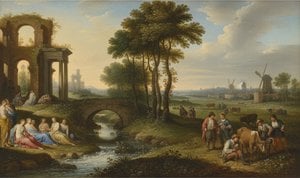
Cornelis van Poelenburch: Bridging Mannerism & the Dutch Baroque Landscape
Discover Cornelis van Poelenburch, a pivotal Dutch Baroque landscape painter bridging Mannerism & Italianate styles. Explore his life, key works, and lasting influence on 17th-century art with ArtsDot.

John Constable: 25 Najlepszych Obrazów Mistrza Angielskiego Krajobrazu | ArtsDot
Odkryj 25 arcydzieł Johna Constable'a – mistrza angielskiego krajobrazu! Poznaj romantyczne pejzaże, technikę malarską i inspiracje z Dedham Vale. Reprodukcje obrazów najwyższej jakości na ArtsDot.com. Eksploruj pełną kolekcję online!