


 Zobacz w skali 1:1
 Wyślij
 Udostępnij
 Szczegóły
 Przewodnik

 Pobierz plik obrazu
 Podobne obiekty
 RTG
RTG Pokaz slajdów
 Statystyki
Landscape Composition Italian Scenery
 Hudson River School
 1832
1832 103.0 x 156.0 cm
 Czytaj więcej
Ręcznie malowana reprodukcja olejowa
Ręcznie malowany obraz olejny na płótnie, wykonany na zamówienie przez naszych artystów w wybranym przez Ciebie wymiarze i oprawie. ( Przełącz na wersję drukowaną Przełącz na wersję cyfrową)




































Wybierz spośród naszych standardowych rozmiarów, które zachowują oryginalne proporcje dzieła sztuki.

Możesz wprowadzić własne wymiary, aby dopasować obraz do konkretnej ramy lub przestrzeni. Jeśli wybrany rozmiar nie będzie odpowiadał proporcjom oryginału, przytniecie dzieło sztuki lub rozszerzymy je o dodatkowe elementy, ręcznie domalowane przez artystę. Przed rozpoczęciem produkcji wyślemy projekt cyfrowy do Twojej akceptacji.
Należy pamiętać, że podgląd na ekranie nie odzwierciedla rzeczywistego przycinania ani rozszerzania obrazu. Tylko projekt dokładnie pokaże ostateczną kompozycję.
Choć oferujemy możliwość zamówienia niestandardowych rozmiarów, zalecamy wybór wymiaru z gotowej listy, aby zachować oryginalne proporcje dzieła.
Po złożeniu zamówienia zespół ArtsDot.com skontaktuje się z klientem drogą mailową w celu uzyskania instrukcji i prześle wizualizację projektu
Dostawa na całym świecie () w ciągu 3–4 tygodni zamiast standardowych 5 tygodni. (22 Wrzesień). Bez kompromisów w kwestii jakości.

Bezpłatna ekspresowa wysyłka na cały świat

Wysokiej jakości płótno lniane

Pełne ubezpieczenie transportowe

Gwarancja zwrotu należności celnych i podatków importowych

Gwarancja idealnego odwzorowania barw

100-dniowy okres na zwrot dzieła w przypadku wykrycia wad produkcyjnych

Gwarancja 100% zwrotu pieniędzy

Oferta przy zakupie wielu sztuk
 Opcja ze szkłem jest dostępna wyłącznie w rozmiarach poniżej 110 cm

Landscape Composition Italian Scenery
Technika wykonania
Rozmiar reprodukcji
-


Suma do zapłaty
$ 313
Podobne dzieła


Biografia artysty
A Pioneer of American Landscape Painting
Thomas Cole, a name inextricably linked to the birth of distinctly American art, stands as a pivotal figure in 19th-century painting. Born in Bolton le Moors, Lancashire, England, in 1801, his early life offered little indication of the profound impact he would have on the artistic landscape. Emigrating to the United States with his family in 1818 and settling in Ohio, Cole’s journey was one of self-discovery and artistic awakening. Initially working as an itinerant portrait painter—a common trade at the time—he soon found himself drawn to the untamed beauty of the American wilderness. This shift wasn't merely a change in subject matter; it represented a fundamental divergence from European artistic traditions, which often focused on historical or mythological narratives. Cole’s landscapes weren’t simply depictions of scenery; they were imbued with a spiritual and allegorical depth that resonated deeply with a nation forging its own identity. His move to Catskill, New York, in 1825 proved transformative, providing him with both inspiration and a permanent base from which to explore the surrounding Hudson River Valley—a region that would become inextricably linked with his artistic legacy.The Hudson River School and Romantic Ideals
Cole is rightfully regarded as the founder of the Hudson River School, an art movement characterized by its romantic portrayal of the American landscape. However, to label him simply a “landscape painter” feels inadequate. His work transcended mere representation; it was deeply philosophical, often exploring themes of humanity’s relationship with nature, the passage of time, and the rise and fall of civilizations. Influenced by European Romanticism—particularly the works of Claude Lorrain and J.M.W. Turner—Cole adapted these sensibilities to an American context. Where European Romantics often depicted dramatic, sublime landscapes as a reflection of inner turmoil, Cole’s paintings frequently conveyed a sense of optimism and divine presence within the natural world. He saw in the vastness of the American wilderness a symbol of national potential and spiritual renewal. The Oxbow (1836), perhaps his most iconic work, exemplifies this perfectly—a sweeping vista that contrasts the wild, untamed river valley with the cultivated farmlands, representing both the promise and the challenges of westward expansion. The painting’s meticulous detail and subtle color variations capture not just a scene but also a feeling – a sense of awe and wonder at the power and beauty of nature.Allegory and The Course of Empire
While celebrated for his realistic depictions of nature, Cole’s artistic ambition extended beyond pure landscape painting. He frequently employed allegory to convey complex moral and philosophical ideas. This is most powerfully demonstrated in his monumental series The Course of Empire, created between 1833 and 1836. Comprising five canvases—“Savage State,” “Pastoral State,” “Arcadian State,” “Consummation,” and “Destruction”—the series traces the cyclical history of a civilization, from its pristine origins to its inevitable decline. The paintings are not merely historical narratives; they serve as cautionary tales about the dangers of unchecked ambition and the fragility of human achievement. The series was inspired by the writings of Count de Volney, whose book *Ruines; or Meditations on the Ruins of Empires* explored similar themes. The dramatic lighting and carefully chosen symbols in each painting—ranging from towering forests to crumbling ruins—invite viewers to contemplate the consequences of their actions and the impermanence of worldly power.Technique and Style
Cole’s artistic style was characterized by a remarkable blend of observation, skill, and imagination. He meticulously studied nature, often making numerous pencil sketches *en plein air* (outdoors) to capture the nuances of light, shadow, and color. However, he wasn't simply a recorder of reality; he skillfully manipulated these elements to create emotionally resonant compositions. Cole’s use of atmospheric perspective—the subtle blurring of distant objects—and his mastery of chiaroscuro (the contrast between light and dark) added depth and drama to his paintings. He was acutely aware of the limitations of his own technical abilities, famously stating that he avoided depicting human figures prominently in his landscapes, preferring instead to focus on the grandeur of nature itself. This decision allowed him to prioritize the spiritual and philosophical themes he sought to convey.Legacy and Enduring Influence
Thomas Cole’s untimely death in 1848 at the age of 47 marked a significant loss for the American art world. However, his influence continued to reverberate through generations of artists. He directly mentored Frederic Edwin Church, who would become one of the leading figures of the second generation of Hudson River School painters. His emphasis on observation from nature, combined with a deeply personal and symbolic approach to landscape painting, laid the foundation for a distinctly American artistic tradition. Cole’s work continues to be exhibited in major museums across the United States, including the New-York Historical Society, the National Gallery of Art in Washington D.C., and the Smithsonian American Art Museum. His paintings are not merely historical artifacts; they remain powerfully evocative and relevant today, prompting viewers to contemplate their own relationship with nature and the enduring questions about humanity’s place in the world. The Thomas Cole National Historic Site in Catskill, New York, preserves his home and studio, offering visitors a glimpse into the life and work of this remarkable artist.
Tomasz Cole
1801 - 1848 , Wielka Brytania
Najważniejsze informacje
- Artistic Movement Or Style: Szkoła Hudson
- Artists Or Movements Influenced By This Artist: ['Asher B. Durand']
- Date Of Birth: 1 lutego 1801
- Date Of Death: 11 lutego 1848
- Full Name: Thomas Cole
- Nationality: Amerykanin
- Notable Artworks:
- Course of Empire
- Oxbow
- Voyage of Life
- Place Of Birth: Bolton, Wielka Brytania
Zobacz także powiązane artykuły

Szkoła Rzeki Hudson: 10 arcydzieł, które ukształtowały pejzaż amerykańskiej sztuki | ArtsDot
Odkryj 10 arcydzieł Szkoły Rzeki Hudson – malarstwo krajobrazowe Cole'a, Churcha i Bierstadta. Poznaj historię artystów i inspiracje romantyzmu amerykańskiego. Reprodukcje obrazów najwyższej jakości na ArtsDot.com! Eksploruj kolekcję online.

Echo Epoki: Nostalgia i Przemiana w Krajobrazach Hudson River School
Odkryj fascynujący świat Szkoły Hudson River! Poznaj historię, artystów i wpływ tego amerykańskiego ruchu romantycznego na sztukę. Ekskluzywne analizy i inspiracje dla kolekcjonerów.
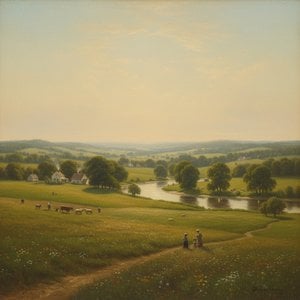
Thomas Worthington Whittredge: Capturing the American Pastoral Ideal with Luminist Light
Explore the luminous landscapes of Thomas Worthington Whittredge, a key figure in the Hudson River School and master of Luminism. Discover his captivating paintings & legacy with ArtsDot.

Robert Spencer: Luminism, Narrative & the American Landscape Tradition
Explore the captivating world of Luminism & the Hudson River School with our expert analysis. Discover the history, artists, and enduring beauty of 19th-century American landscape painting. Find museum-quality reproductions at ArtsDot.
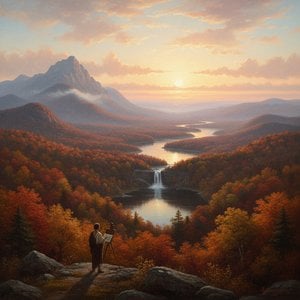
Sublime Krajobrazy: Narodziny Amerykańskiej Tożsamości Artystycznej i Rola Szkoły Hudson River
Odkryj fascynującą historię Szkoły Hudson River i narodziny amerykańskiej tożsamości artystycznej. Poznaj kluczowych artystów, techniki malarskie i inspiracje. Reprodukcje najwyższej jakości na ArtsDot.com!


