
- Pradžia

- Ežero tapybos reprodukcija
- Mather Brown
- Thomas Lowton

 Pirkti atspaudą Pirkti skaitmeninį paveikslą
 Pasidalinti
 Dalintis
 Išsamiau
 Pridėti į mėgstamiausius

 Atsisiųsti
 Panašūs eksponatai
 Rentgeno nuotrauka
 Automatinė diorama
Thomas Lowton

 Skaityti daugiau
Rankų darbo aliejinės reprodukcijos
Rankiniu būdu tapytas aliejus ant droblio jūsų pageidaujamame dydį ir rėmuose – mūsų menininkų darbas pagal užsakymą.




P118B $10

P118H $10

P118W $10

P438Z $10

P508JH $12

P508YH $12

P805H $10

P805Z $10

P919BZ $10

P919G $10

P919XJ $10

P959ZH $10

P968JZ $12

W106C $8

W218G $10

W218JH $8

W218Y $10

W307PJ $10

W316G $10

W316PJ $8

W316Y $10

W398PJ $8

W4111J $10

W500HY $15

W500JH $15

W692G $12

W849H $8

W940BG $15

W953PJ $8




Pasirinkite iš mūsų nustatytų dydžių, atitinkančių originalaus meno kūrinio proporcijas.

Galite įvesti savo matmenis, kad jie atitiktų konkretų rėmą ar erdvę. Jei pasirinktas dydis neatitinka originalaus paveikslėlio proporcijų, mes arba apkropsime meno kūrinį, arba papildysime tapybą rankomis dažytい elementais. Prieš pradėdami gamybą, jūsų patvirtinimui atsiųsime skaitmeninį maketą.
Atkreipkite dėmesį, kad ekrane rodomas vaizdas neatspindi tikrojo apkarpymo ar papildymo. Tik maketas tiksliai parodys galutinę kompoziciją.
Nors galima rinktis ir individualius dydžius, rekomenduojame pasirinkti matmenis iš nustatytos sąrašo, kad būtų išlaikytos originalios proporcijos.
Gavus užsakymą, ArtsDot.com komanda susisieks su klientu el. paštu dėl instrukcijų ir pateiks maketo pavyzdį.
Pristatymas visame pasaulyje () per 3–4 savaites, o ne įprastai – per 5 savaites. (22 liepa). Kokybė lieka nepakeičiama.

Nemokamas greitasis pristatymas visame pasaulyje

Aukštos kokybės lininis drobė

Pilnas siuntimo draudimas

Muitinės mokesčių grąžinimo garantija

Tikro spalvų atitikimo garantija

60 dienų grąžinimo politika (tik esant gamyklinėms defektams)

100% pinigų grąžinimo garantija

Nuolaida už kelias reprodukcijas
 Stiklo variantas prieinamas tik pasirinkus dydį iki 110 cm

Thomas Lowton
Reprodukcijos technika
Reprodukcijos matmenys
-


Galutinė kaina
-
panašūs kūriniai


Autoriaus biografija
The Transatlantic Legacy of Mather Brown
Mather Brown stands as a fascinating bridge between two eras, a painter whose life and work embodied the shifting tides of the late 18th and early 19th centuries. Born in Boston in 1761, his artistic identity was forged in the intellectual crucible of colonial America before finding its ultimate expression in the grand studios of London. His journey represents more than just a personal career; it reflects the movement of artistic ideals from the rigorous, structured principles of Neoclassicism toward the emotive, dramatic spirit of Romanticism. This transition allowed Brown to become a versatile storyteller, capable of capturing both the quiet dignity of an individual portrait and the chaotic grandeur of historical conflict.
The foundation of Brown’s mastery can be traced back to his early mentorship under the legendary John Singleton Copley. Under Copley’s watchful eye, Brown learned the importance of meticulous detail and a profound understanding of classical form. This training provided him with the technical discipline required to navigate the competitive European art market. When he relocated to London in 1790, he did not merely arrive as an outsider but as a prepared professional, quickly earning his place within the prestigious Royal Academy. This membership was a defining achievement, signaling his acceptance into the highest echelons of the British art establishment and providing him with a platform to interact with the most influential figures of his age.
A Master of Portraiture and Historical Narrative
Brown’s body of work is characterized by an extraordinary ability to adapt his technique to the needs of his subject matter. In his portraiture, he possessed a remarkable gift for rendering the subtle nuances of character and social standing. His portraits of luminaries such as Thomas Jefferson and Benjamin West demonstrate a keen eye for the political and social currents of the era, imbuing his subjects with a sense of permanence and gravitas. Whether capturing the refined elegance in Lady with a Dog or the dignified presence in his portrait of Thomas Lowton, Brown utilized light and texture to create lifelike, breathing presences on canvas.
Beyond the intimate scale of portraiture, Brown sought to capture the epic. He was a painter of great ambition, often turning his attention to historical canvases that demanded a command of complex composition and dramatic movement. His work The Battle of the Nile serves as a pinnacle of this approach, where he moved away from static classical forms to embrace the swirling energy and visceral intensity of naval warfare. In these larger works, one can see the emergence of a Romantic sensibility—a focus on the sublime, the powerful, and the transformative nature of historical events.
Artistic Significance and Enduring Impression
The significance of Mather Brown lies in his role as a cultural conduit. By blending the precision of his American training with the stylistic innovations of the London art scene, he helped shape the visual language of an era defined by revolution and transition. His ability to navigate between the formal requirements of commissioned portraiture and the narrative demands of history painting allowed him to leave a lasting mark on both the British and American artistic consciousness.
Today, his works remain vital touchstones for understanding the evolution of Western art. Through his canvases, we witness:
- The intersection of styles: The seamless blending of Neoclassical structure with Romantic emotion.
- Historical documentation: The preservation of the likenesses and legacies of the Enlightenment's most important figures.
- Technical mastery: An enduring excellence in the rendering of fabric, light, and human expression that continues to captivate modern viewers.

Mather Brown
1761 - 1831 , United States of America
Trumpa informacija
- Artistic Movement Or Style: Neoclassical/Romantic
- Artists Or Movements Influenced By This Artist: ['Royal Academy']
- Artists Who Influenced This Artist: ['Benjamin West']
- Date Of Birth: 1761
- Full Name: Mather Brown
- Nationality: American
- Notable Artworks:
- Romeo And Juliet
- The Reverend Alban Thomas Gwynne
- Place Of Birth: Boston, United States of America
Susiję straipsniai

Evoking Emotion & Transcendence: Romantic Landscape Painting (18th-19th Century)
Explore the emotional depth of Romantic landscape painting (18th-19th century). Discover key artists like Friedrich & Cole, and the concepts of the sublime. Expert insights for art lovers & collectors.

Thomas Barker of Bath: Landscape Painting & Societal Reflection in Early 19th-Century England
Explore the life & work of Thomas Barker of Bath, a key figure in 19th-century English Romanticism. Discover his Parisian success, iconic paintings like 'The Bride of Death', and lasting artistic legacy. Learn more at ArtsDot.

John George Brown: Capturing American Life & Sentiment in 19th-Century Genre Painting
Explore the captivating genre paintings of John George Brown, celebrated for his realistic depictions of 19th-century American life. Discover his legacy & find museum-quality reproductions at ArtsDot.
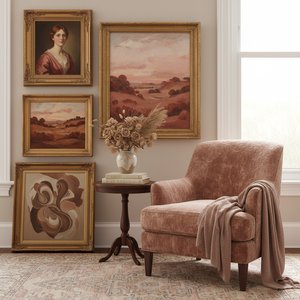
Rosy Brown Hues: 10 Master Paintings & Timeless Decor Ideas |
Explore 10 iconic paintings bathed in captivating rosy brown tones! From Rembrandt to Titian, discover the stories behind these masterpieces & their warm color palettes. Find museum-quality art reproductions and decor inspiration at .

Thomas Hudson: A Study in 18th-Century Portraiture & British Artistic Identity
Explore the life & work of Thomas Hudson, a leading 18th-century British portraitist. Discover his mastery of the 'Grand Manner,' influential style, and lasting impact on British art. Learn about his notable portraits like Judge William Noel & Alexander Van Aken.

