


 Peržiūrėti realaus dydžio版
 Siųsti
 Dalintis
 Išsamiau
 Vadovas

 Atsisiųsti
 Panašūs eksponatai
 Rentgeno spindulių nuotrauka
 Diaporama
 Statistika
Thomas Jefferson
 Acrylic On Canvas
- WallArt
- Neoclassicism
 1786
1786 90.0 x 72.0 cm
 Narodna galerija
 Rodyti daugiau
Rankų darbo aliejinės reprodukcijos
Rankiniu būdu tapytas aliejus ant droblio jūsų pageidaujamame dydį ir rėmuose – mūsų menininkų darbas pagal užsakymą. ( Perjungti į spausdinimą Perejti prie skaitmeninių vaizdų)




P118B €10

P118H €10

P118W €10

P438Z €10

P508JH €12

P508YH €12

P805H €10

P805Z €10

P919BZ €10

P919G €10

P919XJ €10

P959ZH €10

P968JZ €12

W106C €8

W218G €10

W218JH €8

W218Y €10

W307PJ €10

W316G €10

W316PJ €8

W316Y €10

W398PJ €8

W4111J €10

W500HY €15

W500JH €15

W692G €12

W849H €8

W940BG €15

W953PJ €8




Pasirinkite iš mūsų nustatytų dydžių, atitinkančių originalaus meno kūrinio proporcijas.

Galite įvesti savo matmenis, kad jie atitiktų konkretų rėmą ar erdvę. Jei pasirinktas dydis neatitinka originalaus paveikslėlio proporcijų, mes arba apkropsime meno kūrinį, arba papildysime tapybą rankomis dažytい elementais. Prieš pradėdami gamybą, jūsų patvirtinimui atsiųsime skaitmeninį maketą.
Atkreipkite dėmesį, kad ekrane rodomas vaizdas neatspindi tikrojo apkarpymo ar papildymo. Tik maketas tiksliai parodys galutinę kompoziciją.
Nors galima rinktis ir individualius dydžius, rekomenduojame pasirinkti matmenis iš nustatytos sąrašo, kad būtų išlaikytos originalios proporcijos.
Gavus užsakymą, ArtsDot.com komanda susisieks su klientu el. paštu dėl instrukcijų ir pateiks maketo pavyzdį
Pristatymas visame pasaulyje () per 3–4 savaites, o ne įprastai – per 5 savaites. (11 spalis). Kokybė lieka nepakeičiama.

Nemokamas greitasis pristatymas visame pasaulyje

Aukštos kokybės lininis drobė

Pilnas siuntimo draudimas

Muitinės mokesčių grąžinimo garantija

Tikro spalvų atitikimo garantija

100 dienų grąžinimo politika (tik esant įtaigoms)

100% pinigų grąžinimo garantija

Nuolaida dideliems užsakymams
 Stiklo variantas prieinamas tik pasirinkus dydį iki 110 cm

Thomas Jefferson
Reprodukcijos technika
Reprodukcijos dydis
-


Visų pasirinktų variantų kaina
€ 226
A Portrait of Enlightenment: Mather Brown’s Likeness of Thomas Jefferson
The portrait of Thomas Jefferson by Mather Brown, completed in 1786, stands as an arresting emblem of the burgeoning neoclassical aesthetic within Britain during the late Enlightenment. More than simply a likeness—though remarkably accurate for its time—it embodies the intellectual currents that shaped America’s founding ideals and continues to resonate with collectors and art historians alike. Painted on canvas using oil paints, Brown's masterful technique captures Jefferson’s dignified countenance against a backdrop of rich crimson, skillfully employing linear perspective and textural brushstrokes to convey both physical presence and psychological depth.The Artist & His Context
Mather Brown (1761-1831), born in Boston, Massachusetts, represents a pivotal figure bridging the stylistic divide between Neoclassicism and Romanticism. Trained under John Singleton Copley—Boston’s foremost artist—Brown absorbed the meticulous precision of classical artistic principles, prioritizing order and balance as hallmarks of his oeuvre. His decision to relocate to London in 1790 solidified his position within the British art landscape, where he gained membership to the Royal Academy, securing a prominent role in shaping artistic discourse and production. The portrait reflects Brown’s engagement with European intellectual traditions—particularly the influence of Greek sculpture—demonstrating an awareness of the broader philosophical debates concerning reason versus emotion that characterized the era.Style & Technique: Neoclassical Precision
Brown's approach to Jefferson’s depiction exemplifies neoclassical ideals. Linear perspective dominates, creating a convincing illusion of three-dimensionality and anchoring Jefferson’s figure within a carefully constructed space. Geometric shapes—squares and rectangles defining Jefferson’s attire—underscore the compositional stability characteristic of the style. Texture is achieved through deliberate brushstrokes that imbue the fabric of Jefferson's coat and wig with palpable volume, mirroring the monumental grandeur favored by neoclassical painters. The dramatic lighting—originating from an unseen source above—casts strong shadows across Jefferson’s face, highlighting his features and conveying a subtle sense of introspection. These meticulous details underscore Brown’s commitment to capturing not merely appearance but also character—a testament to the artist's skill in translating philosophical concepts into visual form.Symbolism & Emotional Resonance
Beyond its technical brilliance, the portrait is laden with symbolic significance. The inclusion of a classical statue in the background serves as an explicit reference to reason and knowledge—values central to Enlightenment thought. Jefferson’s attire—reflecting his connection to European intellectual traditions—further reinforces this thematic dimension. However, Brown's portrayal transcends mere stylistic convention; it conveys a palpable emotional resonance. The gaze of Jefferson—direct yet contemplative—suggests a profound engagement with internal reflection, hinting at the complexities inherent in reconciling philosophical convictions with personal realities. This subtle melancholy contributes to the portrait’s enduring appeal, inviting viewers to contemplate themes of intellectuality, morality, and the burdens of leadership.A Legacy Enduring Through Reproduction
Today, reproductions of Brown's Jefferson offer art lovers and interior designers alike a captivating glimpse into a pivotal moment in American history and artistic innovation. The painting’s masterful technique—characterized by its luminous color palette and nuanced textural rendering—continues to inspire artists and collectors globally. Its enduring emotional impact—rooted in the portrayal of an intellectual titan wrestling with moral dilemmas—remains profoundly relevant, prompting contemplation on the intersection of reason and emotion within the human experience.问答 (or more naturally for a website heading): Klausimai ir atsakymai
Kokia yra „Thomas Jefferson“, autorius – Mather Brown kūrybos data?
„Thomas Jefferson“, autorius – Mather Brown kūrybos metai – 1786.
Kokia buvo Mather Brown amžius sukuriant „Thomas Jefferson"]?
Kai 1786 m. buvo sukurta „Thomas Jefferson“, Mather Brown – gimęs 1761 m. – buvo 25 metų amžiaus.
Kas sukūrė „Thomas Jefferson“?
„Thomas Jefferson“ kūrybinį darbą sukūrė Mather Brown. Šioje puslapio informacijoje aprašomas Mather Brown originalus kūrinys.
Ką vaizduoja „Thomas Jefferson“, autorius – Mather Brown?
„Thomas Jefferson“, autorius – Mather Brown temos apima portrait, enlightenment, american history, jefferson, neoclassicism, philosophy, dignified, intellectual. Kartu jie apibendrina šio kūrinio tematiką.
Kas sukūrė „Thomas Jefferson“ ir kokiu stiliumi tai atlikta?
Šiame kūrinį „Thomas Jefferson“ sukūrė Mather Brown, atstovaujantis Neoclassicism stiliui.
Ar galiu pamatyti „Thomas Jefferson“, autorius – Mather Brown rentgeno nuotrauką?
„Thomas Jefferson“ galima tyrinėti sluoksniu sluoksnį pusėje, naudojant kūrinio Rentgenas puslapį – interaktyvų vaizdo peržiūrą, įkvėptą restauratoriaus šviesos stalo ir siūlantį vien ambivalentišką vaizdą, sudarytą iš vienylies optinių sluoksnių.
Ar „Thomas Jefferson“ saugoma kūrijasio šalyje?
Ne – kūrinys saugomas užsienyje. Kūrėjas gimė JAV, o originalus kūrinys saugomas Jungtinė Karalystė.
Susiję kūriniai


Autoriaus biografija
Mather Browno transatlantinis palikimas
Mather Brownas yra įtraukiantis tiltas tarp dviejų erų – paveikslautojas, kurio gyvenimas ir kūrinys atspindėjo kintančius XVIII ir XIX amžiaus pradžios laikų bangas. Gimęs Bostone 1761 m., savo meninę tapatybę jis formavo intelektualioje kolonijos Amerikos krosnyje, kol galutinę išraišką rado didybėje Londono studijose. Jo kelionė yra daugiau nei tiesiog asmeninė karjera; tai atspindis meno idealų judėjimo nuo griežtų, struktūrizuotų neoklasicizmo principų link emocinio, dramatiško romantizmo dvasios. Šis transformacijos procesas leido Brownui tapti universaliu istoriju pasakotoju, gebančiu įamžinti tiek tylią individualaus portretų orumą, tiek chaotišką istorinių konfliktų prachtą.
Browno meistriškės šaknys galima atgaminti iš jo ankstyvosios mokymosi laikotekių po legendinio John Singleton Copley priežiūra. Po akiuptaus Copley žvilgsnio Brownas išmokėjo kruopščių detalių svarbą ir gilią klasikinės formos supratimą. Šis mokymas jam suteikė techninę discipliną, reikalingą sėkmingai navigacijai konkurencingoje Europos meno rinkoje. Persikeldamas į Londoną 1790 m., jis atvyko ne tiesiog kaip svetimius, o kaip paruoštas profesionalas, greitai užėdamas savo vietą prestižinėje Karališkojoje akademijoje. Šis narystės laipsnis buvo lemiamas pasiekimas, signalizuojantis jo priimimą į aukščiausius britų meno bendruomenės sluoksnius ir suteikiantis platformą bendrauti su įtakingiausiais savo amžininkais.
Portretavimo ir istorinės naratyvo meistras
Browno kūrybos platus spektras pasižymi neįtikėtinu gebėjimu pritaikyti savo techniką priklausomai nuo tematikos poreikių. Portretuose jis turėjo išskirtinį talentą atvaizduoti subtilius charakterio ir socialinės padėties atspalvius. Jo tokių šviesių galvos asmenų kaip Thomas Jeffersonas ar Benjamin Westas portretai demonstruoja aštrią žvalgybą į to meto politinius ir socialinius srautus, suteikiant savo paveikslų herojams tarybinio patvarumo ir graviškumo pojūtį. Ar tai būtų subtili elegancija paveikslėlyje Lady with a Did, ar orus buvimas portretuojant Thomas Lowton, Brownas taikė šviesą ir tekstūrą, kad drobėje sukurtų gyvus, kvėpuojančius esybėmis.
Išėjęs už intymaus portretavimo ribų, Brownas siekė įamžinti epinę prigimtį. Jis buvo didelės ambicijos paveikslautojas, dažnai nukreipiantis dėmesį į istorinius plėtra, kuri reikalavo sudėtingos kompozicijos ir dramatiško judesio meistriškumo. Jo darbas The Battle of the Nile (Nilo mūšis) tarnauja kaip šio požiūrio viršūnė, kurioje jis atsisakė statinių klasicinių formų, pasirinkdamas audringą energiją ir visceralį jūros karo intensyvumą. Šiuose dideliuose darbuose galima pastebėti gimstančią romantistinę jautriąją prigimtį – susitelkimą į aukštinigą, galingą ir transformatyvią istorinių įvykių prigimtį.
Meninė reikšmė ir neblėstantis įspūdis
Mather Browno reikšmė slypi jo vaidmenyje kaip kultūrinėje jungtyje. Sujungdamas savo amerikietiško mokymo tikslumą su Londono meno scenos stilistiniais naujienomis, jis padėjo suformuoti vizualiąją kalbą erai, apibrėžtai revolucijų ir permainų laiku. Gebėjimas balansuoti tarp oficialių užsakytų portretų reikalavimų ir istorinės paveikslavimo naratyvinės paskirties poreikių leido jam palikti neištrinkiamą žymą tiek britų, tiek amerikiečių meninėje sąmonėje.
Šiandien jo kūriniai išlieka gyvais pagrindais suprantant Vakarų meno evoliuciją. Per jo drobę mes matome:
- Stilių susiliejimą: sklandų neoklasicizmo struktūros ir romantizmo emocijos suderinimą.

Mather Brown
1761 - 1831 , JAV
Trumpa informacija apie kūrėją
- Artistic Movement Or Style: Neoklasicizmas/Romantizmas
- Artists Or Movements Influenced By This Artist: ['Karališkoji akademija']
- Artists Who Influenced This Artist: ['Benjamin Westas']
- Date Of Birth: 1761
- Full Name: Mather Brown
- Nationality: Amerikos Ingrėjos gyventojas
- Notable Artworks:
- Romeo ir Juleta
- Revizorius Albanas Thomas Gwynne
- Place Of Birth: Bostonas, Jungtinės Amerikos Valstijos
Susiję straipsniai

American Realism's Defining Works: 10 Masterpieces for Your Home
Explore 10 defining American Realism masterpieces – Hopper, Homer & more. Discover the stories behind these iconic paintings and bring timeless art to your home with ArtsDot's museum-quality reproductions. Explore the full collection online.

American Regionalism: A Crucible of Identity – Exploring Themes of Place, Labor & Social Commentary
Explore American Regionalism's powerful depiction of the American heartland during the Great Depression. Discover Grant Wood, Thomas Hart Benton & more. Expert analysis & high-quality art reproductions at ArtsDot.

Asher Brown Durand: Luminism, Landscape & the American Ideal – A Comprehensive Exploration
Explore the life & art of Asher Brown Durand, a founding member of the Hudson River School. Discover his masterful landscapes, Luminist techniques, and lasting impact on American painting. Learn about key works like 'Kindred Spirits' & collecting Durand today.

Grant Wood & American Regionalism: Identity, Myth & the Rural Landscape
Explore the world of Grant Wood & American Regionalism with ArtsDot. Discover the symbolism behind 'American Gothic', recurring themes, and the movement's lasting impact on art history. High-quality reproductions available.
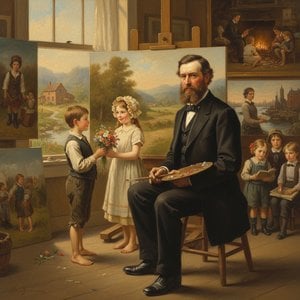
John George Brown: Capturing American Life & Sentiment in 19th-Century Genre Painting
Explore the captivating genre paintings of John George Brown, celebrated for his realistic depictions of 19th-century American life. Discover his legacy & find museum-quality reproductions at ArtsDot.