
- Pradžia

- Straipsniai
- Thomas Hudson: A Study in 18th-Century Portraiture & British Artistic Identity
Thomas Hudson: A Study in 18th-Century Portraiture & British Artistic Identity
Turinio sąrašas
Early Life and Training: The Foundations of a Portraitist
Thomas, Tommy or Tom Hudson may refer to: == Arts and entertainment == Thomas Hudson (poet) (died c. 1605), English musician and poet at the court of James VI of Scotland Thomas Hudson (painter) (1701–1779), British portraitist Thomas Hudson (songw...
The story of Thomas Hudson, though perhaps less celebrated than some of his contemporaries like Reynolds or Gainsborough, is nonetheless crucial to understanding the development of British portraiture in the 18th century. Born in 1701, Hudson’s artistic journey began not with immediate acclaim but with a pragmatic apprenticeship under Jonathan Richardson, a respected, if somewhat conservative, painter and engraver. This early training instilled in him a meticulous technique – a dedication to accurate representation that would become a hallmark of his style. However, the rigid formality of Richardson's approach proved ultimately limiting for the young Hudson, who possessed an inherent desire to move beyond mere imitation towards a more expressive and dynamic portrayal of his subjects. His initial struggles weren’t born of lack of skill, but rather a burgeoning ambition that sought to capture not just likeness, but character – the very essence of the individual before him.
Hudson's early work reveals this tension between academic precision and artistic yearning. He absorbed Richardson’s lessons in anatomy and composition, yet simultaneously began experimenting with looser brushwork and a more nuanced understanding of light and shadow. This period was formative, laying the groundwork for his later success and establishing a foundation upon which he would build a thriving practice in London.
Hudson's Rise to Prominence: Establishing a London Practice
By the 1730s, Hudson had relocated to London, a city teeming with artistic opportunity and fierce competition. He quickly established himself as a capable and reliable portraitist, catering initially to a middle-class clientele eager for affordable representations of themselves and their families. Unlike some artists who cultivated exclusive patronage among the aristocracy, Hudson deliberately broadened his appeal, accepting commissions from merchants, lawyers, and other members of the burgeoning professional classes. This shrewd business sense proved instrumental in his rapid ascent.
His studio became a hub of activity, renowned for its efficiency and affordability. While not immediately associated with the highest echelons of artistic innovation, Hudson’s portraits were admired for their clarity, dignity, and honest depiction of character. He possessed an uncanny ability to put sitters at ease, resulting in images that conveyed both social status and individual personality. This combination of technical skill and psychological insight quickly garnered him a loyal following.
The 'Grand Manner' in Portraiture: Style, Technique, and Influences
As Hudson’s reputation grew, so too did his ambition to elevate portraiture beyond its perceived limitations. He embraced the principles of the ‘Grand Manner,’ an aesthetic style derived from classicism and the art of the High Renaissance. This wasn't simply about painting portraits; it was about imbuing them with a sense of nobility and timelessness. He studied the works of Raphael, Rubens, and Van Dyck, absorbing their techniques for conveying status, power, and intellectual refinement.
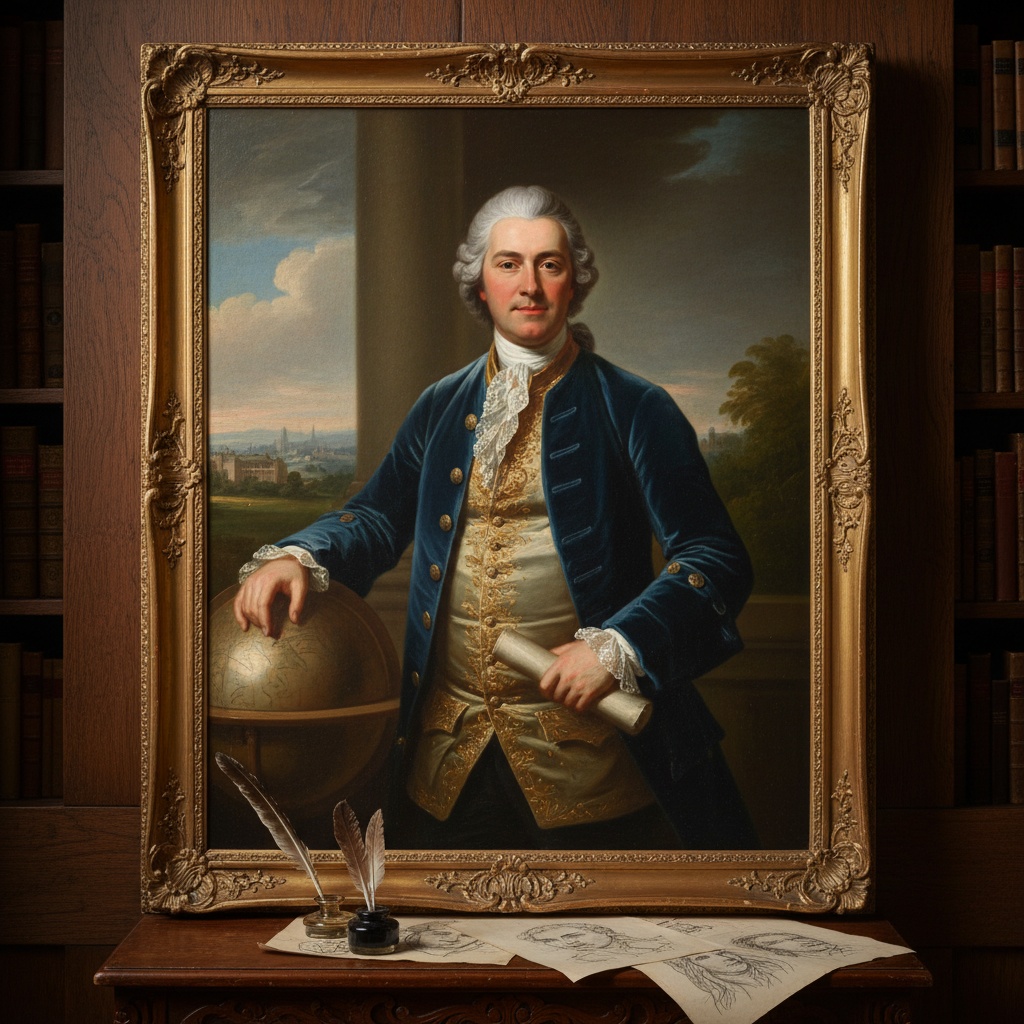
Hudson’s application of the ‘Grand Manner’ wasn't slavish imitation but rather a thoughtful adaptation to British sensibilities. He incorporated classical architectural elements into backgrounds, suggesting cultivation and sophistication. Drapery became more elaborate, adding weight and texture to his compositions. His portraits, such as Judge William Noel, exemplify this approach – the sitter is presented not merely as an individual, but as a figure of authority and moral standing. The masterful use of oil painting technique, particularly in rendering the textures of fabric and skin, further enhances the sense of realism and dignity.
Patronage and Society: Reflecting the Elite World of 18th-Century Britain
Hudson’s success was inextricably linked to the social landscape of 18th-century Britain. The rise of a wealthy merchant class, coupled with an increasingly sophisticated aristocracy, created a demand for portraits that reflected their status and aspirations. He skillfully navigated this complex world, cultivating relationships with influential patrons who commissioned not only individual portraits but also family groups and allegorical scenes.
The portraits he produced offer a fascinating glimpse into the material culture and social values of the period. Subjects are often depicted surrounded by symbols of wealth and learning – books, globes, ornate furniture – all carefully chosen to convey their intellectual pursuits and refined tastes. Alexander Van Aken, for example, is portrayed with an air of quiet confidence, his surroundings hinting at a life of privilege and accomplishment. These weren’t simply likenesses; they were statements of identity, designed to project a particular image to the world.
Beyond Likeness: Hudson’s Contribution to British Artistic Identity
While often overshadowed by Reynolds and Gainsborough, Thomas Hudson played a pivotal role in shaping British artistic identity. He wasn't necessarily an innovator in the same vein as his more celebrated contemporaries, but he was a master craftsman who brought a level of technical skill and psychological insight to portraiture that resonated with a broad audience. His emphasis on realism and dignity helped establish a distinctly British style – one that eschewed the flamboyant excesses of continental art in favor of a more understated elegance.
His influence extended beyond his own paintings, as he trained numerous students who went on to become successful portraitists themselves. He fostered a culture of professionalism and technical excellence, contributing significantly to the growth of British artistic talent. He helped democratize portraiture, making it accessible to a wider range of social classes.
Legacy and Influence: The Enduring Impact of Thomas Hudson's Work
Though he faced criticism for his perceived lack of originality, Thomas Hudson’s legacy endures in the numerous portraits that survive today. These images offer invaluable insights into the lives and values of 18th-century Britain, capturing not just physical likeness but also the spirit of an era. His commitment to technical skill, combined with a keen understanding of human psychology, continues to inspire artists and art lovers alike.
Today, ArtsDot.com offers high-quality reproductions of Hudson’s most celebrated works, allowing you to experience the beauty and elegance of his paintings firsthand. Whether you are drawn to the dignified presence of Judge William Noel or the quiet confidence of Alexander Van Aken, these portraits offer a window into a fascinating period in British history – a testament to the enduring power of art to capture not just what we look like, but who we are. Explore our collection and discover the timeless appeal of Thomas Hudson’s masterful artistry.
Susiję straipsniai
Alexander Nasmyth: Picturing Scotland's Romantic Landscape – Innovation & Identity
Explore the life & art of Alexander Nasmyth, a pivotal figure in Scottish Romantic landscape painting. Discover his iconic works, including portraits of Robert Burns, and learn about his lasting influence on national identity. Fine art reproductions available.


Echoes of Time: A Comprehensive Exploration of Vintage Portrait Art – Styles, Techniques & Enduring Appeal
Explore the captivating world of vintage portrait art! Discover styles, techniques & the enduring appeal of 19th-century masterpieces. Expert restoration, custom reproductions & appraisal services at ArtsDot.

George Romney: Portraiture, Patronage & the Shaping of Georgian Society
Explore the life & art of George Romney, leading portraitist of Georgian England. Discover his style, famous patrons like Emma Hamilton, and legacy in British society. Expert insights for collectors.

Sir Joshua Reynolds' Masterpieces: 25 Portraits of Power & Refinement | ArtsDot
Explore 25 captivating portraits by Sir Joshua Reynolds, a master of British art. Discover stories behind his iconic paintings, elegant style & historical influence. Find museum-quality reproductions and elevate your home decor on ArtsDot.com.

The Enduring Legacy of Family Portraiture: A Historical & Artistic Exploration
Explore the rich history of family portraiture with ArtsDot. Discover artistic styles, symbolism & collecting insights. Commission a custom oil painting or appraise your existing artwork today!

