

- 84.0 x 57.0 cm


A kép az Ön választásai alapján készült: , .
A gyűjtemény leírása
Giuseppe Arcimboldo's 'Spring' is a stunning floral portrait, a masterful blend of nature and human form. Explore the intricate details & symbolic beauty of this iconic Renaissance masterpiece.
 Összes részlet megjelenítése
A művész életrajza
Arcimboldo Giuseppe: Egy egyedülálló olasz festő, aki gyümölcsökkel, virágokkal és tárgyakkal alkotott szokatlan, fantáziaszerű portrékat, melyek a reneszánsz szimbolizmus és a szürrealizmus előfutára.
Kézzel készített olajfestmény reprodukció
Kézzel festett olajvastú vászon, az Ön által választott méretben és keretben, művészeink készítik meglévőre. ( Váltás nyomtatványra Áttérés digitális képre)
Több információ erről a festményről
 Megtekintés
 Küldés
 Megosztás
 Részletek
 Útmutató

 Letöltés
 Hasonló darabok
 X-ray felvétel
 Diavetítés
 Kérdések és válaszok
 Statisztika
Rendelje meg festményét négy egyszerű lépésben
Ne siessen! Bármely választ módosítható; az rendelési összesítőben megjelenő ár minden egyes döntésre reagál.
1 Az első lépés négyből
Melyik méretet szeretné?
Ezek a méretek megőrzik az eredeti festmény arányait. A rajz bemutatja a választott méretet egy falon, egy kétszáz centiméteres kanapé felett.
Vagy adja meg a saját méreteit
Válasszon előre meghatározott méreteink közül, amelyek megfelelnek a műalkotás eredeti arányainak.

Írja be a kívánt szélességet és magasságot, hogy illeszkedjen a keretéhez vagy a falához. Mivel ez kézzel festett alkotás, egy eltérő formájú méret esetén a művész akár festhet is valamivel többet a kép körül, vagy korolathat is belőle — az Ön döntésének megfelelően. A festés megkezdése előtt küldünk egy digitális tervezetet jóváhagyásra. Az oldalon látható kép nem tartalmazza a végeredményt — csak a tervezet mutatja meg a valódi eredményt.
2 A négy lépésből a második
Hogyan kívánja előkészíteni: feltekercselve, vászonra feszítve vagy keretezve?
Az alábbi árak az első lépésben választott méretre vonatkoznak.
Válaszd ki a feszített vászon széleit
Válassza ki a keretet

Fehér Ft1

Elmosódott szélek Ft1

Kiterjesztett Ft1

P118B Ft10

P118H Ft10

P118W Ft10

P438Z Ft10

P508JH Ft12

P508YH Ft12

P805H Ft10

P805Z Ft10

P919BZ Ft10

P919G Ft10

P919XJ Ft10

P959ZH Ft10

P968JZ Ft12

W106C Ft8

W218G Ft10

W218JH Ft8

W218Y Ft10

W307PJ Ft10

W316G Ft10

W316PJ Ft8

W316Y Ft10

W398PJ Ft8

W4111J Ft10

W500HY Ft15

W500JH Ft15

W692G Ft12

W849H Ft8

W940BG Ft15

W953PJ Ft8

H24-GOLD Ft30

H24-SILVER Ft30

H36-GOLD Ft45

H36-SILVER Ft45
Keretezett
Keretprofil: . A kerettel együtt vett teljes méret: .
3 A négy lépésből a harmadik
Szeretne változtatni valamit a festményen?
A legtöbb ember nemet mond erre. Mivel minden festmény kézzel készül, művészünk képes az Ön igényei szerint is átalakítani azt.
A megrendelést követően a ArtsDot.com csapat e-mailt küld a vásárlónak az instrukciókkal, és biztosítja a tervezeti előnézetet
4 A négy lépés közül a negyedik
Néhány felületfinisz
Mindegyik opcionális. A már kiválasztott válaszok nem jelentnek plusz költséget.
Ki festette?
Világszerte elérhető szállítás () 3-4 hét alatt a szokásos 5 hét helyett. (5 november). A minőség nem kérdőjelezhető.
Egy felirat, mint egy múzeumban?
A gravírozott bronztábla részletei
This elegant plaque features the artist's name and the title of the artwork, finely engraved for a timeless presentation.
It is made from bronze with a refined, elegant finish. The text is precisely laser-engraved for a sharp and permanent result. Measuring 9x2 cm, the plaque is compact yet easy to read. It's built to be durable and scratch-resistant, offering a professional, museum-quality look. Mounting is simple thanks to the included adhesive backing.
Átlátszó akril tábla részletei
The plaque includes essential engraved details such as the artist's name, the title of the artwork, the date it was created, the type of media used-like oil on canvas or watercolor-a brief description of the piece, and a QR code that links to the complete artwork information.
It is crafted from clear acrylic, offering a sleek, modern appearance. The text is UV-engraved in black to ensure strong visual contrast. With a size of 10x15 cm, it ensures optimal readability. It comes equipped with two metal hooks for secure wall mounting. The plaque is designed to be weather-resistant, making it suitable for various environments, and it includes interactive features that work seamlessly with smartphone scanning.
Fekete akril tábla részletei
This elegant plaque includes engraved information such as the artist's name, the title of the artwork, the date it was created, the type of media used (like oil on canvas or watercolor), a short description of the artwork, and a QR code for quick access to more information.
The plaque itself is made from refined black acrylic with a premium finish. The text is laser-engraved in white for high contrast and readability. Its size is 10x15 cm, designed to be easy to read. It comes with two metal hooks for professional mounting. The design is sleek and fits any interior style. It is also weather-resistant and durable, with built-in digital integration for mobile compatibility.
Egy védőréteg?
Mikor lenne szüksége rá?
✓ Ellenőrizés és rendelés
Az Ön által megrendelt festmény

Spring
Reprodukciós technika
Reprodukció mérete
-

Kiváló mesterművész
Nagyobb részletesség, finomság és bővített gyártási idő
-

Reprodukció keretezése
-
-
A bármely oldalsó méretét túlszálaló 105 cm (kb. 41 hüvelyk) meghaladó műalkotások vagy reprodukciók esetében a keret összeszerelhető készletként, szétszerelve kerül szállításra. Ez a módszer biztosítja a biztonságos szállítást, és megakadályozza a szállítás során fellépő sérüléseket.
Szakmész összeszerelést igényel – ez nem DIY (önösszeszerelhető) termék.
A készletet egy tapasztalt keretező szakembernek kell összeszerelnie és a vásznat feszítenie kell, fa ragasztó (nem tartalmazza a csomag), vásznfeszítő fogó és szorítók használatával, amelyek a ragasztó száradásáig a keretrészeket egymáshoz vuôngjba tartják. A helytelen összeszerelés vagy a nem egyenletes vásznfeszítés maradandó károsíthatja a műalkotást, és ez nem része a garanciánknak.
 A bármely oldalsó méretét túlszálaló 105 cm (kb. 41 hüvelyk) meghaladó műalkotások vagy reprodukciók esetében a keret összeszerelhető készletként, szétszerelve kerül szállításra. Ez a módszer biztosítja a biztonságos szállítást, és megakadályozza a szállítás során fellépő sérüléseket.
A készlet tartalmazza az összes tömörfa rudat, pontosan méretre vágva.
A mellékelt csavarokkal, valamint a sarokszerekhez szükséges faütő ragasztóval kell összeszerelnie (ez nem tartalmazható a csomagban), így a keretrendezőnek külön kell beszereznie.
A csomag nem tartalmazza a szükséges professzionális eszközöket: egy vászonfeszítőt és klipseket a rácsok vízszintes tartásához a ragasztó megszáradásáig.
Fontos:
A sarokcsatlakozásokhoz fánylagra van szükség, a keretrudakat szorítókapcsokkal kell rögzíteni, amíg a rag teljesen meg nem szárad, a kész keretre feszített vászonhoz pedig vászonfeszítő fogat szükséges. Ezek egyike sem található meg a készletben. Kérjük, rendelés előtt győződjön meg róla, hogy rendelkezik tapasztalt keretező szakemberrel.

Névtábla
-
-

Védőréteg (Lakk)
Fényes lakk (intenzívabb színek, védelem a fény és a nedvesség hatása ellen)
-

Műalkotásom egyedi igényre szabása
Példák a módosíthatóságra: az arc kicserélése az ügyfél fotójára; háziállat hozzáadása (pl. macska helyett kutya); rejtett üzenet elhelyezése a háttérben; a háttér tájainak vagy elemeinek megváltoztatása.
-

Sürgős
Világszerte szóló szállítás () mindössze 3-4 hét alatt, a szokásos 5 hét helyett. (5 november). A minőség nem kérdőjelezhető.
-
Express szállítás
Világszerte elérhető szállítás területre 5 héten belül. (12 november).
A szállítás díja tartalmazza
Összesített ár
Ft 85396
Az üvegkeretes opció csak 110 cm alatti méretben érhető el
Minden rendelés mellé tartalmazva
- Ingyenes globális expressz szállítás
- Prémium minőségű len vászon
- Teljes körű szállítási biztosítás
- Vámvisszatérítési Garancia
- Hiteles színarányosság garancia
- 100 napos visszaküldési lehetőség (csak hibás termékek esetén)
- 100% pénzvisszatérítési garancia
- Több darab vásárlásakor kedvezmény


Giuseppe Arcimboldo’s “Spring”: A Floral Rhapsody of Renewal
Giuseppe Arcimboldo, a name synonymous with audacious imagination and masterful illusion, remains one of the most singular figures in Renaissance art. Born in Milan in 1527, his career unfolded against a backdrop of intellectual ferment – a Europe grappling with religious upheaval and an insatiable curiosity about the natural world. While initially recognized for more conventional works—frescoes adorning cathedrals and portraits adhering to established courtly standards—Arcimboldo’s enduring legacy rests upon a series of composite heads constructed entirely from meticulously arranged objects: fruits, vegetables, flowers, fish, and even musical instruments. These weren't mere playful exercises in visual trickery; they were complex allegories, imbued with symbolism that resonated deeply within the Renaissance worldview and continue to captivate audiences today. “Spring,” painted around 1563, exemplifies this genius perfectly – a vibrant explosion of botanical beauty rendered as a remarkably lifelike human face.
The painting immediately draws the eye into a world of intricate detail. Arcimboldo has constructed a portrait not of a person, but of springtime itself. The ‘face’ is formed entirely from an astonishing array of blossoms – roses in shades of crimson and blush pink dominate the cheeks and lips, while delicate white lilies frame the eyes, their petals suggesting a serene gaze. Yellow daffodils burst forth from the forehead, mirroring the sun's radiant warmth, and tiny buds hint at the promise of future blooms. The hair is a cascading waterfall of leafy greens and vibrant stems, creating an impression of movement and vitality. Beyond the immediate floral composition, Arcimboldo masterfully incorporates other elements – miniature books peek out from beneath the foliage, suggesting knowledge and contemplation, while scattered seeds and nuts subtly reinforce the theme of growth and rebirth.
A Renaissance Allegory: Symbolism in Bloom
Arcimboldo’s work is deeply rooted in Renaissance symbolism. The choice of flowers wasn't arbitrary; each element carries a specific meaning within the context of the era. Spring, as represented here, embodies renewal, fertility, and the cyclical nature of life – themes central to humanist thought during the Renaissance. The inclusion of books speaks to the importance of learning and intellectual pursuits, while the fruits and vegetables symbolize abundance and prosperity. The careful arrangement of these objects creates a visual metaphor for the harmonious balance between humanity and nature, a concept highly valued by artists and intellectuals of the time.
Furthermore, “Spring” can be interpreted as an allegory for the Holy Roman Emperor Maximilian II, who commissioned the series of four seasonal portraits. Arcimboldo’s skill lay in his ability to imbue these fantastical creations with political significance. The vibrant colors and abundant imagery were intended to convey the emperor's power, wealth, and benevolent rule – a celebration of springtime’s bounty and the flourishing of his reign. The painting served as both a personal indulgence for the Emperor and a carefully crafted piece of propaganda, subtly reinforcing his authority.
Technique and Artistic Innovation
Arcimboldo's technique is nothing short of astonishing. He employed meticulous layering and painstaking detail to create an illusion of depth and realism within this entirely constructed image. The flowers are not simply painted; they are carefully arranged and sculpted, creating a tactile quality that invites the viewer to reach out and touch them. His use of chiaroscuro – the dramatic contrast between light and shadow – further enhances the three-dimensional effect, making the floral face appear remarkably lifelike.
Crucially, Arcimboldo’s work represents a significant departure from traditional portraiture. He abandoned the conventions of idealized beauty in favor of a more inventive and symbolic approach. This innovative technique paved the way for later artists who sought to challenge artistic norms and explore new forms of visual expression. “Spring” stands as a testament to his genius, demonstrating his mastery of composition, color, and illusion – qualities that continue to inspire awe and admiration centuries after its creation.
A Timeless Celebration of Nature’s Beauty
“Spring,” whether viewed in the original or a high-quality reproduction, remains a profoundly moving work of art. It is more than just a portrait; it's an ode to the beauty and abundance of nature, a celebration of renewal and rebirth, and a poignant reminder of the interconnectedness between humanity and the natural world. Arcimboldo’s ability to transform ordinary objects into extraordinary works of art speaks to his remarkable vision and artistic skill – qualities that ensure “Spring” will continue to captivate audiences for generations to come.
Kérdések és válaszok
Milyen típusú alkotás a "Spring"?
A katalógusban a „Spring”, Arcimboldo alkotása a WallArt kategóriába tartozik. Ez a besorolás segít hasonló művek megtalálásában.
Milyen tónus felé hajlik a "Spring"?
A „Spring”, Arcimboldo alkotása domináns színe a Amber to Saffron. Ez a szín a paletta alapvető tónusa.
Milyen színek jellemzik a "Spring" alkotást?
A "Spring" színei egy Earthy palettát alkotnak. Ez a besorolás a domináns színek családjait írja le.
Hasonló műalkotások


Arcimboldo
1527 - 1593, Olaszország
A művész életrajza
A World Reimagined: The Enigmatic Art of Giuseppe Arcimboldo
Giuseppe Arcimboldo, a name that conjures images both whimsical and profoundly strange, remains one of the most singular figures in Renaissance art. Born in Milan in 1527, his career unfolded against the backdrop of a Europe steeped in intellectual ferment, religious upheaval, and an insatiable curiosity about the natural world. While initially recognized for more conventional works – frescoes adorning cathedrals and portraits adhering to established courtly standards – Arcimboldo’s enduring legacy rests upon a series of composite heads constructed entirely from meticulously arranged objects: fruits, vegetables, flowers, books, even musical instruments. These weren't mere playful exercises in visual trickery; they were complex allegories, imbued with symbolism that resonated deeply within the Renaissance worldview and continue to fascinate audiences today. His father, Biagio Arcimboldo, was an artist himself, providing young Giuseppe with early artistic training and likely influencing his initial foray into design work for stained glass windows and frescoes at Milan Cathedral beginning around 1549. This foundational experience honed his technical skill and eye for detail—qualities that would become hallmarks of his later, more unconventional creations.Early Years and Artistic Foundations
Giuseppe Arcimboldo’s artistic journey began within a family steeped in the traditions of art. His father, Biagio Arcimboldo, was himself a painter, working primarily as a designer for stained glass windows and frescoes within the grand cathedral of Milan. This early exposure to craftsmanship and visual storytelling undoubtedly shaped young Giuseppe's developing skills. He received his initial training at the Duomo, learning the techniques of fresco painting and the intricacies of creating intricate designs for religious imagery. This period instilled in him a deep appreciation for detail, color theory, and the ability to translate complex ideas into visually compelling forms. It’s believed that this foundation in traditional artistic practices provided a crucial springboard for his later experimentation with more unconventional approaches. The influence of the Milanese art scene—a hub of creativity during the Renaissance—likely fostered a spirit of innovation and a willingness to challenge established norms, qualities that would ultimately define Arcimboldo's unique style.Courtly Commissions and the Rise of a Unique Style
Arcimboldo’s trajectory took a significant turn in 1562 when he was appointed court portraitist to Ferdinand I at the Habsburg court in Vienna. This marked the beginning of over two decades serving as an artistic polymath for three successive Habsburg rulers: Maximilian II and his son, Rudolf II. This appointment thrust him into the heart of European power, providing him with unparalleled access to imperial patronage and a stimulating environment for creative exploration. Beyond painting portraits – though even these often displayed subtle eccentricities – Arcimboldo’s duties encompassed costume design, festival decorations, and the organization of imperial collections. It was within this environment of refined taste and intellectual curiosity that his signature style began to blossom. The courtly demand for novelty and spectacle provided fertile ground for experimentation, allowing him to move beyond traditional portraiture towards the creation of his celebrated “composite heads.” These weren’t born from a sudden impulse but evolved gradually, building upon Renaissance fascination with puzzles, riddles, and the exploration of hidden meanings within seemingly ordinary objects. The influence of earlier artists who experimented with *trompe l'oeil* effects and distorted perspectives can be detected, yet Arcimboldo synthesized these elements into something entirely his own—a unique visual language that challenged conventional notions of representation.Decoding the Symbolism: More Than Meets the Eye
To dismiss Arcimboldo’s work as mere whimsicality is to overlook its profound intellectual depth. Each object within his composite portraits was carefully chosen, laden with symbolic meaning related to the sitter's character, profession, or social status. *The Librarian*, for example, isn’t simply a face constructed from books; it’s a subtle critique of scholarly pretension—a commentary on those who amass knowledge without truly engaging with its content. The animal tails forming the beard represent dusters, hinting at neglected volumes gathering dust on shelves. Similarly, his portraits of the seasons – particularly *Vertumnus*, depicting Emperor Rudolf II as the Roman god of gardens and change – are rich in botanical symbolism, reflecting the emperor’s patronage of science and natural history. These weren't intended to be immediately deciphered; they were designed to provoke contemplation, inviting viewers to unravel layers of meaning hidden within the seemingly playful arrangement of objects. The very act of constructing a human likeness from inanimate matter served as a meditation on the interconnectedness of all things—a reflection of Renaissance Neoplatonism’s belief in the underlying harmony of the universe.Legacy and Rediscovery: A Precursor to Surrealism
Despite his success during his lifetime, Arcimboldo's reputation waned in the centuries following his death in 1593. His work was often relegated to the realm of curiosities—appreciated for its technical skill but dismissed as lacking serious artistic merit. It wasn’t until the 20th century that a renewed appreciation for his art emerged, fueled by the rise of Surrealism. Artists like Salvador Dalí recognized in Arcimboldo a kindred spirit—a visionary who dared to challenge conventional perceptions and explore the subconscious through unexpected juxtapositions of imagery. The influence of Arcimboldo can be seen in Dalí’s own dreamlike compositions and his fascination with metamorphosis and illusion. Today, Arcimboldo is celebrated as a pivotal figure in art history—a precursor to Surrealism whose innovative use of symbolism and playful distortion continues to inspire artists and captivate audiences worldwide. His paintings are housed in prestigious museums such as the Kunsthistorisches Museum in Vienna and the Louvre in Paris, ensuring that his unique vision will continue to resonate for generations to come. His legacy is a testament to the enduring power of imagination and the ability of art to transform our understanding of the world around us.Key Achievements
* **Innovative Portraiture:** Arcimboldo revolutionized portrait painting by moving beyond traditional representations, creating composite heads that were both visually striking and intellectually stimulating. * **Symbolic Mastery:** His works are rich in symbolism, reflecting Renaissance philosophical ideas and offering layers of interpretation for viewers. * **Courtly Influence:** He served as a key artistic figure at the Habsburg court, shaping trends in design, decoration, and costume. * **Precursor to Surrealism:** His unconventional approach paved the way for later surrealist artists, demonstrating the power of dreamlike imagery and unexpected juxtapositions.


Kapcsolódó cikkek

Blossoms of Time: A Historical & Aesthetic Exploration of Floral Painting Across Cultures
Explore the rich history of floral painting! Discover symbolism, techniques & masterpieces from Van Huysum to O'Keeffe. Expert insights for art lovers & collectors at ArtsDot.
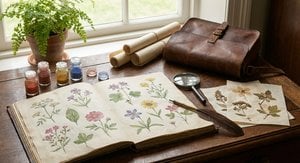
The Flourishing Canvas: A Historical Journey Through Botanical Illustration
Explore the captivating history of botanical illustration! Discover renowned artists like Robert Havell & Mary Walcott, learn about techniques, and find museum-quality art at ArtsDot.com.

Blossoming Symbolism: A Historical Journey Through Flowers in Western Painting
Explore the rich history of flower symbolism in Western painting! Discover how artists from the Renaissance to Modernism used blossoms to convey meaning, emotion & beauty. Learn about iconic artworks and movements.