
- Accueil

- Image numérique
- Raphaël
- Autoportrait

 Commander l'impression Commander la reproduction
 Partager
 Partager
 Details
 Ajouter aux favoris

 Télécharger
 Articles similaires
 X-Ray
X-Ray
 Diaporama
Autoportrait


 Afficher la suite
Acquérez une image numérique haute résolution et améliorée, bien supérieure à l'aperçu en ligne.
Chaque fichier est méticuleusement préparé par nos spécialistes internes à l'aide d'outils avancés et d'une retouche manuelle experte. Nous garantissons que chaque image possède une clarté exceptionnelle, une précision des couleurs irréprochable et un niveau de détail fin.
Le fichier final est livré par e-mail sous 72 heures, optimisé pour une utilisation immédiate dans des contextes professionnels, éditoriaux et d'impression. Il offre la même qualité de confiance que celle utilisée par les plus grands studios de création, éditeurs et galeries.
Image numérique
Téléchargez un fichier haute résolution pour un usage personnel, l'impression et vos projets créatifs.
Inclus avec chaque achat d'image numérique
Livraison numérique experte, garantie.
En choisissant ArtsDot.com, vous n'obtenez pas seulement une simple image : vous recevez une œuvre numérique sublimée avec professionnalisme, conçue avec précision et accompagnée d'une garantie de satisfaction. Voici tout ce qui accompagne automatiquement votre commande :

Livraison rapide par e-mail
Votre fichier d'image numérique haute résolution vous sera envoyé par e-mail sous 72 heures après votre commande — prêt à un usage immédiat.

Fichier numérique optimisé par l'IA
Votre œuvre d'art bénéficie d'une optimisation professionnelle grâce à des outils d'IA avancés et une retouche manuelle, garantissant un niveau maximal de détail, de clarté et de fidélité chromatique.

Réexpédition gratuite à vie
Vous avez accidentellement supprimé ou perdu votre fichier ? Pas de panique — nous vous le renverrons gratuitement, quand vous le souhaitez.

Aucun frais de douane - À jamais
Profitez de votre œuvre d'art instantanément sans frais de douane ni de livraison — les téléchargements numériques sont toujours exonérés de taxes.

Garantie de fidélité des couleurs
Nous garantissons que votre image numérique reproduit les couleurs de l'original aussi fidèlement que possible grâce à des outils professionnels et une gestion rigoureuse des couleurs.

Garantie de satisfaction de 60 jours
Si vous n'êtes pas satisfait de votre image numérique, nous la réviserons ou vous rembourserons 100% sous 60 jours - sans poser de questions.

Garantie de remboursement à 100%
Pas satisfait ? Obtenez un remboursement intégral dans les 60 jours suivant la réception de votre fichier numérique — sans aucune question posée.

Réductions sur les commandes groupées
Achetez 3 images, économisez 10% - Achetez 5, économisez 15% - Achetez 10+, économisez 20%. Idéal pour les projets créatifs, les galeries et les agences.
Description du collectible
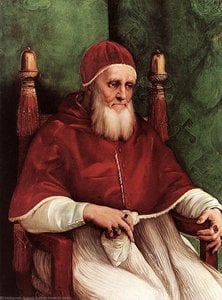
Raphael’s Self Portrait: A Window Into Renaissance Genius
Raphael Sanzio da Urbino’s Self Portrait stands as one of the most iconic images of the High Renaissance, capturing not merely a likeness of the artist but also an embodiment of humanist ideals and artistic ambition. Painted in 1506 during his formative years in Florence—a city brimming with intellectual ferment and artistic innovation—this deceptively simple canvas offers profound insights into Raphael’s worldview and technique.
Artist Background: Shaping Renaissance Ideals
Born in Urbino, Italy, Raphael emerged from a privileged artistic milieu fostered by his father Giovanni Santi, who served as court painter to Federico da Montefeltro. This upbringing instilled in him an appreciation for classical learning alongside masterful painting skills—a hallmark of the era’s humanist spirit. Alongside Leonardo da Vinci and Michelangelo, Raphael formed the triumvirate of artistic giants shaping the Renaissance landscape, each pushing boundaries of realism and expressive power.
Painting Description: Precision and Harmony
Executed in oil paint on poplar wood, the Self Portrait exemplifies Raphael's signature style—characterized by meticulous detail combined with effortless grace. The artist’s gaze meets the viewer directly, conveying a quiet confidence and intellectual curiosity. Notice the subtle sfumato technique employed to soften contours and create an ethereal atmosphere, mirroring Leonardo’s influence. The muted palette—primarily browns and ochres—emphasizes form and texture rather than dramatic color contrasts.
Style and Significance: Neoplatonic Human Grandeur
The Self Portrait firmly establishes Raphael within the broader context of Renaissance art, aligning with the humanist preoccupation with human dignity and beauty. Influenced by Plato’s philosophy, Raphael sought to depict man as possessing a divine spark—a concept central to Neoplatonism and profoundly impacting artistic representation. This painting transcends mere portraiture; it is an assertion of intellectual prowess and artistic mastery—a testament to Raphael's enduring legacy.
Historical Context: Florence at the Crossroads
Florence in 1506 was a city undergoing significant transformation, grappling with political instability and religious fervor. Raphael’s decision to relocate there reflected the dynamism of the Renaissance, where artists sought inspiration from classical antiquity while simultaneously exploring new expressive possibilities. The Self Portrait serves as a microcosm of this era—a celebration of human intellect and artistic achievement amidst turbulent times.
- The Uffizi Gallery houses one of Italy’s most celebrated collections, showcasing masterpieces from the Renaissance period.
- Raphael's works are admired for their clarity of form, ease of composition, and visual achievement of the Neoplatonic ideal of human grandeur.
- This Self Portrait is a significant work of art that has had a lasting impact on the world of art, inspiring countless artists and collectors throughout history.
For more information about Raphael’s artistic journey or to explore other exceptional reproductions of his paintings, visit Raphael's page on ArtsDot.
Œuvres apparentées



Biographie de l'artiste
**Jeunesse et formation**
Raphaël (Raffaello Sanzio da Urbino), un peintre et architecte italien renommé, est né entre le 28 mars et le 6 avril 1483, dans la petite mais culturellement significative ville d'Urbino. Son père, Giovanni Santi, était peintre de cour du duc, lui offrant une exposition précoce au monde artistique. Après le décès de son père à l’âge de onze ans, Raphaël a vraisemblablement géré l’atelier familial, consolidant ainsi sa base artistique.**Carrière artistique et influences**
Le parcours artistique de Raphaël peut être divisé en trois phases distinctes, chacune marquée par un style unique :- Premières années à Umbrie : caractérisée par l'influence de son père et l'ambiance culturelle d’Urbino.
- Période florentine (1504-1508) : absorbant les traditions artistiques de Florence, qui a considérablement façonné son style.
- Période romaine (1508-1520) : travaillant pour deux papes et leurs associés, produisant certaines de ses œuvres les plus célèbres, notamment l’école des Athènes dans la stanza della segnatura du Vatican.
**Œuvres notables et héritage**
Certaines des œuvres notables de Raphaël comprennent :- Le jugement de Salomon (voir sur ArtsDot)
- La madone d’Esterházy (voir sur ArtsDot)
- Les Stanze Vaticanes - Vue de la stanza della segnatura (voir sur ArtsDot)
- Saint Sébastien (voir sur ArtsDot)
- La femme voilée (voir sur ArtsDot)
**Influence et héritage**
L'influence de Raphaël sur l'art est profonde, avec son œuvre constituant un pilier du grand Siècle. Son style serein et harmonieux a servi de modèle à la peinture néoclassique, comme le note l’historien d’art Johann Joachim Winckelmann. Malgré l'influence ultérieure du style de Michel-Ange, Raphaël reste l'un des artistes les plus vénérés de l'histoire. Voir le profil de Raphaël sur ArtsDot
Raphaël
1483 - 1520 , Italie
Informations clés
- Artistes Influents:
- Giovanni Santi
- Pietro Perugino
- Date De Décès: 6 avril 1520
- Date De Naissance: 28 mars 1483
- Influences Artistiques: Peinture néoclassique
- Lieu De Naissance: Urbino, Italie
- Mouvement Artistique: Haute Renaissance
- Nationalité: Italienne
- Nom Complet: Raphaël (Raffaello Sanzio)
- Œuvres Notables:
- L'École d'Athènes
- Madone Esterházy
- La Transfiguration
- Les Stanze Vaticanes

