


L'image s'adapte à vos choix : , .
Description de la pièce
Magnifique autoportrait de Raphaël (1506), chef-d'œuvre italien réalisé sur panneau et exposé à la Galerie des Offices à Florence ! Découvrez l'élégance et la profondeur de cette œuvre emblématique.
 Lire la suite
Biographie de l'artiste
Maître de la Haute Renaissance italienne, célèbre pour ses Madonnes harmonieuses et ses fresques monumentales du Vatican.
Commandez votre en quatre étapes simples
Prenez votre temps. Vous pouvez modifier chaque réponse ; le prix dans votre panier s'ajustera selon vos choix.
1 Première étape sur quatre
Quel format souhaitez-vous ?
Ces formats respectent les proportions de l'œuvre originale. Le dessin illustre votre choix sur un mur, au-dessus d'un canapé de deux mètres.
Ou indiquez vos propres dimensions
Choisissez parmi nos formats prédéfinis qui respectent les proportions originales de l’œuvre.

Saisissez la largeur et la hauteur souhaitées, pour s'adapter à votre cadre ou à votre mur. Cette œuvre est peinte à la main ; ainsi, pour un format de forme différente, l'artiste peut peindre un peu plus autour du tableau ou réduire légèrement les bords — c'est vous qui choisissez. Nous vous envoyons une maquette numérique pour approbation avant que la peinture ne commence. L'image présentée sur cette page ne reflète pas le résultat réel — seule la maquette le fait.
2 Deuxième étape sur quatre
Comment doit-il être préparé : roulé, tendu ou encadré ?
Les prix ci-dessous correspondent au format choisi à l'étape précédente.
Choisissez le type de bordure pour votre toile tendue
Choisissez votre cadre

Bords blancs €1

Bords estompés €1

Bords imprimés €1

P118B €10

P118H €10

P118W €10

P438Z €10

P508JH €12

P508YH €12

P805H €10

P805Z €10

P919BZ €10

P919G €10

P919XJ €10

P959ZH €10

P968JZ €12

W106C €8

W218G €10

W218JH €8

W218Y €10

W307PJ €10

W316G €10

W316PJ €8

W316Y €10

W398PJ €8

W4111J €10

W500HY €15

W500JH €15

W692G €12

W849H €8

W940BG €15

W953PJ €8

H24-GOLD €30

H24-SILVER €30

H36-GOLD €45

H36-SILVER €45
Sous cadre
Baguette : . Dimensions hors tout avec le cadre : .
3 Troisième étape sur quatre
Souhaitez-vous apporter des modifications à la peinture ?
La plupart des gens répondent non. Comme chaque peinture est réalisée à la main, notre artiste peut également l'adapter pour vous.
Après la commande, l'équipe de ArtsDot.com contactera le client par e-mail pour obtenir ses instructions et lui fournir un aperçu de la maquette
4 Quatrième étape sur quatre
Quelques options de finition
Tous sont facultatifs. Les réponses déjà sélectionnées ne comportent aucun coût supplémentaire.
Qui l'a peint ?
Livraison dans le monde entier () en 3 à 4 semaines au lieu des 5 semaines habituelles. (22 novembre). Aucun compromis sur la qualité.
Une plaque nominative, comme au musée ?
Détails de la plaque en bronze gravée
This elegant plaque features the artist's name and the title of the artwork, finely engraved for a timeless presentation.
It is made from bronze with a refined, elegant finish. The text is precisely laser-engraved for a sharp and permanent result. Measuring 9x2 cm, the plaque is compact yet easy to read. It's built to be durable and scratch-resistant, offering a professional, museum-quality look. Mounting is simple thanks to the included adhesive backing.
Détails de la plaque en acrylique transparent
The plaque includes essential engraved details such as the artist's name, the title of the artwork, the date it was created, the type of media used-like oil on canvas or watercolor-a brief description of the piece, and a QR code that links to the complete artwork information.
It is crafted from clear acrylic, offering a sleek, modern appearance. The text is UV-engraved in black to ensure strong visual contrast. With a size of 10x15 cm, it ensures optimal readability. It comes equipped with two metal hooks for secure wall mounting. The plaque is designed to be weather-resistant, making it suitable for various environments, and it includes interactive features that work seamlessly with smartphone scanning.
Détails de la plaque en acrylique noir
This elegant plaque includes engraved information such as the artist's name, the title of the artwork, the date it was created, the type of media used (like oil on canvas or watercolor), a short description of the artwork, and a QR code for quick access to more information.
The plaque itself is made from refined black acrylic with a premium finish. The text is laser-engraved in white for high contrast and readability. Its size is 10x15 cm, designed to be easy to read. It comes with two metal hooks for professional mounting. The design is sleek and fits any interior style. It is also weather-resistant and durable, with built-in digital integration for mobile compatibility.
Un vernis protecteur ?
Pour quand en avez-vous besoin ?
✓ Vérifier et commander
Votre tableau, tel que vous l'avez commandé

Autoportrait
Technique de reproduction
Format de la reproduction
-

Artiste de prestige
Plus de détails, de finesse et un temps de production accru
-

Cadre de reproduction
-
-
Pour les œuvres ou reproductions dont un côté mesure plus de 105 cm (environ 41 pouces), le cadre sera expédié sous forme de kit démonté. Cette méthode garantit une livraison sécurisée et prévient tout dommage pendant le transport.
Assemblage professionnel requis - ce produit n'est pas destiné au bricolage (DIY).
Le kit doit être assemblé et la toile tendue par un encadreur professionnel expérimenté, en utilisant de la colle à bois (non fournie), une pince à tendre la toile et des serre-joints pour maintenir les traverses d'équerre pendant le séchage de la colle. Un assemblage incorrect ou une tension inégale de la toile peut endommager l'œuvre de manière irréversible et n'est pas couvert par notre garantie.
 Pour les œuvres ou reproductions dont un côté mesure plus de 105 cm (environ 41 pouces), le cadre sera expédié sous forme de kit démonté. Cette méthode garantit une livraison sécurisée et prévient tout dommage pendant le transport.
Toutes les baguettes en bois massif sont incluses, découpées avec précision à la taille requise.
À assembler avec les vis fournies, ainsi qu'avec de la colle à bois pour les assemblages d'angles (non fournie), à prévoir par votre encadreur.
L'utilisation d'outils professionnels est requise et non incluse : une pince à tendre la toile (tendeur) et des serre-joints pour maintenir les baguettes bien d'équerre pendant le séchage de la colle.
Important :
L'assemblage des angles nécessite de la colle à bois, les barres doivent être maintenues avec des serre-joints jusqu'au séchage complet de la colle, et le tendage de la toile sur le châssis assemblé nécessite une pince à tendre la toile. Aucun de ces éléments n'est inclus dans le kit. Veuillez consulter un encadreur professionnel expérimenté avant de commander ce format.

Cartel
-
-

Vernis de protection
Vernis brillant (intensifie les couleurs, protège de la lumière et de l'humidité)
-

Personnaliser mon œuvre
Exemples de personnalisation : remplacer le visage par une photo du client ; ajouter un animal de compagnie (par exemple, remplacer un chat par un chien) ; inclure un message caché en arrière-plan ; modifier le paysage ou les éléments d'arrière-plan.
-

Livraison urgente
Livraison dans le monde entier () en 3 à 4 semaines au lieu des 5 semaines habituelles. (22 novembre). Aucune concession sur la qualité.
-
Livraison express
Livraison dans le monde entier () sous 5 semaines. (29 novembre).
Inclus
Prix total
€ 235
L'option verre n'est disponible que pour les dimensions inférieures à 110 cm.
Inclus avec chaque commande
- Livraison express gratuite dans le monde entier
- Toile de lin de qualité supérieure
- Assurance transport complète
- Garantie de remboursement des droits de douane
- Garantie de fidélité des couleurs
- Politique de retour de 100 jours (uniquement en cas de défaut)
- Garantie de remboursement à 100%
- Offre de tarifs dégressifs


Raphael’s Self Portrait: A Window Into Renaissance Genius
Raphael Sanzio da Urbino (1483 – 1520), arguably the most celebrated artist of the High Renaissance, bequeathed to posterity an extraordinary legacy—a body of work that embodies the ideals of beauty, harmony, and intellectual refinement. Among his numerous masterpieces, Raphael’s Self Portrait (1506), housed in the Galleria degli Uffizi in Florence, stands as a singularly poignant testament to his artistic vision and personal introspection.
Painted on a panel measuring 45 x 33 cm, this oil-on-panel artwork transcends mere representation; it’s an embodiment of Raphael's mastery over portraiture and his profound engagement with humanist thought. The painting captures him in a contemplative pose, dressed in a dark suit adorned with a gold trim hat—a deliberate choice reflecting the elegance and sophistication favored by Renaissance nobility.
The Artistic Genius of Raphael
Raphael’s artistic brilliance stemmed from his unwavering commitment to blending classical influences with the expressive fervor of the Renaissance. Like Michelangelo and Leonardo da Vinci, he was part of a triumvirate that reshaped European art, prioritizing balance and proportion while simultaneously delving into human emotion. His approach mirrored the humanist spirit of the era—a belief in the inherent dignity of humankind and its capacity for reason.
Detailed Analysis of the Painting
The meticulous detail evident in Raphael’s depiction of his facial features speaks volumes about his technical skill. Observe the subtle shading around his eyes, conveying a gaze both thoughtful and serene. The artist skillfully rendered his beard and mustache—a stylistic convention prevalent during his time—adding to the portrait's overall character.
Furthermore, Raphael’s technique is remarkable. He employed a glazing method—applying thin layers of translucent paint over previous coats—to achieve luminous effects and imbue the canvas with depth. This painstaking process underscores his dedication to capturing not just likeness but also psychological nuance.
Historical Context
Raphael flourished during a period of unprecedented artistic innovation, coinciding with the rediscovery of classical art and literature. The patronage system—supported by wealthy families like the Medici—fueled creativity and propelled artists to explore new stylistic horizons. His work served as an inspiration for subsequent generations of painters, cementing his place as one of the most influential figures in Western art history.
Relevance to Art History
The Self Portrait is more than just a beautiful painting; it’s a symbol of the Renaissance's shift from medieval dogma to humanist individualism—a pivotal moment in European culture.
Other Notable Works by Raphael
- Madonna with Goldfinch – A masterpiece showcasing Raphael’s masterful use of color and composition.
- Holy Family (Doni Tondo) – Demonstrates Raphael’s ability to convey emotion through idealized figures.
For those seeking to immerse themselves in the splendor of Renaissance art and explore exceptional reproductions of Raphael's creations, visit /art/list/?Filter=8YDTSG-Raphael-(Raffaello-Sanzio-Da-Urbino)-Self-Portrait and https://en.wikipedia.org/wiki/List_of_paintings_by_Raphael.
ArtsDot.com offers high-quality, handmade oil painting reproductions of Raphael’s works—allowing art enthusiasts to bring a piece of history into their homes.
Questions et réponses
Quelle est la place historique de « Autoportrait » ?
Historiquement, « Autoportrait » est une œuvre Renaissance de la grande époque Renaissance.
À quel point la palette de "Autoportrait" est-elle saturée ?
Les couleurs de «Autoportrait» de Raphaël présentent une saturation Atténué. La saturation indique si les couleurs sont vives ou atténuées.
Quelle atmosphère se dégage de « Autoportrait » ?
L'atmosphère générale de «Autoportrait» de Raphaël est Élégant. Cette ambiance décrit l'impression globale de l'œuvre.
En savoir plus sur cette peinture
 Aperçu en situation
 Passer au format impression
 Envoyer
 Partager
 Détails de l'œuvre
 Guide
Guide

 Télécharger l'image
 Articles similaires
 Radiographie
 Diaporama
 Questions et réponses
 Statistiques
Œuvres similaires


Raphaël
1483 - 1520, Italie
Biographie de l'artiste
La vie et l'identité de Raphaël
Raphaël, connu par l'histoire sous plusieurs noms, notamment Raffaello Sanzio, Raffaello Santi et Raffaello Sanzio da Urbino, fut une figure centrale de la Haute Renaissance italienne. Sa vie fut marquée par une double maîtrise de la peinture et de l'architecture, une polyvalence lui permettant de passer avec aisance de l'échelle intime d'un portrait aux exigences monumentales des constructions papales. Il naquit à Urbino, en Italie, le 6 avril 1483, au cœur d'un monde d'une intense activité intellectuelle et artistique.
Sa carrière fut jalonnée d'une productivité immense, nécessitant la gestion d'un vaste atelier pour répondre aux besoins de ses mécènes. Cette capacité professionnelle s'accompagnait d'une grâce sociale qui lui permit de naviguer dans les plus hautes sphères de la cour papale. Traversant les grands centres artistiques d'Italie, il finit par s'établir à Rome, où son influence sur le paysage physique et visuel de la ville fut profonde. Homme d'un rang social important, il fut souvent en interaction directe avec les chefs politiques et religieux de son époque.
L'arc de sa vie fut brusquement interrompu à Rome, dans les États pontificaux, en Italie. Il s'éteignit le 6 avril 1520, à l'âge de 37 ans. Sa disparition fut profondément ressentie au sein de la cour papale, marquant la fin d'une carrière qui avait déjà redéfini les standards de la composition classique et de la conception architecturale. Il laissa derrière lui un œuvre monumentale qui demeure, encore aujourd'hui, une référence fondamentale pour l'étude des idéaux de la Renaissance.
Jeunesse, Famille et Formation
L'atmosphère feutrée et intellectuelle d'Urbino constitua le socle sur lequel s'éleva le jeune Raffaello Sanzio. Né dans un univers de raffinement curial, il était le fils de Giovanni Santi et de Magia di Battista Ciarla. Son père, peintre officiel du Duc, veilla à ce que les premières années de l'enfant soient imprégnées des traditions humanistes qui animaient les cours italiennes. Cet environnement offrait bien plus qu'un simple foyer ; il ouvrait une fenêtre sur les courants artistiques les plus avant-gardistes circulant en Italie centrale. Lorsque la tragédie frappa en 1494 avec le décès de son père, le garçon n'avait que onze ans. Cette perte imposa à son jeune être une maturité précoce, le trouvant déjà investi de la lourde tâche de gérer l'atelier familial.
Son apprentissage formel le conduisit dans l'atelier de Pietro Perugino, à Pérouse. Sous l'égide de ce maître, il s'imprégna du style ombrien, une méthode artistique définie par la douceur du modelé et la sérénité des scènes religieuses. Cette formation, aussi rigoureuse qu'efficace, forgea son talent. Lorsqu'il fut reconnu comme maître indépendant aux alentours de 1500, sa main manifestait déjà une clarté et une aisance remarquables. Il parcourut alors les cités du nord de l'Italie, recueillant les savoirs comme un voyageur collectionnerait des pièces rares, avant que l'appel des grands centres artistiques ne vienne transformer radicalement sa vision du monde.
La Période Florentine et l'Éveil Artistique
Dès son arrivée à Florence en 1504, le jeune peintre pénétra dans une cité sculptée par la présence de géants. Il ne se contenta pas de côtoyer les œuvres de Léonard de Vinci et de Michel-Ange ; il les absorba. Son développement fut façonné par l'étude minutieuse de leurs approches distinctes, s'enrichissant également des influences de Fra Bartolommeo et de Masaccio. Cette période ne fut pas tant une rupture avec ses racines umbroises qu'une synthèse sophistiquée du style florentin. Il s'empara de la précision anatomique et du poids dramatique de ses contemporains pour les intégrer dans un langage visuel plus équilibré et d'une clarté limpide.
Cette ère vit s'affiner sa capacité à capturer la présence humaine à travers des prismes tant religieux que profanes. Entre 1504 et 1507, il produisit une série de Madones témoignant d'une maîtrise croissante de la composition et d'une profonde clarté émotionnelle. Durant ces années, il s'imposa également comme un portraitiste de renom, dépassant la simple ressemblance pour insuffler un sentiment de dignité à ses sujets. Son œuvre de cette époque reflète une transition entre les traditions plus douces de son apprentissage et la clarté monumentale qui allait plus tard définir sa carrière à Rome.
- Le Mariage de la Vierge (1504)
- Jeune homme à la pomme (1505)
- Saint Georges et le Dragon (1506)
- La Belle Jardinière (1507)
Les Années Romaines et le Mécénat Papal
L'appel du pape Jules II en 1508 bouleversa le destin de Raphaël, l'extirpant de l'atmosphère compétitive de Florence pour l'amener vers l'échelle monumentale de Rome. Il arriva dans la Ville Éternelle non pas simplement comme un peintre, mais comme une figure centrale du langage visuel de la Papauté. Sa présence au Vatican fut marquée par une productivité immense qui fit de lui l'artiste le plus courtisé de Rome. Chargé de la décoration des appartements papaux, il dut assumer la responsabilité de marier l'intimité des sujets dévotionnels à la grandeur des grandes narrations historiques. Cette période vit l'artiste s'élever au-delà du chevalet pour assumer d'importantes responsabilités architecturales. Après le décès de Donato Bramante en 1514, il fut nommé architecte responsable de la basilique Saint-Pierre, une fonction témoignant de la confiance immense placée en sa capacité à organiser et à exécuter des projets complexes d'une envergure colossale.
Son influence s'étendit à travers les règnes de papes successifs, notamment celui de Léon X, alors qu'il naviguait dans les hiérarchies sociales et politiques complexes de la cour papale. L'ampleur de ses commandes grandit au même rythme que sa réputation, l'obligeant à diriger un atelier exceptionnellement vaste pour répondre aux exigences de ses mécènes. Si ses premières années étaient définies par la quête de la grâce, ses années romaines furent marquées par la recherche de l'ordre et de la grandeur monumentale. Il devint une figure incontournable du Vatican, sa main se devinant dans la trame même des espaces les plus sacrés de la ville.
- L'École d'Athènes (date inconnue)
- La Transfiguration (commandée en 1517)
Technique, Style et Vision Artistique
Raphaël possédait une capacité rare à synthétiser les innovations disparates de ses contemporains en un langage singulier et cohérent. Il ne se contentait pas de mimer les maîtres rencontrés à Florence ; il en distillait plutôt les forces essentielles. De Léonard de Vinci, il adopta les subtiles gradations du sfumato, tandis que la précision anatomique et la musculature de Michel-Ange nourrissaient sa compréhension de la forme humaine. Cette synthèse lui permit de transcender la simple imitation, créant un style défini par la clarté de la forme et une aisance compositionnelle sans effort. Ses figures habitent l'espace avec une grâce naturelle, évitant la tension pesante qui caractérisait parfois les œuvres de ses pairs.
Son esthétique était ancrée dans l'idéal néoplatonicien de la grandeur humaine, cherchant à représenter la dignité de l'individu à travers des proportions équilibrées et une couleur lumineuse. Il utilisait le chiaroscuro pour apporter profondeur et volume, tout en maintenant un sens de l'ordre qui empêchait ses scènes de sombrer dans le chaos. Cet équilibre entre l'ombre et la lumière, entre le physique et l'idéal, conférait à son œuvre un sentiment de calme céleste. Même dans ses compositions historiques ou religieuses les plus complexes, il existe un sens perceptible de l'harmonie qui guide l'œil à travers le récit.
Cette quête de la perfection était manifeste dans ses diverses représentations de la Madone, où il équilibrait la chaleur maternelle avec une grâce géométrique et structurée. Sa capacité à marier l'observation scientifique de la lumière à un sens idéalisé de la beauté permettait à ses compositions d'être à la fois ancrées dans la réalité et élevées par l'esprit. Il parvint à une stabilité visuelle qui devint un standard pour la Haute Renaissance, se concentrant sur la force tranquille d'un regard bien placé ou le pli précis d'un vêtement pour transmettre une émotion humaine profonde.
Commandes majeures et gestion de l'atelier
L'envergure de la carrière romaine de Raphaël exigeait un niveau d'organisation dépassant largement le modèle traditionnel de l'atelier d'artiste. Pour répondre aux immenses exigences de la cour papale, il dirigeait un atelier d'une taille inhabituelle, véritable centre de production bouillonnant qui fonctionnait avec la précision d'une petite entreprise. Si sa propre main guidait les compositions les plus significatives, une grande partie de l'exécution matérielle de sa vision reposait sur ses assistants. Ces élèves talentueux produisaient souvent des œuvres directement à partir de ses dessins préparatoires, garantissant ainsi une cohérence stylistique à travers une multitude de projets. Ce système lui permettait de maintenir une productivité exceptionnelle, alors même que ses responsabilités s'étendaient aux domaines de l'architecture et de l'urbanisme.
Son influence au sein du Vatican était à la fois vaste et profonde. Il se vit confier une série de commandes prestigieuses pour la décoration des appartements papaux, mais son autorité s'étendait bien au-delà de la toile. Raphaël fut chargé de l'ensemble des projets papaux impliquant l'architecture, la peinture, la décoration et la préservation des antiquités. Ce rôle multifacette fit de lui une figure centrale dans le façonnement physique et esthétique de la résidence papale. Son travail de conception ne se limitait pas aux murs et aux plafonds ; il élaborait également des modèles pour des tapisseries destinées à la cour papale, intégrant ainsi son esthétique au cœur même de la vie de cour.
- La Transfiguration (commandée en 1517)
Chefs-d'œuvre notables et œuvres célèbres
L'étendue de sa production est peut-être mieux comprise à travers ses nombreuses Madonnes, des œuvres qui ont défini le langage visuel de la grâce maternelle. Ces peintures affichaient souvent une chaleur humaine et un sentiment d'équilibre serein qui sont devenus la marque de fabrique de son style. À Florence, son expérimentation sur ce thème a atteint un point crucial avec La belle jardinière, achevée en 1507. Cette œuvre reflète la transition entre sa formation umbroise initiale et les compositions plus sophistiquées qui allaient plus tard définir sa période romaine.
À Rome, ses commandes ont atteint une dimension monumentale au sein du Vatican. Il fut chargé de la décoration de la Stanza della Segnatura, où il créa de vastes cycles de fresques intégrant la philosophie classique à des thèmes religieux. Parmi ceux-ci, L'École d'Athènes demeure son œuvre la plus célèbre, une composition immense qui réunit les grands penseurs de l'Antiquité dans un espace unique et harmonieux. Cet accomplissement a démontré sa capacité à gérer des récits complexes et de grande envergure grâce à une perspective et un ordre d'une précision absolue.
Ses dernières années furent marquées par une productivité immense qui inclut sa plus grande œuvre sur toile, La Transfiguration, commandée en 1517. Ce tableau, sur lequel il travaillait au moment de sa mort, représente l'apogée de sa maîtrise technique et de sa capacité à traiter des sujets dramatiques de grande échelle. Son aptitude à équilibrer une émotion humaine aussi intense avec une structure classique est restée une constante tout au long de sa carrière.
- Crucifixion (1502)
- Le Mariage de la Vierge (1504)
- Portrait de Jules II (1512)
- Madone de la Sedia (1514)
Disciples, Rivaux et Lignée Artistique
Raphaël occupait une position singulière au cœur de la Haute Renaissance, formant un triumvirat de géants créatifs aux côtés de Léonard de Vinci et de Michel-Ange. Tandis que ses contemporains poursuivaient souvent des voies divergentes, entre observation scientifique et tension musculaire, Raphaël cultivait un style empreint de clarté et d'équilibre, devenu la référence absolue de la tradition académique. Cet équilibre n'était pas seulement une prouesse personnelle, mais aussi pédagogique, car sa production prolifique exigeait la gestion d'un atelier hautement organisé pour répondre aux exigences de ses commandes papales.
La direction de cet atelier constituait un pilier central de sa vie professionnelle. Ses élèves n'étaient pas de simples assistants, mais étaient formés pour perpétuer l'esthétique spécifique de son école. Parmi eux, Giulio Romano s'imposa comme une figure majeure, étant souvent chargé d'exécuter des œuvres à partir des dessins originaux de Raphaël. Le style propre de Romano allait finalement porter l'influence de l'artiste vers de nouvelles directions, faisant fréquemment écho aux compositions et aux formes établies au Vatican. Cette lignée permit au nom de Raphaël de rester synonyme d'une grâce et d'un ordre particuliers, bien après sa disparition.
Malgré son immense succès, sa carrière fut marquée par l'ombre de son grand rival, Michel-Ange. La tension entre leurs approches divergentes — l'un privilégiant la proportion harmonieuse et l'autre la puissance anatomique dramatique — a défini une grande partie du discours artistique de l'époque. Si l'influence de Raphaël fut profonde, le poids de l'impact stylistique de Michel-Ange a souvent surpassé la sienne aux yeux des générations suivantes, particulièrement aux XVIIIe et XIXe siècles. Cette compétition entre deux visions distinctes de la grandeur humaine a contribué à façonner la trajectoire de la peinture occidentale pendant des siècles.
La fin d'une carrière prolifique
L'élan d'une carrière ayant atteint les sommets mêmes de la faveur papale fut interrompu avec une soudaineté saisissante. Le 6 avril 1520, jour de son trente-septième anniversaire, Raphaël s'éteignit de manière inattendue à Rome. Sa disparition fut ressentie comme une perte profonde au sein de la cour papale, où son influence était si intimement tissée dans la trame de la vie religieuse et civile que le Pape avait l'intention de l'élever au rang de cardinal. Au lieu de cela, l'homme qui était devenu la voix visuelle de la papauté s'en alla avant que de tels honneurs ne puissent lui être décerner.
Au moment de son décès, il était encore pleinement engagé dans son entreprise la plus monumentale, la toile de grande envergure de La Transfiguration. Cette œuvre demeura inachevée au moment de son dernier souffle, ultime fragment persistant d'une vie définie par une productivité immense. Son départ soudain laissa le Vatican et la communauté artistique de Rome dans un état de deuil, marquant la fin silencieuse d'une période d'une intensité créative exceptionnelle.
Ses restes furent inhumés au Panthéon à Rome, en Italie, un site d'une importance historique et architecturale immense. Ce lieu de repos éternel reflétait la dignité de son rang et la haute estime dans laquelle il était tenu par les autorités des États pontificaux. Il laissa derrière lui un vaste corpus d'œuvres exécutées grâce à un atelier hautement organisé, garantissant que sa présence dans l'histoire de la Haute Renaissance demeure fermement établie.
Où admirer ses œuvres aujourd'hui
Les vestiges physiques de sa carrière prolifique sont parsemés à travers les grands centres de l'art européen. À Rome, une grande partie de sa production la plus significative demeure au sein du Palais du Vatican, où ses fresques continuent de définir le langage visuel des appartements papaux. Ces œuvres, incluant la célèbre École d'Athènes, occupent les espaces mêmes qu'il a contribué à décorer durant ses années les plus productives dans la Ville Éternelle.
Au-delà du Vatican, sa présence se fait sentir dans les grandes galeries du continent. Le Louvre à Paris abrite plusieurs de ses peintures, tandis que la National Gallery of Art à Washington préserve ses œuvres pour le public moderne. À Florence, la Galleria degli Uffizi conserve nombre de ses portraits, offrant un aperçu des visages de la noblesse de la Renaissance qu'il a si soigneusement rendus. La Galerie des Offices contient également plusieurs autres pièces d'importance, garantissant que son influence reste ancrée dans la tradition italienne.
- La Transfiguration, Musées du Vatican, Cité du Vatican
- Madonna della Seggiola, Palazzo Pitti, Florence
- Portrait de Jules II, Galleria degli Uffizi, Florence
- Autoportrait, Galleria degli Uffizi, Florence
- Le Mariage de la Vierge, Pinacoteca di Brera, Milan


Articles connexes
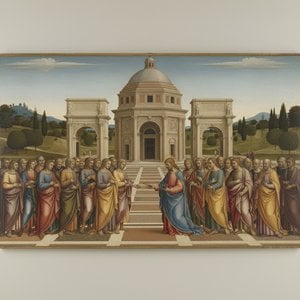
Pietro Perugino: Umbrian Master of Serenity & Precursor to Raphael's High Renaissance
Explore the life & art of Pietro Perugino, a pivotal Renaissance master and Raphael’s influential teacher. Discover his serene compositions, Sistine Chapel frescoes, and lasting legacy with ArtsDot.
L'Art comme Identité : Exprimer sa Personnalité à Travers une Appropriation Classique
Explorez comment l'appropriation de classiques révèle votre identité ! Conseils d'experts pour intégrer l'art dans votre intérieur ou branding. Reproductions de qualité, personnalisation & inspiration.

Les 25 chefs-d'œuvre de Raphaël : l'excellence de la Renaissance
Plongez dans les chefs-d'œuvre de Raphaël et la Haute Renaissance. Explorez la collection complète sur ArtsDot.com.