


 Lähetä
 Jaa
Jaa
 Tarkemmat tiedot
 Opas
Opas

 Lataa kuva
 Samanlaisia kohteita
 Diaesitys
 Tilastot
Three Forms
 Stone
Stone- Sculpture
- Abstraction-Création
 Modern
 53.0 x 34.0 cm
 Tate Britain
 Lue lisää
Tällä sivulla esitettyä taideteosta suojaa tekijänoikeuslaki, mikä tarkoittaa, ettemme voi laillisesti luoda tai myydä täsmälleen samanlaista jäljennöstä. Tämä suoja toteutetaan kansainvälisten sopimusten, kuten esimerkiksi Berne-konventio ja kansallisilla laeilla, mukaan lukien niillä määritellyt Yhdysvaltain tekijänoikeuslaki – Luku 17. Kaikki oikeudet pidätetään. Luvaton kopiointi tai jäljittely on kielletty.
Tämä menetelmä noudattaa täysin tekijänoikeussäännöksiä, sillä se ei sisällä suojatun taideteoksen kopioimista tai jäljentämistä. Sen sijaan kyseessä on luova uudelleentulkinta – uusi maalaus, joka ammentaa vaikutteita alkuperäisestä, mutta ei ole sen identtinen kopio.
Giclée- ja taideprintit
Museolaatuisia giclée- tai kankaitaulun tulosteita nopealla tuotannolla ja joustavilla viimeistelyvaihtoehdoilla. ( Tilaa käsinmaalattu jäljennös Siirry digitaaliseen kuvaan)




































Valitse valmiista mitoistamme sellaiset, jotka vastaavat teoksen alkuperäisiä mittasuhteita.

Kirjoita tarvitsemasi leveys ja korkeus, jotta tuloste sopii kehyskokoon tai seinällesi. Tulostetta voidaan vain leikata, sitä ei voi koskaan tehdä suuremmaksi kuin alkuperäinen kuva, joten eri muotoinen koko aiheuttaa osan kuvasta katoamisen. Lähetämme sinulle digitaalisen mallikuvan hyväksyttäväksi ennen kuin aloitamme tulostuksen. Tällä sivulla näkyvä kuva ei näytä lopullista leikkausta — vain mallikuva näyttää sen.
Maailmanlaajuinen toimitus () 2 viikossa tavallisen 4–5 viikon sijaan. (21 lokakuu)

Ilmainen pikatoimitus ympäri maailman

Korkealaatuinen pellavakangas

Kattava kuljetusvakuutus

Tulliveron palautustakuu

Takuu täydellisestä värien vastaavuudesta

100 päivän palautusoikeus valmistusvirhetapauksissa

100% rahat takaisin -takuu

Määräalennus saatavilla
 Lasivaihtoehto on saatavilla vain alle 110 cm kokoisille teoksille

Three Forms
Giclée- ja taideprintit
Replikaatin koko
-


Kokonaishinta
€ 54
The Essence of Form: A Study in Modernist Serenity
In the quiet, monochromatic realm of Barbara Hepworth’s Three Forms, we encounter a profound dialogue between matter and void. Captured in a striking black-and-white composition, this work serves as a masterclass in the minimalist aesthetic that defined much of the twentieth-century sculptural revolution. The photograph presents three abstract sculptures, each a testament to Hepworth's ability to breathe life into stone. Arranged with meticulous balance upon a rectangular platform, these organic shapes emerge from a deep, velvety black background, creating an atmosphere of intense focus and meditative stillness. There is no distraction here—only the pure, unadulated interplay of light and shadow that defines the very soul of modernism.
The visual journey through this piece is one of tactile discovery. As the eye wanders across the smooth, rounded contours of the sculptures, one can almost feel the polished surface of the marble or alabaster from which they were birthed. Hepworth’s technique involves a delicate dance with geometry; while the sculptures themselves possess soft, flowing lines reminiscent of weathered river stones or celestial bodies, they are anchored by the sharp, decisive edge of the platform. This juxtaposition of organic fluidity and geometric stability creates a rhythmic tension, inviting the viewer to contemplate the relationship between the natural world and human intervention.
A Legacy of Abstraction and Light
To understand Three Forms is to understand the historical weight of the Unit One movement. As a pioneer who sought to bridge the gap between Surrealism and pure Abstraction, Hepworth utilized light as a sculptural tool. In this particular rendering, the directional lighting acts as an invisible chisel, carving out bright highlights that define the sculptures' three-dimensional presence and casting deep, dramatic shadows that suggest hidden depths within the stone. This interplay of luminance does more than just illuminate; it imbues the inanimate objects with a sense of movement and breath, making the static forms feel vibrantly alive.
For the discerning collector or interior designer, this work offers an unparalleled opportunity to introduce a sense of timeless sophistication into a space. The monochromatic palette ensures that the piece remains versatile, acting as a focal point that complements both contemporary minimalist interiors and more classical, opulent settings. It is not merely a photograph of sculpture, but an evocative window into the heart of British Modernism—a piece that promises to bring a sense of structural harmony, intellectual depth, and quiet elegance to any curated collection.
Kysymykset ja vastaukset
Millaista väriharmoniaa Barbara Hepworth:n "Three Forms" edustaa?
Teoksen "Three Forms" väriharmonia on merkitty muodossa Discordant Palette.
Mihin käyttöön "Three Forms"-teoksen painos on suositeltava?
Barbara Hepworth:n "Three Forms"-teoksen suositeltu käyttötarkoitus on Reflective. Se soveltuu kuitenkin myös muihin tarkoituksiin.
Onko "Three Forms" hyvä lahjaidea?
Lahjaksi Barbara Hepworth:n "Three Forms" on suositeltava Corporate Gift. Se sopii hyvin myös muihin tilaisuuksiin.
Samankaltaisia teoksia


Taiteilijan elämäkerta
nuoruvuodet ja koulutus
dame barbara hepworth, arvostettu englantilainen taiteilija ja kuvanveistäjä, syntyi 10. tammikuuta 1903 Wakefieldissä, Yorkshiressa. Hän opiskeli Leeds School of Artissa vuodesta 1920 alkaen ja myöhemmin hän voitti maakunnan apurajan opiskellakseen Royal College of Artissa (RCA) Lontoossa vuosina 1921–1924, jolloin hän suoritti tutkintonsa.taiteellinen ura
- dame barbara hepworthin työ on modernismin ja erityisesti modernin kuvanveiston mestarillinen esimerkki. Hän oli yksi harvoista naistaiteilijoista, joka saavutti kansainvälistä mainetta.
- Vuonna 1933 hän oli mukana perustamassa Unit One -taidesuuntausta yhdessä ben nicholsonin, paul nashin ja muiden taiteilijoiden kanssa, tavoitteenaan yhdistää surrealismi ja abstraktio brittiläisessä taiteessa.
- Hepworthin varhaiselle tuotannolle oli ominaista abstraktio sekä hänen osallistumisensa pariisilaisessa Abstraction-Création -taidesuuntauksessa.
merkittäviä teoksia ja näyttelyitä
- Oval Form (Trezion), pronssinen veistos, kuuluu Kimbell Art Museumin kokoelmaan Fort Worthissa, Yhdysvalloissa. (katso ArtsDot-palvelussa)
- Two Forms -veistos on esillä Hepworth Wakefieldissa, Wakefieldissä, Yhdistyneessä kuningaskunnassa. (katso ArtsDot-palvelussa)
- Totem, marmoriveistos, on myös osa Hepworth Wakefieldin kokoelmaa. (katso ArtsDot-palvelussa)
perintö ja museokokoelmat
barbara hepworthin työt ovat laajalti tunnustettuja, ja hänen veistoksensa sekä maalauksensa ovat osa lukuisia museoita ympäri maailmaa. Taiteilijan nimeä kantava Hepworth Wakefield kätkee sisäänsä lukemattomia mestariteoksia tunnetuilta taiteilijoilta, mukaan lukien Hepworthin omat teokset. (löydä lisää Hepworth Wakefieldistä ArtsDot-palvelusta)johtopäätös
dame barbara hepworthin edelläkävijämäinen työ modernissa brittiläisessä kuvanveistossa on jättänyt pysyvän jäljen taidemaailmaan. Hänen perintönsä jatkaa inspiroimista niin taiteilijoita kuin taiteen ystäviäkin, ja hänen teoksensa säilyvät todisteena hänen innovatiivisesta hengestään ja taiteellisesta neroudestaan. lisää tietoa Barbara Hepworthista Wikipediassa
Barbara Hepworth
1903 - 1975 , Yhdistynyt kuningaskunta
Tietoa taiteilijasta
- Artistic Movement Or Style: Modernisme
- Artists Or Movements Influenced By This Artist: ['Abstraction']
- Artists Who Influenced This Artist: ['Henry Moore']
- Date Of Birth: 10 janvier 1903
- Date Of Death: 20 mai 1975
- Full Name: Jocelyn Barbara Hepworth
- Nationality: Britannique
- Notable Artworks:
- Oval Form
- Two Forms
- Pierced Hemisphere I
- Place Of Birth: Wakefield, Yorkshire
Aiheeseen liittyvät artikkelit

Geometrisen abstraktion mestariteokset: Taidetta kotiin ArtsDotilta
Tutustu geometrisen abstraktion 10 mestariteokseen! Piet Mondrian, Kandinsky ja muut taiteilijat muovasivat modernin taiteen historiaa. Löydä inspiraatiota kotiisi ArtsDotilta – laadukkaat taideprintit ja sisustusehdotukset odottavat. Tutki kokoelma verkossa!

Wassily Kandinskin 25 mestariteosta: Värien ja muodon syvä maailma | ArtsDot
Tutustu Wassily Kandinskin 25 vaikuttavinta teosta! Uppoudu abstraktin taiteen maailmaan, värien symboliikkaan ja modernin ekspressionismin historiaan. Löydä inspiraatiota kodin sisustukseen ArtsDot.com:ista – laadukkaat taideprintit ja reproduktiot.

10 legendaarista pronssiveistosta, jotka mullistivat taiteen – ArtsDot.com
Tutustu 10 legendaariseen pronssiveistokseen, jotka ovat muuttaneet taiteen historiaa! Rodinista Michelangeloon – opi mestareiden tarinat ja löydä täydellinen taideteos kotiisi ArtsDot.com:ssa. Laadukkaat jäljennökset & sisustusideat.
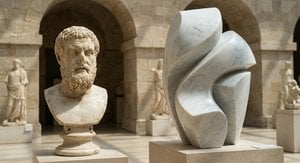
The Enduring Allure of Marble in Art History: From Classical Sculpture to Modern Abstraction
Explore the captivating history of marble sculpture from ancient Greece to modern art. Discover renowned artists like Canova & Michelangelo, carving techniques, and investment insights at ArtsDot.

Barbara Hepworth: A Sculptural Dialogue with Form, Space & the Human Condition
Explore the profound world of Barbara Hepworth's sculpture. Discover her artistic evolution, iconic forms, and lasting influence on modern art. A guide for collectors & enthusiasts.


