


Kuva noudattaa valintojasi: , .
Keräilykohteen kuvaus
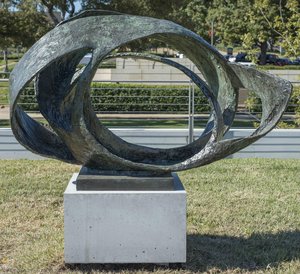
A powerful study in abstract verticality, Barbara Hepworth's 1961 Single Form (Chûn Quoit) evokes Neolithic ritual through its dark, pierced stone texture, inviting you to explore this modernist masterpiece.
 Lue lisää
Taiteilijan elämäkerta
Tutustu Barbara Hepworthin uraauurtavaan abstraktiin kuvanveistoksiin (1903–1975). Hän oli modernismin pioneeri, erityisesti nykytaiteessa. Löydä hänen perintönsä Hepworth Wakefeldissa.
Käsinmaalattu öljyvärinen jäljennös
Käsinmaalattu öljyväri kankaalle haluamassasi koossa ja kehyksissä, taiteilijoidemme valmistamana tilauksesta. ( Vaihda tulosteeseen Siirry digitaaliseen kuvaan)
Tämä teos on tekijänoikeuden suojaama
Tällä sivulla esitettyä taideteosta suojaa tekijänoikeuslaki, mikä tarkoittaa, ettemme voi laillisesti luoda tai myydä täsmälleen samanlaista jäljennöstä. Tämä suoja toteutetaan kansainvälisten sopimusten, kuten esimerkiksi Berne-konventio ja kansallisilla laeilla, mukaan lukien niillä määritellyt Yhdysvaltain tekijänoikeuslaki – Luku 17. Kaikki oikeudet pidätetään. Luvaton kopiointi tai jäljittely on kielletty.
Kunnioittavana ja laillisena vaihtoehtona tarjoamme alkuperäisestä inspiroituneita, yksilöllisiä ja käsinmaalattuja taideteoksia. Taitavat ja ammattimaiset taiteilijamme tutkivat huolellisesti alkuperäisen teoksen tyyliä, tunnelmaa ja taiteellista ydintä luodakseen uuden, ainutlaatuisen teoksen, joka herättää saman tunteen – säilyttäen samalla oman itsenäisen alkuperäisyytensä.
Tämä menetelmä noudattaa täysin tekijänoikeussäännöksiä, sillä se ei sisällä suojatun taideteoksen kopioimista tai jäljentämistä. Sen sijaan kyseessä on luova uudelleentulkinta – uusi maalaus, joka ammentaa vaikutteita alkuperäisestä, mutta ei ole sen identtinen kopio.
Lisää tästä teoksesta
 Jaa teos
 Jaa
Jaa
 Tiedot
 Opas
Opas

 Lataa kuva
 Samanlaisia kohteita
 Diaesitys
 Kysymykset ja vastaukset
 Tilastot
Tilaa maalauksesi neljässä helpossa vaiheessa
Älä kiirehdi. Voit muuttaa mitä tahansa vastausta; tilauksesi loppusumma päivittyy jokaisen valinnan myötä.
1 Ensimmäinen vaihe neljästä
Minkä kokoisen haluaisit?
Nämä koot säilyttävät alkuperäisen maalauksen mittasuhteet. Piirros näyttää valitsemasi koon seinällä, kahden metrin pitkän sohvan yläpuolella.
Tai anna omat mitat
Valitse valmiista mitoistamme sellaiset, jotka vastaavat teoksen alkuperäisiä mittasuhteita.

Kirjoita tarvitsemasi leveys ja korkeus, jotta teos sopii kehyksiisi tai seinällesi. Koska kyseessä on käsinmaalattu teos, taiteilija voi maalata hieman enemmän kuvan ympärille tai rajata sitä hieman, jos haluat eri muotoisen koon — valinta on sinun. Lähetämme sinulle digitaalisen mallikuvan hyväksyttäväksi ennen kuin maalaus alkaa. Tällä sivulla näkyvä kuva ei vastaa lopullista tulosta — vain mallikuva näyttää sen.
2 Toinen vaihe neljästä
Miten teoksen tulisi olla valmiina: rullattuna, kangasjännitteenä vai kehystettynä?
Alla olevat hinnat koskevat ensimmäisessä vaiheessa valitsemaasi kokoa.
Valitse kangaspinnan reunat
Valitse kehys

Valkoinen reuna €1

pehmennetty reuna €1

Jatkuva reuna €1

P118B €10

P118H €10

P118W €10

P438Z €10

P508JH €12

P508YH €12

P805H €10

P805Z €10

P919BZ €10

P919G €10

P919XJ €10

P959ZH €10

P968JZ €12

W106C €8

W218G €10

W218JH €8

W218Y €10

W307PJ €10

W316G €10

W316PJ €8

W316Y €10

W398PJ €8

W4111J €10

W500HY €15

W500JH €15

W692G €12

W849H €8

W940BG €15

W953PJ €8

H24-GOLD €30

H24-SILVER €30

H36-GOLD €45

H36-SILVER €45
Kehystetty
Kehystys: . Kokonaismitat kehyksen kanssa: .
3 Kolmas vaihe neljästä
Haluaisitko tehdä maalaukseen jonkin muutoksen?
Useimmat vastaavat kieltävästi. Koska jokainen maalaus on käsintehty, taiteilijamme voi myös muokata sitä sinua varten.
Tilauksen jälkeen ArtsDot.com -tiimi lähettää asiakkaalle sähköpostia ohjeita varten ja toimittaa luonnoksen esikatselun
4 Neljäs vaihe neljästä
Muutamia viimeistelyvaihtoehtoja
Kaikki ovat valinnaisia. Jo valitut vastaukset eivät aiheuta lisäkustannuksia.
Kuka sen maalaa?
Maailmanlaajuinen toimitus () 3–4 viikossa tavallisen 5 viikon sijaan. (8 marraskuu). Laadusta ei tingitä.
Nimikyltti, kuten museossa?
Kaiverretun pronssilaatan tiedot
This elegant plaque features the artist's name and the title of the artwork, finely engraved for a timeless presentation.
It is made from bronze with a refined, elegant finish. The text is precisely laser-engraved for a sharp and permanent result. Measuring 9x2 cm, the plaque is compact yet easy to read. It's built to be durable and scratch-resistant, offering a professional, museum-quality look. Mounting is simple thanks to the included adhesive backing.
Läpinäkyvän akryylilaatan tiedot
The plaque includes essential engraved details such as the artist's name, the title of the artwork, the date it was created, the type of media used-like oil on canvas or watercolor-a brief description of the piece, and a QR code that links to the complete artwork information.
It is crafted from clear acrylic, offering a sleek, modern appearance. The text is UV-engraved in black to ensure strong visual contrast. With a size of 10x15 cm, it ensures optimal readability. It comes equipped with two metal hooks for secure wall mounting. The plaque is designed to be weather-resistant, making it suitable for various environments, and it includes interactive features that work seamlessly with smartphone scanning.
Mustan akryylilaatan tiedot
This elegant plaque includes engraved information such as the artist's name, the title of the artwork, the date it was created, the type of media used (like oil on canvas or watercolor), a short description of the artwork, and a QR code for quick access to more information.
The plaque itself is made from refined black acrylic with a premium finish. The text is laser-engraved in white for high contrast and readability. Its size is 10x15 cm, designed to be easy to read. It comes with two metal hooks for professional mounting. The design is sleek and fits any interior style. It is also weather-resistant and durable, with built-in digital integration for mobile compatibility.
Suojaava lakka?
Milloin tarvitset sen?
✓ Tarkista ja tilaa
Maalauksesi juuri niin kuin tilasit

Single Form (Chûn Quoit)
Reproduktiotekniikka
Replikaatin koko
-

Kokenut huipputaiteilija
Lisää yksityiskohtia, hienostuneisuutta ja enemmän aikaa tuotantoon
-

Reproduktion kehystysvaihtoehdot
-
-
Teoksille tai reproduktioille, joiden mikä tahansa sivu on suurempi kuin 105 cm (noin 41 tuumaa), kehys toimitetaan osina purettuna sarjana. Tämä menetelmä varmistaa turvallisen toimituksen ja ehkäisee vaurioita kuljetuksen aikana.
Vaatii ammattimaista kokoamista – kyseessä ei ole tee-se-itse-tuote.
Sarja on koottava ja kangas kiristettävä kokeneen kehystysammattilaisen toimesta käyttäen puuliimaa (ei sisälly pakkaukseen), kangaspinnetteitä ja puristimia, jotta kehyksen kulmat pysyvät suorina liiman kuivuessa. Virheellinen kokoaminen tai epätasainen kankaan kiristys voi vaurioittaa teosta pysyvästi, eikä tällaiset vauriot ala takuun piiriin.
 Teoksille tai reproduktioille, joiden mikä tahansa sivu on suurempi kuin 105 cm (noin 41 tuumaa), kehys toimitetaan osina purettuna sarjana. Tämä menetelmä varmistaa turvallisen toimituksen ja ehkäisee vaurioita kuljetuksen aikana.
Kaikki massiivipuupalat sisältyvät, tarkasti mittojen mukaan leikattuina.
Kootaan mukana tulevilla ruuveilla sekä kulmaliitoksia varten tarvittavalla puuliimalla, jota ei toimiteta, joten se on hankittava kehystäjältä.
Vaatii ammattilaisvälineitä, jotka eivät sisälly pakkaukseen: kankaan venytyspihdit (kiristin) ja puristimet, joilla pidetään kehyksen puut suorassa liiman kuivuessa.
Tärkeää:
Kulmaliitoksissa tarvitaan puuliimaa, kehyksien osat on pidettävä puristimilla, kunnes liima on täysin kuivunut, ja koottuun kehykseen jännitettävän kankaan kiristämiseen tarvitaan kangaspenssipihti. Mikään näistä ei sisälly pakkaukseen. Suosittelemme varmistamaan kokeneen kehystäjän saatavuuden ennen tämän kokoisen kehyksen tilaamista.

Nimilaatta
-
-

Suojalakkaus
Kiiltävä lakka (syventää värejä, suojaa valolta ja kosteudelta)
-

Mukauta taideteokseni
Esimerkkejä muokattavista asioista: Vaihda kasvot asiakkaan omaan valokuvaan; Lisää lemmikki (esim. vaihda kissa koiraan); Lisää taustalle piilotettu viesti; Muuta taustan maisemaa tai elementtejä.
-

Pikatoimitus
Maailmanlaajuinen toimitus () 3–4 viikossa tavallisen 5 viikon sijaan. (8 marraskuu). Laadusta ei tingitä.
-
Pikatoimitus
Maailmanlaajuinen toimitus () 5 viikon kuluessa. (15 marraskuu).
Sisältyy hintaan
Kokonaishinta
€ 235
Lasivaihtoehto on saatavilla vain alle 110 cm kokoisille teoksille
Sisältyy jokaiseen tilaukseen
- Ilmainen pikatoimitus ympäri maailman
- Korkealaatuinen pellavakangas
- Kattava kuljetusvakuutus
- Tulliveron palautustakuu
- Takuu täydellisestä värien vastaavuudesta
- 100 päivän palautusoikeus (vain valmistusvirheet)
- 100% rahat takaisin -takuu
- Määräalennus tarjolla


Single Form (Chûn Quoit): A Meditation on Neolithic Echoes
Barbara Hepworth’s “Single Form (Chûn Quoit)” is not merely a sculpture; it's an invitation into a dialogue with the ancient, a resonant echo of prehistoric ritual and the enduring power of form. Created in 1961, this arresting piece—a study in dark stone, meticulously carved and subtly textured—captures Hepworth’s signature style: a masterful blend of abstraction and deeply rooted connection to the natural world. The work immediately commands attention with its verticality, a stark yet graceful presence that speaks of both strength and vulnerability. It's a form that seems simultaneously grounded in the earth and reaching for something beyond – a visual embodiment of contemplation.
The sculpture’s genesis lies within the evocative landscape of Cornwall, specifically referencing the “quoit” chamber tombs found on the Penwith peninsula. These Neolithic structures, characterized by their distinctive circular openings, served as sacred spaces, imbued with layers of ritual and belief. Hepworth deliberately chose to evoke this ancient geometry, translating its essence into a contemporary form. The rough-hewn surface of the stone, achieved through careful carving and polishing, suggests the raw materiality of the original tombs while simultaneously hinting at the artist’s deliberate shaping – a delicate balance between preservation and reimagining.
Materiality and Technique: A Dance Between Stone and Light
Hepworth's choice of material—a dark, possibly bronze or similar stone—is crucial to the sculpture’s impact. The deep hue absorbs light, creating an immediate sense of weight and solidity. Yet, it is not a monolithic mass; subtle variations in texture – areas of roughness juxtaposed with polished surfaces – invite close inspection. This tactile quality encourages viewers to engage physically with the work, sensing its form through touch as much as sight.
The technique employed is one of painstaking refinement. Hepworth’s process involved a deliberate layering and shaping of the stone, guided by an intuitive understanding of its inherent qualities. The circular opening, piercing the upper portion of the sculpture, isn't simply a decorative element; it acts as a focal point, drawing the eye inward and suggesting a portal to another realm. The subtle gradations in tone, achieved through careful polishing and carving, create a sense of depth and volume, transforming what could have been a flat plane into a dynamic three-dimensional form.
Symbolism and Emotional Resonance
“Single Form (Chûn Quoit)” transcends its purely formal qualities to evoke profound symbolism. The reference to the Neolithic quoit tombs speaks to humanity’s enduring fascination with death, ritual, and the mysteries of the past. The sculpture can be interpreted as a meditation on time, memory, and the cyclical nature of existence – a reminder that we are all connected to those who came before us.
Furthermore, the work possesses an undeniable emotional resonance. Its austere beauty and contemplative form invite viewers to slow down, to breathe deeply, and to engage in a quiet dialogue with their own inner selves. The sculpture’s simplicity is deceptive; it holds within it a vastness of meaning, prompting reflection on themes of spirituality, mortality, and the enduring power of human creativity.
A Legacy of Modern Sculpture
Barbara Hepworth was a pivotal figure in 20th-century art, pioneering new approaches to sculpture that moved beyond traditional representational forms. “Single Form (Chûn Quoit)” stands as a testament to her innovative spirit and her profound connection to the natural world. Her work continues to inspire artists and collectors alike, offering a timeless exploration of form, space, and the human condition. Reproductions of this iconic piece provide a remarkable opportunity to bring Hepworth’s vision into any setting, adding a touch of contemplative elegance and historical significance.
Kysymykset ja vastaukset
Mihin käyttöön Barbara Hepworth:n "Single Form (Chûn Quoit)" -teoksen reproduktio soveltuu?
Teoksen "Single Form (Chûn Quoit)" painosteelle suositeltu käyttötapa on Reflective.
Mikä on teoksen Barbara Hepworth:n "Single Form (Chûn Quoit)" paikka taidehistoriassa?
Teoksen Barbara Hepworth:n "Single Form (Chûn Quoit)" taidehistoriallinen luokitus on Modernism, Modern-kaudelta.
Onko "Single Form (Chûn Quoit)"-teoksen luoja Barbara Hepworth tunnettu myös muilla nimillä?
Barbara Hepworth tunnetaan myös nimillä Jocelyn Barbara Hepworth.
Samankaltaisia teoksia




Barbara Hepworth
1903 - 1975, Yhdistynyt kuningaskunta
Taiteilijan elämäkerta
nuoruvuodet ja koulutus
dame barbara hepworth, arvostettu englantilainen taiteilija ja kuvanveistäjä, syntyi 10. tammikuuta 1903 Wakefieldissä, Yorkshiressa. Hän opiskeli Leeds School of Artissa vuodesta 1920 alkaen ja myöhemmin hän voitti maakunnan apurajan opiskellakseen Royal College of Artissa (RCA) Lontoossa vuosina 1921–1924, jolloin hän suoritti tutkintonsa.taiteellinen ura
- dame barbara hepworthin työ on modernismin ja erityisesti modernin kuvanveiston mestarillinen esimerkki. Hän oli yksi harvoista naistaiteilijoista, joka saavutti kansainvälistä mainetta.
- Vuonna 1933 hän oli mukana perustamassa Unit One -taidesuuntausta yhdessä ben nicholsonin, paul nashin ja muiden taiteilijoiden kanssa, tavoitteenaan yhdistää surrealismi ja abstraktio brittiläisessä taiteessa.
- Hepworthin varhaiselle tuotannolle oli ominaista abstraktio sekä hänen osallistumisensa pariisilaisessa Abstraction-Création -taidesuuntauksessa.
merkittäviä teoksia ja näyttelyitä
- Oval Form (Trezion), pronssinen veistos, kuuluu Kimbell Art Museumin kokoelmaan Fort Worthissa, Yhdysvalloissa. (katso ArtsDot-palvelussa)
- Two Forms -veistos on esillä Hepworth Wakefieldissa, Wakefieldissä, Yhdistyneessä kuningaskunnassa. (katso ArtsDot-palvelussa)
- Totem, marmoriveistos, on myös osa Hepworth Wakefieldin kokoelmaa. (katso ArtsDot-palvelussa)
perintö ja museokokoelmat
barbara hepworthin työt ovat laajalti tunnustettuja, ja hänen veistoksensa sekä maalauksensa ovat osa lukuisia museoita ympäri maailmaa. Taiteilijan nimeä kantava Hepworth Wakefield kätkee sisäänsä lukemattomia mestariteoksia tunnetuilta taiteilijoilta, mukaan lukien Hepworthin omat teokset. (löydä lisää Hepworth Wakefieldistä ArtsDot-palvelusta)johtopäätös
dame barbara hepworthin edelläkävijämäinen työ modernissa brittiläisessä kuvanveistossa on jättänyt pysyvän jäljen taidemaailmaan. Hänen perintönsä jatkaa inspiroimista niin taiteilijoita kuin taiteen ystäviäkin, ja hänen teoksensa säilyvät todisteena hänen innovatiivisesta hengestään ja taiteellisesta neroudestaan. lisää tietoa Barbara Hepworthista Wikipediassa


Aiheeseen liittyvät artikkelit

Geometrisen abstraktion mestariteokset: Taidetta kotiin ArtsDotilta
Tutustu geometrisen abstraktion 10 mestariteokseen! Piet Mondrian, Kandinsky ja muut taiteilijat muovasivat modernin taiteen historiaa. Löydä inspiraatiota kotiisi ArtsDotilta – laadukkaat taideprintit ja sisustusehdotukset odottavat. Tutki kokoelma verkossa!

Barbara Hepworth: A Sculptural Dialogue with Form, Space & the Human Condition
Explore the profound world of Barbara Hepworth's sculpture. Discover her artistic evolution, iconic forms, and lasting influence on modern art. A guide for collectors & enthusiasts.

Henry Moore: Sculpting Modernity – Form, Emotion & the Human Condition
Explore the revolutionary sculptures of Henry Moore – abstract forms, reclining figures & powerful expressions of the human condition. Discover his legacy & artistic process with ArtsDot.