


Good reads
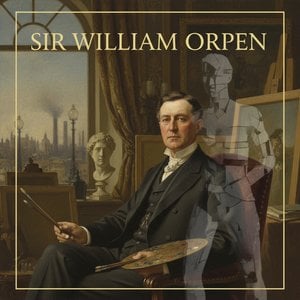
Sir William Orpen: A Study in Edwardian Portraiture & the Shadows of Modernity
Explore the life & art of Sir William Orpen, a master of Edwardian portraiture and poignant WWI depictions. Discover his unique realism, psychological depth, and enduring legacy in this insightful analysis.


18th century Italian painters
Masterpieces by Canaletto and Tiepolo define 18th century Italian art. Explore the full collection online at ArtsDot.com.

Reflecting the Self: A History of Portraiture & Psychological Insight
Explore the fascinating history of self-portraiture from Renaissance masters like Dürer & Rembrandt to modern interpretations. Discover the psychological insights and artistic techniques behind these iconic works. Expert analysis for art enthusiasts.

Questions & Answers
In which historical period did Romano Valori work?
Romano Valori worked in the Modern period. The period situates the artist's activity in history.
Can I explore Romano Valori's works by color spectrum?
See Romano Valori's artworks sorted by color, across the whole spectrum.
How long did Romano Valori live?
Romano Valori lived about 32 years, from 1886 to 1918.
Can I buy a reproduction of a Romano Valori painting?
Yes. See Romano Valori painting reproductions, available as hand-painted oil paintings and as prints.
Can I study Romano Valori's use of color across all works?
See the colors Romano Valori used most often, measured across the artworks.
Is Romano Valori's work in the public domain?
Yes. Romano Valori died in 1918, and the works are in the public domain.
What are the birthplace and birth year of Romano Valori?
Romano Valori was born in Milan in 1886.
What are the best-known paintings by Romano Valori?
See the most famous paintings by Romano Valori, ranked.
Where can I see Romano Valori's paintings?
Romano Valori's paintings can be seen at Ca’ Granda – Ospedale Maggiore Policlinico.