


The picture follows your choices: , .
Collectible Description
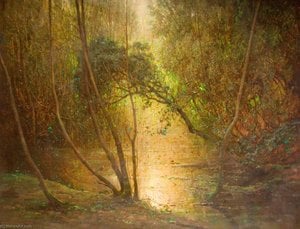
This serene 1837 landscape by Eugène Blery captures a tranquil woodland edge. Discover the beauty of this Romantic era masterpiece today.
 Read More
Artist Biography
A forerunner of the Barbizon school, Blery was a master of etching. Discover his beautiful French landscapes today.
Hand Made Oil Reproduction
Hand-painted oil on canvas in your size and frame, made to order by our artists. ( Switch to Print Switch to Digital Image)
Order your in four simple steps
Take your time. You can change any answer; the price in your order card follows each choice.
1 Step one of four
Which size would you like?
These sizes keep the proportions of the original painting. The drawing shows your choice on a wall, above a two-metre sofa.
Or give your own measurements
Pick from our preset sizes that match the artwork's original proportions.

Type the width and the height you need, to fit your frame or your wall. This is hand-painted, so for a size with a different shape the artist can paint a bit more around the picture, or cut a bit — you choose. We send you a digital mockup to approve before the painting starts. The picture shown on this page does not show the real result — only the mockup does.
2 Step two of four
How should it be prepared: rolled, stretched or framed?
The prices below are for the size you chose in step one.
Choose the edges of the stretched canvas
Choose your frame

White $1

Blurside $1

Extended $1

P118B $10

P118H $10

P118W $10

P438Z $10

P508JH $12

P508YH $12

P805H $10

P805Z $10

P919BZ $10

P919G $10

P919XJ $10

P959ZH $10

P968JZ $12

W106C $8

W218G $10

W218JH $8

W218Y $10

W307PJ $10

W316G $10

W316PJ $8

W316Y $10

W398PJ $8

W4111J $10

W500HY $15

W500JH $15

W692G $12

W849H $8

W940BG $15

W953PJ $8

H24-GOLD $30
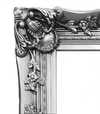
H24-SILVER $30
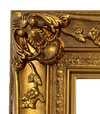
H36-GOLD $45
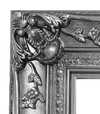
H36-SILVER $45
Framed
Moulding: . Overall size with the frame: .
3 Step three of four
Would you like anything changed in the painting?
Most people answer no. Because each painting is made by hand, our artist can also adapt it for you.
After order, ArtsDot.com team will email client for instructions and provide a mockup preview
4 Step four of four
A few finishing options
All of them are optional. The answers already selected cost nothing extra.
Who paints it?
Worldwide Delivery () in 3/4 weeks instead of standard 5 weeks. (17 November). No compromise on quality.
A nameplate, as in a museum?
Engraved Bronze Plaque Details
This elegant plaque features the artist's name and the title of the artwork, finely engraved for a timeless presentation.
It is made from bronze with a refined, elegant finish. The text is precisely laser-engraved for a sharp and permanent result. Measuring 9x2 cm, the plaque is compact yet easy to read. It's built to be durable and scratch-resistant, offering a professional, museum-quality look. Mounting is simple thanks to the included adhesive backing.
Transparent Acrylic Plaque Details
The plaque includes essential engraved details such as the artist's name, the title of the artwork, the date it was created, the type of media used-like oil on canvas or watercolor-a brief description of the piece, and a QR code that links to the complete artwork information.
It is crafted from clear acrylic, offering a sleek, modern appearance. The text is UV-engraved in black to ensure strong visual contrast. With a size of 10x15 cm, it ensures optimal readability. It comes equipped with two metal hooks for secure wall mounting. The plaque is designed to be weather-resistant, making it suitable for various environments, and it includes interactive features that work seamlessly with smartphone scanning.
Black Acrylic Plaque Details
This elegant plaque includes engraved information such as the artist's name, the title of the artwork, the date it was created, the type of media used (like oil on canvas or watercolor), a short description of the artwork, and a QR code for quick access to more information.
The plaque itself is made from refined black acrylic with a premium finish. The text is laser-engraved in white for high contrast and readability. Its size is 10x15 cm, designed to be easy to read. It comes with two metal hooks for professional mounting. The design is sleek and fits any interior style. It is also weather-resistant and durable, with built-in digital integration for mobile compatibility.
A protective varnish?
When do you need it?
✓ Check and order
Your painting, as you ordered it

Landscape
Reproduction Medium
Reproduction Size
-

Elite Senior Artist
More detail, finesse, and extra production time
-

Reproduction Frame
-
-
For artworks or reproductions larger than 105 cm (approximately 41 inches) on any side, the frame will be shipped as a kit, disassembled. This method ensures safe delivery and prevents damage during transport.
Professional assembly required - this is not a DIY product.
The kit must be assembled and the canvas stretched by an experienced professional framer, using wood glue (not supplied), a canvas stretching plier and clamps to hold the bars square while the glue dries. Incorrect assembly or uneven canvas tension can permanently damage the artwork and is not covered by our warranty.
 For artworks or reproductions larger than 105 cm (approximately 41 inches) on any side, the frame will be shipped as a kit, disassembled. This method ensures safe delivery and prevents damage during transport.
All solid wood bars are included, precisely cut to size.
Assembled with the screws provided, plus wood glue for the corner joints, which is not supplied and must be sourced by your framer.
Professional tools are required and not included: a canvas stretching plier (tensioner) and clamps to hold the bars square while the glue dries.
Important:
The corner joints require wood glue, the bars must be held with clamps until the glue is fully dry, and tightening the canvas on the assembled frame requires a canvas stretching plier. None of these are included in the kit. Please arrange an experienced professional framer before ordering this size.

Nameplate
-
-

Protective Varnish
Glossy Varnish (enhances colors, protects against light/moisture)
-

Customize My Artwork
Examples of what can be changed: Replace face with customer photo; Add pet (e.g., replace cat with dog); Include hidden message in background; Change background landscape or elements.
-

Urgent
Worldwide Delivery () in 3/4 weeks instead of standard 5 weeks. (17 November). No compromise on quality.
-
Express Shipping
Worldwide Delivery () in 5 weeks. (24 November).
Included
Total Price
$ 263
Glass option is only available in size under 110 CM
Included with every order
- Free Worldwide Express Shipping
- High-Quality Linen Canvas
- Full Shipping Insurance
- Customs Tax Refund Guarantee
- True Color Matching Guarantee
- 100-Day Return Policy (Defects Only)
- 100% Money-Back Guarantee
- Bulk Discount Offer


Identification of the Landscape Painting
The oil on paper mounted on canvas titled Landscape is a work by the French artist Eugène Blery. This landscape painting captures a specific moment of light and shadow within the natural world. It was created about 1837.
Eugène Blery brings a quiet precision to this scene. The work focuses on the textures of the earth and the weight of the trees. It is a study of the French countryside, rendered with the directness of a man who observes the world from the soil rather than from a studio window.
The composition rests upon the interplay of light and dark. A soft, hazy atmosphere settles over the distant hills, contrasting with the deep, shaded corners of the foreground. It is a silent observation of the land.
Composition and Visual Elements
Large, mature trees anchor the left and right edges of the scene. Their twisting, oak-like branches reach inward to form a natural frame, a dark repoussoir that directs the eye toward the center. In this middle ground, a sunlit valley opens up, bathed in diffused light that has filtered through a dense canopy. The composition relies on this movement from shadow to light to pull the viewer into the clearing.
The palette is built from the earth. Deep forest greens and mossy olives settle into the shadows, while ochre and warm browns define the terrain. These heavy tones contrast against the pale blue and hazy grey of the distant mountains and the sky. Organic, fluid lines define the landscape, seen in the undulating contours of the hills and the irregular reach of the wood. Atmospheric perspective softens the background, making the far hills appear lighter and less detailed against the horizon.
Texture defines the immediate foreground. The bark of the trees appears rough and craggy, a sharp departure from the soft, dappled appearance of the sunlit meadow. Natural daylight creates strong chiaroscuro effects, casting deep shadows that anchor the viewer in the shaded woodland edge. Light and shadow dance across the uneven ground. A quiet stillness remains.
History and Collection Details
This oil on paper, mounted on canvas, resides within the permanent collection of the Art Institute of Chicago. It carries the accession number 1980.612. The work entered the institution through a gift from the Old Masters Society. It remains a quiet presence in the archives, currently off view from the public galleries.
The physical object carries the weight of its history in its layered materials. It is a fragment of a landscape held in a frame measuring 54.7 × 68.6 × 8.9 cm. The paper beneath the oil rests against the canvas, a marriage of textures preserved through the years. It waits in the stillness of the museum's storage.
Questions & Answers
Can I see an X-ray view of "Landscape" by Eugène Blery?
"Landscape" can be examined layer by layer on the artwork's X-Ray page, a viewer inspired by a conservator's light bench with eleven optical readings of the image.
Toward which tone does "Landscape" lean?
The dominant hue of "Landscape" by Eugène Blery is ochre to sepia. The hue is the underlying tone of the palette.
What are the author and date of "Landscape"?
"Landscape" was created by Eugène Blery in 1837.
More about this painting
 Preview

 Send
 Share
 Details
 Guide


 Download
 Similars
 X-Ray
 Diaporama
 Q&A
 Stats
Related Artworks



Eugène Blery
1805 - 1887, France
Artist Biography
Early Life, Family and Training
Eugène Blery was born in 1805 in Fontainebleau, France. He grew up within a military family, a setting defined by the structured discipline of his father’s profession. His father spent his days teaching mathematics and fortifications at the local military school. This environment of precise measurements and defensive structures shaped the surroundings of his youth. As the school moved in 1808, the family relocated to Saint-Cyr, where Blery spent his formative years at the École spéciale militaire de Saint-Cyr.
His path eventually moved toward the visual arts through the guidance of Julie Volpelière. Under her instruction, he began to develop the technical skills required for his later work. He focused on the precision of drawing and the complexities of printmaking, learning to translate the physical world onto paper. These early lessons provided the foundation for a life spent observing the details of the natural landscape.
Patrons, Workshop and Commissions
The direction of Blery's early career was shaped by the support of the comtesse de Montalivet. Under her patronage, he began to refine his technical abilities during the 1820s. He first developed a skill for lithography, a method that allowed him to translate his observations of the natural world onto stone. Shortly after mastering this process, he turned his attention to acquaforte etching, adding a new layer of precision to his repertoire.
His workshop became a place where the quiet details of the French countryside were captured through line and ink. He built a reputation for producing etchings and engravings that focused on specific botanical and landscape subjects. His work often centered on the textures of trees and the delicate forms of wild flowers. These studies were not mere sketches but deliberate records of the landscape.
- La Grande Bardane (Große Klette am Wasser), 1842
- Angélique sauvage et roseaux (Wilder Engelwurz und Roseaux), 1855
Technique and Style
Blery worked across several mediums, moving between the roles of printmaker, draftsperson, painter, and etcher. He favored the sketchy, free-flowing lines of etching, a choice that suited his interest in capturing the immediate details of the natural world. His approach was defined by a preference for working out of doors, a habit that set him apart from many of his fellow engravers who remained in the studio. This practice of working en plein air allowed him to observe the subtle textures of the landscape directly.
His hand was often found in the study of botanical details and the quiet movements of the countryside. He focused on the specificities of nature, from the way light hits a stream to the structure of wild plants. This commitment to naturalism and direct observation made him a forerunner of the emerging Barbizon school. His etchings and drawings often sought a sense of unity through the suggestive quality of the etched line, capturing the atmosphere of a place rather than a polished, idealized version of it.
- La Grande Bardane (Große Klette am Wasser), 1842
- Angélique sauvage et roseaux (Wilder Engelwurz und Roseaux), 1855
- Eglise de Criel, 1834
Exhibitions and Recognition
Blery was a regular presence at the yearly Paris Salons. His work appeared there often enough to earn consistent attention from those who walked the exhibition halls. In 1840, he was awarded first place, a recognition that marked a significant moment in his career. He continued to find favor with the public and critics alike, eventually receiving the "Croix" in 1846.
The acclaim he gathered was not merely a matter of official awards. His etchings and drawings found a place in collections that valued the directness of his subjects. His ability to capture the quiet details of the French countryside allowed his prints to move beyond the studio and into the hands of collectors. Some of his notable subjects included:
- La Grande Bardane (Große Klette am Wasser), 1842
- Eglise de Criel, 1834
- Angélique sauvage et roseaux, 1855
His reputation was built on this steady accumulation of recognition. By working outdoors, he brought a sense of immediacy to his engravings that resonated with the viewers of the time. This connection to the natural world helped ensure his works were seen and kept.
Legacy and Influence
Blery’s presence is felt in the way he helped move art toward the naturalism of the Barbizon school. Alongside figures like Corot, Daubigny, and Rousseau, he looked toward the landscape to find a more direct way of seeing. His habit of working in situ helped mark a shift in how artists approached the outdoors, contributing to the development of plein-air painting. This approach favored the immediate, unpolished reality of a scene over the staged compositions of the past.
His influence extended into the studios of others through his teaching. He mentored the etcher Charles Méryon, passing on the technical sensibilities required to capture the specific textures of the French countryside. This lineage helped shape the way street scenes and landscapes were etched in the decades that followed.
Today, his traces remain in several collections. His prints and drawings are held in the Norton Simon Museum and the Musée d’art et d’histoire de la Ville de Genève. These works offer a look at a specific moment when the etched line began to favor a more free, sketchy quality to represent the movement of nature.

Related Articles

Evocations of Place: A Historical Journey Through Landscape Art
Explore the rich history of landscape art with ArtsDot. Discover renowned artists, movements like Impressionism & tonalism, and expert guidance for collecting timeless pieces. Find your perfect serene escape today!

John Constable: Nature, Light & the Romantic Vision of Rural England
Explore the life & art of John Constable, the Romantic painter who revolutionized landscape with emotive scenes of rural England. Discover his techniques, legacy, and key works – perfect for collectors & enthusiasts.
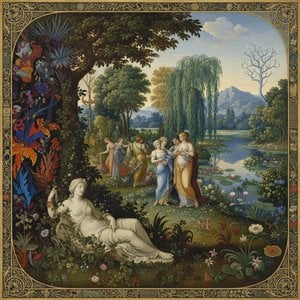
Evoking Eden: Nature's Enduring Legacy in Fine Art Across Historical Movements
Explore the rich history of landscape painting with ArtsDot.com! Discover Impressionism, Realism & Naturalism's impact on nature art. Find serene masterpieces and expert guidance for building your perfect collection.