

 Gemälde kaufen Bild kaufen
 Versenden
 Teilen
 Details anzeigen
 Zu Favoriten hinzufügen

 Herunterladen
 Ähnliche Objekte
 Röntgenaufnahme
 Diashow anzeigen
Tanoo
 Watercolor
- WallArt
- Post-Impressionism
 1912
1912 74.0 x 53.0 cm
 McMichael Canadian Art Collection
 Weiterlesen
Giclée / Kunstdruck
Giclée- oder Leinwanddruck in Museumsqualität mit schneller Produktion und flexiblen Veredelungsoptionen.




P118B $10

P118H $10

P118W $10

P438Z $10

P508JH $12

P508YH $12

P805H $10

P805Z $10

P919BZ $10

P919G $10

P919XJ $10

P959ZH $10

P968JZ $12

W106C $8

W218G $10

W218JH $8

W218Y $10

W307PJ $10

W316G $10

W316PJ $8

W316Y $10

W398PJ $8

W4111J $10

W500HY $15

W500JH $15

W692G $12

W849H $8

W940BG $15

W953PJ $8




Wählen Sie aus unseren vordefinierten Größen, die den ursprünglichen Proportionen des Kunstwerks entsprechen.

Sie können Ihre eigenen Maße eingeben, um ein bestimmtes Format oder einen speziellen Platz einzupassen. Wenn das von Ihnen gewählte Format nicht den Proportionen des Originalbildes entspricht, werden wir das Kunstwerk entweder beschneiden oder das Bild mit einem gespiegelten oder einfarbigen Rand erweitern. Ein digitaler Entwurf wird Ihnen zur Genehmigung zugesandt, bevor die Produktion beginnt.
Bitte beachten Sie, dass die Vorschau auf dem Bildschirm nicht den tatsächlichen Zuschnitt oder die Erweiterung widerspiegelt. Nur der Entwurf zeigt die endgültige Komposition präzise an.
Obwohl Sondermaße verfügbar sind, empfehlen wir die Auswahl eines Maßes aus der vordefinierten Liste, um die ursprünglichen Proportionen zu bewahren.
Weltweiter Versand () innerhalb von 2 Wochen statt der üblichen 4/5 Wochen. (12 Juli)

Kostenloser weltweiter Expressversand

Hochwertige Leinenleinwand

Umfassender Versicherungsschutz beim Versand

Zollsteuer-Rückerstattungsgarantie

Garantie für echte Farbtreue

60-Tage-Rückgaberecht (nur bei Mängeln)

100% Geld-zurück-Garantie

Mengenrabatt verfügbar
 Die Glasoption ist nur in Größen unter 110 cm verfügbar.

Tanoo
Giclée / Kunstdruck
Größe der Reproduktion
-


Endpreis aller Optionen
-
Beschreibung des Sammlerstücks
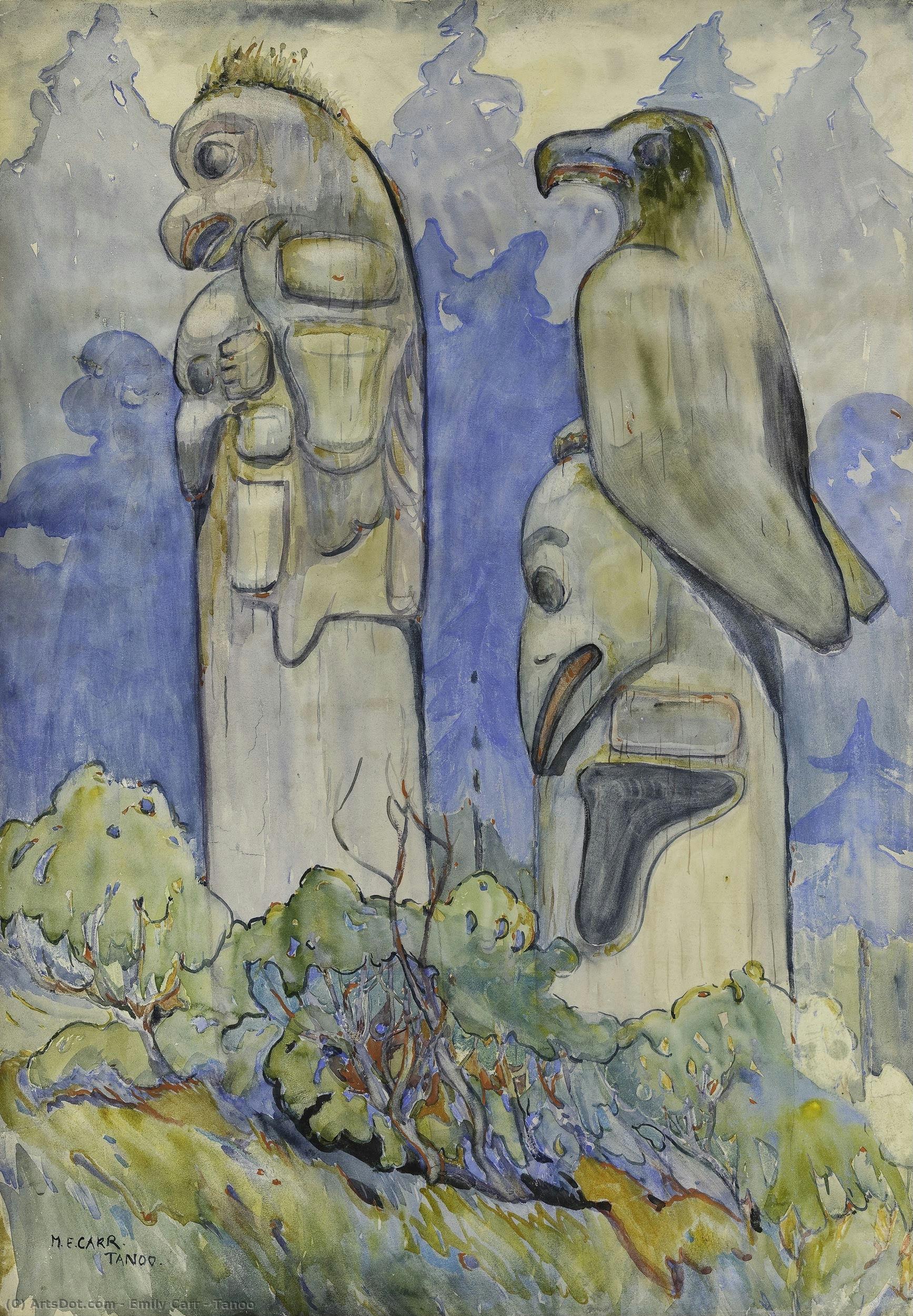
Emily Carr’s ‘Tanoo’: A Window into Haida Spirit and Northwest Coast Majesty
Emily Carr's “Tanoo,” painted in 1912, is more than just a depiction of totem poles; it’s a profound meditation on the spirit of the Pacific Northwest and the enduring connection between Indigenous peoples and their ancestral lands. Created during a pivotal period of change for both Canada and its First Nations communities, this watercolor offers a rare glimpse into a world largely untouched by modern influence – a world where storytelling, spirituality, and the natural world are inextricably intertwined.
The painting immediately commands attention with its verticality. Two imposing totem poles dominate the composition, rendered in Carr’s signature style: a blend of realism and expressive abstraction. These aren't simply static structures; they pulse with life through the artist’s skillful use of line and color. The figures carved into their surfaces – one a human face, the other an eagle – are not merely decorative but represent powerful ancestral spirits, guardians of knowledge and tradition. Carr herself spent time living amongst the Haida people on Queen Charlotte Island (now Haida Gwaii), learning from them and incorporating their worldview into her art. This intimate connection is palpable in the painting’s quiet reverence.
A Masterclass in Watercolor Technique
Carr's mastery of watercolor is evident in every brushstroke. The loose, layered washes create a remarkable sense of texture – you can almost feel the dampness of the forest air and the roughness of the weathered wood. Notice how she builds up color gradually, allowing each layer to bleed into the next, creating subtle shifts in tone and value. This technique isn’t simply about representation; it's about capturing the *feeling* of the landscape – its depth, its mystery, its inherent energy. The diffused lighting, suggesting an overcast day or a shaded forest, further enhances this atmospheric effect.
The composition itself is carefully considered. Carr employs a flattened perspective, prioritizing the verticality of the poles and creating a sense of monumental scale. Geometric shapes – rectangles for the poles, organic forms for the surrounding foliage – are used strategically to guide the viewer’s eye and establish a clear visual hierarchy. The use of line is particularly noteworthy; it defines the contours of the poles with precision while simultaneously suggesting movement and dynamism.
Symbolism and Cultural Significance
“Tanoo” is deeply rooted in Haida culture, where totem poles served as vital records of lineage, history, and spiritual beliefs. Each figure carved into a pole represents an individual or clan, narrating their stories and connecting them to the past. The eagle, for example, often symbolizes strength, wisdom, and connection to the spirit world. The human face likely represents a respected leader or ancestor.
Beyond its specific cultural context, “Tanoo” speaks to broader themes of identity, spirituality, and the relationship between humanity and nature. Carr’s work reflects a growing awareness of Indigenous cultures in Canada during the early 20th century, but it also demonstrates a deep respect for the traditions she encountered. The painting serves as a poignant reminder of the importance of preserving cultural heritage and recognizing the profound wisdom embedded within Indigenous knowledge systems.
Bringing ‘Tanoo’ into Your Space
Reproductions of “Tanoo” offer a beautiful way to bring this evocative artwork into your home or office. The vibrant colors and dynamic composition will add a touch of Northwest Coast spirit to any setting, while the intricate details capture the essence of Carr's artistic vision. Consider framing it in a natural wood frame to complement the painting’s earthy tones and further enhance its connection to the landscape.
Whether you are an art enthusiast, a collector seeking unique pieces, or simply someone who appreciates stunning visual beauty, “Tanoo” is a timeless masterpiece that continues to resonate with viewers today. It's a powerful testament to Emily Carr’s artistic talent and her profound understanding of the spirit of British Columbia.
Ähnliche Kunstwerke


Biografie des Künstlers
Frühes Leben und Einflüsse
- Geboren: 13. Dezember 1871, Victoria, British Columbia
- Gestorben: 2. März 1945, Victoria, British Columbia
- Familienhintergrund: Emily Carr war das vorletzte von insgesamt neun Kindern von Richard und Emily (Saunders) Carr. Ihr Vater war ein englischer Einwanderer, der in Victoria ein erfolgreiches Geschäft gründete.
- Frühe künstlerische Neigungen: Ermutigt durch ihren Vater zeigte Emily schon in jungen Jahren künstlerisches Talent. Sie erhielt frühe Kunstunterricht und interessierte sich sehr für die Darstellung der Natur um sie herum.
- Ausbildung: Studierte am San Francisco Art Institute (1890-1892) und an der Westminster School of Art in London (1899). Diese Erfahrungen führten sie verschiedenen künstlerischen Stilen aus, aber sie entwickelte letztendlich eine einzigartige Vision.
- Frühe Einflüsse: Die Landschaften von British Columbia, insbesondere Vancouver Island, beeinflussten stark Carrs frühe Arbeit. Sie fühlte sich auch von der Kunst und Kultur der First Nations-Völker in der Region angezogen.
Künstlerische Entwicklung und Stil
- Postimpressionistische Anfänge: Anfangs neigte Carrs Stil zum Postimpressionismus, beeinflusst von europäischen Künstlern. Sie löste sich jedoch allmählich von der konventionellen Darstellung ab, um einen expressiveren und persönlicheren Ansatz zu entwickeln.
- Fokus auf indigene Kultur: Ein bedeutender Wendepunkt in ihrer Karriere war ihre Erkundung von First Nations-Dörfern und -Kunst. Sie versuchte, die spirituelle Essenz und den kulturellen Reichtum dieser Gemeinschaften in ihren Gemälden einzufangen.
- Modernistische Hinwendung: Carr wurde zu einer der ersten kanadischen Malerinnen, die den Modernismus annahmen, der durch kräftige Farben, dynamische Pinselstriche und eine Abkehr vom traditionellen Realismus gekennzeichnet ist.
- Einzigartiger Stil: Ihr Stil zeichnet sich durch seine emotionale Intensität, das lebendige Farbpalette und die charakteristische Verwendung von Textur aus. Sie verwendete oft dicke Impasto-Techniken, um ein Gefühl für Bewegung und Energie in ihren Gemälden zu erzeugen.
Wichtige Werke und Ausstellungen
- Bemerkenswerte Gemälde: Tanoo (Aquarell), Ein Haida-Dorf (Öl), Die Indianische Kirche (Öl) gehören zu ihren bekanntesten Werken, die ihre einzigartige Mischung aus modernistischen Techniken und indigenen Themen zeigen.
- Ausstellungen: Carr nahm an mehreren Ausstellungen im Laufe ihrer Karriere teil, darunter die "Canadian West Coast First Nations and Modern Peoples' Art Exhibition" in der National Gallery of Canada.
- Klee Wyck (1941): Ihre Autobiografie Klee Wyck gewann den Governor General’s Literary Award für Sachbücher und demonstrierte ihr Talent als Schriftstellerin und Chronistin des Lebens in British Columbia.
Vermächtnis und historische Bedeutung
- "Mutter der modernen kanadischen Kunst": Emily Carr gilt weithin als Pionierin der modernen kanadischen Kunst, die den Weg für zukünftige Generationen von Künstlern ebnete.
- Anerkennung der indigenen Kultur: Ihre Arbeit trug dazu bei, das Bewusstsein für die Kultur und die künstlerischen Traditionen der First Nations in Kanada zu schärfen.
- Einfluss auf nachfolgende Künstler: Sie inspirierte zahlreiche kanadische Künstler mit ihrer einzigartigen Vision und ihrem unerschütterlichen Engagement für ihr Handwerk. Pegi Nicol Macleod ist ein Beispiel dafür.
- Nationales Symbol: Carrs Vermächtnis geht über ihre Kunstwerke hinaus, da sie zu einem Symbol für künstlerische Unabhängigkeit, kulturelle Erkundung und die Schönheit der Landschaft von British Columbia geworden ist. Ein kleiner Planet, 5688 Kleewyck, wurde nach ihrem anglizierten indigenen Namen benannt.

Emily Carr
1871 - 1945 , Kanada
Kurzinfos
- Beeinflusste Künstler:
- Vincent van Gogh
- Claude Monet
- Camille Pissarro
- Henri Matisse
- Bemerkenswerte Werke:
- Tanoo
- A Haida Village
- The Indian Church
- Geburtsdatum: 13. Dezember 1871
- Geburtsort: Victoria, Kanada
- Künstlerische Richtung: Modernismus, Post-Impressionismus
- Nationalität: Kanadisch
- Sterbedatum: 2. März 1945
- Vollständiger Name: Emily Carr
- Von Künstlern Beeinflusst:
- Margaret Kathleen Nichol
- Sophia Theresa Pemberton
Ähnliche Artikel
Thomas Thomson: Pioneering Canadian Landscape & the Pursuit of National Identity
Explore the evocative landscapes of Tom Thomson, a pivotal figure in Canadian art & precursor to the Group of Seven. Discover his bold style, lasting legacy, and profound impact on shaping a national artistic identity.

Sir Alfred James Munnings: Die 25 Meisterwerke des Pferdebildes | ArtsDot
Entdecken Sie die 25 Meisterwerke von Sir Alfred James Munnings! Erleben Sie seine beeindruckenden Pferdebilder, geprägt vom Impressionismus und Realismus. Hochwertige Kunstdrucke & Reproduktionen auf ArtsDot.com – für elegante Wandkunst & stilvolles Interieurdesign.

Echos der Azurküste: Strategien der Kunstauswahl für mediterrane Villeninterieure – Harmonisierung von Raum, Licht und Erbe
Expertenratgeber für die perfekte Kunstauswahl in mediterranen Villen! Harmonische Farbkonzepte, Lichtgestaltung & lokale Künstler – schaffen Sie ein Zuhause voller Seele. Jetzt lesen!

Impressionistische Landschaften: Die 10 Meisterwerke, die eine Epoche prägten | ArtsDot
Entdecken Sie die 10 Meisterwerke des Impressionismus! Von Monet bis Renoir – erleben Sie die Geschichte, Technik und zeitlose Schönheit ikonischer Landschaftsbilder. Hochwertige Kunstdrucke auf ArtsDot.com. Jetzt entdecken!

Ronald Ossory Dunlop: A Study in Early Canadian Modernism & Evocative Landscape Painting
Discover the captivating world of Ronald Ossory Dunlop, a pivotal Irish painter known for his 'alla prima' landscapes & emotive portraits. Explore his life, techniques, and key artworks with ArtsDot.



