


 Se i rummet
 Send
Send Del
Del
 Detaljer
 Guide
Guide

 Download
 Lignende værker
 Røntgenundersøgelse
 Se diasshow
 Statistik
The Last Supper (detail)


 Læs mere
Giclée / Kunsttryk
Giclée- eller lærredstryk i museumskvalitet med hurtig produktion og fleksible muligheder for finish. ( Bestil håndmalet reproduktion Skift til digitalt billede)




P118B $10

P118H $10

P118W $10

P438Z $10

P508JH $12

P508YH $12

P805H $10

P805Z $10

P919BZ $10

P919G $10

P919XJ $10

P959ZH $10

P968JZ $12

W106C $8

W218G $10

W218JH $8

W218Y $10

W307PJ $10

W316G $10

W316PJ $8

W316Y $10

W398PJ $8

W4111J $10

W500HY $15

W500JH $15

W692G $12

W849H $8

W940BG $15

W953PJ $8




Vælg mellem vores forudindstillede størrelser, der matcher kunstværkets originale proportioner.

Du kan indtaste dine egne mål for at passe til en specifik ramme eller et bestemt område. Hvis den valgte størrelse ikke stemmer overens med det originale billedes proportioner, vil vi enten beskære kunstværket eller udvide billedet med en spejlet eller ensfarvet kant. En digital mockup vil blive sendt til din godkendelse, før produktionen påbegyndes.
Bemærk venligst, at forhåndsvisningen på skærmen ikke afspejler den faktiske beskæring eller udvidelse. Kun mockuppen vil nøjagtigt vise den endelige komposition.
Selvom specialmål er tilgængelige, anbefaler vi at vælge et mål fra den foruddefinerede liste for at bevare de originale proportioner.
Verdensomspændende levering () på 2 uger i stedet for de sædvanlige 4/5 uger. (24 september)

Gratis ekspresforsendelse til hele verden

Lærred af linned i høj kvalitet

Komplet transportforsikring

Garanti for refusion af told og importafgifter

Garanti for autentisk farvegengivelse

100 dages returret ved fabrikationsfejl

100% fuld returret

Mængderabat ved flere køb
 Glasmulighed er kun tilgængelig i størrelser under 110 cm

The Last Supper (detail)
Giclée / Kunsttryk
Reproduktionsstørrelse
-


Samlet pris
$ 63
The Last Supper: A Renaissance Masterpiece of Grief and Revelation
Cosimo Rosselli’s “The Last Supper,” a breathtaking detail from his monumental fresco cycle within the Cappella Sistina, offers an unparalleled glimpse into the heart of the late 15th century. Completed in 1481-82 amidst a complex political reconciliation between Florence and Rome, this work transcends mere biblical narrative; it’s a profound meditation on faith, betrayal, and the human condition. More than just a depiction of Christ's final meal with his disciples, it’s a carefully constructed tableau brimming with psychological depth and artistic innovation.
Rosselli, a Florentine artist known for his vibrant palette and meticulous detail – qualities he honed under the tutelage of Domenico Ghirlandaio – approached this commission with a distinctive vision. Unlike some of his contemporaries who favored a more idealized representation of biblical figures, Rosselli imbued his apostles with a palpable sense of humanity. Their expressions range from stunned disbelief to quiet contemplation, reflecting the immediate shock and emotional turmoil following Christ’s announcement of his impending betrayal. The artist masterfully captures this spectrum of reactions, creating a scene that feels remarkably alive and relatable across the centuries.
A Symphony of Light, Shadow, and Architectural Framing
The fresco's technical brilliance lies in Rosselli’s masterful manipulation of light and shadow – a hallmark of Renaissance painting. He employs *chiaroscuro* to sculpt the figures from their surroundings, creating a dramatic sense of depth and volume that draws the viewer into the scene. The cloudy background, rendered with atmospheric perspective, subtly recedes into the distance, emphasizing the central drama unfolding within the arched niche—a deliberate architectural framing device reminiscent of Florentine palazzi. Notice how columns and arches not only define the space but also contribute to a feeling of solemnity and reverence.
Rosselli’s use of color is equally striking. The predominantly somber tones – deep blues, browns, and reds – evoke a sense of grief and impending doom. However, strategically placed highlights—particularly on Christ's figure and the chalice—draw attention to key elements and imbue the scene with a subtle spiritual radiance. The artist’s careful rendering of textures, from the folds of the drapery to the rough surfaces of the stone, adds another layer of realism and tactile engagement.
Symbolism and Historical Context
Beyond its artistic merits, “The Last Supper” is rich in symbolic meaning. The arrangement of the apostles—with Judas conspicuously positioned on the left, his face obscured by shadow – immediately establishes a sense of unease and foreboding. The three windows behind the scene depict key moments from Christ’s Passion: the Prayer at Gethsemane, the Arrest, and the Crucifixion, visually connecting the meal to the events that will follow. These windows, painted by Rosselli's assistant Biagio d'Antonio, further emphasize the cyclical nature of faith and sacrifice.
The fresco’s creation coincided with a period of intense political maneuvering between Florence and Rome. Pope Sixtus IV commissioned the decoration of the Sistine Chapel as part of an effort to mend relations with Lorenzo de’ Medici, ruler of Florence. Rosselli's work, therefore, carries not only religious significance but also historical weight, offering a window into the cultural and artistic exchanges of the era. The chapel itself, built between 1473 and 1481, stands as a testament to Renaissance architectural grandeur.
A Timeless Masterpiece – Perfect for Reproduction
“The Last Supper” by Cosimo Rosselli remains an enduring masterpiece, captivating viewers with its emotional intensity, technical skill, and profound symbolism. ArtsDot offers meticulously crafted hand-painted reproductions that faithfully capture the essence of this iconic fresco, allowing you to bring this extraordinary work into your home or office. Each reproduction is created using traditional techniques and archival quality materials, ensuring a lasting tribute to Rosselli’s artistic legacy. Explore our detailed collection today and discover the beauty and power of this timeless masterpiece.
Lignende kunstværker


![Legend Of St Francis - [21] - Apparition To Fra Agostino And To Bishop Guido Of Arezzo — Giotto Di Bondone, Proto-renaissance](/media/artworks/images-thumb/8a/06/8a0632ef03ba49f12919faa78718a88b.jpg)


Om kunstneren
Cosimo Rosselli (1439–1507): A Florentine Hand in Rome
Cosimo Rosselli, born around 1439 in the vibrant heart of Florence, emerged from a family of established merchants—a background that afforded him a stable upbringing and access to the burgeoning cultural life of the Renaissance. Unlike many artists who began their training in youth, Rosselli’s artistic journey commenced relatively late, around the age of twenty. He entered the workshop of Domenico Ghirlandaio, a leading figure in Florentine painting renowned for his masterful frescoes and exquisitely detailed altarpieces. This environment was not merely an apprenticeship; it was immersion into a bustling hub of creativity where numerous assistants contributed to a constant stream of commissions. Here, Rosselli absorbed the fundamentals of drawing, composition, and the meticulous techniques that would define his early style. Ghirlandaio’s influence was profound, instilling in him a linear precision, a vibrant palette, and a narrative clarity that characterized much of his work. Yet, even within this formative period, Rosselli began to demonstrate an individual sensibility, subtly absorbing elements from earlier masters like Masaccio and Fra Angelico—artists who had already revolutionized the depiction of space, light, and emotion in painting.- Early Foundations: Domenico Ghirlandaio’s workshop provided Rosselli with a crucial foundation in painting techniques and compositional principles, shaping his early aesthetic sensibilities. He learned from Ghirlandaio's mastery of perspective and draughtsmanship, establishing a stylistic bedrock that would inform his subsequent endeavors.
- Roman Experience: A pivotal moment arrived in 1481 when Rosselli received an invitation to participate in the monumental fresco cycle decorating the walls of the Sistine Chapel in Rome. This commission, alongside such luminaries as Pietro Perugino and Sandro Botticelli, marked a significant turning point in his career, catapulting him onto an international stage. The overarching theme of these frescoes was a carefully constructed parallel between the stories of Moses and Christ—a deliberate attempt to legitimize papal authority and underscore the continuity of divine law. Rosselli’s contributions focused on scenes from the Life of Jesus, showcasing his ability to translate complex narratives into visually compelling compositions.
Florentine Commissions and a Developing Style
Upon returning to Florence from Rome, Rosselli continued to receive a steady flow of commissions for altarpieces, frescoes, and panel paintings. His mature style blossomed during this period, characterized by refined compositions, elegant figures, and increasingly detailed landscapes. He retained the linear precision and vibrant colors he had learned from Ghirlandaio but began to incorporate elements of Perugino’s more graceful and harmonious aesthetic. Notable works from this time include frescoes for the Santissima Annunziata church—a significant commission that allowed him to showcase his evolving style on a grand scale—and numerous altarpieces adorning chapels throughout Florence. Rosselli possessed a talent for portraying the psychological states of his figures, imbuing them with a sense of inner life that resonated with contemporary audiences. He developed a distinctive approach to depicting religious scenes, emphasizing human emotions and interactions while maintaining an atmosphere of reverence and piety.Influences and Artistic Development
Rosselli’s artistic journey is a compelling example of how Renaissance artists navigated the complex interplay between tradition, innovation, and patronage, leaving behind a legacy that continues to inspire and captivate audiences today. He absorbed elements from earlier masters like Masaccio and Fra Angelico, incorporating their innovations—such as realistic depictions of space and emotional expression—into his own distinctive style. This demonstrates a deep understanding of art history and a willingness to learn from those who came before him. His early training under Ghirlandaio instilled in him a meticulous attention to detail and a mastery of linear perspective, shaping the foundational principles of his artistic practice.Legacy and Historical Significance
Cosimo Rosselli continued working diligently throughout the early 16th century, securing commissions from prominent Florentine families and religious institutions. However, as new artistic stars rose—Raphael and Michelangelo foremost among them—his prominence gradually diminished. He passed away in Florence around 1520, leaving behind a body of work that reflects his skill as a painter and his dedication to depicting religious themes with clarity and elegance. Today, Rosselli is remembered as a skilled Florentine artist who played an important role in the development of Renaissance art. His participation in the Sistine Chapel frescoes helped solidify Florence’s position as a leading center of artistic innovation, and his own works demonstrate his ability to synthesize diverse influences into a distinctive and refined style. While perhaps not achieving the same level of fame as some of his contemporaries, Cosimo Rosselli's contributions remain significant—a testament to his talent, dedication, and enduring legacy within the rich tapestry of Renaissance art.
Cosimo Rosselli
1439 - 1507 , Italien
Hurtige fakta
- Artistic Movement Or Style: Quattrocento
- Artists Or Movements Influenced By This Artist: ['Leonardo da Vinci']
- Artists Who Influenced This Artist:
- Domenico Ghirlandaio
- Masaccio
- Date Of Birth: 1439
- Full Name: Cosimo di Lorenzo Filippi Rosselli
- Nationality: Italiensk
- Notable Artworks:
- Procession med Mose og Kristus
- Det Sixtinske Kapel
- Place Of Birth: Florence
Relaterede artikler

The Enduring Legacy of Fresco: Technique, History & Artistic Expression Across Cultures
Explore the rich history & enduring legacy of fresco painting! Discover ancient techniques, Giotto's masterpieces, and modern applications. Expert insights for art lovers & professionals.

Michelangelo Buonarottis 25 Mesterværker: Skulpturer & Malerier til Dit Hjem | ArtsDot
Oplev Michelangelos 25 mest ikoniske værker – fra David til Pietà og Sixtinske Kapel. Lær om renæssancens mester, hans teknikker & tidløse kunst. Find museumskvalitets reproduktioner på ArtsDot.com.
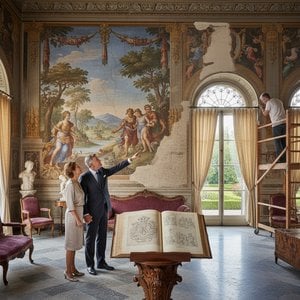
Freskoen som Familiens Arv: Bevar Din Historie på Væggene
Bevar din families historie med smukke, håndmalede vægmalerier og freskoer. Få professionel rådgivning & skræddersyede kunstværker hos – kvalitet og ekspertise garanteret!
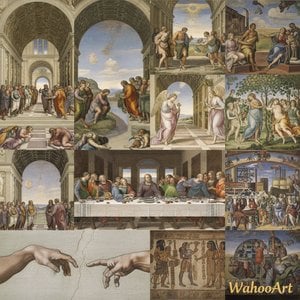
Top 10 Freskomalerier: Kunsthistoriske Mesterværker der Forandrede Kunsten | ArtsDot
Oplev de 10 mest legendariske freskomalerier, der har formet kunsthistorien! Fra Michelangelos Sixtinske Kapel til Raffaellos vægmalerier. Find inspiration og køb museumskvalitets reproduktioner på ArtsDot.com.

The Enduring Legacy of Fresco Painting: Techniques, History & Contemporary Relevance
Explore the rich history & enduring artistry of fresco painting – from Giotto to Michelangelo! Discover techniques, conservation efforts, & modern applications. Learn how ArtsDot brings this timeless art form to your home.