
- Додому

- Цифрове зображення
- Джорджія О’Кіф
- Dark Iris No. III

 Замовити друк Замовити репродукцію
 Надіслати
 Поділитися
 Details
 Додати до улюблених

 Завантажити
 Схожі вироби
 X-Ray
X-Ray
 Слайд-шоу
Dark Iris No. III


Придбайте цифрову копію високої роздільної здатності з покращеною якістю, що значно перевершує онлайн-перегляд.
Кожен файл ретельно підготовлений нашими фахівцями за допомогою сучасних інструментів та професійної ручної ретуші. Ми гарантуємо виняткову чіткість, точну передачу кольору та високу деталізацію кожного зображення.
Фінальний файл надсилається електронною поштою протягом 72 годин і оптимізований для негайного використання у професійних виданнях та друкованих матеріалах. Таку якість обирають провідні дизайнерські студії, видавництва та галереї.
 Читати далі
Цифрове зображення
Завантажте файл високої роздільної здатності для особистого перегляду, друку та творчих проєктів.
Включено в кожне замовлення цифрових зображень
Експертна цифрова доставка, гарантовано
Обираючи ArtsDot.com, ви отримуєте не просто зображення — ви отримуєте професійно вдосконалений цифровий витвір мистецтва, створений з надзвичайною точністю та підкріплений гарантією задоволення. Ось усе, що автоматично додається до вашого замовлення:

Швидка доставка на email
Ваш цифровий файл із зображенням високої роздільної здатності буде надісланий вам електронною поштою протягом 72 годин після оформлення замовлення — він буде готовий до негайного використання.

Цифровий файл із покращенням ШІ
Ваш витвір мистецтва професійно оптимізовано за допомогою передових інструментів штучного інтелекту та ручної корекції, що забезпечує максимальну деталізацію, чіткість і точність передачі кольорів.

Безкоштовне повторне надання послуг протягом усього життя
Випадково видалили або втратили файл? Не хвилюйтеся — ми надішлемо його вам повторно в будь-який час безкоштовно.

Без митних зборів — завжди
Насолоджуйтесь вашим витвором мистецтва миттєво без жодних мит, зборів або плати за доставку — цифрові завантаження завжди не оподатковуються.

Гарантія точності кольорів
Ми гарантуємо, що ваше цифрове зображення максимально точно відтворює оригінальні кольори завдяки використанню професійних інструментів та систем управління кольором.

Гарантія задоволення протягом 60 днів
Якщо ви не задоволені придбаним цифровим зображенням, ми відкоригуємо його або повернемо 100% вартості протягом 60 днів — без жодних запитань.

Гарантія повернення 100% коштів
Не задоволені покупкою? Отримайте повне повернення коштів протягом 60 днів після отримання цифрового файлу — без жодних запитань.

Знижки на оптові замовлення
Купуйте 3 зображення — заощаджуйте 10% — Купуйте 5 — заощаджуйте 15% — Купуйте 10+ — заощаджуйте 20%. Чудово підходить для творчих проєктів, галерей та агентств.
Опис колекційного об'єкта
Dark Iris No. III: A Singular Bloom Against Vast Darkness
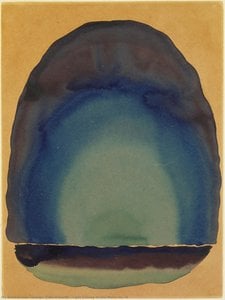
Georgia O’Keeffe's "Dark Iris No. III," painted in 1927, isn’t merely a depiction of an iris flower; it’s a distillation of experience—a testament to O’Keeffe’s unwavering commitment to capturing the essence of nature through abstraction. Created during her formative years in New Mexico, where she established herself as a pioneer of American Modernism alongside fellow artists like Andy Warhol and Edward Weston, this piece embodies the spirit of that era: bold experimentation with color and form driven by an intensely personal vision. The painting’s genesis lies in O’Keeffe's fascination with the Southwest landscape and her profound connection to its flora—particularly irises—which she repeatedly revisited throughout her prolific career.- Composition & Perspective: Vertical orientation dominates, emphasizing the flower’s height and sculptural presence. The iris occupies nearly the entire frame, creating a dramatic contrast against the enveloping dark background that amplifies its visual impact. This deliberate choice eliminates extraneous context, forcing viewers to confront the flower itself—a microcosm of beauty and resilience.
- Color Palette & Texture: Primarily composed of muted whites, grays, and blacks, the palette eschews vibrancy in favor of tonal subtlety. Delicate lavender and pale yellow hues peek through within the iris petals, hinting at hidden depths and adding a touch of ethereal luminescence. The pastel medium lends a soft, slightly blurred texture to the image—a palpable impression of layering that conveys the delicate fragility of the flower while simultaneously suggesting an underlying strength.
Stylistic Influences & Artistic Technique
O’Keeffe's approach to painting was profoundly shaped by Arthur Wesley Dow’s teachings, which championed expressive freedom and a harmonious balance between color and line—a departure from the prevailing realism of her time. Dow encouraged artists to prioritize intuition over meticulous observation, urging them to translate their inner feelings into visual representations. This philosophy is evident in “Dark Iris No. III,” where curving lines define the petals of the iris, creating a sense of organic movement and conveying O’Keeffe's desire to capture not just what she saw but how she *felt*. The simplified forms—characteristic of Modernist aesthetics—reduce the flower to its fundamental elements, highlighting color and texture as primary vehicles for artistic expression.- Symbolism & Emotional Resonance: Iris flowers have long been associated with symbolism – faith, hope, wisdom, and courage – reflecting O’Keeffe's spiritual convictions and her belief in the transformative power of art. The painting invites contemplation on themes of beauty, vulnerability, and perseverance—qualities that resonate deeply within the viewer’s psyche.
A Legacy of Bold Abstraction
“Dark Iris No. III” stands as a cornerstone of O’Keeffe's oeuvre and exemplifies her unwavering dedication to exploring the boundaries of artistic innovation. It solidified her reputation as a visionary artist who redefined American Modernism by prioritizing subjective experience and embracing unconventional techniques—a legacy that continues to inspire artists and collectors alike. Its enduring appeal lies in its ability to convey profound emotion through deceptively simple forms, reminding us that true beauty resides not merely in representation but in the act of perceiving itself.- Provenance & Exhibitions: The painting’s journey began with Paul Rosenfeld's Intimate Gallery in New York City and subsequently graced prestigious museums like Santa Fe and Washington D.C., cementing its place within the annals of art history.
Схожі витвори мистецтва




Біографія митця
Early Life and Artistic Foundations
Georgia Totto O’Keeffe, a name synonymous with American modernism, emerged from the unassuming landscape of Sun Prairie, Wisconsin, in 1887. Born into a family of Irish and Hungarian descent engaged in dairy farming, young Georgia displayed an artistic inclination early on, deciding by age ten that she would dedicate her life to art. This determination was nurtured through lessons with local watercolorist Sara Mann, followed by formal studies at the School of the Art Institute of Chicago from 1905 to 1906 and later at the University of Virginia. However, it was her encounter with Arthur Wesley Dow’s principles – emphasizing personal expression and a harmonious balance of color and line – that truly ignited her artistic path. Dow's teachings steered O’Keeffe away from strict realism toward a more subjective and emotionally resonant approach to art, an approach that would define her career. These formative years weren’t without their challenges; periods of illness and dissatisfaction led her to temporarily abandon painting, but the creative impulse always drew her back, evolving with each new experience and influence. The vastness of the Wisconsin plains, coupled with a strong family connection to the land, instilled in her a deep appreciation for nature's forms – a theme that would become central to her later work.New York and the Stieglitz Circle
A pivotal moment arrived in 1916 when O’Keeffe’s abstract charcoal drawings were discovered by Alfred Stieglitz, a renowned photographer and art dealer. He exhibited her work without her prior knowledge, sparking a dialogue that would profoundly shape both their lives and the course of American art. Stieglitz recognized an exceptional talent in O'Keeffe, one that resonated with his own modernist sensibilities. He invited her to New York City in 1918, providing not only professional support but also fostering a deep personal connection. Their relationship blossomed into marriage in 1924, creating a dynamic artistic partnership and intellectual exchange. Stieglitz championed O’Keeffe’s work, showcasing it at his gallery “291” and promoting her as a leading figure in the American avant-garde. During this period, she began to develop her signature style – bold, simplified forms and intensely saturated colors – initially expressed through depictions of New York skyscrapers and, most famously, magnified flower paintings. These floral works, often interpreted (though consistently denied by O’Keeffe herself) as veiled representations of female anatomy, challenged conventional notions of beauty and sexuality in art. Stieglitz's influence was immense; he encouraged her to explore abstraction and pushed her to develop a unique visual language.The Allure of the Southwest
While New York provided a crucial platform for her early success, it was the landscapes of the American Southwest that truly captured O’Keeffe’s imagination and profoundly influenced her artistic vision. Her first visit to New Mexico in 1929 marked the beginning of a lifelong love affair with the region's stark beauty, vibrant colors, and unique cultural heritage. The vastness of the desert, the dramatic rock formations, and the ancient Pueblo architecture resonated deeply within her, inspiring a new series of paintings that reflected the spirit of the land. Works like *Cow’s Skull: Red, White, and Blue* (1931) and *Summer Days* (1936) are powerful testaments to this influence, transforming seemingly mundane objects into iconic symbols of the American West. She spent many summers in New Mexico, establishing a home and studio in Abiquiu that became integral to her artistic process and identity. This period saw a shift towards larger-scale works, often employing encaustic techniques alongside oil paints, creating textured surfaces that mirrored the rugged terrain she observed.Technique and Style
O’Keeffe's style evolved significantly throughout her career. Initially influenced by Arthur Dow’s emphasis on color and line, she gradually developed a highly personal approach characterized by simplified forms, bold colors, and an exploration of scale. Her early works often featured realistic depictions of flowers, but as she matured, she began to abstract these subjects, reducing them to their essential shapes and colors. The use of encaustic—a mixture of beeswax and pigments—added texture and luminosity to her paintings, while her meticulous attention to detail created a sense of intimacy and immediacy. She was known for her close-up views of flowers, often presented at an enormous scale, forcing the viewer to confront their beauty and complexity in a new way. Her work is frequently described as “minimalist,” but it’s more accurately characterized by a deliberate reduction of elements to their most essential forms, creating a powerful emotional impact.Legacy and Enduring Influence
Georgia O'Keeffe continued to paint prolifically throughout her life, experimenting with new subjects and pushing the boundaries of abstraction. Her later works included aerial views of clouds and skies, reflecting a fascination with the vastness and ethereal quality of the natural world. She remained fiercely independent and uncompromising in her artistic vision, refusing to be categorized or defined by prevailing art movements. O'Keeffe’s impact on American art is immeasurable. She paved the way for future generations of female artists, challenging societal norms and asserting her own unique voice in a male-dominated field. Her paintings continue to captivate audiences with their bold simplicity, emotional depth, and evocative power. The establishment of the Georgia O'Keeffe Museum in Santa Fe in 1997 further solidified her legacy, preserving her art and providing a space for ongoing scholarship and appreciation. In 2014, *Jimson Weed/White Flower No. 1* sold for $44.4 million, setting a record price for a work by a female artist – a testament to the enduring value and significance of her artistic contribution. O’Keeffe's influence extends beyond painting; she became an icon of American individualism and self-reliance, inspiring countless artists and admirers with her unwavering commitment to her craft and her unique perspective on the world. Her work remains a powerful reminder of the transformative power of art and the enduring beauty of the natural world.Key Works & Museum Presence
- Red Canna: Exemplifies her early exploration of floral abstraction.
- Cow’s Skull: Red, White, and Blue (1931): A powerful symbol of the American Southwest and a meditation on mortality.
- Summer Days (1936): Captures the essence of the New Mexico landscape with its vibrant colors and simplified forms.
- Jimson Weed/White Flower No. 1: A monumental floral painting that showcases her mastery of scale and composition.
- Georgia O'Keeffe Museum (Santa Fe)
- Museum of Modern Art (New York)
- Art Institute of Chicago
- National Gallery of Art (Washington, D.C.)

Джорджія О’Кіф
1887 - 1986 , Сполучені Штати Америки
Короткі факти
- Artistic Movement Or Style: Модернізм, Абстракціонізм
- Artists Or Movements Influenced By This Artist:
- Довгий стиль
- Стігліц
- Artists Who Influenced This Artist:
- Артур Доу
- Альфред Стігліц
- Date Of Birth: 15 Листопада 1887
- Date Of Death: 6 Березня 1986
- Full Name: Georgia Totto O'Keeffe
- Nationality: Американка
- Notable Artworks:
- Квіти
- Черепи тварин
- Пейзажі
- Place Of Birth: Солт Лейк Сіті, США

