
- Додому

- Репродукція картини олією
- Джорджія О’Кіф
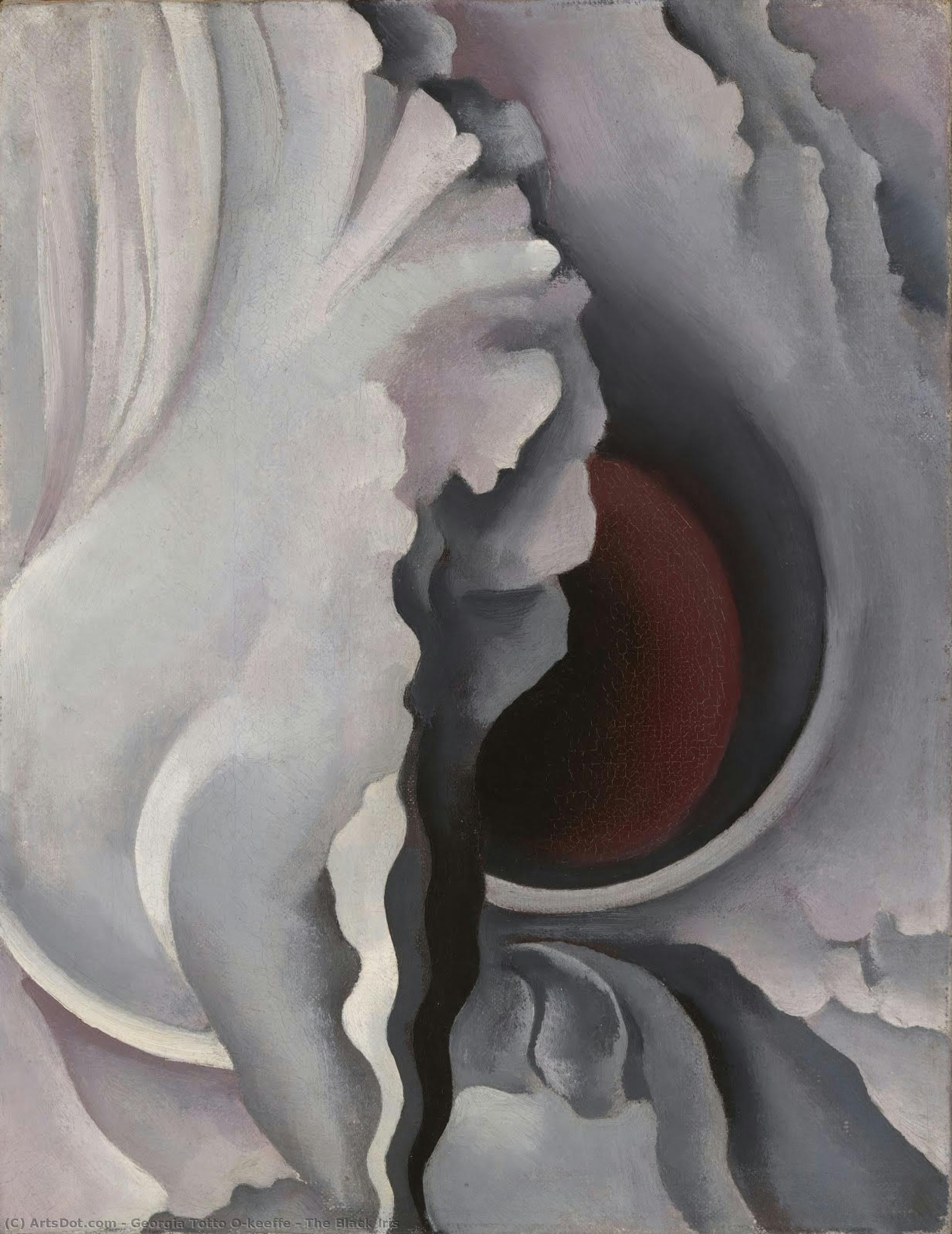
- The Black Iris
 Замовити друк Купити цифрове зображення
 Надіслати
 Поділитися
 Details
 Додати до улюблених

 Завантажити
 Схожі вироби
 X-Ray
X-Ray
 Слайд-шоу
The Black Iris


Олійная репродукція ручної роботи
Написана вручну олією на полотні у вашому розмірі та рамі, виготовлена на замовлення нашими художниками.




P118B $10

P118H $10

P118W $10

P438Z $10

P508JH $12

P508YH $12

P805H $10

P805Z $10

P919BZ $10

P919G $10

P919XJ $10

P959ZH $10

P968JZ $12

W106C $8

W218G $10

W218JH $8

W218Y $10

W307PJ $10

W316G $10

W316PJ $8

W316Y $10

W398PJ $8

W4111J $10

W500HY $15

W500JH $15

W692G $12

W849H $8

W940BG $15

W953PJ $8




 Читати далі
Обирайте з наших стандартних розмірів, що відповідають оригінальним пропорціям твору мистецтва.

Ви можете вказати власні розміри, щоб репродукція підійшла до конкретної рами або інтер'єру. Якщо вибраний вами розмір не відповідає пропорціям оригіналу, ми або обріжемо полотно, або доповнимо картину додатковими елементами, промальованими вручну. Цифровий макет буде надіслано вам на затвердження перед початком виробництва.
Зверніть увагу, що попередній перегляд на екрані не відображає фактичне обрізання або розширення зображення. Тільки макет точно покаже остаточну композицію.
Хоча ми можемо виготовити виріб у нестандартному розмірі, для збереження оригінальних пропорцій рекомендуємо обирати варіанти зі встановленого списку.
Після оформлення замовлення команда ArtsDot.com зв'яжеться з клієнтом електронною поштою для отримання інструкцій та надасть попередній макет
Доставка по всьому світу () за 3–4 тижні замість стандартних 5 тижнів. (1 Липень). Без жодних компромісів у якості.

Безкоштовна експрес-доставка по всьому світу

Високоякісне лляне полотно

Повне страхове покриття доставки

Гарантія відшкодування митних зборів

Гарантія точного відтворення кольорів

Політика повернення протягом 60 днів (лише у разі виявлення дефектів)

Гарантія повернення 100% коштів

Знижка на багатоелементні замовлення
 Скляний варіант доступний лише для розмірів до 110 см

The Black Iris
Матеріал репродукції
Розмір репродукції
-


Підсумкова ціна
-
Опис твору
The Black Iris: A Study in Silence and Sensuality – Georgia O’Keeffe's Masterpiece
Georgia O’Keeffe’s “The Black Iris” is more than just a depiction of a flower; it’s an immersion into a world of distilled emotion, a testament to the artist’s profound connection with the natural world and her ability to translate that relationship onto canvas. Completed in 1926, this painting exemplifies O'Keeffe’s groundbreaking approach to American modernism – a deliberate stripping away of extraneous detail to reveal the essential forms and textures that lie beneath. The image, dominated by the intense darkness of the iris’s center and the surrounding petals, immediately draws the viewer in, creating an intimate space where contemplation and quiet observation are paramount.
The composition itself is a carefully constructed exercise in focus. O'Keeffe employs a tightly cropped perspective, filling nearly the entire frame with the flower, forcing us to confront its power directly. The curving petals guide our gaze in a circular motion, mirroring the natural unfolding of the bloom and subtly suggesting notions of growth, expansion, and perhaps even the cyclical nature of life itself. The elongated vertical emphasis adds a sense of strength and resilience, qualities often associated with O’Keeffe's subjects – particularly her flowers.
Chromatic Restraint and Dramatic Contrast
What immediately strikes the viewer is the painting’s remarkable restraint in its color palette. Primarily monochromatic, it revolves around shades of white, gray, and black, punctuated by a startlingly deep burgundy/maroon hue at the flower's core. This deliberate lack of vibrant color amplifies the impact of the central focal point, creating a dramatic contrast that commands attention. The subtle gradations within these tones – the delicate shifts in value and saturation – are crucial to building depth and dimension, giving the illusion of velvety petals and complex shadow play. It’s a masterful demonstration of how O'Keeffe used color not for decoration, but as a tool to shape perception.
Craftsmanship and the Language of Line
The surface of “The Black Iris” is alive with evidence of O’Keeffe’s meticulous technique. Visible brushstrokes are deliberately employed, creating a textured surface that invites tactile engagement – almost as if you could reach out and feel the delicate curve of each petal. Layering techniques build volume and create an incredible sense of three-dimensionality, transforming a static image into a dynamic representation of form. The artist’s use of soft, flowing lines to define the petals contrasts with the more defined edges of the darker center, further emphasizing the flower's organic structure. This careful control over line and shape is characteristic of O’Keeffe’s modernist style – a commitment to simplifying forms while retaining their essential beauty.
Symbolism and the Inner Landscape
As with many of O’Keeffe’s works, “The Black Iris” invites interpretation. The flower itself has been widely discussed in terms of its symbolic resonance. Often viewed as representations of femininity, sexuality, or inner emotions, these flowers were not merely botanical studies for O'Keeffe; they were conduits to a deeper understanding of the human condition. Linda Nochlin’s influential analysis suggests that the iris could be interpreted as a morphological metaphor for female genitalia, a provocative reading that highlights the artist’s willingness to challenge conventional notions of beauty and representation. However, O’Keeffe herself resisted such interpretations, emphasizing her intention to capture “what I saw” – a testament to her artistic independence and desire to create works that resonated with her own unique vision.
A Legacy of Vision
“The Black Iris” stands as a powerful example of Georgia O’Keeffe's enduring legacy. Created during a pivotal moment in American art history, this painting demonstrates her innovative approach to abstraction and her profound connection to the natural world. Its quiet intensity, masterful technique, and layered symbolism continue to captivate viewers today, solidifying its place as one of O’Keeffe’s most iconic works. A hand-painted reproduction offers a unique opportunity to experience the full impact of this extraordinary piece – a window into the soul of an artist who dared to see beauty in the simplest of forms.
Схожі витвори мистецтва


Біографія митця
Early Life and Artistic Foundations
Georgia Totto O’Keeffe, a name synonymous with American modernism, emerged from the unassuming landscape of Sun Prairie, Wisconsin, in 1887. Born into a family of Irish and Hungarian descent engaged in dairy farming, young Georgia displayed an artistic inclination early on, deciding by age ten that she would dedicate her life to art. This determination was nurtured through lessons with local watercolorist Sara Mann, followed by formal studies at the School of the Art Institute of Chicago from 1905 to 1906 and later at the University of Virginia. However, it was her encounter with Arthur Wesley Dow’s principles – emphasizing personal expression and a harmonious balance of color and line – that truly ignited her artistic path. Dow's teachings steered O’Keeffe away from strict realism toward a more subjective and emotionally resonant approach to art, an approach that would define her career. These formative years weren’t without their challenges; periods of illness and dissatisfaction led her to temporarily abandon painting, but the creative impulse always drew her back, evolving with each new experience and influence. The vastness of the Wisconsin plains, coupled with a strong family connection to the land, instilled in her a deep appreciation for nature's forms – a theme that would become central to her later work.New York and the Stieglitz Circle
A pivotal moment arrived in 1916 when O’Keeffe’s abstract charcoal drawings were discovered by Alfred Stieglitz, a renowned photographer and art dealer. He exhibited her work without her prior knowledge, sparking a dialogue that would profoundly shape both their lives and the course of American art. Stieglitz recognized an exceptional talent in O'Keeffe, one that resonated with his own modernist sensibilities. He invited her to New York City in 1918, providing not only professional support but also fostering a deep personal connection. Their relationship blossomed into marriage in 1924, creating a dynamic artistic partnership and intellectual exchange. Stieglitz championed O’Keeffe’s work, showcasing it at his gallery “291” and promoting her as a leading figure in the American avant-garde. During this period, she began to develop her signature style – bold, simplified forms and intensely saturated colors – initially expressed through depictions of New York skyscrapers and, most famously, magnified flower paintings. These floral works, often interpreted (though consistently denied by O’Keeffe herself) as veiled representations of female anatomy, challenged conventional notions of beauty and sexuality in art. Stieglitz's influence was immense; he encouraged her to explore abstraction and pushed her to develop a unique visual language.The Allure of the Southwest
While New York provided a crucial platform for her early success, it was the landscapes of the American Southwest that truly captured O’Keeffe’s imagination and profoundly influenced her artistic vision. Her first visit to New Mexico in 1929 marked the beginning of a lifelong love affair with the region's stark beauty, vibrant colors, and unique cultural heritage. The vastness of the desert, the dramatic rock formations, and the ancient Pueblo architecture resonated deeply within her, inspiring a new series of paintings that reflected the spirit of the land. Works like *Cow’s Skull: Red, White, and Blue* (1931) and *Summer Days* (1936) are powerful testaments to this influence, transforming seemingly mundane objects into iconic symbols of the American West. She spent many summers in New Mexico, establishing a home and studio in Abiquiu that became integral to her artistic process and identity. This period saw a shift towards larger-scale works, often employing encaustic techniques alongside oil paints, creating textured surfaces that mirrored the rugged terrain she observed.Technique and Style
O’Keeffe's style evolved significantly throughout her career. Initially influenced by Arthur Dow’s emphasis on color and line, she gradually developed a highly personal approach characterized by simplified forms, bold colors, and an exploration of scale. Her early works often featured realistic depictions of flowers, but as she matured, she began to abstract these subjects, reducing them to their essential shapes and colors. The use of encaustic—a mixture of beeswax and pigments—added texture and luminosity to her paintings, while her meticulous attention to detail created a sense of intimacy and immediacy. She was known for her close-up views of flowers, often presented at an enormous scale, forcing the viewer to confront their beauty and complexity in a new way. Her work is frequently described as “minimalist,” but it’s more accurately characterized by a deliberate reduction of elements to their most essential forms, creating a powerful emotional impact.Legacy and Enduring Influence
Georgia O'Keeffe continued to paint prolifically throughout her life, experimenting with new subjects and pushing the boundaries of abstraction. Her later works included aerial views of clouds and skies, reflecting a fascination with the vastness and ethereal quality of the natural world. She remained fiercely independent and uncompromising in her artistic vision, refusing to be categorized or defined by prevailing art movements. O'Keeffe’s impact on American art is immeasurable. She paved the way for future generations of female artists, challenging societal norms and asserting her own unique voice in a male-dominated field. Her paintings continue to captivate audiences with their bold simplicity, emotional depth, and evocative power. The establishment of the Georgia O'Keeffe Museum in Santa Fe in 1997 further solidified her legacy, preserving her art and providing a space for ongoing scholarship and appreciation. In 2014, *Jimson Weed/White Flower No. 1* sold for $44.4 million, setting a record price for a work by a female artist – a testament to the enduring value and significance of her artistic contribution. O’Keeffe's influence extends beyond painting; she became an icon of American individualism and self-reliance, inspiring countless artists and admirers with her unwavering commitment to her craft and her unique perspective on the world. Her work remains a powerful reminder of the transformative power of art and the enduring beauty of the natural world.Key Works & Museum Presence
- Red Canna: Exemplifies her early exploration of floral abstraction.
- Cow’s Skull: Red, White, and Blue (1931): A powerful symbol of the American Southwest and a meditation on mortality.
- Summer Days (1936): Captures the essence of the New Mexico landscape with its vibrant colors and simplified forms.
- Jimson Weed/White Flower No. 1: A monumental floral painting that showcases her mastery of scale and composition.
- Georgia O'Keeffe Museum (Santa Fe)
- Museum of Modern Art (New York)
- Art Institute of Chicago
- National Gallery of Art (Washington, D.C.)

Джорджія О’Кіф
1887 - 1986 , Сполучені Штати Америки
Короткі факти
- Artistic Movement Or Style: Модернізм, Абстракціонізм
- Artists Or Movements Influenced By This Artist:
- Довгий стиль
- Стігліц
- Artists Who Influenced This Artist:
- Артур Доу
- Альфред Стігліц
- Date Of Birth: 15 Листопада 1887
- Date Of Death: 6 Березня 1986
- Full Name: Georgia Totto O'Keeffe
- Nationality: Американка
- Notable Artworks:
- Квіти
- Черепи тварин
- Пейзажі
- Place Of Birth: Солт Лейк Сіті, США
Пов'язані статті

Concrete Visions: Exploring the Urban Landscape in Painting – From Realism to Contemporary Art
Explore the evolution of cityscape painting from Realism to contemporary art with ArtsDot. Discover key artists & invest in timeless urban visions. Expert guidance, museum-quality reproductions.


Від класичного натюрморту до сучасної абстракції: Піднесення атмосфери вілли за допомогою мистецтва відтворення
Відкрийте світ вишуканого мистецтва відтворення з ArtsDot! Історія натюрморту, техніки голландських майстрів та персоналізований декор для вашої вілли. Замовте репродукцію своєї улюбленої картини онлайн!

Blossoms of Time: A Historical & Aesthetic Exploration of Floral Painting Across Cultures
Explore the rich history of floral painting! Discover symbolism, techniques & masterpieces from Van Huysum to O'Keeffe. Expert insights for art lovers & collectors at ArtsDot.

Alfred Henry Maurer: Reassessing the Pioneer of American Modernist Abstraction
Explore the groundbreaking work of Alfred Henry Maurer, a pivotal figure in American Modernism. Discover his Fauvist & Cubist paintings and understand his lasting influence on abstract art. Expert analysis for collectors.

Топ-25 шедеврів Василя Кандинського: подорож у світ абстрактного мистецтва | ArtsDot.com
Відкрийте для себе 25 найвідоміших шедеврів Василя Кандинського! Пориньте у світ абстрактного мистецтва, експресіонізму та кольорових композицій. Репродукції картин Кандинського преміум-якості на ArtsDot.com – для вашого інтер'єру з душею. Дослідіть повну колекцію онлайн!



