


 Önizleme yap
 Paylaş
 Paylaş
 Detayları Gör

 İndir
İndir
 Benzerlerini gör
 X-Işını
 Slayt Gösterisi
L


 Tümünü Gör
El Yapımı Yağlı Boya Reproduksiyon
Sanatçılarımız tarafından sipariş üzerine hazırlanan; istediğiniz boyut ve çerçevede, tuval üzerine el boyaması yağlı boya. ( Baskı satın al Görsel satın al)




































Eserin orijinal oranlarıyla uyumlu, önceden belirlenmiş boyutlarımız arasından seçim yapın.

Belirli bir çerçeveye veya alana uyması için kendi boyutlarınızı girebilirsiniz. Seçtiğiniz boyut orijinal görüntünün oranlarıyla eşleşmiyorsa, sanat eserini kırparak veya ek el boyaması öğelerle resmi uzatarak ayarlayacağız. Üretim başlamadan önce onayınız için dijital bir taslak gönderilecektir.
Lütfen ekrandaki önizlemenin gerçek kırpmayı veya uzatmayı yansıtmadığını unutmayın. Nihai kompozisyonu yalnızca hazırlanan taslak doğru şekilde gösterecektir.
Özel boyutlar mevcut olsa da, orijinal oranları korumak adına önceden tanımlanmış listeden bir boyut seçmenizi öneririz.
Siparişten sonra, ArtsDot.com ekibi talimatlar için müşteriye e-posta gönderecek ve bir taslak önizleme sunacaktır
Dünya Çapında Teslimat (); standart 5 hafta yerine 3/4 haftada. (24 Ağustos). Kaliteden ödün verilmez.

Dünya Çapında Ücretsiz Ekspres Kargo

Yüksek Kaliteli Keten Tuval

Tam Kapsamlı Nakliye Sigortası

Gümrük Vergisi İade Garantisi

Gerçek Renk Uyumu Garantisi

60 Günlük İade Politikası (Sadece Kusurlu Ürünler İçin)

%100 Para İade Garantisi

Toplu Alım İndirimi
 Cam seçeneği yalnızca 110 cm altındaki boyutlar için mevcuttur.

L
Reproduksiyon Tekniği
Reproduksiyon Boyutu
-


Toplam Tutar
$ 263
Benzer Eserler


Sanatçı Özgeçmişi
The Sculptor of Inner Landscapes
George Minne, a name etched into the profound annals of Belgian Symbolism, possessed the rare ability to translate the invisible tremors of the human soul into tangible, sculptural form. Born in Ghent in 1866 as Georgius Joannes Leonardus Minne, his journey was one of deep introspection and artistic refinement. Growing up in an architecturally significant family, he inherited a foundational respect for structure and harmony, yet his creative spirit sought something far more elusive than mere physical balance. His early training at the Royal Academy of Fine Arts in Ghent and later in Brussels provided him with a rigorous classical foundation, but it was his encounter with the burgeoning modernist currents of Europe that truly ignited his genius. Through his connections with literary figures like Maurice Maeterlinck, Minne began to view art not as a mirror of reality, but as a vessel for psychological depth and spiritual yearning.
The trajectory of Minne’s career was irrevocably altered by the winds of Symbolism blowing through Paris. His 1890 return to the French capital brought him into the orbit of the great Auguste Rodin. In a legendary moment of artistic humility, when Minne sought permission to study in Rodin's studio, the master himself famously remarked that he had nothing to teach the young Belgian. This validation allowed Minne to pivot away from the muscular, externalized drama of Rodin toward a more internalized, ascetic aesthetic. Influenced by the haunting imagery of Edvard Munch and Gustave Moreau, he began to explore themes of vulnerability, isolation, and the spiritual struggle. His work became a sanctuary for the "inner landscape," where the physical body served only as a map for the complexities of human emotion.
A Language of Elongation and Devotion
Minne’s technical mastery is most strikingly evident in his departure from anatomical perfection in favor of emotional truth. He embraced a deliberate simplification of form, utilizing elongated proportions and subtly distorted anatomy to evoke a sense of melancholy and spiritual transcendence. His sculptures often feature figures that appear fragile, almost weightless, as if burdened by the very air they inhabit. This is perhaps most iconically captured in his "Kneeling Youth" series. These works, characterized by their stooped postures and inward-looking gazes, became his most enduring legacy. Whether rendered in marble or cast in bronze, these figures embody a profound sense of humility and religious or existential devotion, standing as silent sentinels of the human condition.
The artist's stylistic kinship with the Viennese Secessionists—most notably Gustav Klimt and Egon Schiele—is unmistakable. Much like his contemporaries in Austria, Minne utilized the aesthetics of Art Nouveau to wrestle with existential questions. His work shares that movement's preoccupation with the tension between decorative beauty and psychological unrest. In pieces such as Manstorso (1910), one observes a masterful use of restraint; the crossed arms of the figure do not signal defiance, but rather a protective enclosure of the self, a gesture of profound inward contemplation and perhaps a quiet resignation to fate.
Legacy and Historical Resonance
Beyond his individual masterpieces, Minne’s contribution to the evolution of modern sculpture lies in his ability to bridge the gap between classical tradition and the expressive freedom of the twentieth century. He established his own bronze foundry in Ghent, ensuring that his vision could be realized with the precise texture and weight required to convey his somber themes. Even as he navigated the upheavals of World War I, fleeing briefly to Wales, his commitment to the exploration of the spiritual remained unshakable.
Today, the significance of George Minne is found in the quiet power of his surviving works held in prestigious collections such as the Folkwang Museum and the Neue Galerie New York. His ability to capture the following elements remains a cornerstone of Symbolist study:
- The Aesthetics of Vulnerability: Using slender, attenuated forms to represent the fragility of the human spirit.
- Spiritual Symbolism: Transforming physical gestures, such as kneeling or crossing arms, into profound theological and psychological statements.
- Integration of Arts: Blending the sculptural discipline with the literary and decorative movements of his era, specifically Art Nouveau and Symbolism.
Minne remains a pivotal figure whose work continues to resonate with anyone who has looked inward to find the beautiful, often haunting, complexities of existence.

george minne
1866 - 1941
Kısa Bilgiler
- Artistic Movement Or Style: Symbolist Sculpture
- Artists Or Movements Influenced By This Artist: Vienna Secession
- Artists Who Influenced This Artist: Gustav Klimt
- Date Of Birth: August 30, 1866
- Date Of Death: February 18, 1941
- Full Name: George Minne
- Nationality: Belgian
- Notable Artworks:
- The Fountain of Kneeling Youths
- Pair of Kneeling Youth Sculptures
- Place Of Birth: Ghent, Belgium
İlgili Makaleler

Georges Braque'ın En İyi 25 Eseri: Kübizm ve Modern Sanatın İkonları | ArtsDot
Georges Braque'ın en iyi 25 eserini keşfedin! Kübizm hareketinin öncüsü olan bu ikonik tablolar, modern sanatın ruhunu yansıtıyor. Sanat tarihine yolculuk yapın ve evinizi ArtsDot.com'un yüksek kaliteli baskılarıyla zenginleştirin.
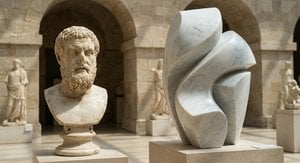
The Enduring Allure of Marble in Art History: From Classical Sculpture to Modern Abstraction
Explore the captivating history of marble sculpture from ancient Greece to modern art. Discover renowned artists like Canova & Michelangelo, carving techniques, and investment insights at ArtsDot.

Georges Seurat'ın En İyi 25 Eseri: İzlenimcilikten Modern Sanata Bir Yolculuk
Georges Seurat'ın en iyi 25 eserini keşfedin! İzlenimcilik ve Noktacılık akımının öncüsü bu Fransız ressamın renkli dünyasına yolculuk yapın. Sanat baskıları ve ev dekorasyonu için ArtsDot.com'da koleksiyonu inceleyin.

Bronze Sculptures That Defined Art History | ArtsDot
Journey through art history with our Top 10 bronze sculptures! Explore masterpieces by Rodin, Michelangelo & more. Discover stories behind iconic statues and find museum-quality reproductions for your home decor at ArtsDot.com.

Bronze Age to Modern Masters: 10 Sculptures That Redefined Art | ArtsDot
Journey through art history with 10 legendary bronze sculptures – from Michelangelo's David to Rodin’s Thinker. Explore the stories, techniques & timeless beauty of these masterpieces. Find museum-quality reproductions & elevate your home decor on ArtsDot.com.

