


Görsel seçimlerinize göre şekillenmektedir: , .
Eser Açıklaması
Experience the raw emotion of Kirchner's 'Dancing Couple,' an Expressionist masterpiece depicting vulnerability and intimacy through dynamic brushstrokes and bold colors.
 Tümünü Gör
Sanatçı Biyografisi
Ernst Ludwig Kirchner (1880-1938): Alman Ekspresyonizminin önde gelen ismi ve Die Brücke grubunun kurucu üyesiydi. Şehrin atmosferini, insan figürünü çarpıcı renklerle ve duygusal ifadelerle yakalayan eserleriyle sanat tarihine geçti.
El Yapımı Yağlı Boya Reproduksiyon
Sanatçılarımız tarafından sipariş üzerine hazırlanan; istediğiniz boyut ve çerçevede, tuval üzerine el boyaması yağlı boya. ( Baskı Satışına Geç Dijital Görsele Geç)
Bu tablo hakkında daha fazla bilgi
 Gerçek Boyutta Önizle
 Paylaş
 Paylaş
 Detayları Gör
 Rehber

 İndir
İndir
 Benzer ürünler
 X-Işını
 Slayt Gösterisi
 Soru & Cevap
 İstatistikler
Tablonuzu dört basit adımda sipariş edin
Acele etmeyin. İstediğiniz yanıtı değiştirebilirsiniz; sipariş kartınızdaki fiyat her seçime göre güncellenir.
1 Dört adımdan biri
Hangi boyutu istersiniz?
Bu boyutlar orijinal tablonun oranlarını korur. Çizim, seçtiğiniz eserin iki metrelik bir koltuğun üzerindeki duvarda nasıl duracağını göstermektedir.
Veya kendi ölçülerinizi girin
Eserin orijinal oranlarıyla uyumlu, önceden belirlenmiş boyutlarımız arasından seçim yapın.

Çerçevenize veya duvarınıza uygun olması için ihtiyacınız olan genişlik ve yüksekliği yazın. Bu eser el boyamasıdır; bu nedenle farklı bir formdaki boyutlar için sanatçı, resmin etrafına biraz daha fazla boya ekleyebilir veya kenarlardan biraz kırpabilir — seçim sizin. Boyama işlemi başlamadan önce onaylamanız için size bir dijital taslak gönderiyoruz. Bu sayfada gösterilen resim gerçek sonucu yansıtmamaktadır; gerçek sonucu yalnızca taslak göstermektedir.
2 Dört adımdan ikincisi
Nasıl hazırlanmalı: rulo halinde mi, gerilmiş mi yoksa çerçeveli mi?
Aşağıdaki fiyatlar, birinci adımda seçtiğiniz boyut içindir.
Gergin kanvasın kenarlarını seçin
Çerçevenizi seçin

Beyaz kenar bitişi ₺1

Bulanık kenar bitişi ₺1

Kenar boyalı ₺1

P118B ₺10

P118H ₺10

P118W ₺10

P438Z ₺10

P508JH ₺12

P508YH ₺12

P805H ₺10

P805Z ₺10

P919BZ ₺10

P919G ₺10

P919XJ ₺10

P959ZH ₺10

P968JZ ₺12

W106C ₺8

W218G ₺10

W218JH ₺8

W218Y ₺10

W307PJ ₺10

W316G ₺10

W316PJ ₺8

W316Y ₺10

W398PJ ₺8

W4111J ₺10

W500HY ₺15

W500JH ₺15

W692G ₺12

W849H ₺8

W940BG ₺15

W953PJ ₺8

H24-GOLD ₺30

H24-SILVER ₺30

H36-GOLD ₺45

H36-SILVER ₺45
Çerçeveli
Çerçeve Kenarlığı: . Çerçeve dahil toplam boyut: .
3 Dört adımdan üçüncüsü
Tabloda herhangi bir değişiklik yapılmasını ister misiniz?
Çoğu kişi hayır cevabını veriyor. Her tablo el yapımı olduğu için sanatçımız eseri sizin için uyarlayabilir.
Siparişten sonra, ArtsDot.com ekibi talimatlar için müşteriye e-posta gönderecek ve bir taslak önizleme sunacaktır
4 Dört adımdan dördüncüsü
Birkaç bitiş seçeneği
Hepsi isteğe bağlıdır. Halihazırda seçilmiş olan yanıtlar ek bir maliyet getirmez.
Kim tarafından yapıldı?
Dünya Çapında Teslimat (); standart 5 hafta yerine 3/4 haftada. (11 Kasım). Kaliteden ödün verilmez.
Müzedekiler gibi bir isimlik mi?
İşlemeli Bronz Plaka Detayları
This elegant plaque features the artist's name and the title of the artwork, finely engraved for a timeless presentation.
It is made from bronze with a refined, elegant finish. The text is precisely laser-engraved for a sharp and permanent result. Measuring 9x2 cm, the plaque is compact yet easy to read. It's built to be durable and scratch-resistant, offering a professional, museum-quality look. Mounting is simple thanks to the included adhesive backing.
Şeffaf Akrilik Plaka Detayları
The plaque includes essential engraved details such as the artist's name, the title of the artwork, the date it was created, the type of media used-like oil on canvas or watercolor-a brief description of the piece, and a QR code that links to the complete artwork information.
It is crafted from clear acrylic, offering a sleek, modern appearance. The text is UV-engraved in black to ensure strong visual contrast. With a size of 10x15 cm, it ensures optimal readability. It comes equipped with two metal hooks for secure wall mounting. The plaque is designed to be weather-resistant, making it suitable for various environments, and it includes interactive features that work seamlessly with smartphone scanning.
Siyah Akrilik Plaka Detayları
This elegant plaque includes engraved information such as the artist's name, the title of the artwork, the date it was created, the type of media used (like oil on canvas or watercolor), a short description of the artwork, and a QR code for quick access to more information.
The plaque itself is made from refined black acrylic with a premium finish. The text is laser-engraved in white for high contrast and readability. Its size is 10x15 cm, designed to be easy to read. It comes with two metal hooks for professional mounting. The design is sleek and fits any interior style. It is also weather-resistant and durable, with built-in digital integration for mobile compatibility.
Koruyucu vernik mi?
Ne zaman ihtiyacınız var?
✓ Kontrol et ve sipariş ver
Sipariş ettiğiniz şekilde, tablonuz

Dancing Couple
Reproduksiyon Tekniği
Reproduksiyon Boyutu
-

Seçkin Kıdemli Sanatçı
Daha fazla detay, incelik ve ek üretim süresi
-

Reproduksiyon Çerçevesi
-
-
Herhangi bir kenarı 105 cm'den (yaklaşık 41 inç) büyük olan sanat eserleri veya reprodüksiyonlar için çerçeve, demonte edilmiş bir kit halinde gönderilecektir. Bu yöntem, güvenli teslimat sağlar ve taşıma sırasında oluşabilecek hasarları önler.
Profesyonel montaj gereklidir; bu ürün kendin yap (DIY) tarzı bir ürün değildir.
Kit; ahşap tutkalı (pakete dahil değildir), kanvas germe pensi ve tutkal kururken çıtaların dik durmasını sağlayacak işkenceler kullanılarak, deneyimli bir profesyonel çerçeveci tarafından monte edilmeli ve kanvas gerilmelidir. Hatalı montaj veya dengesiz kanvas gerginliği sanat eserine kalıcı zarar verebilir ve bu durum garantimiz kapsamında değildir.
 Herhangi bir kenarı 105 cm'den (yaklaşık 41 inç) büyük olan sanat eserleri veya reprodüksiyonlar için çerçeve, demonte edilmiş bir kit halinde gönderilecektir. Bu yöntem, güvenli teslimat sağlar ve taşıma sırasında oluşabilecek hasarları önler.
Tüm masif ahşap çıtalar dahildir, montaj için hassas bir şekilde ölçülmüştür.
Paket içeriğinde bulunan vidalar ve köşe birleşimleri için ustanız tarafından temin edilmesi gereken, ancak pakete dahil olmayan ahşap tutkalı ile monte edilir.
Profesyonel araçlar gereklidir ve pakete dahil değildir: bir tuval germe aparatı (gerdirici) ve yapıştırıcı kururken çıtaların dik durmasını sağlayacak kıskaçlar.
Önemli:
Köşe bağlantıları için ahşap tutkalı gereklidir; tutkal tamamen kuruyana kadar çıtalar işkenceler ile sabitlenmelidir ve monte edilmiş çerçeve üzerindeki kanvasın gerilmesi için bir kanvas germe pensine ihtiyaç duyulur. Bunların hiçbiri kit içerisinde yer almamaktadır. Lütfen bu boyutu sipariş etmeden önce deneyimli bir profesyonel çerçeve ustası ile anlaşın.

Eser Etiketi
-
-

Koruyucu Vernik Katmanı
Parlak Vernik (renkleri canlandırır; ışığa ve neme karşı koruma sağlar)
-

Eserimi Özelleştir
Değiştirilebilecek örneklere göz atın: Yüzü müşteri fotoğrafıyla değiştirin; Evcil hayvan ekleyin (örneğin, kediyi köpek ile değiştirin); Arka plana gizli bir mesaj dahil edin; Arka plan manzarasını veya öğelerini değiştirin.
-

Hızlı Teslimat
Dünya Çapında Teslimat (); standart 5 hafta yerine 3/4 hafta içinde. (11 Kasım). Kaliteden ödün verilmez.
-
Hızlı Gönderim
için dünya çapında 5 haftalık teslimat süresi. (18 Kasım).
Dahil
Toplam Tutar
₺ 12981
Cam seçeneği yalnızca 110 cm altındaki boyutlar için mevcuttur.
Her siparişle birlikte gelir
- Dünya Çapında Ücretsiz Ekspres Kargo
- Yüksek Kaliteli Keten Kanvas
- Tam Nakliye Sigortası
- Gümrük Vergisi İadesi Garantisi
- Gerçek Renk Uyumu Garantisi
- 100 Günlük İade Politikası (Sadece Kusurlu Ürünler İçin)
- %100 Para İade Garantisi
- Toplu Alım İndirimi


Dancing Couple by Ernst Ludwig Kirchner: A Dynamic Expression of Modernity
- Artist: Ernst Ludwig Kirchner
- Year: Unknown (likely around 1909, based on related works)
- Medium: Oil on Canvas
- Size: Unknown
Subject and Composition
“Dancing Couple” by Ernst Ludwig Kirchner presents a vibrant and somewhat unsettling depiction of an intimate moment between a man and a ballerina. The composition is dynamic, immediately drawing the viewer's eye to the central figures engaged in a dance. The subjects are not portrayed realistically; instead, Kirchner employs distortion and exaggeration characteristic of Expressionism. The dancer’s pose suggests both grace and instability, while the man appears to be supporting her, creating a sense of precariousness within their interaction. The background is a deep blue, providing a stark contrast to the warmer tones of the figures and intensifying the focus on their relationship.
Style and Technique: Expressionism in Action
Kirchner was a key figure in the German Expressionist movement, and "Dancing Couple" exemplifies this style. Expressionism sought to convey subjective emotions and experiences rather than objective reality. This is evident in Kirchner’s use of bold colors – pinks, yellows, and blues dominate the palette – creating a visually arresting effect. The brushwork is loose and visible, contributing to a textured surface that adds to the painting's emotional intensity. Impasto techniques (thickly applied paint) further enhance this texture. Lines are used expressively, defining contours and folds in a way that prioritizes feeling over precise representation. Perspective is flattened, which contributes to the overall sense of emotional compression rather than spatial realism.
Historical Context: Die Brücke and Urban Modernity
This artwork was created during a period of significant social and cultural change in Germany. Kirchner was a founding member of "Die Brücke" (The Bridge), an artist collective formed in 1905 that aimed to break away from traditional artistic conventions. “Die Brücke” artists were deeply influenced by urban life, industrialization, and the anxieties of modernity. “Dancing Couple,” while seemingly depicting a romantic scene, can be interpreted as reflecting these broader themes – perhaps symbolizing the fragility of human connection in an increasingly impersonal world. The painting’s subject matter also reflects the popularity of ballet and theatrical performances during that era.
Symbolism and Emotional Impact
Beyond its aesthetic qualities, "Dancing Couple" carries symbolic weight. The dancer's precarious pose suggests vulnerability and dependence, while the man's support implies a complex dynamic of power and responsibility. The intense colors and distorted forms evoke a range of emotions – from excitement and passion to anxiety and unease. The painting’s overall effect is one of heightened emotionality, inviting viewers to contemplate the complexities of human relationships and the challenges of navigating modern life. It's a powerful exploration of intimacy, fragility, and the search for connection in a rapidly changing world.
Soru ve Cevaplar
Expressionism akımına ait olan "Dancing Couple" adlı eser hangi ülkeye aittir?
"Dancing Couple", Almanya doğumlu Ernst Ludwig Kirchner tarafından Expressionism akımı içerisinde yaratılmıştır. Sanatçının kökeni, eseri Expressionism akımının Almanyali sanatçılar tarafından uygulanan biçimine bağlamaktadır.
Ernst Ludwig Kirchner imzalı "Dancing Couple" eserini hangi teknik ve üslup tanımlıyor?
"Dancing Couple" adlı eserde, Oil On Canvas tekniği Expressionism akımıyla buluşuyor.
Ernst Ludwig Kirchner imzalı "Dancing Couple" eserinde hangi renkler hakimdir?
"Dancing Couple", Rosy Brown (#b6a497) tonlarının öne çıktığı Neutrals bir palet ile tanımlanmaktadır."
Benzer Eserler


Ernst Ludwig Kirchner
1880 - 1938, Almanya
Sanatçı Özgeçmişi
Ernst Ludwig Kirchner (1880-1938): A Life Forged in Expression
Ernst Ludwig Kirchner, a name inextricably linked to the visceral heart of German Expressionism, emerged from a period brimming with transformative upheaval—a genesis marked by displacement and fueled by an unwavering artistic conviction. His birth in Aschaffenburg, Bavaria, in 1880, initiated a journey profoundly shaped by familial circumstance and imbued with an early awareness of societal shifts. The landscapes of his formative years – dictated largely by his father’s profession as a paper scientist— instilled within him a sense of detachment that would become a recurring motif throughout his oeuvre, informing not only his subject matter but also the very essence of his artistic vision. From Frankfurt to Perlen, and ultimately settling in Chemnitz, Kirchner absorbed the anxieties inherent in Germany's accelerating modernization, immersing himself in an intellectual milieu characterized by fervent debate regarding artistic direction and social reform. Despite initial inclinations toward architecture at Königliche Technische Hochschule Dresden—a pursuit that provided him with foundational technical skills alongside exposure to humanist ideals—it was painting, driven by admiration for masters like Albrecht Dürer and a resolute rejection of academic formalism, that cemented his artistic path. He found kinship amongst fellow rebels – Fritz Bleyl, Karl Schmidt-Rottluff, Erich Heckel – forging bonds that irrevocably altered the trajectory of 20th-century art.Early Life and Artistic Formation
Kirchner’s childhood was marked by frequent relocations due to his father's career demands, fostering a sensitivity to change and observation—qualities that would translate into meticulous detail in his paintings. He attended schools in Frankfurt and Perlen until securing the prestigious professorship at Chemnitz College of Technology, where he honed his artistic skills alongside kindred spirits who shared a radical worldview. This formative period witnessed the blossoming of his intellectual curiosity and cemented his commitment to exploring new artistic horizons—a pursuit that would culminate in his enrollment at Dresden’s Hochschule für Bildende Künste (Royal Academy of Fine Arts), where he studied architecture alongside fellow Expressionist pioneers. However, it was not architectural design alone that captivated him; rather, the intensive study of drawing and painting—particularly life drawing—provided him with invaluable techniques for capturing human form and emotion. His early artistic explorations were profoundly influenced by the works of Dürer and Rembrandt, whose mastery of etching and chiaroscuro served as models for Kirchner’s own printmaking endeavors. He recognized in these artists a kindred spirit—a dedication to portraying reality with uncompromising honesty and an unwavering belief in the transformative power of art.Die Brücke: A Collective Pursuit of Expression
Kirchner's artistic trajectory took its decisive turn in 1905 when he joined *Die Brücke* (“The Bridge”), an avant-garde collective dedicated to forging a new aesthetic language—one that rejected the conventions of Impressionism and Academic painting. Alongside Bleyl, Schmidt-Rottluff, and Heckel, Kirchner established a studio in Dresden where they engaged in collaborative experimentation—a crucible for artistic innovation fueled by shared intellectual convictions. The group’s inspiration drew heavily from sources outside the mainstream art world—primitive art from Africa and Oceania; the bold chromatic palette of Vincent van Gogh; and Edvard Munch's haunting exploration of psychological anxieties. Rejecting idealized beauty, *Die Brücke* embraced distortion, jarring color combinations, and expressive brushwork to convey the pervasive sense of alienation and unease characterizing modern life. Kirchner’s early paintings—such as *The Street* (1908)—capture this atmosphere with remarkable acuity, depicting urban landscapes populated by figures rendered in fragmented forms and vibrant hues—a stylistic hallmark that distinguishes him from his contemporaries. The collective's ethos extended beyond mere artistic technique; it encompassed a broader philosophical stance—a rejection of bourgeois complacency and an embrace of spontaneity and emotional intensity.Style and Technique: Exploring Psychological Depth
Kirchner’s distinctive artistic style is characterized by several key elements—most notably, his masterful manipulation of color and brushstroke. He eschewed the subtle gradations of Impressionistic painting in favor of bold, unmixed hues that heightened the expressive force of his compositions. His brushstrokes were energetic and visible, conveying a palpable sense of movement and dynamism—a technique he honed through extensive plein air studies and meticulous studio practice. Kirchner’s figures—often depicted nude or semi-nude—were rendered with unflinching realism but also subjected to distortion—a stylistic device that served to amplify emotional impact and convey psychological complexity. He employed techniques borrowed from Expressionist predecessors like Munch and Picasso, prioritizing subjective experience over objective representation. The influence of primitive art—particularly African sculpture—is evident in Kirchner’s sculptural works and informs his approach to form—a deliberate rejection of academic conventions in favor of a more primal aesthetic. His meticulous attention to detail—captured with charcoal and pastel—further underscores his commitment to portraying the human figure with uncompromising honesty.Legacy and Recognition
Kirchner's artistic output spanned decades, culminating in a prolific oeuvre encompassing paintings, prints, sculptures, and decorative arts. Despite facing considerable opposition from conservative critics and institutions—particularly during the Nazi era—his work gained posthumous acclaim as a cornerstone of German Expressionism. In 1933, the Nazis deemed Kirchner’s art “degenerate”—a designation that resulted in the confiscation and destruction of numerous artworks—representing a devastating blow to his artistic career and personal life. Tragically afflicted by illness—likely schizophrenia—Kirchner retreated to Davos, Switzerland, where he continued to paint landscapes imbued with melancholic beauty. He succumbed to suicide on June 15, 1938, marking the end of a remarkable artistic journey. Nevertheless, Kirchner’s legacy persists as an enduring testament to the transformative power of art—a voice that continues to resonate across generations of artists and critics alike. His paintings—characterized by their uncompromising honesty and profound psychological depth—remain among the most iconic images of the Expressionist movement—solidifying his place as one of Germany's foremost artistic innovators.- Notable Works: *The Street*, *Nude Dancers*, *Five Women*, *Landscape with Figures*
- Influences: Albrecht Dürer, Vincent van Gogh, Edvard Munch, Primitive Art (African & Oceanic)


Benzer Yazılar

The Enduring Legacy of Oil on Canvas: Technique, History & Aesthetic Impact
Explore the rich history & techniques of oil painting – from Renaissance masters to Impressionism. Discover pigments, layering methods, and why this timeless medium endures. Expert insights for artists & art enthusiasts.
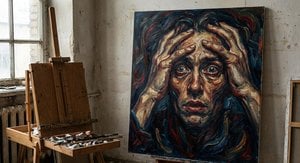
Figurative Expressionism: Emotional Intensity & Subjective Reality in 20th-Century Art
Explore the powerful world of Figurative Expressionism with ArtsDot. Discover key artists like Kirchner & Beckmann, understand its emotional depth, and learn how to collect this influential 20th-century art movement.

The Visceral Cry of a Nation: Exploring Emotion & Distortion in German Expressionism
Explore the powerful world of German Expressionism with ArtsDot. Discover Kirchner, Nolde & Die Brücke's emotive masterpieces. Learn about this pivotal art movement and its lasting impact on modern art.