


 Visa i rummet
 Skicka
 Dela
Dela
 Detaljer
 Studentguide för konstverk

 Ladda ner
 Liknande objekt
 Röntgen
 Bildspel
 Besökstatistik
The Microscope


 Läs mer
Giclée / Konsttryck
Giclée- eller canvasprint av museumskvalitet med snabb produktion och flexibla ytbehandlingsalternativ. ( Köp handmålat konstverk Byt till digital bildförsäljning)




P118B Skr10

P118H Skr10

P118W Skr10

P438Z Skr10

P508JH Skr12

P508YH Skr12

P805H Skr10

P805Z Skr10

P919BZ Skr10

P919G Skr10

P919XJ Skr10

P959ZH Skr10

P968JZ Skr12

W106C Skr8

W218G Skr10

W218JH Skr8

W218Y Skr10

W307PJ Skr10

W316G Skr10

W316PJ Skr8

W316Y Skr10

W398PJ Skr8

W4111J Skr10

W500HY Skr15

W500JH Skr15

W692G Skr12

W849H Skr8

W940BG Skr15

W953PJ Skr8




Välj bland våra förinställda storlekar som motsvarar konstverkets ursprungliga proportioner.

Ange den bredd och höjd du behöver, för att passa din ram eller din vägg. Ett tryck kan endast beskäras, aldrig göras större än bilden, vilket innebär att ett format med en annan formform leder till att en del av bilden går förlorad. Vi skickar en digital mockup för godkännande innan vi trycker något. Bilden som visas på denna sida visar inte den faktiska beskärningen — det är endast mockuppen som gör det.
Leverans över hela världen () på 2 veckor istället för standard 4/5 veckor. (22 oktober)

Fri expressfrakt över hela världen

Högkvalitativ linnecanvas

Fullständig fraktförsäkring

Garantier för återbetalning av tullavgifter

Garantier för exakt färgåtergivning

100 dagars returrätt vid fabrikationsfel

100% pengarna tillbaka-garanti

Mängdrabatt erbjuds
 Glasalternativet är endast tillgängligt i storlekar under 110 cm.

The Microscope
Giclée / Konsttryck
Reproduktionsstorlek
-


Totalpris
Skr 610
A Window into Enlightenment: Examining Robert Walter Weir’s “The Microscope”
Robert Walter Weir's "The Microscope," completed in 1849, stands as a remarkable testament to the confluence of scientific curiosity and humanist ideals that characterized mid-nineteenth century America. More than just a portrait depicting Jacob Whitman Bailey, a prominent advocate for American microscopy and instructor at West Point, this painting embodies the Romantic spirit’s fascination with both reason and imagination—a duality Weir skillfully captures through meticulous observation and expressive brushwork. The artwork resides within Yale University Art Gallery's collection, offering visitors an opportunity to contemplate its enduring significance.- Subject Matter: At its core, “The Microscope” presents a tableau of intellectual engagement. Bailey, dressed in attire reminiscent of Galileo Galilei—a deliberate allusion to the Renaissance astronomer’s groundbreaking discoveries—demonstrates his knowledge to his sons and daughter, Maria. This familial scene underscores the importance of educating children not only in traditional arts but also in scientific pursuits, reflecting the burgeoning belief that fostering intellectual development was crucial for societal progress.
- Style & Technique: Weir’s style aligns firmly with the Hudson River School tradition, prioritizing atmospheric perspective and tonal gradation to convey a sense of grandeur and tranquility. Employing oil paints on canvas, he achieved remarkable realism through careful layering and blending—a hallmark of the era's artistic approach. The subdued palette—dominated by browns, greens, and blues—creates an environment that feels both scholarly and contemplative.
Historical Context: Science and Domestic Education in Victorian America
The painting emerged during a period marked by significant advancements in scientific understanding, particularly in microscopy. Scientists like Bailey were actively exploring the microscopic world, uncovering previously unseen organisms and challenging prevailing theories about disease and heredity. Simultaneously, Victorian society placed considerable emphasis on educating girls—primarily focusing on music, dance, and needlework—though figures like Bailey recognized the necessity of introducing science into female education. Weir’s depiction reflects this societal preoccupation with cultivating intellectual prowess in young women.- Symbolism: The inclusion of Galileo's garb serves as a powerful symbol—representing the triumph of observation and experimentation over dogma. Bailey’s stance, gazing intently at the microscope, embodies the Romantic conviction that scientific inquiry could illuminate the mysteries of creation. Furthermore, Maria’s presence symbolizes the future generation inheriting this enlightened worldview.
- Emotional Impact: “The Microscope” transcends mere representation; it evokes a feeling of serene intellectual pursuit and familial devotion. Weir's masterful use of light and shadow contributes to an atmosphere of quiet contemplation—encouraging viewers to appreciate the beauty inherent in knowledge and the importance of nurturing young minds.
Yale Center for British Art’s Perspective
The Yale Center for British Art considers “The Microscope” as a pivotal piece illustrating the Romantic movement's commitment to both reason and imagination. Its inclusion within the American Art before 1900 galleries underscores its significance in shaping artistic sensibilities during this formative period. The painting continues to inspire interior designers seeking to infuse their spaces with elements of intellectual curiosity and humanist values—a legacy that extends far beyond its original creation.Frågor och svar
Vilken känsla förmedlar Romanticism-verket "The Microscope"?
Den Reflective känslan i "The Microscope" ackompanjeras av dess Romanticism-stil.
Finns det verk som liknar "The Microscope"?
Sidan Liknande verk för "The Microscope" av Robert Walter Weir presenterar relaterade konstverk.
Finns det ett bildspel för "The Microscope" av Robert Walter Weir?
Diaporama för "The Microscope" kan ses på konstverkets Bildspel-sida.
Liknande konstverk


Om konstnären
Ett liv etsat i historien: Robert Walter Weirs värld
Robert Walter Weir, född i New York City den 18 juni 1803, var en gestalt djupt sammanvävd med det 19:e århundradets amerikanska konstnärliga och pedagogiska väv. Hans livshistoria är en berättelse om självdriven hängivenhet, en törst efter klassisk kunskap och ett outtröttligt engagemlamb för att främja kreativitet hos andra. Under de tidiga åren rörde sig familjen Weir mellan New York City och New Rochelle innan de återvände till staden vid 1817 års mitt. Trots att han initialt var involverad i handel, kände den unge Robert en stark dragning till det konstnärliga uttrycket; vid arton års ålder lämnade han kommersen 1821 för att helt och hållet ägna sig åt måleriet. Detta beslut markerade början på en resa där han inte bara blev en respekterad konstnär, utan även en avgörande pedagog som formade sinnena hos framtida ledare. Weirs första utbildning var till stor del självstyrd och förfinades genom flitiga studier i New York mellan 1822 och 1824. Det var dock hans efterföljande vistelse i Italien – Florens (1824–1825) och Rom (1825–1827) – som verkligen tände hans konstnärliga sinnen. Genom att fördjupa sig i mästerverken av Michelangelo och Rafael absorberade han renässansens principer kring komposition och detaljrikedom, influenser som skulle eka genom hela hans karriär.Från duk till klassrum: Ett dubbelt arv
Vid hemkomsten till New York 1827 integrerades Weir snabbt i den växande konstnärliga gemenskapen. Han ställde regelbundet ut vid National Academy of Design, där han blev associerad medlem 1829 och uppnådde status som fullvärdig akademiker 1831 – bevis på hans växande skicklighet och erkännande. Det var dock en annan väg som skulle definiera stora delar av hans livsverk: utbildningen. År 1834 accepterade han tjänsten som lärare i teckning vid United States Military Academy i West Point, New York. Denna utnämning var inte bara ett jobb; det var ett kall. Han steg i graderna till professor i teckning 1846 och förblev hängiven denna roll under ett extraordinärt fyrtiotvå år, fram till 1876. Inflytandet av hans tjänstgöring är nästan omätbart. Weir undervisade inte bara i teckning; han ingöt en uppskattning för konst, observation och visuellt tänkande hos en generation framtida militärer. Bland hans elever fanns namn som senare skulle bli synonyma med det amerikanska inbördeskriget: Ulysses S. Grant, Robert E. Lee, Jefferson Davis och James Abbott McNeill Whistler – en anmärkningsvärd lista som demonstrerar bredden av hans inflytande. Han agerade även mentor åt Seth Eastman, en annan betydelsefull konstnär som dokumenterade livet bland ursprungsbefolkningen. Hans pedagogiska metod handlade inte enbart om teknisk färdighet; det handlade om att kultivera ett skarpt öga och främja förmågan till kreativ problemlösning, egenskaper som skulle tjäna dessa män väl i deras framtida gärningar.Hudson River School och de historiska berättelserna
Weir betraktas med rätta som en medlem av Hudson River School, en amerikansk konstinriktning känd för sina romantiska skildringar av nationens landskap. Även om hans dukar ofta porträtterade historiska motiv, var de genomsyrade av samma känsala av storslagenhet och vördnad för naturen som kännetecknar skolan. Hans konstnärliga stil var djupt rotad i de klassiska principer han hämtat från sina italienska studier – en noggrann uppmärksamhet på detaljer, balanserade kompositioner och en dramatisk användning av ljus och skugga. Han kopierade dock inte blott renässansens tekniker; han anpassade dem till amerikanska teman och berättelser. Hans kanske mest ikoniska verk är The Embarkation of the Pilgrims, beställt av den amerikanska kongressen 1837 och installerat i rotundan i U.S. Capitol 1843. Denna monumentala målning är inte bara en historisk skildring; det är en kraftfull allegori över mod, tro och Amerikas grundläggande principer. Andra betydelsefulla verk inkluderar *Bourbons Last March*, *Landing of Hendrik Hudson*, *Our Lord on the Mount of Olives* och *Columbus before the Council of Salamanca*. Dessa målningar uppvisar hans mångsidighet och hans hängivenhet att fånga avgörande ögonblick i historien med både precision och emotionell resonans.Familj, inflytande och ett bestående erkännande
Robert Walter Weirs arv sträcker sig långt bortom hans egna konstnärliga prestationer. Han etablerade en familjetradition av konstnärlig excellens; två av hans söner följde i hans fotspår. John Ferguson Weir blev en respekterad målare och skulptör, medan Julian Alden Weir utmärkte sig som en framstående porträtt-, figur- och landskapsmålare – vilket ytterligare befäste namnet Weir inom den amerikanska konsthistorien. Robert Walter Weir var gift två gånger och blev far till sexton barn, vilket skapade ett livfullt familjeliv sida vid sida med hans professionella strävanden. Han gick bort 1889 och lämnade efter sig ett rikt konstnärligt arv och ett bestående avtryck på den amerikanska utbildningen. Idag fortsätter hans verk att visas på framstående museer och i samlingar, vilket säkerställer att hans bidrag förblir synliga och uppskattade av kommande generationer. Hans inflytande kan fortfarande kännas genom de otaliga konstnärer han inspirerade, både direkt som elever och indirekt genom sin hängivenhet till att främja kreativitet och kritiskt tänkande.Ett bestående intryck
- Kopplingen till Hudson River School: Weirs medlemskap i denna inflytelserika rörelse befäste hans plats inom den amerikanska landskapsmåleriets kanon.
- Arvet från West Point: Hans fyra decennier vid West Point formade djupt de konstnärliga sinnena hos många framtida militära ledare, vilket demonstrerade konstpedagogikens kraft.
- Mästerskap inom historiemåleri: Verk som The Embarkation of the Pilgrims exemplifierar hans förmåga att fånga betydelsefulla historiska händelser med dramatisk effekt och symboliskt djup.
- En konstnärlig dynasti: Framgången för hans söner, John Ferguson Weir och Julian Alden Weir, förstärkte ytterligare familjens bidrag till den amerikanska konsten.

Robert Walter Weir
1803 - 1889 , USA
Snabbfakta
- Artistic Movement Or Style: Hudson River School
- Artists Or Movements Influenced By This Artist: ['James Abbott McNeill Whistler']
- Artists Who Influenced This Artist:
- Michelangelo
- Raphael
- Date Of Birth: 18 juni 1803
- Full Name: Robert Walter Weir
- Nationality: Amerikansk
- Notable Artworks:
- Embarkation of the Pilgrims
- Landing of Hendrik Hudson
- Evening of the Crucifixion
- Place Of Birth: New York City, USA
Relaterade artiklar

Robert Spencer: Luminism, Narrative & the American Landscape Tradition
Explore the captivating world of Luminism & the Hudson River School with our expert analysis. Discover the history, artists, and enduring beauty of 19th-century American landscape painting. Find museum-quality reproductions at ArtsDot.
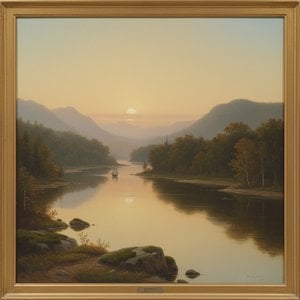
David Johnson: A Luminist Master of the Hudson River School & Beyond
Explore the captivating landscapes of David Johnson, a key figure in the Hudson River School & Luminism movement. Discover his artistic evolution, legacy, and how to collect his works with ArtsDot.

The Sublime Landscape: Exploring the Hudson River School Movement
Explore the captivating world of the Hudson River School! Discover the history, artists, and defining characteristics of this iconic American art movement. Learn about Romanticism's influence & find inspiration for your collection.

Hudson River School: Topp 10 mästerverk för ditt hem – Konst & Historia | ArtsDot.com
Upptäck de 10 mest ikoniska mästerverken från Hudson River School! Lär känna Thomas Cole, Frederic Church och andra amerikanska landskapsmålare. Köp högkvalitativa konsttryck & inred med storslagen naturkonst på ArtsDot.com.
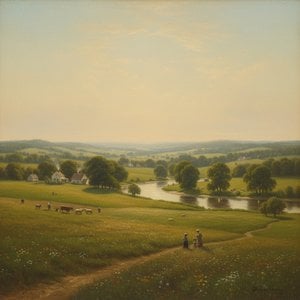
Thomas Worthington Whittredge: Capturing the American Pastoral Ideal with Luminist Light
Explore the luminous landscapes of Thomas Worthington Whittredge, a key figure in the Hudson River School and master of Luminism. Discover his captivating paintings & legacy with ArtsDot.