

 Förhandsvisa
 Skicka
 Dela
Dela
 Visa detaljer
 Guide
Guide

 Ladda ner
 Liknande objekt
 Röntgen
 Bildspel
 Frågor och svar
 Statistik
The acrobats


 Visa mer
Giclée / Konsttryck
Giclée- eller canvasprint av museumskvalitet med snabb produktion och flexibla ytbehandlingsalternativ. ( Beställ handmålad reproduktion Byt till digital bild)




P118B Skr10

P118H Skr10

P118W Skr10

P438Z Skr10

P508JH Skr12

P508YH Skr12

P805H Skr10

P805Z Skr10

P919BZ Skr10

P919G Skr10

P919XJ Skr10

P959ZH Skr10

P968JZ Skr12

W106C Skr8

W218G Skr10

W218JH Skr8

W218Y Skr10

W307PJ Skr10

W316G Skr10

W316PJ Skr8

W316Y Skr10

W398PJ Skr8

W4111J Skr10

W500HY Skr15

W500JH Skr15

W692G Skr12

W849H Skr8

W940BG Skr15

W953PJ Skr8




Välj bland våra förinställda storlekar som motsvarar konstverkets ursprungliga proportioner.

Ange den bredd och höjd du behöver för att passa din ram eller vägg. Ett tryck kan endast beskäras, aldrig göras större än originalbilden, vilket innebär att ett format med en annan proportion leder till att en del av bilden går förlorad. Vi skickar en digital mockup för godkännande innan vi påbörjar tryckningen. Bilden som visas på denna sida visar inte den faktiska beskärningen — det är endast mockuppen som gör det.
Leverans över hela världen () på 2 veckor istället för standard 4/5 veckor. (5 november)

Fri expressfrakt över hela världen

Högkvalitativ linnecanvas

Fullständig fraktförsäkring

Garantier för återbetalning av tullavgifter

Garantier för exakt färgåtergivning

100 dagars returrätt (endast vid fel)

100% pengarna tillbaka-garanti

Mängdrabatt erbjuds
 Glasalternativet är endast tillgängligt i storlekar under 110 cm.

The acrobats
Giclée / Konsttryck
Storlek på reproduktion
-


Slutgiltigt pris
Skr 631
A Chaotic Symphony of Human Drama
In the profound and often unsettling world of Max Beckmann, The Acrobats emerges as a breathtaking spectacle of movement and existential tension. Painted in 1939, a year shadowed by the gathering storms of global conflict, this masterpiece serves as a vibrant yet distorted stage where humanity performs its most precarious balancing acts. The canvas is a dense, almost claustrophobic collage of figures, each caught in a moment of intense physical or emotional exertion. At first glance, the eye is drawn to the sheer variety of poses—some figures sit in quiet contemplation, while others are suspended in mid-motion, mimicking the daring feats of circus performers. This sense of a theatrical troupe, caught between a rehearsal and a performance, creates an atmosphere that is simultaneously energetic and deeply unsettling.
The composition defies traditional spatial logic, opting instead for a layered, almost dreamlike arrangement that pushes the boundaries of German Expressionism. Beckmann utilizes a technique reminiscent of medieval stained glass, where bold outlines and compressed spaces force the viewer to confront the weight of every figure. The background is cluttered with the mundane artifacts of domestic life—chairs, dining tables, and various household objects—yet these familiar items feel strangely displaced within this acrobatic chaos. This juxtaposition between the ordinary setting and the extraordinary physical feats suggests a deeper metaphor: that life itself is a continuous, often dangerous, performance played out against the backdrop of an unstable world.
Symbolism and the Expressionist Vision
To gaze upon The Acrobats is to witness Beckmann’s unique ability to translate personal and historical trauma into universal symbolism. Having been profoundly changed by his experiences as a medical orderly during World War I, Beckmann developed a visual language characterized by distorted forms and heavy, symbolic weight. In this work, the acrobats are not merely entertainers; they represent the fragility of the human condition. The act of balancing, of holding onto objects like books or bowls amidst a sea of shifting bodies, mirrors the struggle to maintain dignity and order in an era of encroaching madness. Every limb stretched toward an unseen goal and every tilted gaze carries the burden of social anxiety and existential dread.
The color palette plays a crucial role in driving this emotional impact. Beckmann employs vivid, often jarring colors that clash with one another, heightening the sense of psychological unrest. These hues do not merely decorate the scene; they pulse with the rhythm of the performance, guiding the viewer through the labyrinthine layers of the painting. For the discerning collector or interior designer, this piece offers more than just visual interest; it provides a profound intellectual and emotional anchor. A high-quality reproduction of such a work brings into a space a sense of historical gravity and a conversation about the resilience of the human spirit amidst chaos.
A Timeless Masterpiece for Modern Spaces
For those seeking to curate an environment filled with depth and narrative power, The Acrobats stands as an incomparable choice. Its complex layers of meaning and striking visual rhythm make it a centerpiece capable of transforming a room from a mere living space into a gallery of contemplation. Whether placed in a contemporary setting where its bold lines can contrast with minimalist decor, or in a more classical interior to provide a dramatic focal point, the painting commands attention through its sheer expressive force.
Owning a reproduction of this Beckmann masterpiece allows for an intimate connection with one of the 20th century's most significant artistic legacies. It is an invitation to explore the tension between movement and stillness, between the public spectacle and the private struggle. In every brushstroke of a faithful reproduction, the spirit of the German Expressionist movement lives on, offering timeless inspiration to anyone who finds beauty in the complex, the distorted, and the profoundly human.
Frågor och svar
Vilken typ av konstverk är "The acrobats" av Max Beckmann?
"The acrobats" är ett verk av typen WallArt.
Kan jag se en röntgenbild av "The acrobats" av Max Beckmann?
"The acrobats" kan utforskas lager för lager på verkets Röntgenanalys-sida, en interaktiv vy inspirerad av en konservators ljusbord med elva optiska lager av bilden.
Vilket stämningsläge och vilken känsla uttrycker "The acrobats" av Max Beckmann?
"The acrobats" av Max Beckmann förmedlar en Dramatic känsla inom en övergripande Dramatic stämning.
Liknande konstverk


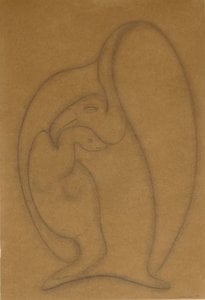


Konstnärsbiografi
Early Life and Artistic Development
Max Beckmann, a German painter, draftsman, printmaker, sculptor, and writer, was born on February 12, 1884, in Leipzig, Saxony. His artistic journey commenced with academically correct depictions—a stylistic choice reflecting the prevailing academic tradition of his time—which subsequently underwent a dramatic transformation into distorted figures and spaces. This shift mirrored Beckmann’s profoundly altered perception of humanity following his harrowing experience as a medical orderly during World War I, an event that indelibly shaped his artistic vision. The trauma of witnessing the horrors of war instilled in him a preoccupation with themes of suffering and decay, influencing his stylistic evolution.Artistic Style and Influences
Beckmann’s distinctive style drew inspiration from a diverse array of artists, establishing connections to movements like Expressionism and Neue Sachlichkeit. Notably, he acknowledged the profound impact of Cézanne's geometric explorations on his compositional approach, mirroring Cézanne's deliberate simplification of forms. Furthermore, Vincent van Gogh’s expressive brushwork served as a crucial model for Beckmann’s technique—a bold departure from academic conventions—capturing the emotional intensity characteristic of Van Gogh’s oeuvre. Blake’s visionary imagery and Rembrandt’s masterful use of chiaroscuro also exerted considerable influence on Beckmann's artistic sensibilities, guiding him toward conveying psychological depth and dramatic tension. Finally, Rubens’ monumental canvases instilled in Beckmann a fascination with grandeur and theatrical presentation.Notable Works and Exhibitions
Beckmann’s oeuvre encompasses a remarkable range of subjects—from landscapes imbued with symbolic resonance to portraits capturing the complexities of human emotion—demonstrating his versatility as an artist. Among his most celebrated creations is “The Bark,” acquired by the National Gallery in Berlin, a monumental canvas depicting a desolate seascape rendered with meticulous detail and conveying a palpable sense of isolation. Equally significant is “Self-Portrait in Tuxedo,” purchased in 1928, which presents Beckmann’s self-image as a figure grappling with existential anxieties—a testament to his introspective artistic spirit. Beckmann's work was showcased in retrospectives at the Städelschule Mannheim (1928) and Basel and Zurich (1930), cementing his position as one of the foremost artists of his era.Later Life and Exile
Beckmann’s life took a decisive turn with the ascent of Adolf Hitler to power, triggering his expulsion from the Frankfurt Art School and resulting in the confiscation of over 500 of his artworks—a devastating blow to his artistic career and personal freedom. Forced into exile, he sought refuge in Amsterdam for ten years, enduring bureaucratic obstacles that prevented him from securing a visa for the United States. During this period, Beckmann continued to produce prolifically, exploring themes of displacement and resilience—themes that would permeate his subsequent artistic endeavors. His unwavering commitment to artistic integrity fueled his determination to resist Nazi oppression and preserve his creative vocation.Legacy
Max Beckmann’s enduring legacy resides in his profound contribution to German Expressionism and his exploration of existential concerns through art. He was honored as a teacher at Washington University in St. Louis and the Brooklyn Museum, nurturing the talents of aspiring artists and fostering intellectual discourse. His first retrospective in the United States occurred in 1948 at the City Art Museum, Saint Louis, marking a pivotal moment in recognizing his artistic significance on an international scale. Beckmann’s unwavering belief in the transformative power of art—expressed eloquently in his correspondence with fellow artist Marie-Louise von Motesiczky—continues to inspire artists and scholars alike. Max Beckmann's influence extends beyond the realm of painting, permeating literature and philosophy, solidifying his place as a multifaceted intellectual figure who wrestled with profound questions about human existence.
Max Beckmann
1884 - 1950 , Tyskland
Kortfakta
- Artistic Movement Or Style: Expressionism
- Artists Or Movements Influenced By This Artist: ['Georges Seurat']
- Artists Who Influenced This Artist:
- Rembrandt
- Bosch
- Date Of Birth: Feb 12, 1884
- Date Of Death: Dec 27, 1950
- Full Name: Max Carl Friedrich Beckmann
- Nationality: German
- Notable Artworks:
- The Bark
- Self-Portrait in Tuxedo
- Place Of Birth: Leipzig, Germany
Relaterade artiklar
Figurative Expressionism: Emotional Intensity & Subjective Reality in 20th-Century Art
Explore the powerful world of Figurative Expressionism with ArtsDot. Discover key artists like Kirchner & Beckmann, understand its emotional depth, and learn how to collect this influential 20th-century art movement.

The Visceral Cry of a Nation: Exploring Emotion & Distortion in German Expressionism
Explore the powerful world of German Expressionism with ArtsDot. Discover Kirchner, Nolde & Die Brücke's emotive masterpieces. Learn about this pivotal art movement and its lasting impact on modern art.

Tysk Expressionism: 10 Mästerverk som Definierade en Epok – Konst & Inredning
Utforska 10 ikoniska mästerverk inom tysk expressionism! Lär känna konstnärer som Nolde, Kirchner & Heckel. Upptäck historien bakom dessa färgstarka målningar och finn inspiration till din inredning med ArtsDot.com – museumkvalitet för ditt hem.

Max Beckmann: Navigating Trauma & Modernity Through a Distorted Lens
Explore the powerful world of Max Beckmann's art – a journey through trauma, modernity & distortion. Discover his key works, influences, and lasting legacy with expert analysis.
Max Ernsts 25 Mästerverk: Surrealismens Geni i Konst och Hemmets Atmosfär
Utforska Max Ernsts 25 mest ikoniska surrealistiska målningar och collage. Lär känna historien bakom dadaismens genier och expressionismens färgstarka värld. Hitta inspiration till din heminredning med museumskvalitativa konsttryck på ArtsDot.com.


