


 Köp tryck Köp högupplöst digital bild
 Skicka
 Dela
Dela
 Visa detaljer
 Lägg till i favoriter

 Ladda ner
 Liknande objekt
 Röntgen
 Bildspel
Screen
 Mixed Materials
- Sculpture
- Art Nouveau
 1905
1905 5.0 x 207.0 cm
 Museum of Applied Arts
 Visa mer
Handgjord oljereproduktion
Handmålad olja på duk i din valda storlek och ram, tillverkad efter beställning av våra konstnärer.




































Välj bland våra förinställda storlekar som motsvarar konstverkets ursprungliga proportioner.

Du kan ange egna mått för att passa en specifik ram eller yta. Om den valda storleken inte matchar originalbildens proportioner kommer vi antingen att beskära konstverket eller utöka målningen med ytterligare handmålade element. En digital skiss skickas till dig för godkännande innan produktionen påbörjas.
Observera att förhandsvisningen på skärmen inte återspeglar den faktiska beskärningen eller utökningen. Endast skissen visar den slutgiltiga kompositionen korrekt.
Även om anpassade storlekar är möjliga, rekommenderar vi att du väljer en dimension från den fördefinierade listan för att bevara originalproportionerna.
Efter beställning kommer ArtsDot.com team att mejla kunden för instruktioner och tillhandahålla en skissförhandsvisning
Leverans över hela världen () på 3–4 veckor istället för standard 5 veckor. (19 juli). Inga kompromisser med kvaliteten.

Fri expressfrakt över hela världen

Högkvalitativ linnecanvas

Fullständig fraktförsäkring

Garantier för återbetalning av tullavgifter

Garantier för exakt färgåtergivning

60 dagars returrätt (endast vid fabrikationsfel)

100% pengarna tillbaka-garanti

Mängdrabatt erbjuds
 Glasalternativet är endast tillgängligt i storlekar under 110 cm.

Screen
Teknik för reproduktion
Storlek på reproduktion
-


Slutgiltigt pris
-
Beskrivning av konstverket
The Allure of Hungarian Art Nouveau Craftsmanship
To stand before this magnificent folding screen is to step directly into the opulent, dreamlike atmosphere of early twentieth-century Central Europe. Dating from 1905, this piece transcends mere furniture; it is a narrative in wood, glass, and mother-of-pearl. The subject matter, featuring elongated, graceful female figures adorned with flowing garments that terminate in delicate heart motifs, speaks to the period's fascination with idealized femininity and organic form. It embodies the exquisite confluence of artistic movements—a dialogue between the structured elegance of the Wiener Werkstätte and a distinct, passionate 'Hungarian taste.'
A Symphony of Materials and Techniques
The sheer technical mastery displayed here is breathtaking. The screen’s structure itself suggests its function as an elegant partition, capable of dividing space while simultaneously enhancing it with its artistry. Observe the marquetry on the two outermost panels; these inlays, crafted from a rich tapestry of various woods, gleaming metals, and iridescent mother-of-pearl, are nothing short of jewel-like. The incorporation of cut glass panes adds an ethereal quality, allowing light to interact with the carved details—the suggested birds and blooming flowers visible in the photo description—in a mesmerizing dance. This combination of hard, structural materials with delicate, organic inlay work speaks to the highest level of decorative art practice.
Echoes of Artistic Movements
The provenance hints at an intellectual milieu where artistic boundaries were fluid and exciting. The comparison drawn between this piece and the works of Charles Rennie Mackintosh suggests a shared commitment to stylized naturalism, while the mention of the Gödöllő Artist Colony roots it firmly within a specific cultural moment. József Vágó’s joint creations with his brother, László, are celebrated for their ability to marry formal European vocabulary with deeply personal national motifs. This screen is a tangible artifact of that creative tension—a perfect marriage of international modernism and localized, heartfelt artistry.
Bringing Salon Grandeur Home
For the collector or designer seeking an anchor piece imbued with history and unparalleled craftsmanship, this reproduction offers an extraordinary opportunity. Imagine its presence in a grand salon or library; it does not merely decorate—it elevates the entire space. The emotional impact of such a piece is one of nostalgic romance mixed with sophisticated modernity. It invites contemplation on beauty, artistry, and the passage of time, making any room feel instantly curated, storied, and deeply personal.
Liknande konstverk


Konstnärsbiografi
Fritz Lang: A Master of Woodcut and the Echoes of Japan
Born in Stuttgart, Germany, on March 15th, 1877, Fritz Lang emerged as a significant figure in late 19th and early 20th-century European art. While often overshadowed by some of his contemporaries, Lang’s dedication to the craft of woodcut, linocut, lithograph, and book illustration reveals a meticulous artist deeply influenced by Japanese aesthetics and a keen observer of the natural world. His work offers a unique window into a period of artistic experimentation and shifting cultural perspectives.
Lang's early artistic training began with an apprenticeship as a decorative painter in Stuttgart, providing him with foundational skills in composition and color. However, it was his subsequent studies at the Königlich-Württembergische Kunstschule and the Karlsruher Akademie that truly shaped his artistic trajectory. These institutions exposed him to various techniques and styles, but it was his encounter with Japanese woodblock prints – a burgeoning trend in Europe at the time – that proved transformative. The precise lines, bold compositions, and evocative depictions of nature within these prints ignited a passion for simplification and directness in Lang’s own work.
During the late 1890s and early 1900s, Lang established himself as a freelance artist, producing numerous woodcuts, linocuts, and lithographs. These works often depicted scenes of rural life, animals, and landscapes – subjects that resonated with his growing appreciation for the natural world. His early pieces demonstrate a clear influence from Japanese masters like Hiroshige and Hokusai, evident in their flattened perspectives, use of negative space, and emphasis on capturing atmospheric effects. Notably, his work was acquired by prestigious institutions such as the British Museum, the Königliche Kupferstichkabinett of Stuttgart, and the Hofbibliothek in Vienna, solidifying his reputation within the art world.
The Impact of World War I and a Shift in Focus
The outbreak of World War I dramatically altered Lang’s artistic life. Conscription forced him to interrupt his creative pursuits and serve with the armed forces. The post-war period proved challenging, marked by economic hardship and political instability in Germany. Consequently, his output during this time was limited, a stark contrast to the prolificacy of his earlier years.
However, amidst these difficulties, Lang found renewed inspiration in 1928 when he embarked on a journey to German East Africa (present-day Tanzania). This experience profoundly impacted his artistic vision. The vibrant colors, exotic flora and fauna, and rich cultural traditions of the region fueled a new series of woodcuts and paintings that celebrated the diversity and beauty of African landscapes and wildlife. These works represent a significant departure from his earlier, more restrained style, embracing bolder color palettes and dynamic compositions.
Technique and Style: A Synthesis of Tradition and Innovation
Lang’s artistic technique was characterized by a remarkable command of woodcut and linocut processes. He meticulously prepared his blocks, carefully considering the grain and texture of the materials to achieve desired effects. His prints are distinguished by their sharp lines, precise details, and skillful use of shading – techniques honed through years of practice and informed by his study of Japanese masters.
Despite drawing inspiration from Japanese art, Lang’s work never became a mere imitation. He skillfully adapted these influences to create a distinctly personal style. His compositions often feature simplified forms, strong diagonals, and a sense of movement – elements that contribute to the dynamic energy of his prints. Furthermore, he demonstrated an exceptional ability to capture the essence of his subjects, conveying not just their appearance but also their spirit and character.
Legacy and Historical Significance
Fritz Lang’s artistic career spanned several decades, during which he established himself as a respected master of woodcut and linocut. While he may not be as widely recognized as some of his contemporaries, his work holds significant historical value. His prints offer valuable insights into the evolving relationship between European and Japanese art in the late 19th and early 20th centuries.
Moreover, Lang’s exploration of African themes – particularly during his travels to German East Africa – represents an important contribution to the representation of non-Western cultures within Western art. His depictions of African landscapes and wildlife were both aesthetically compelling and culturally sensitive, challenging conventional European perspectives on the continent. Fritz Lang died in Stuttgart on October 26th, 1961, leaving behind a substantial body of work that continues to be appreciated for its technical skill, artistic vision, and historical significance.

józsef vágó
1877 - 1947 , Romania
Kortfattad information
- Artistic Movement Or Style: Woodcuts, Linocuts, Lithographs
- Artists Or Movements Influenced By This Artist:
- German Artists
- Austrian Artists
- Artists Who Influenced This Artist: ['Japanese Woodcut Masters']
- Date Of Birth: 15 March 1877
- Date Of Death: 26 October 1961
- Full Name: Fritz Lang
- Nationality: German
- Notable Artworks:
- Athlete Wrestling
- Pool of Bethesda
- African Studies
- Place Of Birth: Stuttgart, Germany
Relaterade artiklar

Metropolitan Museum of Art: Topp 25 mästerverk för ditt hem – Konsthistoria & Inspiration
Utforska de 25 mest ikoniska konstverken på Metropolitan Museum of Art i New York! Upptäck van Gogh, Monet, Rembrandt och mer – deras historia, teknik & inspiration. Hitta museumskvalitativa tryck och inred ditt hem med tidlös skönhet hos ArtsDot.com.

Art Nouveau: Topp 10 mästerverk som definierade en epok – Konsttryck & Inredning
Utforska Art Nouveau-rörelsens 10 mest ikoniska mästerverk! Lär känna Alphonse Mucha, Gustav Klimt & andra nyckelartister. Vackra konsttryck och inspiration för din inredning – upptäck tidlösa symbolik och organiska former på ArtsDot.com.
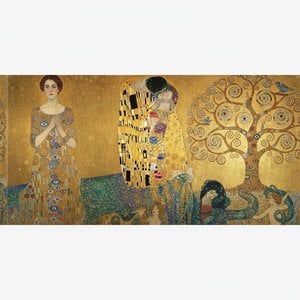
Gustav Klimts 25 Mästerverk: En Konstresa för Hemmet & Själens Frid
Utforska Gustav Klimts 25 mest ikoniska målningar! Fördjupa dig i symbolik, Art Nouveau och den gyllene fasen. Hitta inspiration för din heminredning & köp museumkvalitativa reproduktioner på ArtsDot.com.

Henri Matisse: Topp 25 mästerverk – Konst för ditt hem | ArtsDot
Utforska Henri Matisse' 25 mest ikoniska målningar! Lär känna Fauvismens färgstarka värld och hans tidlösa konst. Upptäck historien bakom varje mästerverk & hitta inspiration för din inredning på ArtsDot.com.
National Gallery of Art: Topp 25 Mästerverk – Konst för Hemmet & Själens Frid
Utforska National Gallery of Art i Washingtons 25 mest ikoniska målningar! Upptäck Cézannes struktur, Matisses färg och Picassos tidiga genialitet. Hitta inspiration för ditt hem med konsttryck av högsta kvalitet på ArtsDot.com.

