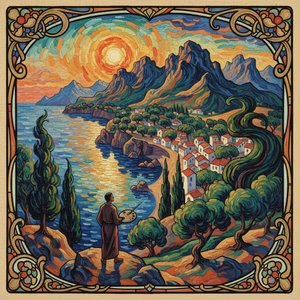
Ett liv smitt i sten och tro: Antoni Gaudís värld
Antoni Gaudí i Cornet, född den 25 juni 1852 i den katalanska staden Reus, Spanien, var inte bara en arkitekt; han var en visionär som skulpterade drömmar till verklighet. Hans livshistoria är lika fängslande och okonventionell som de byggnader som bär hans outplånliga märke. Att växa upp bland Kataloniens böljande kullar och karga landskap formade djupt Gaudís konstnärliga sinne. Redan som barn uppvisade han en skarp observationsförmåga och studerade noggrant naturens former och texturer – ett inflytande som skulle bli grundstenen i hans unika arkitektoniska språk. Familjelivet präglades av både trygghet och begränsning; hans far, en kopparslagare, ingav en respekt för hantverket, medan hans mors hängivna katolicism fostrade en djup andlig koppling som genomsyrade hans senare verk. Dessa tidiga erfarenheter lade grunden för en karriär tillägnad att harmonisera konst, natur och tro. Hans formella utbildning började vid Piarist-skolan i Reus, följt av studier vid universitetet i Barcelona innan han slutligen skrev in sig vid den provinsiella arkitektskolan, där han tog examen 1878. Även under sina akademiska år var Gaudís talang uppenbar, även om den kanske inte erkändes på konventionellt sätt; hans professorer beundrade hans skicklighet men hade ofta svårt att förenas med de etablerade normerna. Han kompletterade sin utbildning genom att arbeta som ritare för arkitekten Josep Fontserè i Mestres, där han bidrog till projekt som Ciutadella-parken i Barcelona – en tidig glimt av de urbana landskap han snart skulle transformera.
En unik visions blomstring
Gaudís första uppdrag visade en framväxande stil som skickligt blandade historiska influenser – nygotik och orientalism – men det var hans medfödda förmåga att transcendera imitation och skapa något helt nytt som utmärkte honom. Casa Vicens (1883–1888) står som ett tidigt vittnesbörd om denna spirande originalitet, där moriska och nygotiska element vävs samman med en livfull färgpalett och intrikata detaljer. Det var dock arbetet med basilikan Sagrada Família 1883 som verkligen definierade hans livsverk. Vad som började som ett relativt konventionellt nygotiskt projekt utvecklades under Gaudís ledning snabbt till ett djärvt, organiskt mästerverk – ett bevis på hans orubbliga vision och innovativa strukturella tekniker. Han föreställde sig inte bara en byggnad utan en ”stenbibel”, där varje element var genomdränkt av religiös symbolik. Samtidigt skapade Gaudí bostadsmärkvärdigheter som Casa Batlló och Casa Milà (La Pedrigrada), färdigställda mellan 1904 och 1910. Dessa strukturer trotsade arkitektoniska konventioner med sina böljande fasader, skelettliknande former och avvisandet av stel symmetri. De var inte bara byggnader utan levande organismer som andades med en unik energi. Parc Güell, påbörjat 1900, exemplifierade ytterligare hans mästerskap i att integrera arkitektur med det naturliga landskapet genom att använda färgglada mosaiker – hans signaturteknik *trencadís* – för att skapa harmoniska rum som kändes både fantasifulla och djupt andliga. Även tidigare verk som Palau Güell (1886–1888) visade hans experimenterande med parabelbågar och innovativ materialanvändning, vilket förebådade de strukturella genombrott som skulle komma.
Natur, tro och innovation: Gaudís genialitetens pelare
I hjärtat av Gaudís arkitektoniska filosofi låg en orubblig vördnad för naturen. Han trodde att naturliga former bar nyckeln till perfekt design och studerade noggrant allt från snäckskal och träd till djurskelett. Denna biomimik var inte bara estetisk; den informerade även hans strukturella innovationer. Hans jämviktade konstruktioner – beroende av lutande kolonner och lätta tegeltak – var ett direkt svar på observationen av hur naturliga element fördelar vikt effektivt, vilket eliminerade behovet av traditionella strävpelare. Utöver naturen var Gaudís djupa katolska tro en lika kraftfull influens, särskilt tydlig i Sagrada Família där religiös symbolik är vävd in i varje aspekt av designen. Basilikan var inte bara en plats för tillbedjan; den var avsedd att vara en fysisk manifestation av de kristna trosbekännelserna. Han var även pionjär inom *trencadís*-tekniken – en mosaikform som använder krossade keramikbitar – vilket skapade livfulla, texturerade ytor som tillförde ytterligare ett lager av organisk skönhet till hans skapelser. Hans tidiga exponering för nygotiska och orientaliska influenser gav en grund, men han kopierade inte bara dessa stilar; han absorberade dem, transformerade dem och överträffade dem slutligen för att skapa något unikt eget.
Ett bestående arv: Gaudís påverkan på världen
Antoni Gaudí betraktas med rätta som den främsta företrädaren för katalansk modernism (Art Nouveau), en rörelse som strävade efter att skapa en distinkta kulturell identitet för Katalonien genom konst och arkitektur. Hans arbete handlade inte bara om att bygga strukturer; det handlade om att skapa en upplevelse, väcka känslor och fira sitt hemland. Idag är sju av Gaudís mästerverk – Sagrada Família, Park Güell, Casa Batlló, Casa Milà, Palau Güell, Casa Vicens och kryptan i Colonia Güell – utsedda till UNESCO-världsarv, ett bevis på deras enastående universella värde. Hans inflytande på arkitekturen sträcker sig långt utanför Spaniens gränser; arkitekter och designers världen över fortsätter att hämta inspiration från hans innovativa former, strukturella tekniker och holistiska designansats. Tragiskt nog fick Gaudís liv ett abrupt slut den 10 juni 1926, när han blev påkörd av en spårvagn i Barcelona. Ironiskt nog ledde hans anspråkslösa utseende till att många trodde att han bara var en tiggare, vilket fördröjde den medicinska hjälpen tills det var för sent. Trots hans död fortsatte byggandet av Sagrada Família baserat på hans noggrant detaljerade planer och modeller, och är nu planerat att färdigställas 2026 – hundraårsminnet av hans bortgång. Vidare inledde den katolska kyrkan en process för Gaudís kanonisering år 2003, som ett erkännande av både hans hängivna tro och hans extraordinära konstnärliga bidrag – en passande hyllning till mannen som ägnade sitt liv åt att bygga monument som rörde vid himlen.
Bortom tegel och murbruk: Gaudís eviga anda
- Katalansk identitet: Gaudís verk blev synonymt med katalansk kultur och förkroppsligade en anda av självständighet och konstnärlig innovation.
- Arkitektonisk revolution: Han utmanade konventionella arkitektoniska normer genom att pionjera nya strukturella tekniker och omfamna organiska former.
- Andlig resonans: Hans djupa tro genomsyrade hans skapelser med religiös symbolik och en känsla av det heliga.
- Bestående inspiration: Gaudí fortsätter att inspirera arkitekter, konstnärer och designers över hela världen och lämnar ett bestående arv i den moderna konstens och arkitekturens landskap.
Antoni Gaudí var mer än bara en arkitekt; han var en poet i sten, en visionär som förvandlade Barcelona till ett levande konstverk. Hans byggnader är inte bara strukturer utan vittnesbörd om kraften i fantasi, tro och den naturliga världens eviga skönhet.
Frågor & svar
Var hittar jag Antoni Gaudís konstverk grupperade efter nyckelord?
För att hitta verk av Antoni Gaudí inom ett specifikt tema, använd artistens Efter nyckelord-sida, som grupperar konstverken efter nyckelord.
Under vilken historisk period verkade Antoni Gaudí?
Antoni Gaudí verkade under perioden talet. Perioden placerar konstnärens verksamhet i ett historiskt sammanhang.
Var kan man hitta Antoni Gaudís konstverk kategoriserade efter motiv?
Ämnesatlas för Antoni Gaudí är en sida som kategoriserar konstnärens verk efter deras motiv.
Kan jag sortera Antoni Gaudís konstverk efter färg?
Sidan Färgindex organiserar Antoni Gaudís konstverk efter färg.
Hur många konstverk av Antoni Gaudí finns tillgängliga att bläddra bland?
Du kan bläddra bland 19 konstverk verk av Antoni Gaudí på sidan Alla konstverk.
Var och när föddes Antoni Gaudí?
Antoni Gaudí föddes i Reus år 1852.
What other names is Antoni Gaudí known by?
Antoni Gaudí is also known as Gaudi.
Var kommer Antoni Gaudí ifrån?
Antoni Gaudí föddes i Spanien.