


Bilden anpassas efter dina val: , .
Beskrivning av samlarobjekt
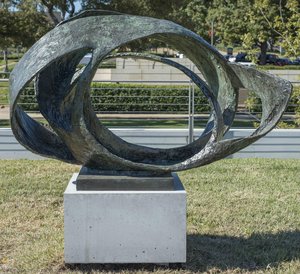
Utforska Barbara Hepworths fascinerande skulptur 'Involute II' – en symbolisk form i brons som väcker tankar om rum och yta. En modern konstnärs mästerverk.
 Visa mer
Konstnärens biografi
Utforska den moderna skulpturen av Dame Barbara Hepworth (1903–1975). En pionjär inom abstrakt konst, Hepworths verk – inklusive 'Oval Form' & 'Two Forms' – blandar surrealism och abstraktion. Upptäck hennes arv på Hepworth Wakefield.
Handgjord oljereproduktion
Handmålad olja på duk i din valda storlek och ram, tillverkad efter beställning av våra konstnärer. ( Byt till tryck Byt till digital bild)
Detta konstverk är upphovsrättsligt skyddat
Konstverket som visas på denna sida skyddas av upphovsrättslagen, vilket innebär att vi inte lagligt kan skapa eller sälja en identisk reproduktion. Detta skydd upprätthålls genom internationella avtal såsom den Bernkonventionen och genom nationella lagar, inklusive de som fastställs av Amerikansk upphovsrättslag – Titel 17. Alla rättigheter förbehållna. Återgivning av konstverk är förbjuden utan skriftligt tillstånd från WahooArt.
Som ett respektfullt och lagligt alternativ erbjuder vi skräddarsydda, handmålade konstverk inspirerade av originalet. Våra skickliga och professionella konstnärer studerar noggrant originalets stil, stämning och konstnärliga essens för att skapa ett nytt, unikt verk som väcker samma känsla – samtidigt som det förblir en originell skapelse i egen rätt.
Denna metod följer fullt ut upphovsrättsliga regler eftersom den inte innebär kopiering eller duplicering av det skyddade konstverket. Istället är det en kreativ nytolkning – en ny målning som är influerad av originalet men inte identisk med det.
Mer om denna målning
 Skicka
 Dela
Dela
 Visa detaljer
 Guide
Guide

 Ladda ner
 Liknande objekt
 Bildspel
 Frågor och svar
 Statistik
Beställ din målning i fyra enkla steg
Ta god tid på dig. Du kan ändra alla svar; priset i din varukorg uppdateras efter varje val.
1 Steg ett av fyra
Vilken storlek önskar du?
Dessa storlekar bibehåller originalmålningens proportioner. Illustrationen visar ditt val på en vägg, ovanför en två meter lång soffa.
Eller ange egna mått
Välj bland våra förinställda storlekar som motsvarar konstverkets ursprungliga proportioner.

Ange den bredd och höjd du behöver för att passa din ram eller din vägg. Eftersom detta är handmålat kan konstnären, vid ett annat format, måla lite mer runt bilden eller beskära den något – det är du som väljer. Vi skickar en digital mockup för godkännande innan målningen påbörjas. Bilden som visas på denna sida representerar inte det slutgiltiga resultatet — det är endast mockuppen som visar det.
2 Steg två av fyra
Hur ska den förberedas: rullad, uppspänd eller inramad?
Priserna nedan gäller för den storlek du valde i steg ett.
Välj kanter för den uppspända duken
Välj din ram

Vit kant Skr1

Suddig kantfinish Skr1

Fortsatt motiv Skr1

P118B Skr10

P118H Skr10

P118W Skr10

P438Z Skr10

P508JH Skr12

P508YH Skr12

P805H Skr10

P805Z Skr10

P919BZ Skr10

P919G Skr10

P919XJ Skr10

P959ZH Skr10

P968JZ Skr12

W106C Skr8

W218G Skr10

W218JH Skr8

W218Y Skr10

W307PJ Skr10

W316G Skr10

W316PJ Skr8

W316Y Skr10

W398PJ Skr8

W4111J Skr10

W500HY Skr15

W500JH Skr15

W692G Skr12

W849H Skr8

W940BG Skr15

W953PJ Skr8

H24-GOLD Skr30

H24-SILVER Skr30

H36-GOLD Skr45

H36-SILVER Skr45
Inramad
Profil: . Total storlek inklusive ram: .
3 Steg tre av fyra
Skulle du vilja ändra något i målningen?
De flesta svarar nej. Eftersom varje målning är handgjord kan vår konstnär även anpassa den efter dina önskemål.
Efter beställning kommer ArtsDot.com team att skicka ett e-postmeddelande till kunden för instruktioner och tillhandahålla en förhandsvisning av utkastet
4 Steg fyra av fyra
Några alternativ för ytbehandling
Alla är valfria. De svar som redan har valts kostar inget extra.
Vem är konstnären?
Leverans över hela världen () på 3–4 veckor istället för standard 5 veckor. (4 november). Inga kompromisser med kvaliteten.
En skylt, precis som på ett museum?
Detaljer för graverad bronsplatta
This elegant plaque features the artist's name and the title of the artwork, finely engraved for a timeless presentation.
It is made from bronze with a refined, elegant finish. The text is precisely laser-engraved for a sharp and permanent result. Measuring 9x2 cm, the plaque is compact yet easy to read. It's built to be durable and scratch-resistant, offering a professional, museum-quality look. Mounting is simple thanks to the included adhesive backing.
Detaljer för transparent akrylplatta
The plaque includes essential engraved details such as the artist's name, the title of the artwork, the date it was created, the type of media used-like oil on canvas or watercolor-a brief description of the piece, and a QR code that links to the complete artwork information.
It is crafted from clear acrylic, offering a sleek, modern appearance. The text is UV-engraved in black to ensure strong visual contrast. With a size of 10x15 cm, it ensures optimal readability. It comes equipped with two metal hooks for secure wall mounting. The plaque is designed to be weather-resistant, making it suitable for various environments, and it includes interactive features that work seamlessly with smartphone scanning.
Detaljer för svart akrylplatta
This elegant plaque includes engraved information such as the artist's name, the title of the artwork, the date it was created, the type of media used (like oil on canvas or watercolor), a short description of the artwork, and a QR code for quick access to more information.
The plaque itself is made from refined black acrylic with a premium finish. The text is laser-engraved in white for high contrast and readability. Its size is 10x15 cm, designed to be easy to read. It comes with two metal hooks for professional mounting. The design is sleek and fits any interior style. It is also weather-resistant and durable, with built-in digital integration for mobile compatibility.
Ett skyddande fernissa?
När behöver du den?
✓ Kontrollera och beställ
Din målning, precis som du beställt den

Involute II
Reproduktionsmetod
Storlek på reproduktion
-

Elitkonstnär av högsta klass
Mer detaljrikedom, finess och extra produktionstid
-

Inramning av reproduktion
-
-
För konstverk eller reproduktioner som är större än 105 cm (cirka 41 tum) på någon sida, levereras ramen som ett isärplockat kit. Denna metod säkerställer en trygg leverans och förhindrar skador under transport.
Professionell montering krävs – detta är inte en produkt för självmontering.
Kitet måste monteras och duken spännas av en erfaren professionell inramare med hjälp av trälim (ingår ej), en spänntång för duk och klämmor för att hålla sargen rak medan limmet torkar. Felaktig montering eller ojämn spänning av duken kan orsaka permanenta skador på konstverket och täcks
 För konstverk eller reproduktioner som är större än 105 cm (cirka 41 tum) på någon sida, levereras ramen som ett isärplockat kit. Denna metod säkerställer en trygg leverans och förhindrar skador under transport.
Alla massiva träribbor ingår, exakt tillkapade efter mått.
Monteras med de medföljande skruvarna, samt trälim för hörnfogarna, vilket inte ingår och måste anskaffas av din ramverkare.
Professionella verktyg krävs och ingår ej: en dukspännare och klämmor för att hålla listerna raka medan limmet torkar.
Viktigt:
Hörnjunctionerna kräver trälim, listerna måste hållas på plats med tvingar tills limmet har torkat helt, och för att spänna duken på den monterade ramen krävs en spänntång för duk. Inget av detta ingår i kitet. Vänligen kontakta en erfaren professionell rammakare innan du beställer denna storlek.

Namnskylt
-
-

Skyddande fernissa
Glansig fernissa (förstärker färgerna, skyddar mot ljus och fukt)
-

Anpassa mitt konstverk
Exempel på vad som kan ändras: Byt ut ansiktet mot ett foto från kunden; Lägg till ett husdjur (t.ex. byt ut en katt mot en hund); Inkludera ett dolt meddelande i bakgrunden; Ändra bakgrundens landskap eller detaljer.
-

Expressleverans
Leverans över hela världen () inom 3–4 veckor istället för standardiserade 5 veckor. (4 november). Inga kompromisser med kvaliteten.
-
Expressleverans
Leverans över hela världen () inom 5 veckor. (11 november).
Ingår
Slutgiltigt pris
Skr 2628
Glasalternativet är endast tillgängligt i storlekar under 110 cm.
Ingår i varje beställning
- Fri expressfrakt över hela världen
- Högkvalitativ linnecanvas
- Fullständig fraktförsäkring
- Garantier för återbetalning av tullavgifter
- Garantier för exakt färgåtergivning
- 100 dagars returrätt (endast vid fel)
- 100% pengarna tillbaka-garanti
- Mängdrabatt erbjuds


Involute II: A Dance of Form and Void – An Exploration of Barbara Hepworth’s Sculptural Vision
Dame Barbara Hepworth's "Involute II," created in 1956, is more than just a sculpture; it’s an invitation to contemplate the relationship between form, space, and the very essence of human experience. This remarkable piece, crafted primarily from bronze – though hints of its earlier plaster origins remain – embodies Hepworth's signature style: a profound exploration of abstraction rooted in organic forms and a deep connection to the natural world. The work’s genesis lies within a period of intense creative evolution for Hepworth, following her relocation to St Ives, Cornwall, where she found an unparalleled environment for artistic inspiration.
The title itself, "Involute," derived from a geometric term describing a spiral curve, immediately suggests a dynamic movement – a sense of continuous unfolding and returning. Hepworth masterfully translates this mathematical concept into a tangible form. The sculpture presents a large, rounded ball, pierced through with a central aperture. This hole isn’t merely an absence; it's a crucial element that fundamentally alters our perception of the object. It creates a visual dialogue between the solid exterior and the implied emptiness within, inviting us to consider the interplay of volume and void – a core principle in Hepworth’s oeuvre.
The Language of Form: Materiality and Technique
Hepworth's technique was revolutionary for her time. She didn’t simply carve stone or wood; she worked directly with metal, employing methods akin to sculpting clay. She began by creating a series of thin sheets of bronze, manipulating them with files and abrasives until they achieved the desired texture – a surface that felt both smooth and subtly rough, reflecting light in unexpected ways. This process, documented extensively in her studio, allowed her to imbue the metal with an almost tactile quality, as if inviting the viewer to reach out and trace its contours.
The choice of bronze itself is significant. Bronze possesses a remarkable ability to capture detail while simultaneously conveying a sense of weight and solidity. It’s a material that can both suggest movement and evoke stillness – qualities perfectly embodied in "Involute II." The subtle variations in color within the patina—ranging from deep browns to hints of green—further enhance this effect, adding layers of visual complexity.
Symbolism and Emotional Resonance
"Involute II" is not simply a geometric form; it’s imbued with symbolic meaning. Hepworth herself described her work as a dialogue between form and space, reflecting a deep interest in the human condition. The pierced aperture can be interpreted as representing an opening to the unknown, a portal through which we might access deeper levels of consciousness or experience. It speaks to themes of vulnerability, transformation, and the inherent tension between containment and release.
Furthermore, the spiral form itself carries powerful associations with growth, evolution, and the cyclical nature of life. It echoes the patterns found in seashells, galaxies, and even the human body – connecting the sculpture to a broader sense of universal order. The work’s emotional impact is profound; it evokes feelings of serenity, contemplation, and a subtle sense of mystery.
A Legacy of Modern Sculpture
Barbara Hepworth's "Involute II" stands as a testament to her pioneering spirit and her enduring influence on modern sculpture. Her work continues to resonate with viewers today, challenging us to reconsider our assumptions about form, space, and the relationship between art and experience. Reproductions of this iconic piece offer an exceptional opportunity to bring Hepworth’s visionary aesthetic into your home or office – a chance to engage with a truly remarkable work of art that transcends time and speaks directly to the human soul.
Frågor och svar
När och med vilka material skapades "Involute II"?
"Involute II" skapades år 1956 i Brons.
Vilken storlek bör jag välja för tryck av "Involute II" till mitt rum?
För ett Vardagsrummet rekommenderas "Involute II" i tryckstorleken Stor.
Vilken färgpalett används i "Involute II"?
"Involute II" av Barbara Hepworth använder en Neutrala toner färgpalett. Paletten sammanfattar verkets övergripande färgkaraktär.
Liknande konstverk



Barbara Hepworth
1903 - 1975, Storbritannien
Konstnärsbiografi
Barbara Hepworth: Pioneer of Abstract Sculpture
Barbara Hepworth (1903–1975) stands as one of the most influential figures in twentieth-century British art, recognized for her groundbreaking contributions to modern sculpture and her unwavering dedication to exploring the relationship between form and space. Born Jocelyn Barbara Hepworth in Wakefield, Yorkshire, she possessed an innate fascination with natural forms—particularly pebbles and seashells—which would profoundly shape her artistic vision throughout her prolific career. Her formative years were marked by a deep connection to the rugged landscape of West Yorkshire, fostering a sensitivity for texture and materiality that would become central to her sculptural practice.- Early Influences: Hepworth’s artistic journey began with studies at Leeds School of Art in 1920, where she encountered Henry Moore, establishing a collaborative spirit that would endure throughout their lives. This formative period instilled in her an appreciation for geometric abstraction and the exploration of fundamental visual principles.
- Royal College of Art & Surrealism: Continuing her education at the Royal College of Art from 1921 until she graduated in 1924, Hepworth embraced the burgeoning avant-garde movement of Surrealism, collaborating with Ben Nicholson and Paul Nash. This exposure to surrealist ideas fueled her experimentation with unconventional materials and techniques.
The Unit One Movement & Early Sculptural Innovations
Hepworth’s artistic breakthrough arrived in 1933 with the formation of Unit One, alongside Nicholson, Nash, and others—a collective dedicated to uniting Surrealism and abstraction. This movement championed a radical departure from representational art, prioritizing pure form and exploring its inherent dynamism. Hepworth's early sculptures – notably *Oval Form* (Trezion) – exemplify this aesthetic ethos, characterized by smooth surfaces and subtly curving shapes that defy easy categorization.- Material Exploration: Hepworth’s mastery lay in her ability to transform raw materials—primarily stone and bronze—into evocative forms. She meticulously honed her craft, mastering techniques of carving and casting to achieve unparalleled precision and expressive power.
- Influence of Moore & Nicholson: Hepworth's artistic dialogue with Henry Moore and Ben Nicholson proved invaluable in shaping her aesthetic sensibilities. Their shared commitment to exploring the interplay between organic and geometric forms propelled her creative endeavors forward.
Mature Style & Monumental Commissions
Throughout the 1940s and 1950s, Hepworth’s sculptural output intensified, reflecting a deepening engagement with both landscape and human figure. Her distinctive style—characterized by concentric circles and voids—became synonymous with modern sculpture.- Landscape as Inspiration: Hepworth drew inspiration from the Yorkshire countryside, translating its contours and textures into monumental sculptures that captured the essence of natural forms. Pieces like *Two Forms* and *Totem* stand as testament to her ability to convey profound emotional resonance.
- Public Recognition & Legacy: Hepworth’s work garnered international acclaim, securing prestigious commissions—including Winged Figure for John Lewis—and cementing her place among the foremost sculptors of her time. Her enduring influence continues to inspire artists today.
The Hepworth Wakefield & Continuing Artistic Exploration
Today, Barbara Hepworth’s legacy resides prominently at The Hepworth Wakefield, where a comprehensive collection showcases her oeuvre—spanning from early explorations of abstraction to monumental sculptures that redefine the boundaries of artistic expression.- A Singular Vision: Hepworth's unwavering dedication to exploring form and space—coupled with her profound sensitivity for materials—established her as an unparalleled innovator in modern sculpture. Her work remains a beacon of creativity, inviting viewers to contemplate the fundamental questions of art and existence.


Relaterade artiklar

The Enduring Legacy of Bronze Sculpture: A Collector's Guide to Form & Cultural Significance
Explore the rich history & enduring appeal of bronze sculpture with expert insights for collectors at ArtsDot. Learn about casting techniques, iconic artists, and collecting tips to build a discerning art collection.

Barbara Hepworth: A Sculptural Dialogue with Form, Space & the Human Condition
Explore the profound world of Barbara Hepworth's sculpture. Discover her artistic evolution, iconic forms, and lasting influence on modern art. A guide for collectors & enthusiasts.

Bronsålderns Mästerverk: 10 Skulpturer Som Förändrade Konsthistorien | ArtsDot
Upptäck 10 legendariska brons skulpturer som revolutionerade konsthistorien! Lär känna Rodin, Michelangelo och andra mästare. Köp museumkvalitativa repliker & hitta inspiration för din inredning på ArtsDot.com.