


 Förhandsvisa
 Skicka
 Dela
Dela
 Visa detaljer

 Ladda ner
 Liknande objekt
 Röntgen
 Bildspel
 Statistik
Sukkaa kutova tyttö


 Visa mer
Giclée / Konsttryck
Giclée- eller canvasprint av museumskvalitet med snabb produktion och flexibla ytbehandlingsalternativ. ( Beställ handmålad reproduktion Byt till digital bild)




P118B $10

P118H $10

P118W $10

P438Z $10

P508JH $12

P508YH $12

P805H $10

P805Z $10

P919BZ $10

P919G $10

P919XJ $10

P959ZH $10

P968JZ $12

W106C $8

W218G $10

W218JH $8

W218Y $10

W307PJ $10

W316G $10

W316PJ $8

W316Y $10

W398PJ $8

W4111J $10

W500HY $15

W500JH $15

W692G $12

W849H $8

W940BG $15

W953PJ $8




Välj bland våra förinställda storlekar som motsvarar konstverkets ursprungliga proportioner.

Du kan ange egna mått för att passa en specifik ram eller yta. Om det valda måttet inte överensstämmer med originalbildens proportioner kommer vi antingen att beskära konstverket eller utöka bilden med en speglad eller enfärgad kant. En digital mockup skickas för ditt godkännande innan produktionen påbörjas.
Vänligen notera att förhandsvisningen på skärmen inte återspeglar den faktiska beskärningen eller utökningen. Endast mockuppen visar den slutgiltiga kompositionen korrekt.
Även om anpassade storlekar är möjliga, rekommenderar vi att du väljer ett mått från den fördefinierade listan för att bevara de ursprungliga proportionerna.
Leverans över hela världen () på 2 veckor istället för standard 4/5 veckor. (10 september)

Fri expressfrakt över hela världen

Högkvalitativ linnecanvas

Fullständig fraktförsäkring

Garantier för återbetalning av tullavgifter

Garantier för exakt färgåtergivning

100 dagars returrätt (endast vid defekter)

100% pengarna tillbaka-garanti

Mängdrabatt erbjuds
 Glasalternativet är endast tillgängligt i storlekar under 110 cm.

Sukkaa kutova tyttö
Giclée / Konsttryck
Storlek på reproduktion
-


Slutgiltigt pris
$ 62
Albert Edelfelt’s “Sukkaa kutova tyttö”: A Portrait of Rural Finland
“Sukkaa kutova tyttö” – "Girl Knitting a Sock" – is more than just a depiction of a young girl; it's a poignant window into the heart of 19th-century Finnish rural life, masterfully rendered by Albert Edelfelt. Painted in 1878, this work exemplifies Edelfelt’s pivotal shift away from grand historical narratives towards a deeply personal and naturalistic style that would ultimately define his legacy as Finland's greatest artist. The scene unfolds within the tranquil embrace of a Finnish forest, a setting meticulously observed and imbued with a quiet dignity.
The central figure, a young girl absorbed in her task of knitting a sock, dominates the composition. Her posture is relaxed yet attentive, her expression thoughtful – a subtle blend of concentration and perhaps a touch of melancholy. The artist’s skill lies not just in capturing her physical likeness but also in conveying an intangible sense of character, hinting at the hardships and quiet resilience inherent in rural existence. The presence of several other figures, subtly placed within the background, adds to the scene's realism, suggesting a bustling household or perhaps a communal gathering – a vital element of Finnish village life.
Realism and the Rise of National Identity
Edelfelt’s artistic journey was profoundly shaped by his time in Antwerp and Paris. Initially trained in the academic tradition of history painting under Jean-Léon Gerome, he quickly recognized the limitations of this style when applied to Finnish subjects. His move towards realism began with a desire to authentically portray the lives of his countrymen – a crucial step in fostering a sense of national identity during a period of increasing political and cultural awareness within Finland.
The painting’s setting, a dense Finnish forest, is not merely a backdrop; it's an integral part of the narrative. The trees, rendered with meticulous detail, evoke a sense of timelessness and connection to the land – a theme that would become increasingly important in Finnish art and literature during this era. This focus on the natural world reflects Edelfelt’s commitment to representing Finland’s unique landscape and culture to the wider world.
Technique and Composition
"Sukkaa kutova tyttö" showcases Edelfelt's mastery of oil painting techniques. The brushwork is smooth yet textured, creating a palpable sense of depth and atmosphere. He employs subtle gradations of light and shadow to model the figures and their surroundings, lending them a remarkable three-dimensionality. The composition itself is carefully balanced, with the girl occupying the central space while the surrounding elements – the trees, the rock, and the other figures – contribute to a harmonious whole.
Notice the use of color; muted greens, browns, and blues dominate the palette, reflecting the natural tones of the Finnish forest. These colors are not merely descriptive; they evoke a sense of tranquility and serenity, reinforcing the painting’s overall mood. The artist's attention to detail – from the texture of the girl’s dress to the individual strands of yarn – is remarkable, demonstrating his dedication to capturing the nuances of everyday life.
Symbolism and Emotional Impact
Beyond its realistic depiction of rural Finland, “Sukkaa kutova tyttö” carries a subtle symbolic weight. The act of knitting itself represents hard work, domesticity, and the continuation of tradition – values deeply rooted in Finnish culture. The girl’s contemplative expression suggests a connection to something larger than herself, perhaps a sense of responsibility or a yearning for a better future.
Edelfelt's ability to evoke such profound emotions through seemingly simple subject matter is a testament to his artistic genius. “Sukkaa kutova tyttö” remains a powerful and enduring image of Finland – a celebration of its people, its landscape, and its cultural heritage. A hand-painted reproduction offers an unparalleled opportunity to experience the beauty and emotional depth of this iconic work firsthand.
Liknande konstverk


![Pas Mèche [nothing Doing] — Jules Bastien-lepage, Naturalist Painting](/media/artworks/images-thumb/01/c8/01c885499ff56bb2e6383eef008f6c1b.jpg)


Konstnärsbiografi
Early Life and Education
Albert Gustaf Aristides Edelfelt, a Finnish painter celebrated for his masterful depictions of rural landscapes and portraits imbued with humanist values, was born on July 21, 1854, in Porvoo, Finland. His parents, Carl Albert Edelfelt—a Swedish-speaking architect who had emigrated to Finland seeking artistic inspiration—and Alexandra Edelfeldt née Brandt—an amateur poet deeply attuned to the beauty of Finnish culture—established a household rooted in intellectual curiosity and artistic appreciation. From an early age, Edelfelt demonstrated a remarkable aptitude for drawing and painting, nurtured by his mother’s encouragement and fueled by a profound connection to the natural world surrounding his birthplace. He began his formal education at Svenska Normalyceum in Helsinki where he excelled as a student of Adolf von Becker, delving into the intricacies of history painting and honing his technical skills. This formative period instilled in him a disciplined approach to artistic practice and exposed him to influential pedagogical figures who championed realism and observation. Recognizing Edelfelt’s exceptional talent, the Finnish government awarded him a scholarship to pursue advanced studies at Saint Petersburg Academy of Fine Arts, where he immersed himself in Russian artistic traditions alongside Gunnar Berndtson—a fellow student who would become a lifelong collaborator. This experience broadened his artistic horizons and solidified his commitment to capturing the essence of human emotion and experience through meticulous detail.Artistic Journey
Edelfelt’s artistic trajectory unfolded against the backdrop of Finland's burgeoning cultural landscape, marked by a fervent desire to elevate Finnish art to international prominence. Driven by an unwavering belief in the power of plein air painting—the practice of capturing landscapes directly from nature—he embraced this revolutionary technique championed by Impressionists like Jules Bastien-Lepage and Gustave Courtois. His studio in Paris became a hub for artistic experimentation, fostering friendships with fellow artists who shared his passion for innovation and authenticity. He quickly gained recognition for his historical costume paintings, notably *Kuningatar Blanka*, which vividly portrayed the Swedish medieval Queen Bianca caring for her son Haakon Magnusson—a scene brimming with tenderness and symbolic resonance. This masterpiece earned him a prestigious medal at the Paris Universal Exposition of 1889, propelling him to the forefront of Finnish artistic achievement. Simultaneously, Edelfelt cultivated an enduring fascination with portraiture, capturing the dignity and complexity of his subjects with remarkable sensitivity and precision. His portraits of Louis Pasteur—a pioneering scientist whose groundbreaking discoveries revolutionized medicine—became iconic representations of intellectual brilliance and human compassion.Notable Works
Edelfelt’s oeuvre encompasses a diverse range of artistic expressions, reflecting his multifaceted engagement with both Finnish landscapes and humanist themes. Among his most celebrated paintings are *Young Woman in Her Boudoir*, which delicately portrays the intimacy of domestic life—a testament to Edelfelt's ability to convey subtle emotions through nuanced observation—and *Under the Birches*, a breathtaking depiction of Finnish birch forests bathed in ethereal sunlight—a quintessential example of plein air painting that captures the sublime beauty of the natural world. These works stand as enduring symbols of Finnish artistic identity and continue to inspire admiration for their masterful execution and profound emotional depth. Furthermore, Edelfelt’s contribution to Finnish cultural heritage extends beyond his paintings themselves. He served as an illustrator for Runeberg's poems—a role that cemented his reputation as a champion of Finnish literature and bolstered the nation's artistic legacy. His influence resonated throughout Finland’s artistic community, nurturing the talents of younger painters like Akseli Gallen-Kallela and Gunnar Berndtson—artists who would forge their own distinctive paths while honoring Edelfelt’s pioneering spirit.Legacy and Impact
Albert Edelfelt remains a towering figure in Finnish art history—a visionary artist whose unwavering commitment to realism and humanist values profoundly shaped the trajectory of Finnish artistic expression. His legacy transcends mere stylistic innovation; it embodies a deep appreciation for the natural world, an empathy for human experience, and a steadfast belief in the transformative power of art. As one of Finland’s foremost painters, Edelfelt secured his place among the nation's cultural icons—a testament to his enduring artistic brilliance and his indelible contribution to Finnish identity. His works continue to captivate audiences worldwide, serving as reminders of the beauty and dignity inherent in human existence and the profound significance of capturing the essence of our surroundings with unwavering honesty and compassion.
Albert Edelfelt
1854 - 1905 , Finland
Kortfakta
- Artistic Movement Or Style: Realist
- Artists Or Movements Influenced By This Artist: ['Akseli Gallen-Kallela']
- Artists Who Influenced This Artist: ['Jean-Léon Gérôme']
- Date Of Birth: July 21, 1854
- Date Of Death: August 18, 1905
- Full Name: Albert Gustaf Aristides Edelfelt
- Nationality: Finnish
- Notable Artworks:
- Portrait of Louis Pasteur
- Young woman in her boudoir
- Under the birches
- Place Of Birth: Porvoo, Finland
Relaterade artiklar

Topp 10 ikoniska oljemålningar som förändrade konsthistorien – ArtsDot.com
Utforska de 10 mest ikoniska oljemålningarna som revolutionerade konsthistorien! Lär känna Monet, Van Gogh och Da Vinci. Hitta inspiration & köp museumkvalitativa reproduktioner på ArtsDot.com – för en tidlös inredning.
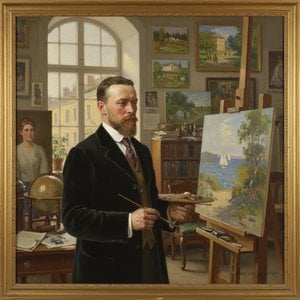
Albert Edelfelt: A Pioneer of Finnish Realism & International Impressionist Circles
Explore the life & work of Albert Edelfelt, a pioneering Finnish Realist painter who bridged Impressionism & national identity. Discover his masterpieces and lasting influence on art history.

Olja på dukens bestående arv: Teknik, historia och samtida praktik
Utforska oljemåleriets rika historia och tekniker – från renässansens mästare till dagens konstnärer. Lär dig om material, metoder och konservering för att bevara konsten.

The Enduring Legacy of Oil on Canvas: Technique, History & Aesthetic Impact
Explore the rich history & techniques of oil painting – from Renaissance masters to Impressionism. Discover pigments, layering methods, and why this timeless medium endures. Expert insights for artists & art enthusiasts.

Olja på duk: En tidlös teknik – Historik, process och konstnärliga möjligheter
Utforska oljemålningskonsten! Lär dig om flamländsk teknik, materialval och historisk utveckling. Expertguider för både nybörjare och erfarna konstnärer – bevara dina målningar med bästa praxis.
