
 Pregledaj u prostoru
 Pošalji
 Podeli
 Detalji o delu
 Vodič
Vodič

 Preuzmi
 Slični predmeti
 Rendgenski snimak
 Automatska prezentacija
 Pitanja i odgovori
 Statistika
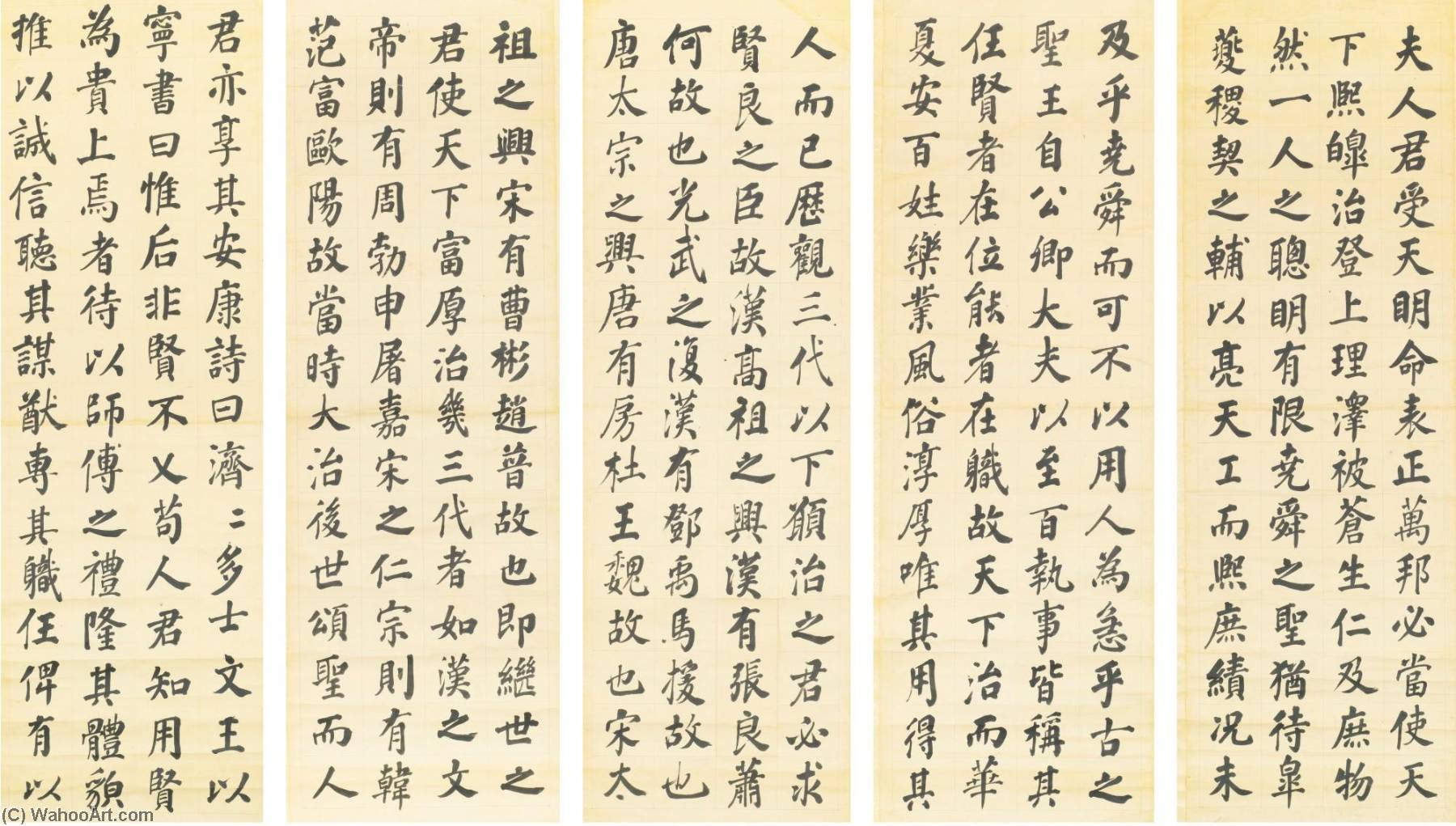
CALLIGRAPHY IN REGULAR SCRIPT

- 137.0 x 45.0 cm
 Pročitaj više
Nabavite datoteku spremnu za štampu koja nudi znatno veći kvalitet od onlajn pregleda. Svaka digitalna slika koju nudimo potiče iz visokorezolucičnog master fajla iz naše baze — obično širine od 5.000 do 15.000 piksela — što vam omogućava štampu u velikom formatu, precizno kadriranje ili bezbrižnu reprodukciju najfinijih detalja.
Nijedan fajl ne napušta naš studio netaknut. Digitalni stručnjak vrši proveru boja u odnosu na originalno delo i koriguje ih po potrebi, a zatim unapređuje jasnoću i detalje pomoću profesionalnih alata za retuširanje — uvek ostajući veran umetnikovim potezima četkice i stilu. Rezultat je slika koja izgleda kao pravo delo, a ne kao sken sa filterom.
Proverite i odobrite pre završetka: naš stručnjak vam šalje sliku putem e-pošte u roku od 72 sata na pregled. Niste zadovoljni? Zatražite poboljšanja ili ispravke, ili tražite povraćaj novca ukoliko kvalitet ne ispunjava vaša očekivanja.
Ovo je kvalitet kojem poverenje ukazuju izdavači, dizajnerski studiji, galerije i štamparije.
Digitalna slika
Preuzmite datoteku visoke rezolucije za ličnu upotrebu, štampanje i kreativne projekte. ( Pređi na štampu Kupite ručno oslikano delo)
Uključeno uz svaku porudžbinu digitalne slike
Profesionalna digitalna isporuka, zagarantovana
Kada odaberete ArtsDot.com, ne dobijate samo sliku – vi primate profesionalno unapređeno digitalno umetničko delo, izrađeno sa najvećom preciznošću i uz garanciju zadovoljstva. Evo svega što automatski dolazi uz vašu porudžbinu:

Brza dostava putem e-pošte
Vaša digitalna slika visoke rezolucije biće vam poslata putem e-pošte u roku od 72 sata od poručivanja – spremna za trenutnu upotrebu.

Digitalna datoteka unapređena veštačkom inteligencijom
Vaše umetničko delo je profesionalno optimizovano primenom naprednih AI alata i ručne obrade, čime se osiguravaju maksimalni detalji, oštrina i preciznost boja.

Besplatna doživotna ponovna isporuka
Slučajno ste obrisali ili izgubili svoju datoteku? Ne brinite – poslaćemo vam je ponovo u bilo kom trenutku, potpuno besplatno.

Bez troškova uvoza – zauvek
Uživajte u svojim umetničkim delima trenutno, bez carine, akciza ili troškova dostave – digitalni download je uvek bez poreza.

Garancija preciznosti boja
Uz pomoć profesionalnih alata i upravljanja bojama, osiguravamo da vaša digitalna slika što vernije odražava originalne boje.

Garancija zadovoljstva u roku od 100 dana
Ako niste zadovoljni svojom digitalnom slikom, izvršićemo reviziju ili ćemo vam vratiti 100% novca u roku od 100 dana – bez ikakvih pitanja.

100% garancija povrata novca
Niste zadovoljni? Dobijte puni povraćaj novca u roku od 100 dana od prijema digitalne datoteke – bez suvišnih pitanja.

Popusti na velike porudžbine
Kupite 3 slike, uštedite 10% - Kupite 5 slika, uštedite 15% - Kupite 10+ slika, uštedite 20%. Odlično za kreativne projekte, galerije i agencije.
Srodna umetnička dela


Biografija umetnika
Zhang Zhao: A Master of Running Script in the Qing Dynasty
The world of 17th-century Chinese art is rich with figures who shaped its trajectory, and among them stands Zhang Zhao (1691–1745), a calligrapher whose elegant running script – known as *jiejing* – continues to captivate viewers today. More than just a skilled practitioner of brush and ink, Zhang Zhao was a product of his time, deeply influenced by the philosophical currents of the Qing Dynasty and the artistic legacy of Dong Qichang, a pivotal figure in establishing aesthetic standards for Chinese art.
Born in Xu Province during a period of immense political upheaval, Zhang Zhao’s early life instilled within him a profound sense of discipline and an appreciation for scholarship. He initially pursued a career as a civil servant but quickly gravitated towards the refined world of calligraphy, recognizing its power to convey both intellectual depth and aesthetic beauty. His training likely involved studying the works of earlier masters, absorbing their techniques and developing his own distinctive style – one characterized by fluidity, balance, and an almost meditative quality.
The Influence of Dong Qichang
Zhang Zhao’s artistic development was inextricably linked to that of Dong Qichang (1579–1645), a renowned scholar-official and art critic who profoundly shaped the aesthetic landscape of the Qing Dynasty. Dong Qichang championed the concept of *wuhu*, or “five aesthetics”—poetry, music, painting, calligraphy, and ritual—as essential components of a cultivated individual’s life. He advocated for a return to classical forms and values, emphasizing simplicity, sincerity, and a deep connection with nature.
Zhang Zhao was deeply influenced by Dong Qichang's ideas, particularly his emphasis on *jiejing* as a form of refined expression. Dong Qichang’s writings on calligraphy stressed the importance of achieving a state of “naturalness” – a sense of effortless grace and spontaneity – in one’s brushwork. Zhang Zhao embraced this philosophy, striving to capture the essence of his subjects through subtle variations in line weight, pressure, and speed.
A Career in Service and Artistic Recognition
Zhang Zhao's career unfolded within the complex political landscape of the Qing Dynasty. He secured a *jinshi* (successful candidate) position in 1709, demonstrating his intellectual prowess and earning him a place within the imperial bureaucracy. He rose through the ranks, eventually becoming Secretary of the Ministry of Justice in 1733. However, his career was not without its challenges; he narrowly avoided execution after failing to manage aboriginal territories in Guizhou, highlighting the precariousness of life for officials during this turbulent period.
Despite these setbacks, Zhang Zhao continued to produce significant works of calligraphy and poetry. He collaborated with other prominent scholars on important literary projects, including the *Lülü Zhengyi* and its sequel, *Houbian*, which served as standard treatises on music theory. Notably, he was also recognized by the Yongzheng Emperor for his exceptional skill, receiving a commendation for a poem written with his left hand after an accident had impaired his right arm – a testament to his resilience and artistic dedication.
Style and Legacy
Zhang Zhao’s *jiejing* is characterized by its elegant fluidity and subtle variations in line weight. His works often exhibit a sense of quiet contemplation, reflecting the philosophical ideals championed by Dong Qichang. He skillfully employed techniques such as *shougong* (a technique for creating a sense of depth through varying line thickness) and *yanzhuan* (a technique for creating a sense of movement through variations in brush pressure), adding layers of complexity and nuance to his compositions.
While Zhang Zhao’s name may not be as widely recognized as some of his contemporaries, his contributions to the development of running script are undeniable. His works represent a significant example of Qing Dynasty calligraphy, embodying both technical mastery and philosophical depth. Today, his paintings and scrolls continue to be admired for their beauty, elegance, and enduring legacy – a testament to the skill and vision of this remarkable artist.

Zhang Zhao
1691 - 1745
Kratke informacije
- Artistic Movement Or Style: Running script calligraphy
- Artists Or Movements Influenced By This Artist: ['Traditional Chinese art']
- Artists Who Influenced This Artist: ['Dong Qichang']
- Date Of Birth: 1691
- Date Of Death: 1745
- Full Name: Zhang Zhao
- Nationality: Chinese
- Notable Artworks:
- Hanging Scrolls
- Album Leaves
- Place Of Birth: Jiangsu Province, China