
- Početna strana

- Reprodukcija uljane slike
- Хилари Жермен Едгар Дегас
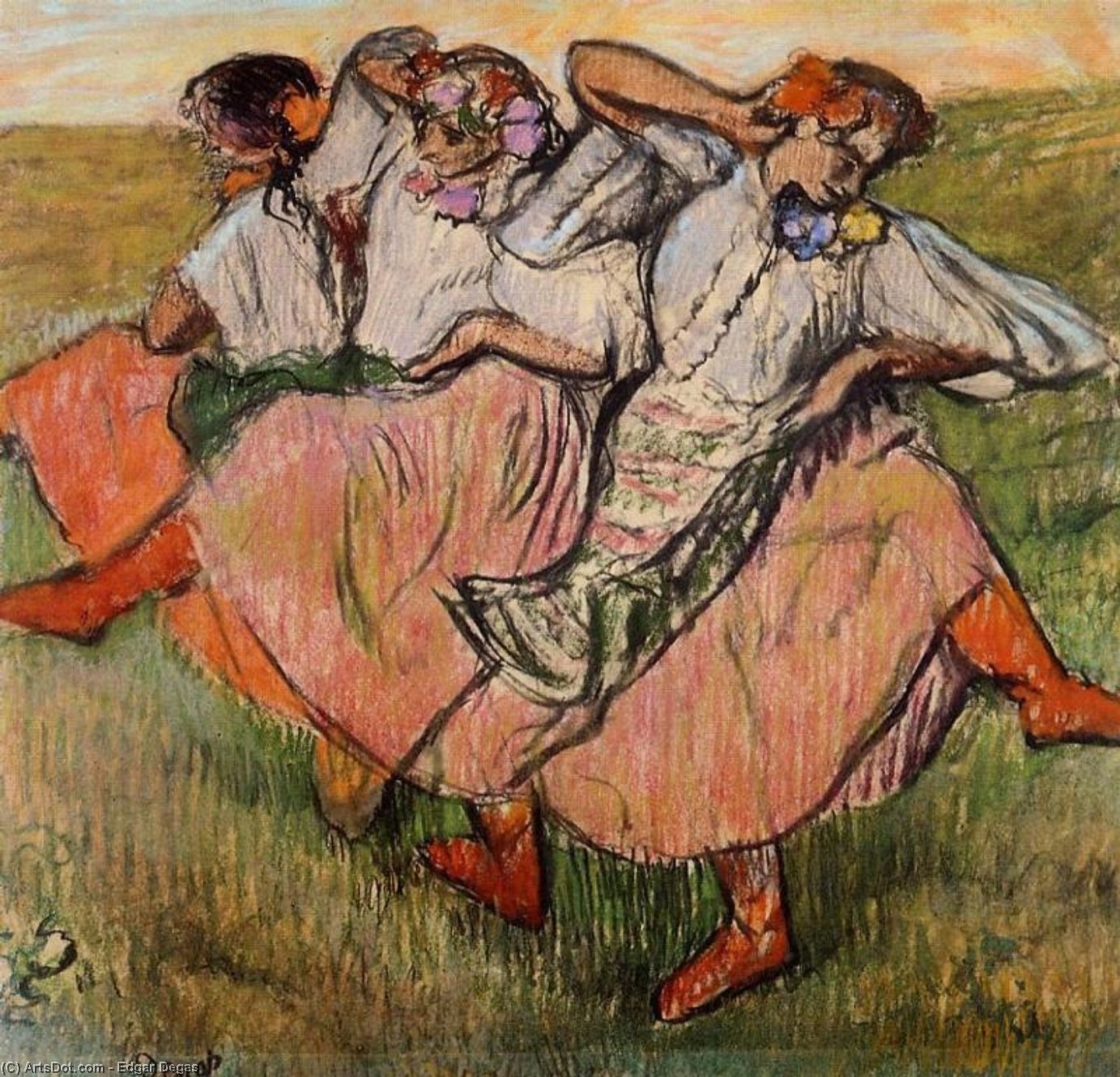
- Three Russian Dancers
 Kupi štampu Kupi digitalnu sliku
 Pošalji
 Podeli
 Detalji
 Dodaj u omiljene

 Преузми
 Slični predmeti
 Rendgenski snimak
 Slajdovi
Three Russian Dancers
 Pastel
- Other
- Impressionism
 1895
1895- 19th Century
 63.0 x 53.0 cm
 Pročitaj više
Ručno rađena uljana reprodukcija
Ručno oslikano uljanim bojama na platnu u dimenzijama i okviru po vašem izboru, izrađeno po porudžbini od strane naših umetnika.




































Izaberite jednu od naših unapred definisanih veličina koje odgovaraju originalnim proporcijama umetničkog dela.

Можете унети сопствене димензије како бисте прилагодили дело одређеном оквиру или простору. Ако одабрана величина не одговара пропорцијама оригинала, слика ће бити исечена или проширена додатним елементима који се ручно насликавају. Дигитални prikaz ће вам бити послат на одобрење пре почетка производње.
Имајте на уму да преглед на екрану не одражава стварно исецање или проширење. Само приказ (mockup) ће тачно приказати коначну композицију.
Иако су доступне прилагођене величине, препоручујемо да одаберете димензију из дефинисане листе како бисте сачували оригиналне пропорције.
Nakon narudžbine, tim ArtsDot.com će klijentu putem e-pošte poslati uputstva i dostaviti prikaz predloženog rešenja
Isporuka širom sveta () za 3/4 nedelje umesto uobičajenih 5 nedelja. (2 јул). Bez kompromisa po pitanju kvaliteta.

Besplatna ekspresna dostava širom sveta

Visokokvalitetno laneno platno

Kompletno osiguranje transporta

Garancija povraćaja carine i uvoznih dažbina

Garancija vernosti boja

Politika povrata u roku od 60 dana (samo u slučaju nedostataka)

Garancija povrata novca od 100%

Popust pri grupnoj kupovini
 Opcija sa staklom dostupna je samo za dimenzije manje od 110 cm

Three Russian Dancers
Tehnika reprodukcije
Dimenzije reprodukcije
-


Konačna cena
-
Opis umetničkog dela
A Glimpse into a Fleeting Moment: Edgar Degas’s “Three Russian Dancers”
Edgar Degas, a master of capturing movement and modern life, presents us with an enchanting scene in “Three Russian Dancers” (1895). This pastel on paper is not merely a depiction of dancers; it's a window into the vibrant world of late 19th-century ballet and a testament to Degas’s innovative artistic vision. Recent scholarship has illuminated that these are, in fact, *Ukrainian* dancers – a crucial recontextualization reflecting evolving understandings of cultural representation within art history.Subject & Composition: Grace in Repose
The artwork portrays three women, likely during an interval or rehearsal, set against a backdrop of a hazy, sun-drenched field. They are dressed in the characteristic pink and white attire of ballet dancers, their poses suggesting both practiced elegance and relaxed camaraderie. One dancer delicately holds flowers, adding a touch of natural beauty to the scene. The composition is deliberately asymmetrical, lending a sense of spontaneity and capturing a fleeting moment rather than a staged performance. Degas avoids rigid formality, instead favoring an intimate and observational approach.Artistic Style & Technique: Impressionism’s Embrace
Though Degas resisted being labeled an “Impressionist,” his work shares key characteristics with the movement. He prioritized capturing the *impression* of a scene – the light, atmosphere, and sense of motion – over precise realism. The use of pastel is central to this effect. Pastel allows for layering and blending, creating soft transitions and luminous colors that beautifully convey the dancers’ delicate forms and the warmth of the outdoor setting. His technique involves loose, expressive strokes, prioritizing movement and gesture over meticulous detail.Historical Context: Ballet & Modern Life
Degas was deeply fascinated by ballet, dedicating a significant portion of his oeuvre to depicting dancers – more than half of his works feature them. This fascination stemmed from his interest in portraying modern life and the dynamism of urban culture. The late 19th century saw a surge in popularity for ballet, particularly with the rise of companies like the Ballets Russes (though this work predates Diaghilev’s company). Degas's depictions offer a glimpse behind the scenes, revealing the dancers not just as performers but as working women. The recent recognition of their Ukrainian heritage adds another layer to the historical context, highlighting the international influences within the ballet world and prompting a re-evaluation of cultural attributions in art.Symbolism & Emotional Impact: Joyful Abandon
The flowers held by one dancer can be interpreted as symbols of youth, beauty, and celebration. The open landscape suggests freedom and natural grace. More broadly, the artwork evokes a sense of joyful abandon and carefree spontaneity. Degas masterfully captures not just *what* the dancers are doing but *how* they feel – their energy, their poise, and their connection to one another. The soft pastel palette contributes to this feeling of lightness and optimism.Degas’s Legacy & Collecting Considerations
“Three Russian Dancers” exemplifies Degas's unique ability to blend classical technique with modern subject matter. His work continues to inspire artists and captivate audiences today. For collectors and interior designers, a reproduction of this piece offers a touch of elegance, sophistication, and artistic depth. Its soft color palette and graceful composition make it suitable for a variety of spaces, adding a sense of tranquility and beauty. Consider pairing it with complementary colors like muted greens, creams, or pale blues to enhance its delicate aesthetic. This artwork is currently housed in the E.G. Buhrle Collection Museum in Zurich, Switzerland.Explore Further
- Other notable works by Degas include “After the Bath (Woman Drying Herself),” “Leaving the Bath,” and “After Bathing, Woman Drying Herself.”
- To learn more about Edgar Degas, consult resources like Wikipedia ([https://en.wikipedia.org/wiki/Edgar_Degas](https://en.wikipedia.org/wiki/Edgar_Degas)) and ArtsDot.
Srodna umetnička dela


Biografija umetnika
Edgar Degas: A Revolutionary French Artist Known for His Captivating Ballet Dancers, Parisian Scenes, and Innovative Techniques—A True Master of Modern Art
Edgar Degas stands as a monumental figure in the annals of art history – an artist who defied categorization yet irrevocably shaped the trajectory of modern painting. Born Hilaire-Germain-Edgar De Gas in Paris, 1834, he possessed a singular vision that blended classical training with a radical embrace of contemporary life, establishing him as one of the foremost innovators of his time. His legacy continues to resonate today, influencing artists across generations and cementing his place among the titans of Impressionism and Realism alike.Early Life and Artistic Foundations
Degas’s upbringing was comfortably bourgeois; his father served as a banker, providing financial stability for his family, while his mother descended from Creole lineage in New Orleans – an experience that instilled in him a fascination with diverse cultures and perspectives. From a young age, he demonstrated an aptitude for drawing and painting, initially honing his skills by meticulously copying works within the Louvre Museum—a formative practice that cultivated a lifelong devotion to classical art forms. This dedication wasn’t merely academic; it represented a conscious rejection of prevailing artistic conventions and fueled a desire to forge his own path. He enrolled at Lycée Louis-leGrand, but quickly realized that formal education alone wouldn't satisfy his creative impulses.Beyond Impressionism: A Unique Artistic Vision
While fellow Impressionists like Monet and Renoir sought to capture the ephemeral beauty of fleeting moments outdoors—primarily bathed in sunlight—Degas largely conducted his artistic endeavors within the confines of his studio. This deliberate choice allowed him unparalleled control over composition, color palettes, and textural nuances. He eschewed the grand narratives favored by academic painters, instead focusing on subjects that resonated with the pulse of everyday Parisian life: laundresses diligently tending to their tasks, cabaret singers captivating audiences with their performances, milliners crafting elaborate hats—and, most notably, dancers. Degas didn’t merely depict ballerinas as idealized figures; he confronted them with unflinching honesty, portraying their grueling rehearsals and capturing the physicality of their profession with remarkable precision. His canvases often featured unconventional cropping techniques—placing figures in unexpected positions—and utilized asymmetrical arrangements that conveyed a sense of dynamism and immediacy. He was driven by an unwavering commitment to observing reality without embellishment, striving to reveal its inherent beauty through meticulous detail.Influences Shaping Degas’s Artistic Style
Degas's artistic sensibilities were profoundly shaped by a constellation of influences—spanning from classical masters like Ingres to the pioneering Realists championed by Courbet and Pissarro. However, perhaps the most transformative encounter was his immersion in Japanese prints—Ukiyo-e—which captivated him with their bold compositions, flattened perspectives, and masterful use of color. These prints instilled in Degas a stylistic sensibility that prioritized visual impact over traditional representational accuracy, encouraging him to experiment with innovative techniques and challenge established artistic norms. He skillfully blended these influences into his own distinctive style, resulting in artworks characterized by both elegance and psychological depth.Notable Achievements and Legacy
Degas’s oeuvre encompasses an astonishing array of mediums—oil paintings, sculptures, prints, and drawings—each imbued with a remarkable level of technical virtuosity. His ballet class scenes—particularly *The Ballet Class*—remain iconic representations of artistic observation and capture the essence of movement with breathtaking clarity. Similarly, his depictions of racehorses and jockeys exemplify his fascination with capturing fleeting moments of action and conveying emotion through subtle gestures and expressions. Furthermore, Degas’s portraits are distinguished by their psychological complexity, delving beneath surface appearances to reveal the inner lives of his subjects—a hallmark of his artistic approach. His influence extended far beyond his own lifetime, inspiring subsequent generations of artists who embraced innovation and pursued stylistic experimentation. Edgar Degas's enduring legacy resides not only in his masterpieces but also in his unwavering belief that art should serve as a conduit for truthfulness and beauty—principles that continue to resonate powerfully within the artistic landscape today.
Хилари Жермен Едгар Дегас
1834 - 1917 , Француска
Osnovne informacije
- Artistic Movement Or Style: Impressionizam i Realizam
- Artists Who Influenced This Artist:
- Ingres
- Courbet
- Pissarro
- Date Of Birth: 19 July 1834
- Date Of Death: 27 September 1917
- Full Name: Hilaire-Germain-Edgar De Gas
- Nationality: Francuski
- Notable Artworks:
- Dancer and Tambourine
- The Ballet Class
- Degas in a Green Jacket
- The Collector
- Women Combing Their Hair
- Place Of Birth: Paris, France
Povezani članci

The Subdued Radiance of Pastel Palettes: Exploring Emotional Resonance in Art History
Explore the emotional power of pastel palettes in art history! Discover Impressionism, Post-Impressionism & color psychology insights. Find museum-quality reproductions at ArtsDot.

Edgar Degas: Capturing Modern Life – A Study of Movement, Observation, and the Parisian Belle Époque
Explore the captivating world of Edgar Degas! Discover his innovative techniques, iconic ballet paintings, and unique portrayal of Parisian life in this insightful art history study.

Impressionistic Landscapes: 10 Masterpieces That Changed Art & Decor
Journey into the heart of Impressionism! Explore 10 masterpieces by Monet, Renoir & Degas that revolutionized landscape art. Discover their stories, techniques & find museum-quality reproductions to elevate your home decor on ArtsDot.com.

Vasily Surikov: Historical Epic & Psychological Realism in 19th-Century Russian Painting
Explore the powerful historical paintings of Vasily Surikov, a leading figure of Russian Realism. Discover his dramatic compositions, psychological depth & lasting influence on 19th-century art. Learn about collecting Surikov's masterpieces.

The Subdued Radiance of Pastel Palettes: Exploring Emotional Resonance in Art History
Explore the emotional power of pastel palettes in art history! Discover Impressionism, Post-Impressionism & color psychology insights. Find museum-quality reproductions at ArtsDot.



