

 Pregledaj u prostoru
 Pošalji
 Podeli
 Detalji o delu
 Vodič
Vodič

 Preuzmi
 Slični predmeti
 Rendgenski snimak
 Automatska prezentacija
 Pitanja i odgovori
 Statistika
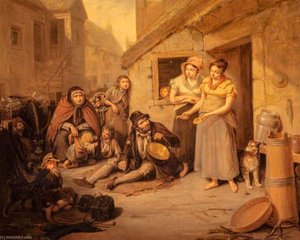
The Expected Penny

 Pročitaj više
Giclee štampa / Umetnički otisak
Giclée štampa ili print na platnu muzejskog kvaliteta uz brzu izradu i raznovrsne opcije završne obrade. ( Kupite ručno oslikano delo Pređi na digitalnu sliku)




































Izaberite jednu od naših unapred definisanih veličina koje odgovaraju originalnim proporcijama umetničkog dela.

Unesite željenu širinu i visinu kako bi se štampa uklopila u vaš ram ili zid. Štampu je moguće samo iseći, ali nikada povećati iznad dimenzija originalne slike, stoga format sa drugačijim proporcijama uzrokuje gubitak dela slike. Pre početka štampe, poslaćemo vam digitalni prikaz radi potvrde. Slika prikazana na ovoj stranici ne predstavlja stvarni isrez — to pokazuje samo digitalni prikaz.
Dostava širom sveta () za 2 nedelje umesto uobičajenih 4/5 nedelja. (4 новембар)

Besplatna ekspresna dostava širom sveta

Visokokvalitetno laneno platno

Potpuno osiguranje transporta

Garancija povraćaja carine i uvoznih dažbina

Garancija vernosti boja

Politika povraćaja u roku od 100 dana (samo u slučaju nedostataka)

Garancija povrata 100% novca

Popust na više proizvoda
 Opcija sa staklom dostupna je samo za dimenzije manje od 110 cm

The Expected Penny
Giclee štampa / Umetnički otisak
Dimenzije reprodukcije
-


Ukupna cena
дин 6575
Srodna umetnička dela




Biografija umetnika
Early Life and Artistic Beginnings
Thomas Sword Good, born on December 4th, 1789, in the border town of Berwick-upon-Tweed, was a painter deeply rooted in the everyday life of northern England. His beginnings were humble; he initially followed in the trade of his family, working as a house-painter. However, an innate artistic sensibility soon drew him away from purely decorative work and towards portraiture. This transition wasn’t abrupt but rather a gradual unfolding of talent, fueled by observation and a growing desire to capture the likenesses – and perhaps more importantly, the character – of those around him.
Berwick-upon-Tweed itself played a crucial role in shaping Good's artistic vision. The town’s bustling harbor, its close-knit communities of fishermen and tradespeople, and the dramatic coastal landscapes provided an inexhaustible source of inspiration. It was a world he knew intimately, and this familiarity would become a defining characteristic of his oeuvre.
From Portraiture to Genre Painting
The early 1820s marked a pivotal shift in Good’s career as he embraced genre painting – scenes depicting everyday life. Between 1820 and 1834, he regularly exhibited at London's principal art exhibitions, gaining recognition for his ability to portray the nuances of ordinary existence with remarkable sensitivity. While portraiture offered a direct engagement with individual identity, genre painting allowed Good to explore broader themes of community, labor, and social interaction.
His early works showcased a developing skill in capturing realistic detail and conveying atmosphere. Paintings like ‘A Scotch Shepherd’ (1820) and scenes depicting musical gatherings or men engaged in simple pastimes reveal a keen eye for composition and a growing confidence in his narrative abilities. However, it was his depictions of Northumbrian life – the fishermen, smugglers, and rural folk of his homeland – that truly set him apart.
Influences and Artistic Style
Good’s artistic lineage is clearly linked to David Wilkie, the celebrated Scottish genre painter known for his moralizing scenes of everyday life. A visit to London allowed Good to study Wilkie's work firsthand, absorbing his techniques and approach to storytelling. However, while influenced by Wilkie’s precision and attention to detail, Good developed a distinct style characterized by a warmer palette and a more intimate portrayal of his subjects.
He wasn’t merely replicating scenes; he was capturing the spirit of a place and its people. His paintings often possess a quiet dignity, avoiding caricature or overt sentimentality. There's a sense of respect for the working class, a genuine empathy that resonates through his canvases. He skillfully balanced realism with an underlying poetic sensibility.
Mature Works and Later Life
Throughout the 1820s and early 1830s, Good produced a prolific body of work. Paintings such as ‘Practice’ (depicting a barber's apprentice in a humorous scene), ‘Rummaging an Old Wardrobe,’ and numerous coastal scenes demonstrate his mastery of genre painting. His depictions of fishermen – ‘Fishermen’ (1827) and ‘Coast Scene, with Fishermen’ (1830) – are particularly noteworthy for their atmospheric detail and realistic portrayal of maritime life.
Notably, 'Coast Scene, with a Fisherman' (1832) was acquired by the National Gallery, solidifying his reputation as an important British artist. However, around the mid-1830s, Good ceased painting, retiring from public exhibition. He spent his remaining years in Berwick-upon-Tweed, living on the quay walls of his native town and passing away on April 15th, 1872.
Legacy and Historical Significance
Although he largely withdrew from the art world after a relatively short but productive career, Thomas Sword Good left behind a significant body of work that offers valuable insights into early 19th-century British life. His paintings are not grand historical narratives or idealized landscapes; they are intimate portraits of ordinary people and their surroundings.
Two works – ‘No News’ and ‘Study of a Boy’ – were bequeathed to the National Gallery by his widow, Mary Evans Good, ensuring that his art would be preserved for future generations. Today, examples of his work can also be found in the Fitzwilliam Museum at Cambridge and other collections, continuing to captivate viewers with their realism, warmth, and quiet dignity.
Good’s historical significance lies not only in his artistic skill but also in his ability to capture a specific time and place – the coastal communities of Northumbria – with such sensitivity and authenticity. He stands as a testament to the power of genre painting to illuminate the lives of those often overlooked by history, offering a poignant glimpse into the everyday realities of 19th-century Britain.

Thomas Sword Good
1789 - 1872
Osnovne informacije
- Full Name: Thomas Sword Good
- Nationality: British
- Date Of Birth: 1789
- Date Of Death: 1872
- Place Of Birth: Berwick-upon-Tweed, UK
- Notable Artworks:
- No News
- Fo'c'sle of a Berwick Smack
- Coast Scene with Fishermen
- Artistic Movement Or Style: Genre painting
- Artists Who Influenced This Artist: ['David Wilkie']