

 Predogled v realnem okolju
 Pošlji
 Deli
Deli
 Podrobnosti o delu
 Priročnik

 Prenesi sliko
 Podobni izdelki
 Rentgenski posnetek
 Predvajaj diaporama
 Vprašanja in odgovori
 Statistika
Lucretia

- 42.0 x 37.0 cm


 Preberi več
Giclée tisk / Umetniški tisk
Giclée ali platnati odtis muzejske kakovosti z hitro proizvodnjo in prilagodljivimi možnostmi končne obdelave. ( Kupite ročno slikano delo Preklop na digitalno sliko)




P118B €10

P118H €10

P118W €10

P438Z €10

P508JH €12

P508YH €12

P805H €10

P805Z €10

P919BZ €10

P919G €10

P919XJ €10

P959ZH €10

P968JZ €12

W106C €8

W218G €10

W218JH €8

W218Y €10

W307PJ €10

W316G €10

W316PJ €8

W316Y €10

W398PJ €8

W4111J €10

W500HY €15

W500JH €15

W692G €12

W849H €8

W940BG €15

W953PJ €8




Izberite eno od naših vnaprej določenih velikosti, ki ustrezajo prvotnim proporcijam umetničkega dela.

Vnesite širino in višino, ki jih potrebujete za svoj okvir ali steno. Tiskanje se lahko le odreže, vendar ga ni mogoče narediti večjega od slike, zato format z drugačno obliko pomeni izgubo dela slike. Pred tiskanjem vam pošljemo digitalni predogled za potrditev. Slika, prikazana na tej strani, ne prikazuje dejanskega izrezka — le predogled to omogoča.
Globalna dostava () v 2 tednih namesto standardnih 4/5 tednov. (6 november)

Brezplačna ekspresna dostava po vsem svetu

Visokokakovostno laneno platno

Popolno zavarovanje pošiljke

Garancija povračila carine in uvoznih davkov

Garancija popolnega barvnega ujemanja

100-dnevna politika vračil (le v primeru okvar)

Garancija 100% povračila denarja

Popust pri večjem naročilu
 Možnost stekla je na voljo le za velikosti pod 110 cm

Lucretia
Giclée tisk / Umetniški tisk
Velikost reprodukcije
-


Skupna cena
€ 56
A Haunting Vision of Virtue: Lucas Cranach the Elder’s Lucretia
In the quiet, somber depths of Lucas Cranach the Elder’s 1532 masterpiece, Lucretia, viewers are invited into a moment of profound psychological and spiritual intensity. This work is far more than a mere depiction of a classical tragedy; it is a haunting testament to the intersection of Renaissance humanism and the religious anxieties that defined Reformation Germany. As one gazes upon the figure, there is an immediate sense of being transported to a period where the boundaries between personal morality and divine will were being violently redrawn. Cranach, a master of the Northern Renaissance, utilizes a strikingly restrained approach, eschewing the vibrant, distracting palettes of his contemporaries in favor of a monochrome-leaning aesthetic that demands solemn contemplation.
The composition is masterfully understated, focusing the viewer's attention on the raw emotional gravity of the scene. Lucretia is presented with a vulnerability that is both heartbreaking and empowering. Her gaze, fixed upward toward an unseen heavens, suggests a soul caught in the midst of an agonizing transition—a refusal to succumb to the darkness of her trauma and an acceptance of her tragic fate. Beside her, the presence of Collatinus provides a poignant contrast; his kneeling posture and attempt to offer solace highlight the human struggle to find comfort amidst insurmountable grief. The starkness of the palette, dominated by muted shades of grey, ochre, and bone, amplifies this sense of mourning, creating an atmosphere where every subtle tonal gradation carries the weight of a heavy heart.
Symbolism and the Mastery of Light
Beyond the immediate narrative of the Roman legend, Cranach weaves a rich tapestry of symbolism that resonates with both mythological and theological depth. The rocky outcrop upon which Lucretia rests serves as more than just a physical setting; it represents the harsh, unyielding realities of earthly existence and the trials of the human spirit. Through his expert use of chiaroscuro, Cranach creates dramatic contrasts between light and shadow that do not merely define form, but illuminate the internal struggle of his subject. The light seems to catch the edges of her grief, emphasizing her physical vulnerability while simultaneously suggesting a flicker of divine resilience.
For the discerning collector or interior designer, this painting offers an unparalleled opportunity to introduce a piece of profound intellectual and emotional depth into a space. The technique of tempera on panel allows for a precision and a matte finish that lends the work an antique, timeless quality, making it a sophisticated focal point for any curated collection. It is a work that does not merely decorate a room but transforms it, inviting conversation about history, ethics, and the enduring strength of the human character. To possess a high-quality reproduction of this piece is to hold a fragment of the Northern Renaissance—a window into an era where art served as the ultimate mirror for the complexities of the human soul.
Vprašanja in odgovori
Kako lahko odkrijem umetniška dela, podobna delu "Lucretia" avtorja Lucas Cranach Starejši?
Umetninice, podobne delu "Lucretia" avtorja Lucas Cranach Starejši, so zbrane na strani Podobna dela te umetnine.
Ali je na voljo prenos v visoki ločljivosti za "Lucretia"?
Digitalno sliko dela "Lucretia" avtorja Lucas Cranach Starejši lahko kupite na njegovi strani Visokoresolucijska digitalna slika: prenos digitalne slike visoke ločljivosti.
V katero obdobje umetnostnega razvoja Lucas Cranach Starejši pripada delo "Lucretia"?
V okviru kariere umetnika Lucas Cranach Starejši delo "Lucretia" pripada obdobju Mature Period, kar omogoča primerjavo z ostalimi umetnikovimi deli.
Sorodna umetniška dela


Biografija umetnika
A Renaissance Master of Saxony: The Life and Art of Lucas Cranach the Elder
Lucas Cranach the Elder, born in Kronach, Germany around 1472, stands as a pivotal figure of the German Renaissance. His life unfolded during a period of immense religious and political upheaval, and his art became inextricably linked to both the burgeoning Protestant Reformation and the opulent courts he served. Initially trained by his father, Hans Maler, Cranach’s early artistic development remains somewhat shrouded in mystery, though influences from South German masters are evident in his evolving style. He quickly distinguished himself not merely as a skilled craftsman but as an artist capable of capturing psychological depth alongside technical precision – qualities that would soon draw the attention of powerful patrons. In 1504, he entered the service of Frederick III, Elector of Saxony, a relationship that would define much of his career and provide him with both stability and access to influential circles. This appointment as court painter in Wittenberg wasn’t simply about producing decorative works; it placed Cranach at the very heart of one of the most transformative movements in European history.Early Life and Artistic Training
Information regarding Lucas Cranach's formative years is scarce, reflecting a common characteristic of Renaissance artists whose personal histories were often deliberately obscured to enhance their artistic reputations. However, scholarly research suggests that he received his initial artistic education from his father, Hans Maler—a respected painter known for his frescoes in churches throughout Bavaria and Saxony. Like many artists of his time, Cranach’s training encompassed not only painting techniques but also humanist scholarship, fostering a broader intellectual understanding crucial to navigating the complexities of Renaissance culture. While precise details about his early stylistic influences remain elusive, evidence indicates connections with South German masters—particularly Matthias Grünewald—whose expressive use of color and dramatic compositions foreshadowed many innovations that would characterize Cranach’s mature oeuvre.Service to Frederick III and Wittenberg
Cranach's ascension to prominence began in 1504 when he was appointed court painter to Frederick III, Elector of Saxony—a patronage that proved remarkably fruitful both artistically and politically. Wittenberg, Frederick’s seat of power and the epicenter of Luther’s Reformation movement, became Cranach’s artistic laboratory—a space where he honed his skills, experimented with new ideas, and engaged directly in shaping the visual culture of a nation undergoing radical transformation. This appointment wasn't merely about fulfilling a contractual obligation; it demanded an artist capable of conveying Luther’s theological convictions through compelling imagery—a task Cranach undertook with unwavering dedication and artistic brilliance. He produced no fewer than eleven portraits of Luther, each meticulously crafted to embody the reformer’s moral authority and intellectual conviction. These weren’t simply likenesses; they were carefully constructed images designed to project strength, piety, and erudition – essential qualities for a leader challenging papal dogma.The Reformation Art: Symbolism and Narrative
Lucas Cranach's contribution to the Reformation extended far beyond portraiture. He spearheaded the production of woodcuts and engravings that disseminated Protestant doctrines widely—a feat unparalleled in its scope and impact. These prints weren’t merely didactic illustrations; they were artistic statements imbued with symbolic meaning—reflecting a profound shift away from Catholic iconography toward a more personal engagement with scripture. Cranach's depictions of biblical scenes moved decisively away from traditional representations, emphasizing direct confrontation with God’s word and fostering a deeper spiritual connection between the viewer and faith. The Annunciation to Joachim exemplifies this innovative approach—radiating joy and optimism as it portrays Mary receiving the divine messenger—a visual testament to Luther's belief in predestination and divine grace. Cranach skillfully employed color, composition, and symbolism to convey complex theological concepts—demonstrating that art could serve as a powerful vehicle for religious persuasion.Style and Technique: A Legacy of Elegance and Precision
Lucas Cranach the Elder’s artistic style is instantly recognizable—characterized by elongated figures with graceful proportions, vibrant hues, and meticulous attention to detail. His technique involved a masterful blend of oil painting, woodcut, and engraving—allowing him to reach a vast audience through both original artworks and affordable prints. The workshop established by Cranach became renowned for its distinctive aesthetic—reflecting the humanist ideals prevalent in Renaissance Germany. Cranach’s mastery of perspective and chiaroscuro—the interplay of light and shadow—created dramatic visual effects that heightened the emotional impact of his paintings. Stag Hunt of Elector Friedrich III the Wise stands as a paragon of Northern Renaissance style—capturing the dynamism of the hunt while simultaneously conveying the noble status of its patron—a testament to Cranach’s ability to synthesize artistic innovation with humanist conviction. His portraits are equally compelling, distinguished by their psychological insight and refined execution—demonstrating that an artist could convey profound emotion through subtle gestures and nuanced expressions.Concluding Reflections: An Enduring Influence
Lucas Cranach the Elder died in 1553, leaving behind a monumental artistic legacy that continues to inspire admiration and scholarly inquiry today. He was arguably the most influential painter of his era—a master of portraiture, a visionary interpreter of religious themes, and a shrewd businessman who understood the transformative potential of visual communication. His work transcends mere stylistic imitation; it embodies the spirit of the Renaissance—characterized by intellectual curiosity, humanist conviction, and artistic daring. Cranach’s enduring influence can be discerned in the works of countless subsequent artists—who adopted his techniques and embraced his aesthetic sensibilities—solidifying his place as one of the foremost figures of European art history. From the iconic portraits of Martin Luther to the captivating mythological scenes—Cranach's oeuvre remains a beacon of artistic excellence—a testament to the power of imagination, skill, and unwavering dedication to conveying profound human experience.
Lucas Cranach Starejši
1472 - 1553 , Nemčija
Hitri podatki
- Artistic Movement Or Style: German Renaissance
- Artists Who Influenced This Artist: ['Hans Maler']
- Date Of Birth: 1472
- Full Name: Lucas Cranach the Elder
- Nationality: German
- Notable Artworks:
- Stag Hunt
- Self-Portrait
- Annunciation to Joachim
- Place Of Birth: Kronach, Germany
Sorodni članki

Bartolomeo Pinelli: Neoclassical Linearity & Roman Topography of Memory
Explore the captivating world of Bartolomeo Pinelli, a master Italian engraver renowned for his evocative Roman scenes & historical narratives. Discover his art and legacy with ArtsDot.

The Northern Renaissance: A Flourishing of Realism, Religious Reform & Artistic Innovation
Explore the Northern Renaissance! Discover Jan van Eyck's innovations, religious shifts, & key artists of this influential period. Expert analysis and insights into Early Netherlandish painting at ArtsDot.
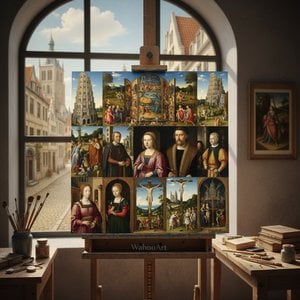
Severna renesansa: 10 mojstrovin, ki so definirale umetnostni slog
Odkrijte 10 mojstrovin severne renesanse – od Jana van Eycka do Dürerja! Raziskujte zgodbe za slikovito umetnost, tehnike in čar teh ikoničnih del. Najboljša zbirka reprodukcij na ArtsDot.com!

25 Mojstrovin Kunsthistorischega Muzeja: Umetnost za Vas Dom | ArtsDot
Odkrijte 25 mojstrovin Kunsthistorischega Muzeja na Dunaju! Raphael, Rembrandt, Vermeer in druge legende. Zgodbe umetnikov, tehnike ter navdih za dekoracijo doma. Reprodukcije slik vrhunske kakovosti – ArtsDot.

Lucas van Leyden: Innovation & Intimacy in Early Netherlandish Printmaking
Explore the groundbreaking prints of Lucas van Leyden, a Dutch master bridging Gothic detail & Renaissance innovation. Discover his rare works, investment potential, and legacy for discerning collectors.


