

 Predogled v realnem okolju
 Pošlji
 Deli
Deli
 Podrobnosti o delu
 Priročnik

 Prenesi sliko
 Podobni izdelki
 Rentgenski posnetek
 Predvajaj diaporama
 Vprašanja in odgovori
 Statistika
untitled (9458)

 Preberi več
Giclée tisk / Umetniški tisk
Giclée ali platnati odtis muzejske kakovosti z hitro proizvodnjo in prilagodljivimi možnostmi končne obdelave. ( Kupite ročno slikano delo Preklop na digitalno sliko)




P118B €10

P118H €10

P118W €10

P438Z €10

P508JH €12

P508YH €12

P805H €10

P805Z €10

P919BZ €10

P919G €10

P919XJ €10

P959ZH €10

P968JZ €12

W106C €8

W218G €10

W218JH €8

W218Y €10

W307PJ €10

W316G €10

W316PJ €8

W316Y €10

W398PJ €8

W4111J €10

W500HY €15

W500JH €15

W692G €12

W849H €8

W940BG €15

W953PJ €8




Izberite eno od naših vnaprej določenih velikosti, ki ustrezajo prvotnim proporcijam umetničkega dela.

Vnesite širino in višino, ki jih potrebujete za svoj okvir ali steno. Tiskanje se lahko le odreže, vendar ga ni mogoče narediti večjega od slike, zato format z drugačno obliko pomeni izgubo dela slike. Pred tiskanjem vam pošljemo digitalni predogled za potrditev. Slika, prikazana na tej strani, ne prikazuje dejanskega izrezka — le predogled to omogoča.
Globalna dostava () v 2 tednih namesto standardnih 4/5 tednov. (8 november)

Brezplačna ekspresna dostava po vsem svetu

Visokokakovostno laneno platno

Popolno zavarovanje pošiljke

Garancija povračila carine in uvoznih davkov

Garancija popolnega barvnega ujemanja

100-dnevna politika vračil (le v primeru okvar)

Garancija 100% povračila denarja

Popust pri večjem naročilu
 Možnost stekla je na voljo le za velikosti pod 110 cm

untitled (9458)
Giclée tisk / Umetniški tisk
Velikost reprodukcije
-


Skupna cena
€ 56
A Glimpse into the Soul: Egon Schiele's "Untitled (9458)"
Egon Schiele’s “Untitled (9458),” a deceptively simple depiction of sunflowers against a backdrop of verdant leaves, is far more than a botanical study. It’s a concentrated distillation of the artist’s signature style – a raw, emotionally charged exploration of mortality, vulnerability, and the precarious beauty of existence. Painted during a period marked by personal turmoil and the looming shadow of World War I, this work embodies Schiele's deeply introspective approach to art, revealing a world both intensely vibrant and profoundly unsettling.
The photograph itself offers a close-up intimacy, pulling us into the heart of the composition. The sunflowers, rendered in bold yellows and accented with the earthy browns of aging leaves, command immediate attention. Their forms are not idealized; they possess an almost bruised quality, hinting at a transient beauty – a reminder that even the most radiant life is subject to decay. The surrounding green foliage, subtly textured, provides a grounding element, yet it too carries a sense of melancholy, as if mirroring the sunflowers’ impending decline.
Echoes of Trauma and Expressionism
Born in 1890 in Tulln an der Donau, Austria, Egon Schiele's life was tragically cut short at just 28 years old. His early childhood was marred by illness and the untimely death of his father from syphilis – a trauma that would indelibly shape his artistic vision. This preoccupation with mortality, coupled with his own struggles with mental health and relationships, fueled an intensely personal and often unsettling body of work. Schiele’s art is firmly rooted in Expressionism, characterized by distorted forms, exaggerated lines, and a deliberate rejection of academic conventions.
The influence of Gustav Klimt, a more established figure in the Viennese art scene, is evident in Schiele's early training, yet he quickly forged his own distinct path. Unlike Klimt’s opulent surfaces, Schiele favored a pared-down aesthetic, focusing on conveying raw emotion through line and color. The twisting, almost skeletal forms of the sunflowers – and indeed, much of his work – speak to this underlying anxiety about physical fragility and the inevitability of death.
Symbolism in Decay: A Portrait of Transient Beauty
The sunflower itself is a potent symbol, traditionally associated with adoration, loyalty, and longevity. However, within Schiele’s painting, these associations are subtly subverted. The sunflowers' vibrant yellow hue, while initially joyful, feels tinged with sadness – perhaps reflecting the fleeting nature of beauty or the awareness of impending loss. The brown edges of the leaves suggest a process of decay, reinforcing the theme of transience and reminding us that even the most magnificent things eventually fade.
Furthermore, the arrangement of the sunflowers—a cluster of individual blooms against a backdrop of others—can be interpreted as a meditation on isolation and vulnerability. Each flower stands alone, yet they are united by their shared fate. The composition invites contemplation on the interconnectedness of life and death, joy and sorrow.
Bringing Schiele’s Intensity Home: High-Quality Reproductions
ArtsDot offers meticulously crafted hand-painted reproductions of Egon Schiele's “Untitled (9458),” allowing you to experience the full force of this emotionally resonant artwork in your own space. Our skilled artists faithfully recreate Schiele’s distinctive style, capturing the intensity of his lines and the depth of his color palette. Whether adorning a gallery wall or adding a touch of dramatic flair to an interior design scheme, a ArtsDot reproduction provides a tangible connection to one of the most compelling figures in 20th-century art. Explore our collection today and bring Schiele’s haunting beauty into your world.
Vprašanja in odgovori
V katero obdobje kariere Egon Ščile pripada delo "untitled (9458)"?
V okviru kariere umetnika Egon Ščile delo "untitled (9458)" pripada obdobju Late Period, kar omogoča primerjavo z ostalimi umetnikovimi deli.
Kateremu umetniku je "untitled (9458)" pripisano?
Delo "untitled (9458)" je ustvaril Egon Ščile. Informacije na tej strani opisujejo izvirno delo umetnika Egon Ščile.
Katera postavitev najbolje ustreza formatu dela "untitled (9458)" avtorja Egon Ščile?
Z obliko Portrait se reprodukcija dela "untitled (9458)" priporoča za Living Room.
Sorodna umetniška dela


Biografija umetnika
Egon Schiele: Austrian Expressionist Painter
Austrian art has since acquired legendary status in interdisciplinary cultural studies. Histories of modern Austrian art generally begin with the architectural boom that swept Vienna in the second half of the nineteenth century. During this period of strong economic growth, the Emperor Franz Josef constructed a necklace of public edifices along the broad Ringstrasse that encircles Vienna’s inner city, prompting artists to flock to the capital from all over to compete for decorative mural commissions. The most renowned painter of the era was Hans Makart, but the young Gustav Klimt also earned his reputation executing commissions on the interior walls of structures such as theaters and museums. The favored style combined a sort of blowsy eroticism with a firm grip on classical and historical allegory. Starting from his masterpiece *The Kiss*, Klimt gradually moved away from the accepted formula, however, evolving a personal symbolism that was less conventionally readable as well as more overtly sexual. This combination proved devastating so far as the tasted of staid Vienna were concerned: Klimt was banished from the ranks of public muralists, and henceforth had to seek support solely from well-heeled private patrons.
Early Life & Influences
Egon Schiele was born in Tulln an der Donau – a picturesque region with vineyards, onion-domed towers and Baroque monasteries. Yet this idyllic setting is hardly reflected in his work.
Instead, many of his landscapes appear melancholic, sometimes sombre. Perhaps he was processing the early death of his father from syphilis and the subsequent loss of his sister Elvira.
Raised initially by his mother and then under the somewhat controlling guardianship of his uncle Leopold Czihaczek, Schiele’s childhood lacked conventional stability but fostered a fiercely independent spirit. Even as a boy, he displayed an intense fascination with trains—a motif that subtly reappeared in later paintings—and a burgeoning talent for drawing, though this was initially met with disapproval from his father who saw it as a distraction from more practical pursuits. The early death of his sister Elvira also cast a long shadow over the young artist’s psyche. These formative experiences instilled within him a sensitivity and an emotional rawness that would become hallmarks of his artistic expression, a constant grappling with themes of life, death, and the human condition.
Vienna Secession & Artistic Breakthrough
Schiele's formal artistic training began at the Kunstgewerbeschule (School of Arts and Crafts) in Vienna, but he quickly found itself stifled by its conservative approach. He transferred to the Akademie der bildenden Künste (Academy of Fine Arts), only to become further disillusioned with its rigid academic traditions. This dissatisfaction led him to abandon formal training altogether, choosing instead to forge his own path, a testament to his unwavering artistic conviction.
The influence of Gustav Klimt was pivotal during these early years; Schiele admired Klimt’s decorative style and exploration of symbolism, even receiving mentorship from the established artist.
He co-founded the Neues Wiener Kunstgruppe (New Viennese Art Group) in 1909, aligning himself with other progressive artists who challenged the prevailing artistic norms. His distinctive style features elongated figures, contorted poses, and expressive lines that convey a sense of unease and emotional intensity.
Style Characteristics & Recurring Themes
Schiele’s art is immediately recognizable for its raw honesty and psychological depth.
He fearlessly confronted themes often considered taboo – sexuality, death, anxiety, isolation – with an unflinching gaze.
His distinctive style features elongated figures, contorted poses, and expressive lines that convey a sense of unease and emotional intensity. The human form, particularly the nude, became his primary subject, not as an object of idealized beauty but as a vessel for exploring the complexities of human experience.
Schiele didn’t shy away from depicting himself in unflattering or vulnerable poses, revealing a profound level of self-awareness and introspection.
Legacy & Recognition
Despite facing censorship and legal challenges – including a brief imprisonment for allegedly corrupting minors with his art – Schiele gained recognition within Vienna’s avant-garde circles.
His work challenged the conventions of the time, provoking both admiration and outrage.
By the time of his untimely death during the Spanish flu pandemic in 1918 at the age of twenty-eight, he had established himself as a leading figure in Austrian Expressionism. Significant works such as *Self-Portrait with Physalis*, *Couple Embracing*, and *Field Landscape (Kreuzberg near Krumau)* stand as testaments to his artistic genius.
His influence on subsequent generations of artists is undeniable, particularly those interested in exploring psychological themes and challenging conventional artistic norms.

Egon Ščile
1890 - 1918 , Avstrija
Hitri podatki
- Artistic Movement Or Style: Expresionismo
- Artists Who Influenced This Artist: ['Gustav Klimt']
- Date Of Birth: 12 giugno 1890
- Date Of Death: 31 octubre 1918
- Full Name: Egon Schiele
- Nationality: Austriaco
- Notable Artworks:
- Autoritratto con Physalis
- Giovane coppia
- Paesaggio campo (Kreuzberg)
- Place Of Birth: Tulln an der Donau, Austria
Sorodni članki
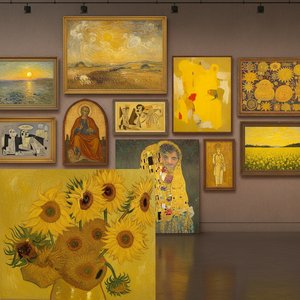
Golden Hues: 10 Masterpieces Dominated by Chrome Yellow | ArtsDot
Immerse yourself in golden light! Explore 10 famous paintings dominated by 'Chrome Yellow', from Van Gogh’s Sunflowers to Monet's Haystacks. Discover the stories behind these iconic Impressionist & Post-Impressionist masterpieces and find museum-quality art reproductions at ArtsDot.com.
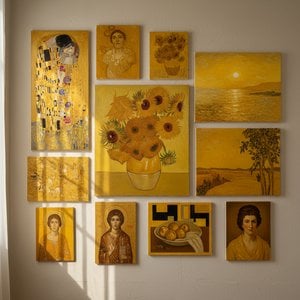
Golden Hues: Top 10 Paintings Dominated by Yellow Ochre |
Explore 10 iconic paintings bathed in golden yellow ochre! From Van Gogh's sunflowers to Monet’s haystacks, discover the stories behind these masterpieces. Find museum-quality art reproductions & elevate your home decor on .

Izrazi čustev: 10 mojstrovin ekspresionizma za vaš dom
Odkrijte 10 mojstrovin ekspresionizma, ki so zaznamovale umetnost! Edvard Munch, Nolde & Kirchner – spoznajte zgodbe in čustva za vsakim delom. Najboljša zbirka reprodukcij na ArtsDot.com!

Egon Schiele: 25 Mojstrovin Ekspresionizma za Vaš Dom | ArtsDot
Odkrijte 25 mojstrovin Egona Schieleja – avstrijskega ekspresionista! Preberite zgodbe za vsako sliko, tehnike in simbolizem. Kvalitetne reprodukcije slik za vaš dom na ArtsDot.com. Raziskajte celotno zbirko online!

Egon Schiele: Expressionism, Anxiety & the Modern Condition – A Comprehensive Exploration
Explore the emotionally charged world of Egon Schiele (1890-1918). Discover his Expressionist masterpieces, psychological themes, and lasting impact on modern art. A comprehensive guide for collectors & enthusiasts.


